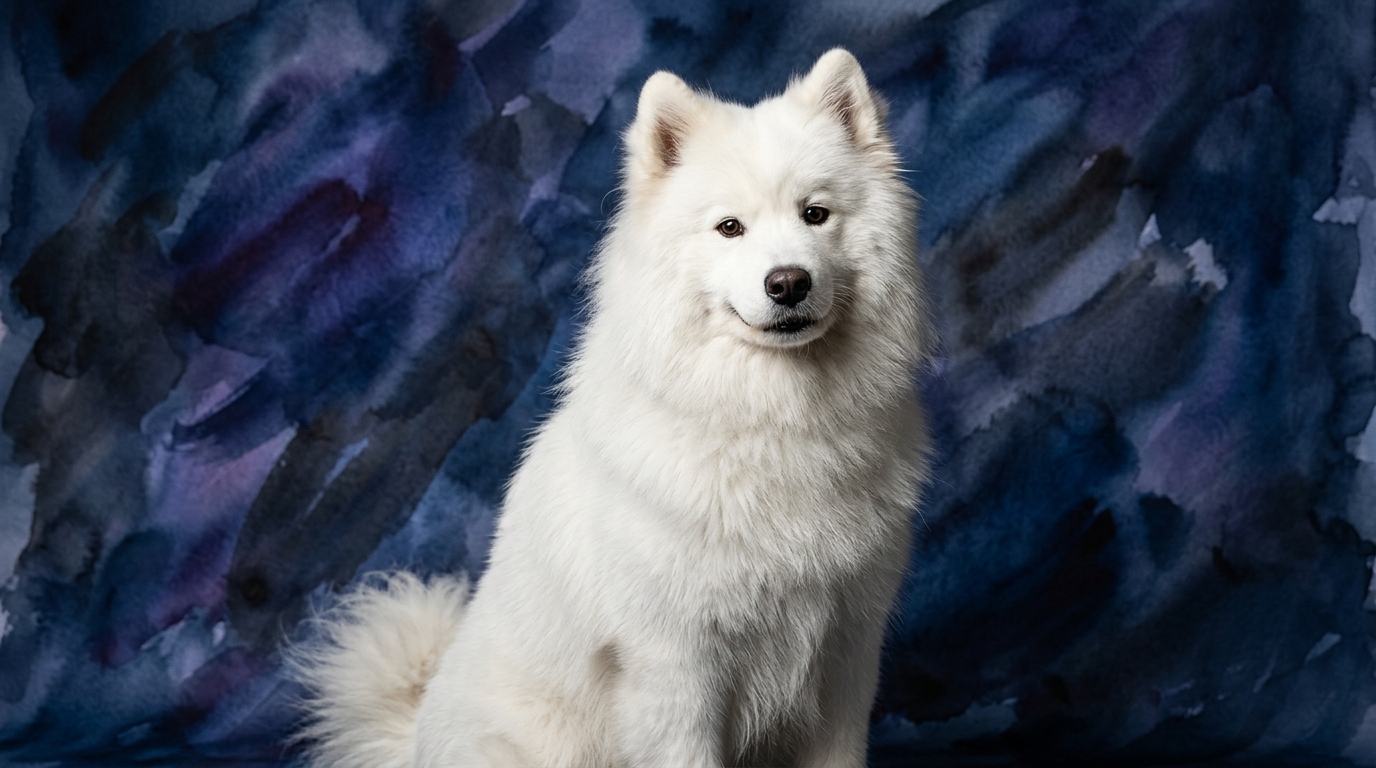
Samoyed at a glance
| IQ Rank / Score | #33 |
|---|---|
| Trainability | ★★★☆☆ (3/5) |
| Social Intelligence | ★★★★★ (5/5) |
| Lifespan | 10-12 years |
| Shedding | Moderate to high |
| Exercise Needs | High (60+ min/day + training) |
| Origin | Siberia (Russia) |
The Samoyed: A Working Breed with a Social Brain
Originating from the freezing expanses of Siberia, the Samoyed's existence has always been intertwined with human collaboration. These dogs weren't just fluffy companions; they were indispensable partners, herding reindeer, pulling sleds, and even acting as living blankets for their nomadic Nenet owners. This deep, historical bond with humans isn't merely anecdotal; it's a foundational element of their unique cognitive blueprint, shaping a breed whose social acumen is unparalleled.
Their position at #33 out of 138 breeds in Stanley Coren's obedience ranking is a testament to their capacity for learning, placing them firmly in the 'above average' category for working dogs. This ranking reflects their ability to grasp new commands with 15-25 repetitions and obey on the first command 70% of the time or more. However, Coren's scale primarily assesses a specific type of obedience, and the Samoyed's true cognitive brilliance extends far beyond mere command-following, particularly into the realm of social interaction and keen problem-solving, even if they occasionally show an independent streak typical of their working group heritage.
Decoding the Samoyed Intelligence Profile
When we look at the Samoyed's cognitive profile, a distinct picture emerges: Problem Solving: 3/5, Training Speed: 3/5, Social Intelligence: 5/5, Instinctive Drive: 4/5, Memory: 3/5. This breakdown highlights a dog whose strengths lie less in rote memorization or lightning-fast command execution, and more in nuanced social understanding and a strong sense of purpose. Their moderate scores in problem-solving and training speed indicate they are capable learners who can tackle complex tasks, but they might not be the quickest to pick up every new trick without proper motivation and positive reinforcement.
The Samoyed's exceptional 5/5 Social Intelligence is their crowning cognitive achievement. This isn't just about being friendly; it's a deep, innate ability to understand and respond to human emotions, cues, and social structures. For the Samoyed, social bonding isn't merely a pleasant interaction – it's a survival mechanism ingrained over millennia. Their strong instinctive drive (4/5) also plays a crucial role, reflecting their genetic predisposition for activities like herding and pulling, demanding a focused and determined mind. Their memory, while not photographic, is solid (3/5), allowing them to retain important information about their environment and routines, further aiding their adaptive capabilities.
A History of Heart: Social Bonding as Survival
The Samoyed's extraordinary social intelligence evolved as a critical survival trait in the harsh Siberian environment. Imagine endless sub-zero nights where warmth was a matter of life or death. The Samoyeds would sleep directly with their nomadic families, their thick coats radiating heat and preventing hypothermia for both dog and human. This isn't just about physical closeness; it required a profound level of trust, empathy, and social attunement – dogs able to read human needs and comfort without verbal cues. This ancient pact forged a breed whose connection to humans is uniquely profound and still evident in their affectionate nature today.
Further testament to their adaptive genius is the very feature that gives them their iconic look: the 'Samoyed smile'. This isn't just an endearing facial expression; it's a physical trait where the corners of the mouth naturally curve upward. This unique physiological adaptation prevents drool from freezing into painful icicles in sub-zero Siberian temperatures, a crucial detail for a working dog operating in extreme cold. This detail, often overlooked as mere charm, reveals a breed whose entire physiology, down to their facial structure, is optimized for survival alongside their human companions.
Samoyed Intelligence: A Breed Comparison
When considering working breeds from similar origins, the Samoyed shares certain traits but also possesses distinct cognitive differences. The **Siberian Husky**, for instance, is often celebrated for its incredible endurance and independent thinking on the trail, whereas the Samoyed often shows a deeper, more empathetic connection to its human handler, stemming from generations of co-sleeping and close family integration. Similarly, while the **Alaskan Malamute** embodies sheer strength and a formidable will for heavy sled pulling, the Samoyed combines its working drive with a more pronounced eagerness to please and social responsiveness, making them highly attuned to human interaction.
3 At-Home Tests to Measure Your Samoyed's IQ
These tests are adapted from peer-reviewed ethology research. No equipment is needed beyond items you have at home. Run each test 5–10 times for reliable results.
The Myth: "Samoyeds are just beautiful clouds with no working brain."
✅ Far from being 'brainless clouds,' Samoyeds are discerning, adaptable, and highly socially astute dogs whose intelligence is deeply rooted in their working heritage. Their capacity for problem-solving, social bonding, and intuitive communication proves they possess a nuanced and capable mind, even if they choose to follow their own independent thoughts sometimes.
Samoyed vs. Similar Breeds
🧠 What's Your Dog's IQ Score?
Our full Pet IQ Lab assessment includes 12+ tests across 5 cognitive dimensions, calibrated for Samoyeds specifically.
Take the Full IQ Test →Frequently Asked Questions
How smart is a Samoyed?
Our Pet IQ Lab framework scores cognition across five dimensions (max 25). The Samoyed totals 18/25 — high for a domestic dog. The full article breaks down each dimension with at-home tests.
Are Samoyeds easy to train?
Samoyeds can learn most cues, but expect to repeat lessons and keep sessions short. They score 3/5 on Training Speed in our breed profile.
Are Samoyeds good with children and other pets?
Yes — their Social Intelligence rates 5/5 in our Pet IQ Lab framework. With early socialization and supervised play, most Samoyeds integrate well into families with respectful children and other pets.
Do Samoyeds need a lot of mental stimulation?
Absolutely. With Problem Solving 3/5 and Instinctive Drive 4/5, Samoyeds need daily mental work — puzzle feeders, scent games, training sessions, or nose-work — to avoid boredom.
How much exercise does a Samoyed need?
Samoyeds need active engagement. Plan for 45-60 minutes of exercise and training per day, plus mental stimulation.
How good is a Samoyed's memory?
Samoyeds score 3/5 on memory. They remember high-value associations well; less-used cues fade without refresher sessions.
What is the typical lifespan of a Samoyed?
Typical lifespan is 10-12 years for a large dog like the Samoyed.
The Samoyed is a testament to adaptive intelligence, a beautiful blend of Arctic resilience and profound social connection. These 'smiling' companions offer a rich landscape for owners curious to explore the deeper cognitive layers of their beloved pet.