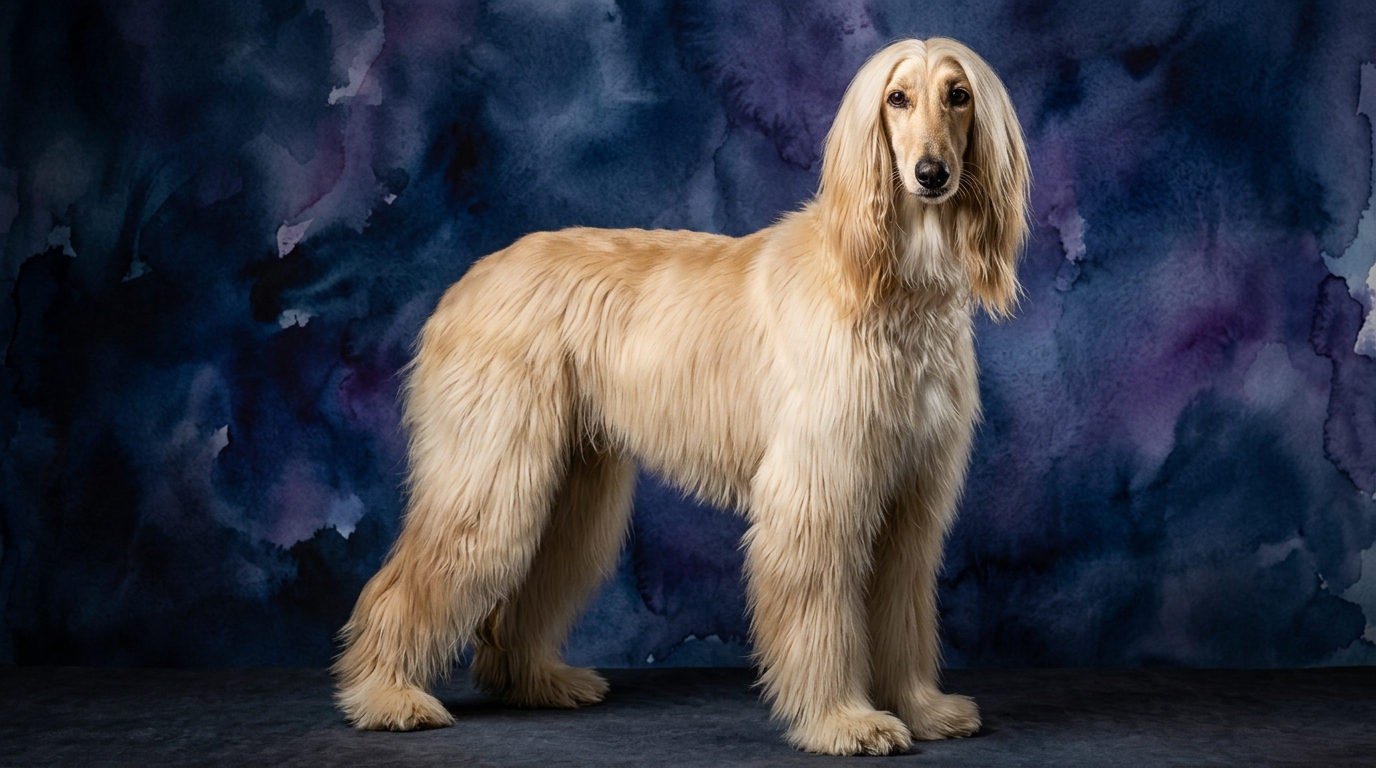
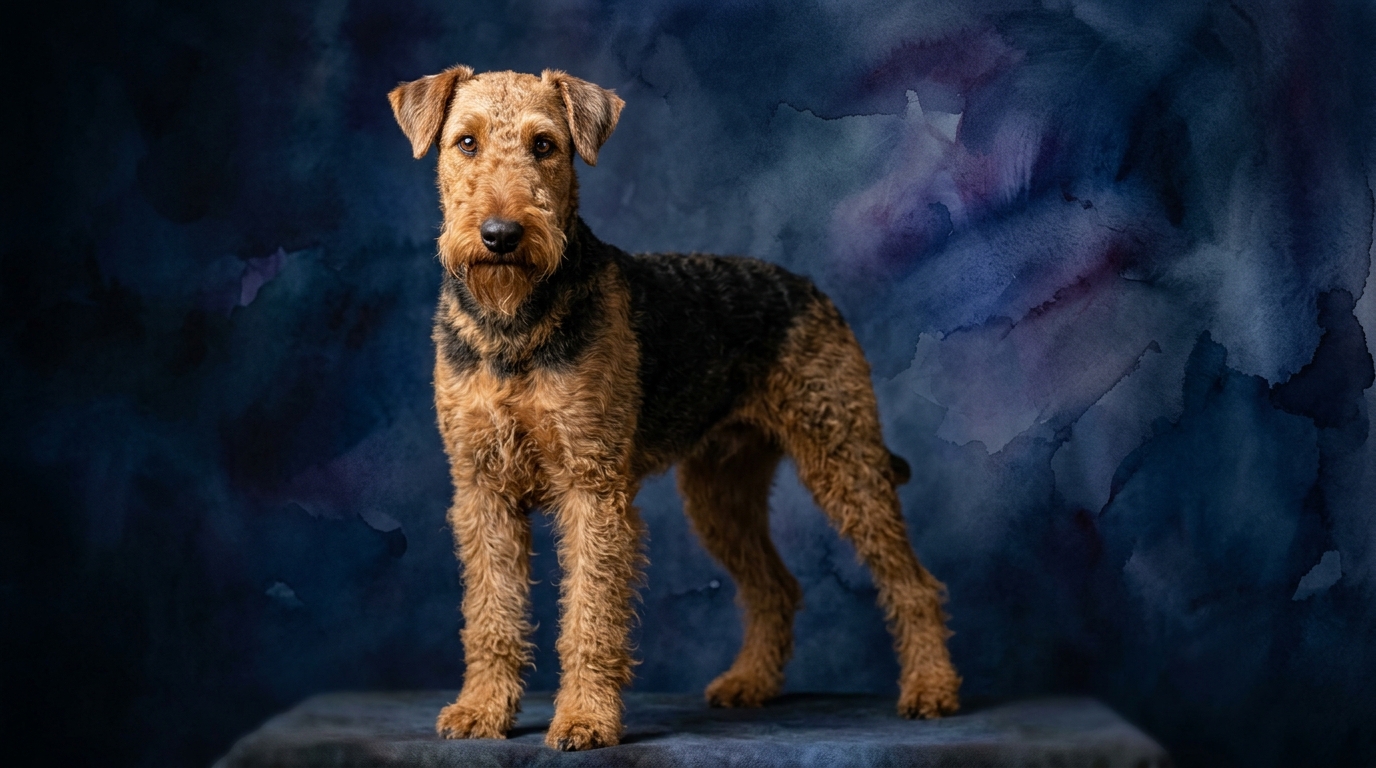
Side-by-Side Cognitive Profiles: Afghan Hound vs. Airedale Terrier
Our Pet IQ Lab analysis provides a granular look at the cognitive strengths and inclinations of these two distinct breeds. The Afghan Hound, ranking #79 on Coren's scale, presents a fascinating blend of independence and natural drive. Their Problem Solving ability rates at 4/5, indicating a capacity for complex solutions, often applied to self-directed goals. However, their Training Speed is notably low at 1/5, suggesting a significant challenge in acquiring new commands. Social Intelligence stands at 2/5, reflecting a reserved demeanor and less inclination to interpret human emotional cues. Their Instinctive Drive is exceptionally high at 5/5, showcasing a powerful, innate urge for chasing and hunting, while Memory is moderate at 3/5, meaning they retain information reasonably well, though their training speed might mask this.
In contrast, the Airedale Terrier, a more prominent #29 on Coren's scale, demonstrates a different cognitive blueprint. Like the Afghan, their Problem Solving is rated 4/5, indicating a resourceful nature and a knack for figuring things out, often with a playful, mischievous bent. Their Training Speed is a robust 4/5, signifying a quick uptake of new tasks and a genuine enthusiasm for learning. Social Intelligence is higher at 3/5, suggesting a greater attunement to human interactions and intentions. Their Instinctive Drive is a manageable 3/5, present but more readily channeled, and their Memory is strong at 4/5, contributing to their reliable retention of learned behaviors.
Where the Afghan Hound Exhibits Unique Cognitive Strengths
The Afghan Hound's most pronounced cognitive advantage lies in its unparalleled Instinctive Drive, rated a perfect 5/5. This isn't merely an inclination; it's a deep-seated, sophisticated predatory sequence, allowing them to independently track, pursue, and make decisions in complex environments without human intervention. Their problem-solving capacity, while equally rated 4/5 as the Airedale, is often directed by this intense drive, enabling them to find creative ways to overcome obstacles to reach a self-determined objective, such as a distant movement or scent. This translates to an animal profoundly capable of self-sufficiency in certain contexts, requiring minimal human direction for specific natural behaviors, which is a specific cognitive win for those appreciating an animal's inherent, unadulterated instincts.
Airedale Terrier's Cognitive Advantages in Application
The Airedale Terrier shines in areas that translate directly to cooperative living and learning with humans. Their Training Speed of 4/5 is a significant cognitive advantage, allowing them to rapidly grasp and execute new commands, making training sessions productive and rewarding. Complementing this is their Memory, rated 4/5, ensuring that once a task is learned, it is retained effectively over time, building a robust behavioral repertoire. Furthermore, their Social Intelligence at 3/5, while not the highest among all breeds, demonstrates a greater capacity to read and respond to human cues than the Afghan Hound, fostering a more interactive and responsive partnership. This combination of quick learning, strong retention, and better social attunement makes them highly adaptable to various roles and tasks directed by a human companion.
Trainability: A Clear Distinction in Cooperation
When it comes to ease of training, the Airedale Terrier distinctly outperforms the Afghan Hound due to fundamental differences in their cognitive makeup and motivational drives. The Airedale's 4/5 Training Speed and 4/5 Memory mean they not only pick up new commands quickly but also remember them reliably. Their 3/5 Social Intelligence makes them more inclined to engage with and please their human partners, often finding intrinsic reward in cooperative learning. This breed thrives on mental stimulation and positive reinforcement, eagerly participating in structured lessons and tasks, which helps channel their moderate 3/5 Instinctive Drive into productive activities.
Conversely, the Afghan Hound's 1/5 Training Speed is a direct indicator of their challenge in formal obedience. Their lower 2/5 Social Intelligence means they are less motivated by human approval or interaction, often prioritizing their own interests. The Afghan's overwhelming 5/5 Instinctive Drive, particularly their prey drive, can easily override any learned commands, making off-leash reliability a significant undertaking. Training an Afghan Hound requires extraordinary patience, consistency, and a deep understanding of their independent sighthound nature, focusing more on management and positive motivation for their own terms rather than expecting eager compliance.
Matching Breeds to Owner Lifestyles: Activity and Engagement
Both the Afghan Hound and the Airedale Terrier require active owners, but their activity needs manifest differently. The Afghan Hound, with its high instinctive drive and physical build, demands extensive opportunities for running and stretching its powerful legs, ideally in a secure, large area. Their mental stimulation often comes from independent exploration and scent-tracking rather than complex obedience routines. A relaxed owner might appreciate their less demanding need for constant interaction, but must be prepared for rigorous physical exercise requirements and a dog that makes many of its own decisions, particularly if a chase opportunity arises.
The Airedale Terrier, while also needing substantial physical exercise to burn off energy, thrives on mental engagement as well. Their quick wit and problem-solving skills mean they need an owner who can provide consistent training, interactive play, and engaging activities like agility, obedience, or puzzle toys to prevent boredom. A truly relaxed owner who neglects these mental and physical needs would likely find an Airedale becoming destructive or developing undesirable behaviors. They are best suited for owners who are not just active, but also enjoy a hands-on, participatory role in their dog's daily life and development.
The Verdict
Choose an Afghan Hound if you appreciate an elegant, independent companion with profound natural hunting instincts, are prepared for a significant training commitment focused on management, and can provide ample safe space for running.
Opt for an Airedale Terrier if you seek an engaging, quick-witted partner eager to learn and participate in varied activities, and are ready to provide consistent training, mental challenges, and robust physical exercise.
🧠 Find Your Pet's IQ Score
Our Pet IQ Lab assessment covers 25+ tests across 5 cognitive dimensions — personalized to your breed.
Take the Full IQ Test →Frequently Asked Questions
Is an Afghan Hound difficult to train?
Yes, their low training speed and independent nature mean they require immense patience and creative, positive reinforcement, as they are less inclined to follow human commands or seek to please their handler.
Do Airedale Terriers need a lot of mental stimulation?
Absolutely, their high problem-solving abilities and quick learning mean they thrive on mental challenges, puzzles, and consistent training to prevent boredom and potential destructive behaviors when under-stimulated.
Which breed is generally better with children?
The Airedale Terrier, with its higher social intelligence and more adaptable nature, is typically considered more suitable for families with children, provided proper socialization and supervision are in place. The Afghan Hound's reserved demeanor might make them less tolerant of boisterous child play.