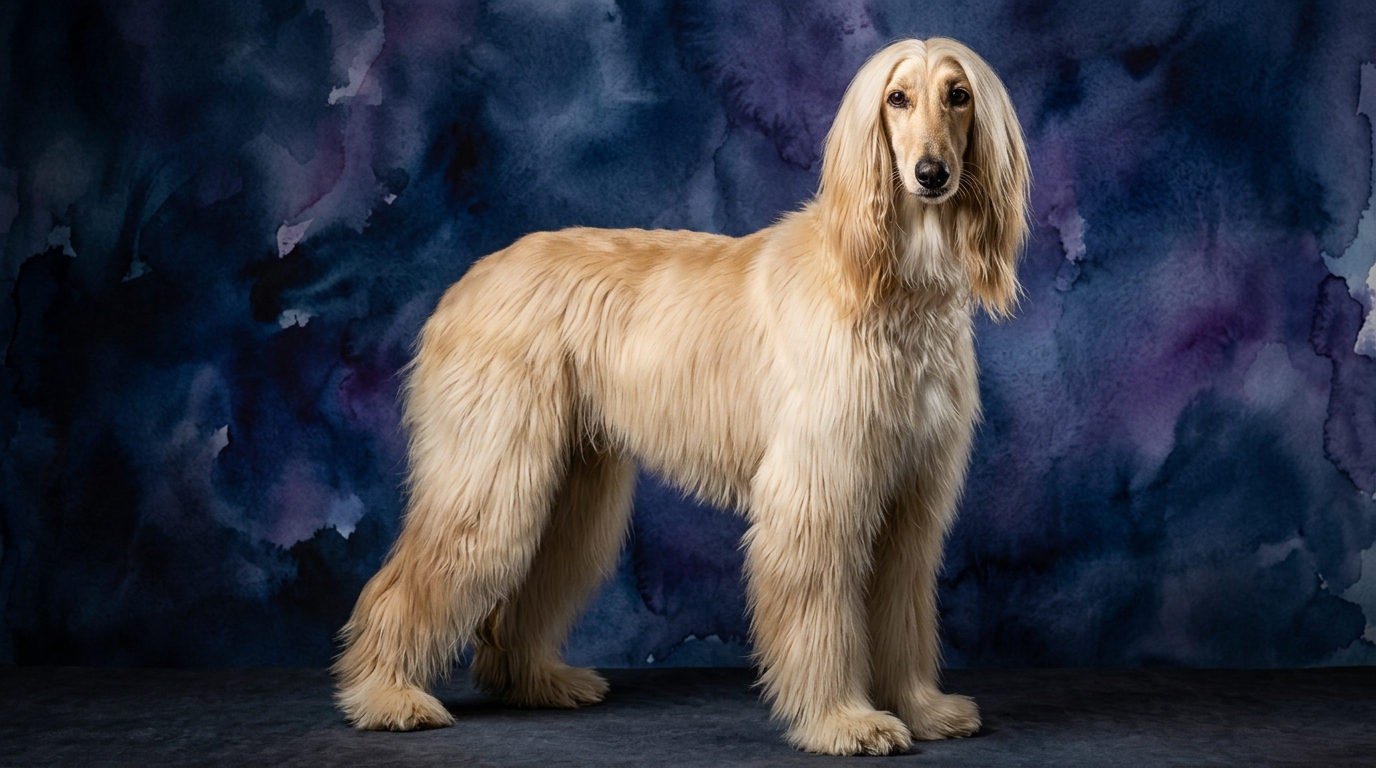
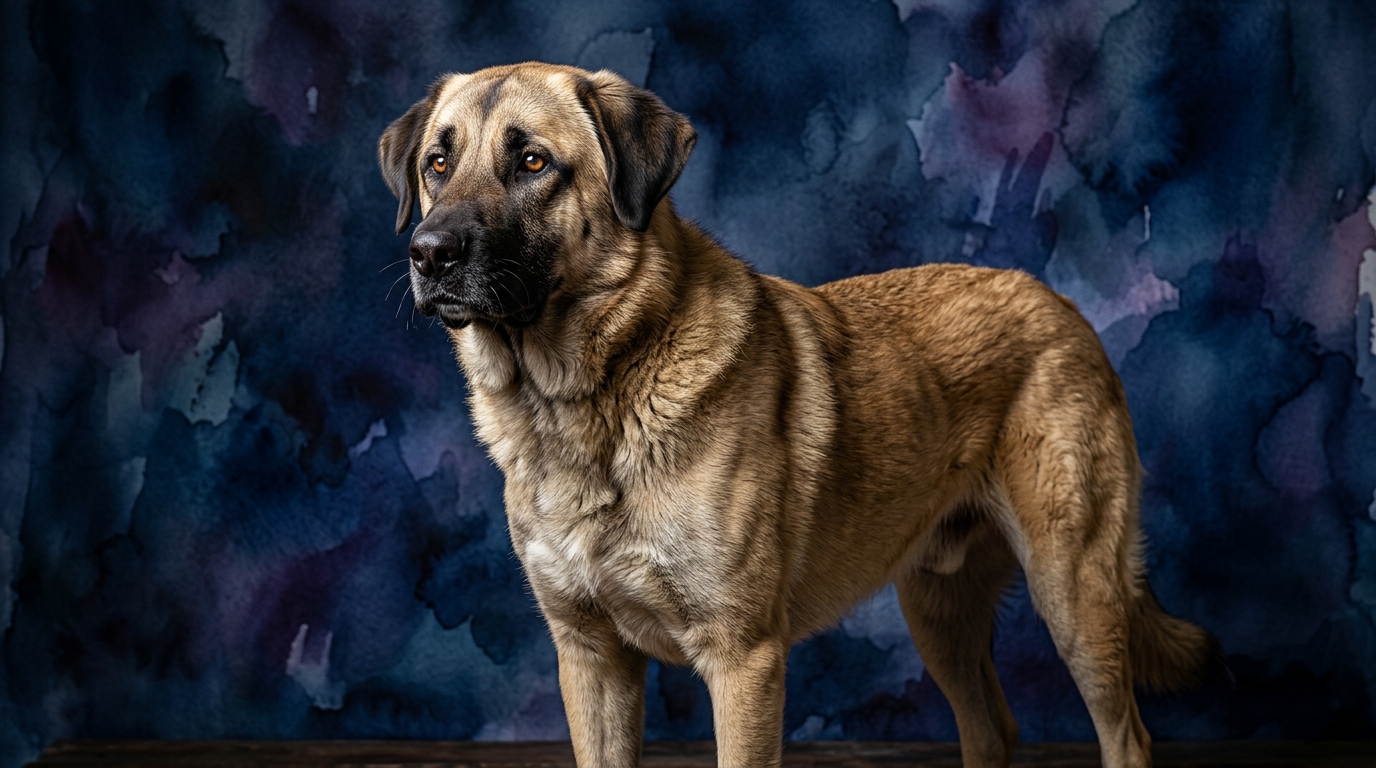
Side-by-Side IQ Profile: Afghan Hound vs. Anatolian Shepherd Dog
The Afghan Hound, ranked #79 by Coren, presents a unique cognitive blueprint. Their Problem Solving is a robust 4/5, indicating a strong capacity for independent thought and creative solutions, often without human direction. Training Speed, however, registers a challenging 1/5, reflecting their profound independence and minimal drive to perform human-initiated commands. Social Intelligence sits at 2/5, suggesting a preference for self-reliance over deep social engagement with humans. Their Instinctive Drive is an exceptional 5/5, dominated by their sighthound prey drive, while Memory is a moderate 3/5, retaining information selectively.
The Anatolian Shepherd Dog, not Coren-ranked, offers a more balanced cognitive profile tailored to their guardian role. Their Problem Solving is 3/5, indicating practical intelligence for assessing threats and protecting charges. Training Speed is a moderate 3/5, meaning they can learn commands and routines at a reasonable pace, driven by understanding purpose. Social Intelligence is also 3/5, showing they can interpret social cues and form strong bonds, though with characteristic aloofness. Their Instinctive Drive is a balanced 3/5, focused on protection, and Memory is a functional 3/5, crucial for retaining important information about their environment and charges.
Where the Afghan Hound Wins Cognitively
The Afghan Hound truly shines in areas demanding independent thought and self-reliance. Their Problem Solving score of 4/5 is a testament to their capacity for creative, autonomous decision-making. Unlike many breeds that look to their human for direction, an Afghan Hound is adept at assessing a situation and formulating a plan of action entirely on its own. This cognitive strength, rooted in their history as solitary hunters, means they might figure out how to open a gate or access a forbidden treat, not out of mischief, but as an exercise in their inherent cognitive prowess to achieve a desired outcome.
Coupled with this is their exceptional Instinctive Drive (5/5). While often challenging for owners, this powerful drive represents a peak in specialized canine cognition. Their entire being is wired for the chase, for spotting movement from a distance and executing a swift, precise pursuit. This isn't just a physical attribute; it's a cognitive masterpiece of detection, focus, and rapid execution. Their brains are finely tuned instruments for identifying, tracking, and engaging prey, making them unparalleled in tasks requiring sustained, independent focus on a moving target. In their specific domain of sighthound work, their cognitive architecture is profoundly effective.
Where the Anatolian Shepherd Dog Wins Cognitively
The Anatolian Shepherd Dog's cognitive strengths lie in their balanced, practical intelligence, particularly their moderate Training Speed (3/5) and Social Intelligence (3/5). While not as independently 'creative' in problem-solving as the Afghan in abstract ways, the Anatolian's cognitive profile is geared towards reliable, consistent performance within a social and working context. Their 3/5 Training Speed indicates a dog that is receptive to learning and capable of understanding and executing commands, albeit with a need for clear, consistent guidance. They learn not just by rote, but by understanding the utility of a command in their world, making them more amenable to structured training than the Afghan.
Their Social Intelligence of 3/5 further bolsters their cognitive advantage in human interaction. Anatolians are more attuned to human social cues and communication, allowing for a more collaborative training experience. They form strong, protective bonds and can interpret the nuances of their owner's moods and intentions, which is vital for a guardian breed. This doesn't mean they are blindly obedient; rather, they process social information to inform their decisions, often exhibiting a thoughtful independence. Their Problem Solving (3/5) is also a practical strength, focused on assessing threats and protecting their charges, a cognitive specialization that makes them highly effective in their historical role. They excel at making sound, independent judgments in real-world guardian scenarios, weighing risks and acting decisively.
Which is Easier to Train and Why
Between these two breeds, the Anatolian Shepherd Dog is unequivocally easier to train, primarily due to significant differences in their Training Speed and Social Intelligence scores. The Afghan Hound's Training Speed of 1/5 means they learn new commands at an exceedingly slow pace and often lack the motivation to perform them consistently. Their high Instinctive Drive (5/5) means their natural inclinations, particularly the chase, will frequently override any learned commands, making redirection challenging. Furthermore, their low Social Intelligence (2/5) indicates they are less inclined to look to humans for direction or to seek approval, making compliance a secondary concern to their own independent agenda. Training an Afghan Hound requires immense patience, creativity, and acceptance of their strong-willed nature, often feeling like a continuous negotiation rather than a straightforward teaching process.
In contrast, the Anatolian Shepherd Dog's moderate Training Speed (3/5) and Social Intelligence (3/5) make them far more responsive to instruction. While still possessing an independent streak inherent to guardian breeds, they are more willing to engage in the learning process and are better at understanding and internalizing commands. Their social intelligence allows them to better interpret human intentions and build a cooperative working relationship. They learn best with positive reinforcement, consistency, and a clear understanding of what is expected, often performing tasks if they perceive a logical reason or benefit. Their instinctive drive (3/5) is also more balanced, centered on protection rather than a singular, overwhelming chase drive, making it easier to manage and integrate into training.
Which Suits Active Owners vs. Relaxed Owners
Defining 'active' and 'relaxed' owners for these breeds requires nuance, as their needs diverge significantly from typical companion dogs. An Afghan Hound, with its 5/5 Instinctive Drive for chasing, suits an owner who is 'active' in providing outlets for this powerful instinct, rather than necessarily engaging in structured, high-intensity exercise. This means an owner who can safely provide opportunities for long, supervised runs in securely fenced areas or participate in sighthound-specific sports like lure coursing. They are not content with short walks; their physical and cognitive need to run and pursue is profound. However, once their physical and instinctual needs are met, they can be quite 'relaxed' indoors, often preferring to lounge regally. A 'relaxed' owner who cannot facilitate these specific, high-drive activities would find an Afghan Hound challenging, as their pent-up energy and instincts can manifest as destructive or difficult behaviors.
The Anatolian Shepherd Dog, conversely, suits an owner who is 'active' in a different sense: active in providing a clear, consistent leadership role and a suitable environment for their guardian instincts. They thrive on having a purpose, whether it's guarding a property or a family, which translates to a need for space to patrol and observe. While they don't require the same explosive running as an Afghan, they need regular, moderate exercise and mental stimulation that engages their problem-solving and protective drives. A 'relaxed' owner for an Anatolian might be someone with a large property where the dog can roam and fulfill its natural tendencies, but this 'relaxed' approach must still include active, consistent training and socialization from puppyhood. They are not suited for apartment living or owners who cannot commit to their foundational needs for purpose and security, as their protective instincts require careful guidance and management.
The Verdict
Choose the Afghan Hound if you are an owner who appreciates profound canine independence, possesses immense patience for training, and can provide consistent, safe outlets for a powerful, specialized chase drive.
Opt for the Anatolian Shepherd Dog if you seek a protective, moderately trainable guardian with a balanced cognitive profile, capable of independent decision-making in a working context, and you can provide a suitable environment for their watchful nature.
🧠 Find Your Pet's IQ Score
Our Pet IQ Lab assessment covers 25+ tests across 5 cognitive dimensions — personalized to your breed.
Take the Full IQ Test →Frequently Asked Questions
Are Afghan Hounds untrainable due to their low training speed?
While Afghan Hounds have a training speed of 1/5, they are not untrainable, but they require a unique approach. Their profound independence and lack of desire to please mean traditional obedience methods are often ineffective; instead, owners need immense patience, positive reinforcement, and a willingness to work with their strong-willed nature, focusing on cooperation rather than strict compliance.
Do Anatolian Shepherds need a lot of mental stimulation to thrive?
Anatolian Shepherds, with their moderate problem-solving and instinctive drive, do best with mental stimulation that engages their guardian instincts and provides a sense of purpose. While not requiring constant puzzle games, they benefit from having a 'job,' like patrolling a yard or observing their environment, coupled with consistent training and opportunities for thoughtful decision-making in their daily routine.
How does Coren's ranking system apply to these breeds, especially the Anatolian Shepherd Dog?
Coren's ranking primarily assesses obedience intelligence, which explains the Afghan Hound's #79 rank, reflecting their challenge with human-directed commands. The Anatolian Shepherd Dog is not included in Coren's traditional ranking, likely because their specialized guardian intelligence, emphasizing independent decision-making and practical problem-solving in a working context, doesn't fit neatly into the obedience-focused criteria.