Side-by-Side Cognitive Profiles
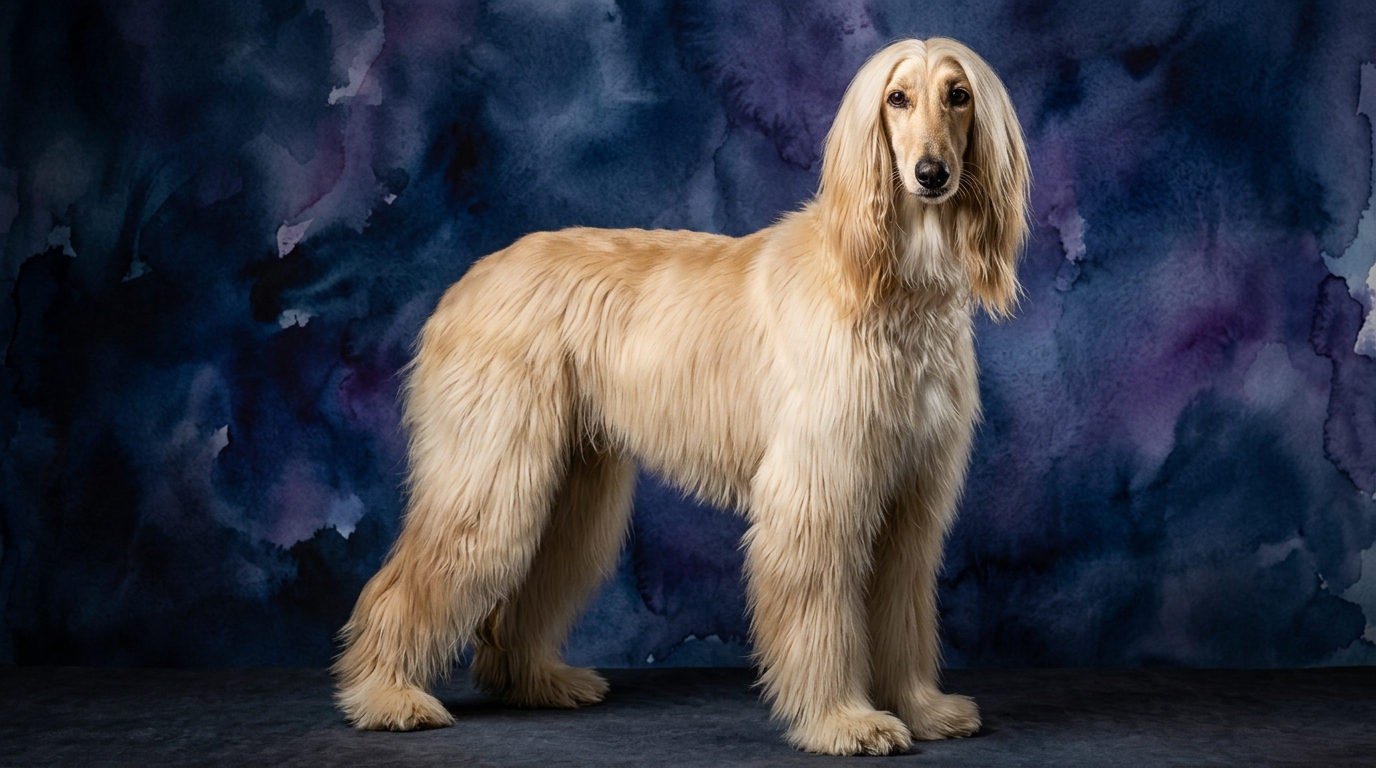
The Afghan Hound, with a Coren ranking of #79, presents a unique cognitive blueprint. Their problem-solving ability is rated 4/5, indicating a capacity for complex thought, particularly when self-motivated or involving their strong chase instinct. Training speed, however, is a low 1/5, reflecting a breed that often prioritizes independent thought and requires extensive patience and repetition. Social intelligence stands at 2/5; they can be reserved with strangers, forming deep but selective bonds, and while they interpret human cues, compliance is often optional. Their instinctive drive is an exceptional 5/5, showcasing powerful sighthound capabilities for pursuit and keen visual tracking. Memory is rated 3/5, suggesting a good retention of routines, territory, and past experiences.
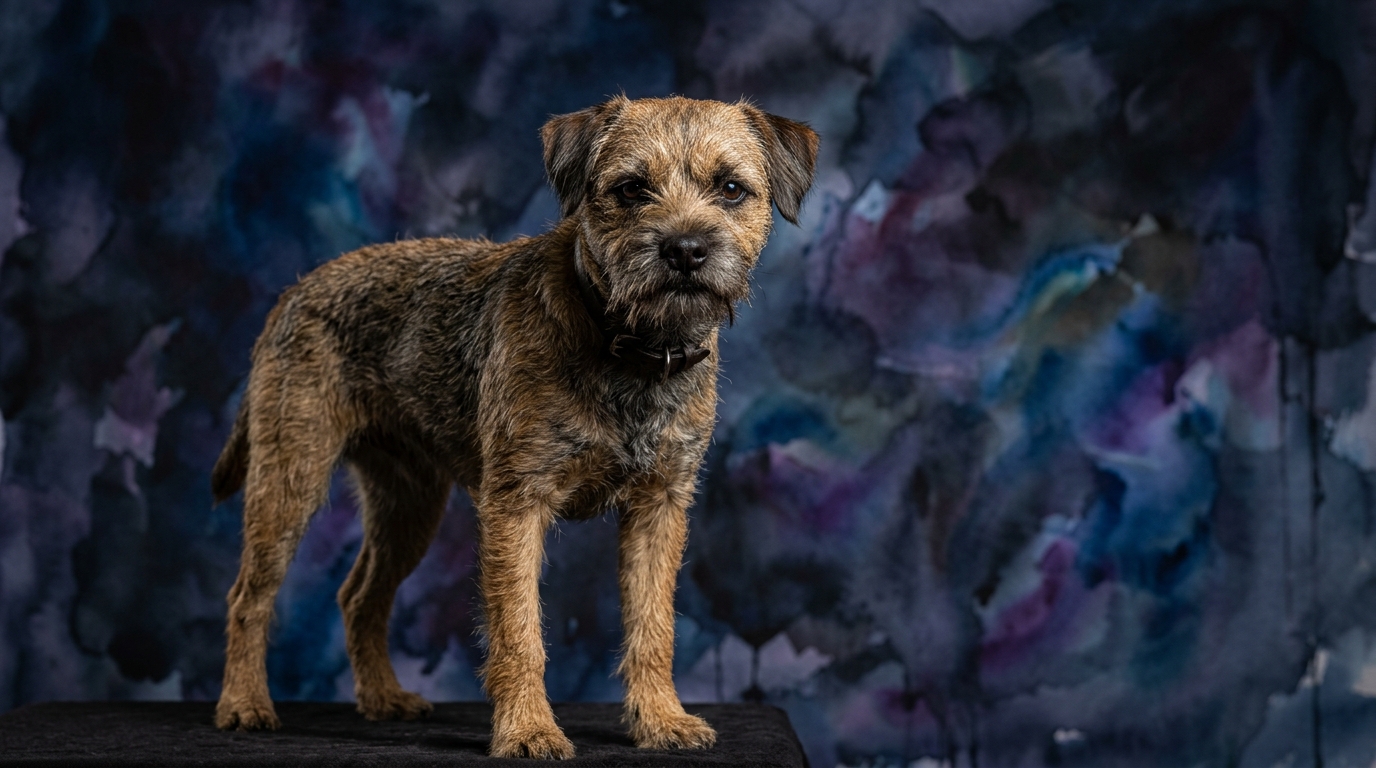
In stark contrast, the Border Terrier, with a Coren ranking of #30, exhibits a different set of cognitive strengths. Their problem-solving mirrors the Afghan at 4/5, excelling particularly when navigating small spaces or overcoming obstacles to reach a goal. Training speed is a robust 4/5, meaning they quickly grasp new commands and concepts, enjoying cooperative learning. Social intelligence is higher at 3/5; they are generally more affable, read human emotions and intentions with reasonable accuracy, and are eager to engage. Their instinctive drive is a moderate 3/5, possessing a prey drive for small vermin but being more biddable than a sighthound. Memory is rated 4/5, indicating excellent recall of learned behaviors, commands, and social interactions over time.
Where the Afghan Hound Excels Cognitively
The Afghan Hound's most pronounced cognitive advantage lies in its unparalleled instinctive drive, scoring a perfect 5/5 compared to the Border Terrier's 3/5. This isn't merely a physical attribute; it represents a profound cognitive specialization for visual processing, spatial awareness, and rapid decision-making in high-speed pursuit scenarios. Their sighthound heritage equips them with an exceptional ability to spot and pursue moving objects over vast distances, making them supremely adapted for tasks demanding independent, visually-driven action and demonstrating a unique form of environmental awareness focused on movement and speed.
While both breeds share a 4/5 score for problem-solving, the Afghan Hound often exhibits a more self-directed and independent approach to finding solutions. They excel at devising strategies to achieve their own objectives, even if those objectives diverge from human commands. This manifests as a cognitive resilience and self-sufficiency, where they are less reliant on human direction to navigate challenges or attain desired outcomes, showcasing a distinct form of autonomous intellectual resourcefulness.
Where the Border Terrier Shows Cognitive Strengths
The Border Terrier's significantly higher training speed, rated 4/5 compared to the Afghan's 1/5, marks a clear cognitive victory. This indicates a remarkable capacity for forming associations between commands and actions rapidly, making them exceptionally receptive to learning new behaviors. Their eagerness to cooperate and engage in interactive training reflects a strong cognitive desire for partnership, where they find satisfaction in understanding and responding to human instruction, accelerating the acquisition of skills.
Social intelligence is another area where the Border Terrier (3/5) surpasses the Afghan Hound (2/5). While the Afghan is discerning, the Border Terrier typically exhibits a more open, adaptable, and responsive social cognition. They are generally more attuned to subtle human cues, more willing to adjust their behavior based on owner feedback, and often more comfortable and adaptable in varied social settings. This suggests a stronger cognitive drive for social cohesion and a greater readiness to interpret and respond to the emotional and communicative signals from their human companions.
Furthermore, the Border Terrier's superior memory, scoring 4/5 against the Afghan's 3/5, significantly contributes to their overall cognitive advantage in many domestic settings. They retain learned behaviors, commands, and social contexts with fewer repetitions and recall them more reliably over extended periods. This robust memory underpins their consistent responsiveness and allows for a broader, more complex repertoire of understood cues and routines, making them more predictable and easier to live with in terms of established expectations.
Trainability: A Tale of Two Temperaments
Without a doubt, the Border Terrier is considerably easier to train. Their high training speed (4/5) and stronger social intelligence (3/5) mean they are inherently more motivated to work collaboratively with humans. They form positive associations quickly, understand what is being asked of them, and find genuine satisfaction in pleasing their owners, making the training process a collaborative and rewarding experience. Their excellent memory (4/5) ensures that once a behavior is learned, it is retained and recalled reliably.
The Afghan Hound, conversely, presents a greater training challenge. Their very low training speed (1/5) and lower social intelligence (2/5) in a cooperative sense imply that they often require immense patience, creativity, and a deep understanding of their unique motivations. While capable of problem-solving (4/5), they frequently choose to act on their powerful instinctive drives (5/5) or independent thought rather than immediate compliance. Training with an Afghan is less about rapid instruction and more about consistent, long-term persuasion, convincing them that desired behaviors align with their own interests.
Matching Breeds to Lifestyles: Active vs. Relaxed Owners
Both breeds benefit from active owners, but their activity needs diverge significantly in nature. An Afghan Hound is ideal for owners who relish long, vigorous, off-leash runs in expansive, secure areas where their profound instinctive drive for pursuit can be safely expressed. Their physical demands are substantial, requiring outlets for their sighthound capabilities, such as lure coursing or extensive visual tracking. However, their mental engagement often prefers self-directed exploration over highly structured, cooperative tasks, making them suitable for active owners who appreciate a dog's independent spirit.
The Border Terrier also thrives with active owners, but their preference leans towards interactive and cooperative activities. They are well-suited for owners who enjoy engaging in dog sports like agility, obedience, hiking, or earth dog trials, where physical exertion is combined with mental challenges that involve teamwork and problem-solving alongside their human companion. Their moderate instinctive drive (3/5) is more amenable to being channeled into structured activities. While neither breed is truly suited for a "relaxed" owner requiring minimal engagement, a Border Terrier might adapt slightly better to a less intensely active home, provided they still receive consistent mental stimulation and daily walks.
The Verdict
If you appreciate a dog with profound independence, a majestic presence, and an unparalleled instinctive drive for visual pursuit, and you are prepared for a long-term commitment to patient, consistent, and often creative engagement that respects their self-directed nature, choose the Afghan Hound.
If you seek a cooperative, adaptable, and spirited companion for various activities, valuing quick learning, social responsiveness, and a keen problem-solving mind that thrives on partnership and interactive challenges, choose the Border Terrier.
🧠 Find Your Pet's IQ Score
Our Pet IQ Lab assessment covers 25+ tests across 5 cognitive dimensions — personalized to your breed.
Take the Full IQ Test →Frequently Asked Questions
Do Afghan Hounds require a lot of exercise despite their perceived aloofness?
Absolutely. Their instinctive drive (5/5) means they require significant opportunities for vigorous exercise, ideally in large, secure areas where they can run freely and express their sighthound nature. Lack of appropriate outlets can lead to boredom and undesirable behaviors.
Are Border Terriers good for first-time dog owners?
Border Terriers can be suitable for first-time owners due to their high trainability (4/5 training speed) and generally adaptable social intelligence (3/5). They respond well to positive reinforcement and clear guidance, making them a rewarding learning experience for new owners willing to engage in consistent training.
How does the "problem-solving" score differ between these two breeds?
Both breeds score 4/5 in problem-solving, but their approaches differ significantly. Afghan Hounds often solve problems to achieve their own independent goals, such as figuring out how to initiate a chase. Border Terriers frequently apply their problem-solving skills in cooperative tasks or to navigate their environment, often with a keen interest in human interaction and a desire to achieve a shared goal.