
Side-by-Side Cognitive Profiles
While renowned canine intelligence researcher Stanley Coren places the English Bulldog at rank #77 and the Afghan Hound at #79 for working and obedience intelligence, these similar rankings only scratch the surface of their unique cognitive architectures. Our deeper dive into five specific IQ dimensions reveals the intricate ways these breeds perceive, learn, and interact with their environments and their human companions. Understanding these nuanced differences is crucial for any prospective owner.
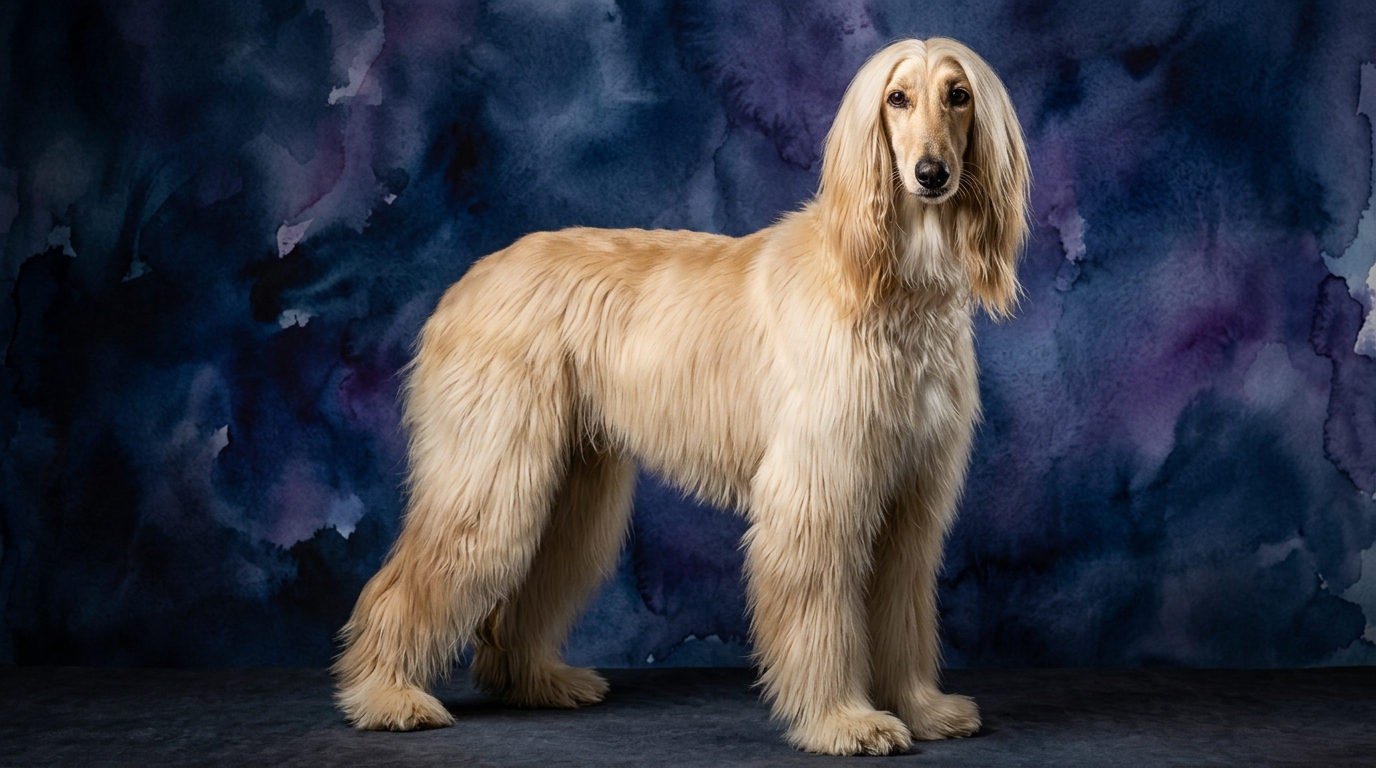
The Afghan Hound’s cognitive profile is marked by a strong independent streak: problem solving at 4/5, training speed a low 1/5, social intelligence at 2/5, an exceptional instinctive drive of 5/5, and a moderate memory score of 3/5. This suggests a dog that excels at self-directed tasks and possesses profound innate motivations, but is less inclined towards human-centric compliance or overtly social interactions.
In contrast, the English Bulldog presents a profile geared more towards companionship: problem solving at 2/5, training speed at 2/5, a robust social intelligence of 4/5, an instinctive drive of 3/5, and a memory score of 2/5. This indicates a dog that thrives on social connection, is somewhat amenable to learning, but may not be as adept at complex independent thought or driven by overwhelming primal urges.
Where the Afghan Hound Excels Cognitively
The Afghan Hound’s cognitive strengths are deeply rooted in its heritage as a sighthound, manifesting primarily in its exceptional instinctive drive and a robust capacity for independent problem-solving. With an instinctive drive score of 5/5, these dogs possess an unwavering internal motivation to pursue, observe, and react to stimuli in their environment. This isn't just a high energy level; it's a profound, intrinsic urge that dictates much of their behavior, driving them to scan horizons for movement and engage in bursts of intense activity. Complementing this is their 4/5 rating in problem-solving, indicating a mind adept at navigating complex scenarios to achieve a goal, often without direct human instruction. For instance, an Afghan Hound might independently devise a strategy to bypass an obstacle in pursuit of a perceived 'prey' or figure out how to access a desired location, relying on their keen senses and spatial awareness rather than waiting for a cue. This combination means they are often self-sufficient thinkers when it comes to their primary motivations, capable of intelligent action driven by their ancient instincts.
Where the English Bulldog Shines Cognitively
In contrast, the English Bulldog’s cognitive strengths lie closer to the human social sphere, showcasing a distinct aptitude for connection and companionship. Their standout attribute is a social intelligence score of 4/5, which signifies a keen awareness of human emotions, expressions, and social dynamics. Bulldogs are often highly responsive to the moods of their family members, offering comfort or seeking interaction in appropriate ways. This isn't about performing tricks but about a deep, intuitive understanding of their place within a social unit and a desire for harmonious interaction. While their training speed of 2/5 is modest, it still surpasses the Afghan Hound's, indicating a greater willingness and slightly quicker comprehension when engaging in human-directed learning. This suggests that with patient, positive reinforcement, Bulldogs are more inclined to form associations between commands and actions because of their inherent social drive to please or interact, making them more receptive to forming routines that strengthen their bond with their people.
Training Ease: Afghan Hound vs. English Bulldog
When evaluating which breed presents an easier path for training, the data clearly points towards the English Bulldog, albeit with the caveat that neither breed is generally considered effortless. The Afghan Hound's 1/5 training speed is a direct reflection of its independent nature and overwhelming instinctive drive (5/5). These dogs were bred to think for themselves, chasing quarry over vast distances, and their cognitive architecture prioritizes self-directed action over human-centric compliance. Asking an Afghan Hound to repeatedly perform a 'sit' in a stimulating environment often competes directly with its primal urges to observe or pursue, making consistent obedience a significant challenge. Their lower social intelligence (2/5) further means they might not be as motivated by human approval or interaction during training sessions.
The English Bulldog, with its 2/5 training speed, offers a slightly more receptive learner. While not quick to master commands, their high social intelligence (4/5) means they are generally more invested in pleasing their people and maintaining a harmonious relationship. This social motivation can be a powerful lever in training, as Bulldogs respond well to positive reinforcement that strengthens their bond. Their lower instinctive drive (3/5) compared to the Afghan Hound also means fewer internal distractions competing with training efforts, allowing for a more focused, albeit deliberate, learning process. Therefore, while both require patience, the Bulldog's inherent social nature makes the training journey more collaborative.
Ideal Owners: Active vs. Relaxed Lifestyles
The distinct cognitive profiles of the Afghan Hound and English Bulldog naturally align with different owner lifestyles. For those seeking an active companion who thrives on engagement with the world, the Afghan Hound is a compelling choice. Their 5/5 instinctive drive and 4/5 problem-solving capabilities mean they are wired for action, observation, and independent exploration. They flourish with owners who understand their need for ample opportunities to run, chase, and utilize their keen senses in secure, expansive environments. This is not a breed content with a short walk; they require owners dedicated to fulfilling their profound physical and mental demands, perhaps through activities like lure coursing or long, stimulating hikes. Their lower social intelligence and training speed suggest an owner who appreciates a more independent, perhaps aloof, canine companion who engages on their own terms.
Conversely, the English Bulldog is an ideal match for individuals or families seeking a more relaxed, socially engaged companion. Their high social intelligence (4/5) and more moderate instinctive drive (3/5) mean they are content with a comfortable home life, enjoying close proximity to their people and participating in family activities. While they still require regular, gentle exercise to maintain health, their cognitive makeup isn't geared towards relentless physical pursuit or complex independent problem-solving in the same way an Afghan Hound's is. Owners who value a deep social bond, a good-natured temperament, and a dog that is generally amenable to a less demanding physical routine will find immense joy in an English Bulldog.
The Verdict
The Afghan Hound is best suited for experienced owners who embrace an independent spirit and can provide consistent outlets for intense instinctive drives and problem-solving, thriving in active, outdoor-oriented homes. They are for those who appreciate a canine partner with a mind of its own, requiring dedication to exercise and mental stimulation.
The English Bulldog is an excellent choice for individuals or families seeking a devoted, socially intelligent companion who enjoys a relaxed pace and close connection. They thrive in homes where their gentle nature and desire for companionship are cherished, making them ideal for those prioritizing social interaction over athletic pursuits.
🧠 Find Your Pet's IQ Score
Our Pet IQ Lab assessment covers 25+ tests across 5 cognitive dimensions — personalized to your breed.
Take the Full IQ Test →Frequently Asked Questions
Are Afghan Hounds difficult to live with due to their low training speed?
Their low training speed (1/5) means they aren't quick to learn obedience commands, but their high problem-solving (4/5) and instinctive drive (5/5) suggest they are thinking dogs, just not always in ways directed by humans. Owners need patience, understanding their independent nature, and focusing on managing their strong instincts rather than expecting perfect compliance.
How does the English Bulldog's social intelligence manifest in daily life?
With a social intelligence score of 4/5, English Bulldogs are typically very attuned to their human family, often seeking affection and companionship. They are known for their gentle and amiable nature, readily integrating into family life and forming strong, affectionate bonds, making them excellent companions for those who value close interaction.
What kind of mental stimulation do these breeds need, given their different IQ profiles?
Afghan Hounds benefit from activities that engage their keen senses and problem-solving, such as lure coursing, scent work, or puzzle toys that challenge their independent thought. English Bulldogs, due to their social intelligence, thrive on interactive play with their owners, gentle training that reinforces their bond, and opportunities for social engagement rather than complex, solitary mental tasks.