Decoding Canine Cognition: Afghan Hound vs. Collie (Rough) IQ Profiles
At The Cosmic Pet Pet IQ Lab, we analyze canine cognition across five distinct dimensions, offering a nuanced perspective on what makes each breed's mind unique. While both the Afghan Hound and the Collie (Rough) exhibit distinct cognitive strengths, their overall profiles paint a picture of divergent evolutionary paths and specialized roles.
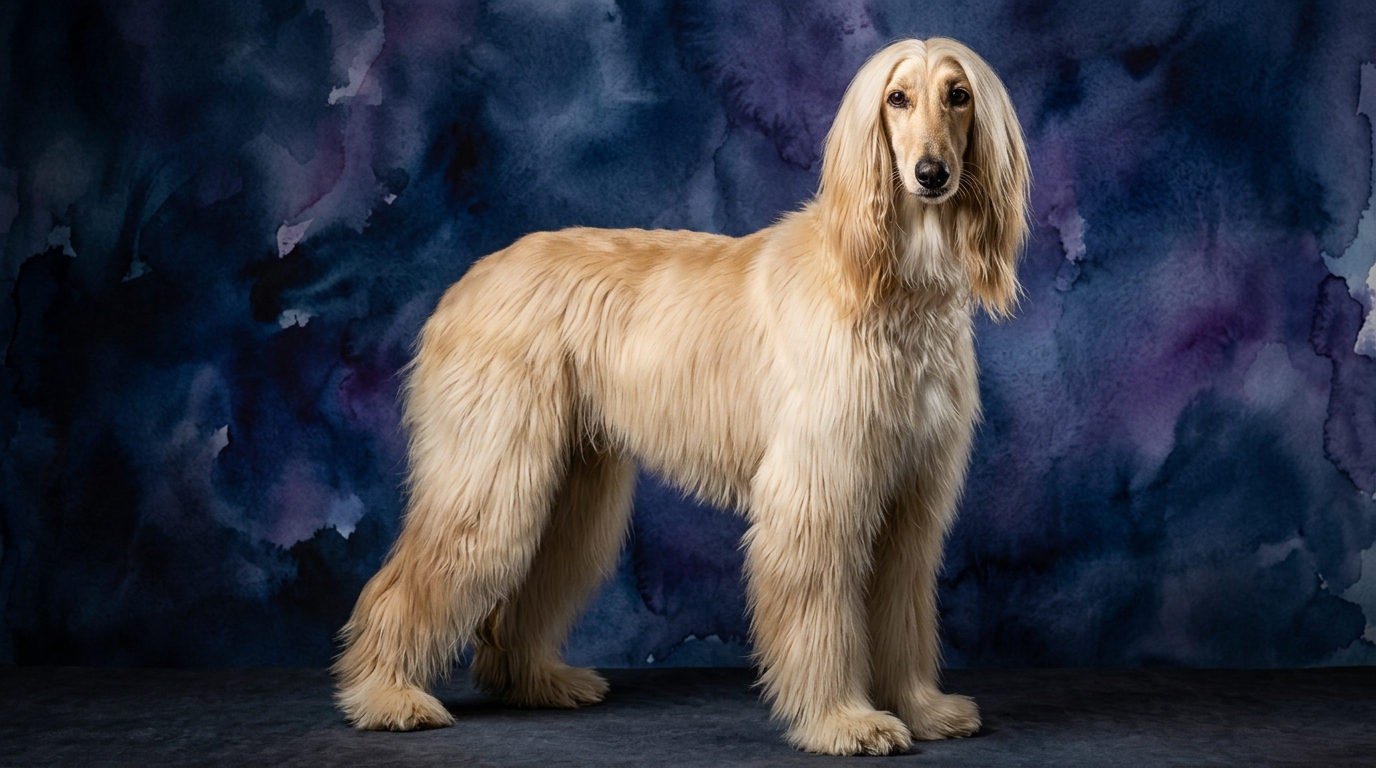
The Afghan Hound, with a Coren ranking of #79, demonstrates a problem-solving capacity rated at 4/5, indicating a good ability to navigate complex situations independently. However, its training speed is notably low at 1/5, suggesting a strong disinclination towards repetitive instruction. Social intelligence is moderate at 2/5, reflecting a somewhat aloof disposition, while an exceptional instinctive drive of 5/5 underscores its sighthound heritage and formidable prey pursuit capabilities. Its memory, at 3/5, is competent but not outstanding.
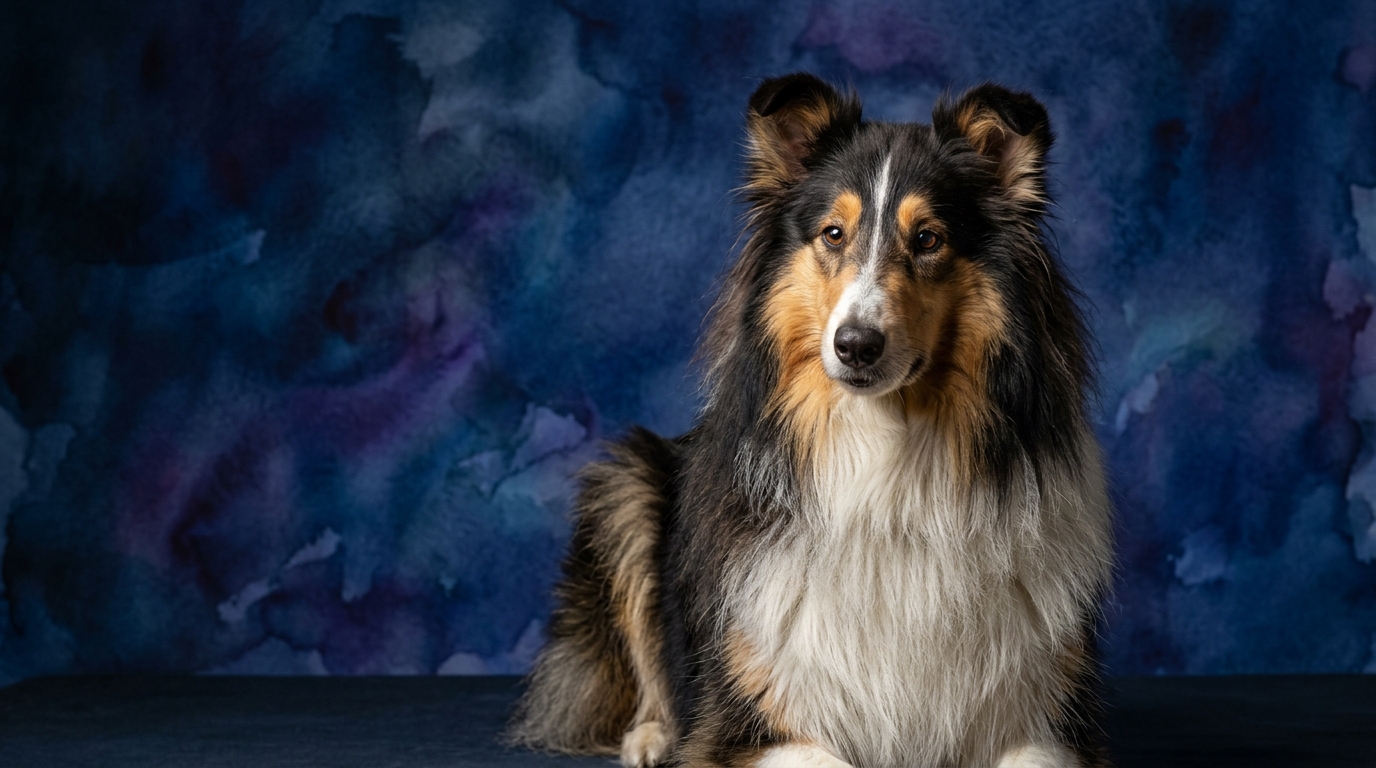
In contrast, the Collie (Rough), ranked #16 by Coren, shares the Afghan Hound's 4/5 problem-solving acumen, showing an equal capacity for figuring things out. Where it diverges significantly is its training speed, a robust 4/5, making it highly receptive to learning commands and routines. Its social intelligence is a solid 3/5, indicative of a more outwardly connected and responsive temperament. The Collie's instinctive drive sits at 3/5, channeling its herding lineage into focused, purposeful actions rather than independent chase. Its memory shines brightest at 5/5, suggesting a remarkable capacity for retaining information and experiences.
The Afghan Hound's Cognitive Strengths
When evaluating pure, unadulterated problem-solving, the Afghan Hound holds its own, matching the Collie (Rough) with a 4/5 rating. This isn't about solving puzzles for human approval; it's about navigating the world effectively based on its own intrinsic motivations. An Afghan Hound excels at autonomous decision-making in pursuit of a goal, often demonstrating ingenuity in overcoming obstacles without direct guidance. For instance, if a gate is ajar or a scent trail leads through a complex environment, its inherent ability to map out a solution to reach its objective is pronounced.
The Afghan Hound's most pronounced cognitive win lies in its instinctive drive, rated at a perfect 5/5. This isn't merely a physical attribute but a deeply ingrained cognitive program that allows it to process sensory information related to movement and distance with incredible precision, triggering immediate, powerful pursuit. This drive fuels its ability to independently scan vast landscapes, identify moving targets from afar, and execute complex chase sequences with minimal hesitation or need for external direction. This level of self-directed, goal-oriented action, driven by an ancient, powerful instinct, is where its cognitive architecture truly outshines many other breeds.
The Collie (Rough)'s Cognitive Advantages
The Collie (Rough) demonstrates clear cognitive advantages, particularly in areas critical for partnership and complex task learning. Its training speed, a robust 4/5 compared to the Afghan Hound's 1/5, indicates a brain highly wired for absorbing and responding to human cues. This translates to a quicker grasp of commands and a greater willingness to engage in structured learning activities. It processes new information rapidly and integrates it into its behavioral repertoire with impressive efficiency, a hallmark of breeds developed for intricate working roles.
Perhaps the most significant cognitive win for the Collie (Rough) is its exceptional memory, rated at 5/5. This superior recall allows it to remember vast arrays of commands, routines, and past experiences with remarkable accuracy. This isn't just about remembering 'sit' but recalling complex sequences, specific locations, and even the nuances of past interactions. This robust memory underpins its ability to perform intricate tasks, learn from previous mistakes or successes, and maintain a consistent behavioral pattern over time, making it a reliable and predictable companion in various settings.
Furthermore, its social intelligence, while not extraordinary at 3/5, is notably higher than the Afghan Hound's 2/5. This suggests a greater capacity for understanding and responding to human emotional states and intentions, fostering a more symbiotic relationship. This heightened social awareness contributes to its cooperative nature and its ability to work in close concert with people, often anticipating needs or reacting appropriately to subtle cues that an Afghan Hound might overlook.
Training Trajectories: Which Breed Learns Faster?
When considering ease of training, the Collie (Rough) is unequivocally the more amenable student. Its 4/5 training speed rating directly translates to a dog that eagerly engages with training sessions and quickly forms associations between commands and actions. This receptiveness stems from its herding heritage, where precise, timely responses to human direction were crucial for managing livestock. A Collie typically thrives on positive reinforcement, seeking to understand and comply, making the training process a rewarding collaborative effort. They are often keen to please and find satisfaction in performing tasks correctly, reducing the effort required from the trainer.
The Afghan Hound, conversely, presents a significant training challenge, primarily due to its 1/5 training speed. This isn't a lack of problem-solving ability, but rather a profound independence and a lower intrinsic motivation to comply with human-initiated directives. Their historical role as sighthounds demanded autonomous decision-making, not obedience to a handler at a distance. An Afghan Hound might understand a command perfectly but choose not to execute it if it perceives no immediate benefit or if a more compelling scent or visual stimulus presents itself. Their memory (3/5) is sufficient to retain commands, but their low training speed and high instinctive drive (5/5) mean consistent, patient, and highly motivating techniques are essential to achieve even basic obedience, often requiring a deep understanding of sighthound psychology.
Lifestyle Match: Active Pursuits vs. Relaxed Companionship
For owners seeking a highly active partner for structured activities, the Collie (Rough) presents a compelling choice. Its combination of good problem-solving, high training speed, and excellent memory makes it ideal for dog sports like agility, obedience, and even herding trials. These activities satisfy its mental and physical needs, channeling its energy and cognitive strengths into productive outlets. A Collie thrives on purpose and shared activity, making it a suitable companion for owners who enjoy regular, engaging routines and have the time to dedicate to training and enrichment. Their social intelligence also means they generally enjoy being involved in family activities and respond well to social cues.
The Afghan Hound, while possessing an intense instinctive drive (5/5) for bursts of speed and chase, is not typically suited for structured, repetitive activities with an owner. Their exercise needs lean towards open spaces where they can gallop freely and indulge their sighthound instincts, rather than intricate agility courses. For a relaxed owner, or one who prefers a dog with a more independent spirit, the Afghan Hound could fit, provided their unique exercise requirements are met through secure, expansive areas for running. They are often described as regal and calm indoors, enjoying comfort and quiet, but require significant, specific outdoor exertion to be content. Their lower social intelligence and training speed mean they are less inclined to be constantly seeking owner interaction or direction, suiting an owner who appreciates a dog with a strong, self-contained personality.
The Verdict
Choose an Afghan Hound if you appreciate a dog with profound independence, a powerful, instinct-driven pursuit ability, and a calm, self-possessed demeanor indoors, provided you can satisfy their need for expansive, free-running exercise.
Opt for a Collie (Rough) if you desire a highly trainable, attentive companion capable of mastering complex tasks, thriving on shared activities, and demonstrating exceptional memory and social responsiveness.
🧠 Find Your Pet's IQ Score
Our Pet IQ Lab assessment covers 25+ tests across 5 cognitive dimensions — personalized to your breed.
Take the Full IQ Test →Frequently Asked Questions
Does the Afghan Hound's low training speed mean it cannot be trained?
No, it simply means training requires exceptional patience, consistency, and highly motivating techniques. Afghan Hounds understand commands, but their independent nature and strong instinctive drives mean they often choose whether or not to comply, requiring a trainer who understands their unique motivations.
Are Rough Collies good family dogs, given their cognitive profile?
Yes, their social intelligence and cooperative nature, combined with their excellent memory and trainability, typically make them wonderful family companions. They are generally patient and attentive, often forming strong bonds and responding well to children and other pets, especially with proper socialization.
How do their problem-solving abilities compare despite different Coren ranks?
Both breeds share a 4/5 problem-solving rating, indicating good inherent intelligence for navigating challenges. The difference in Coren rank primarily reflects their willingness and speed to perform tasks *for humans*, not their raw capacity to figure things out independently.