Side-by-Side IQ Profile: Afghan Hound vs. Jack Russell Terrier
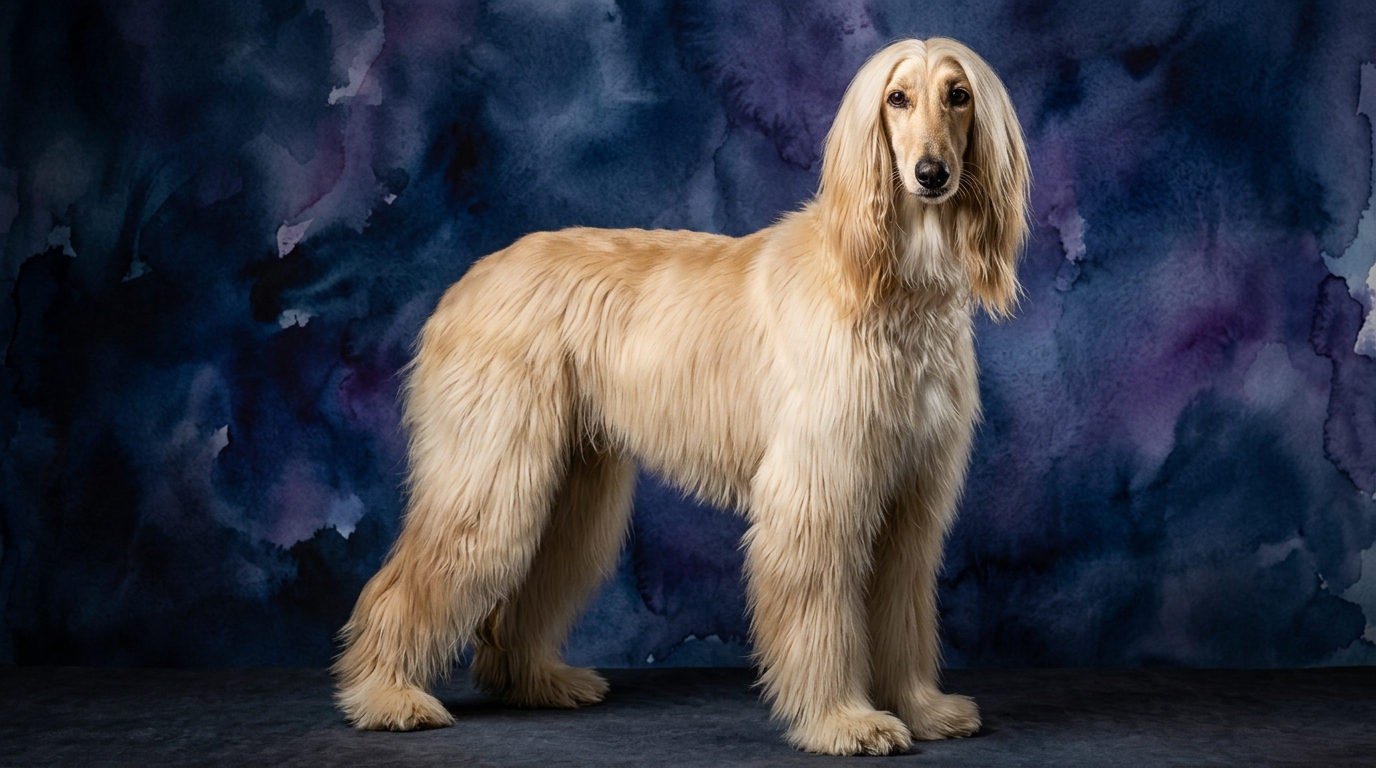
The Cosmic Pet Pet IQ Lab employs a multi-faceted approach to canine cognition, assessing five key dimensions. The Afghan Hound, a sighthound breed, holds a Coren rank of #79, indicating a specific cognitive style. Its profile includes Problem Solving at 4/5, Training Speed at 1/5, Social Intelligence at 2/5, Instinctive Drive at 5/5, and Memory at 3/5. This suggests an independent thinker with strong innate motivations but a deliberate approach to learning human-initiated commands and a selective social engagement.
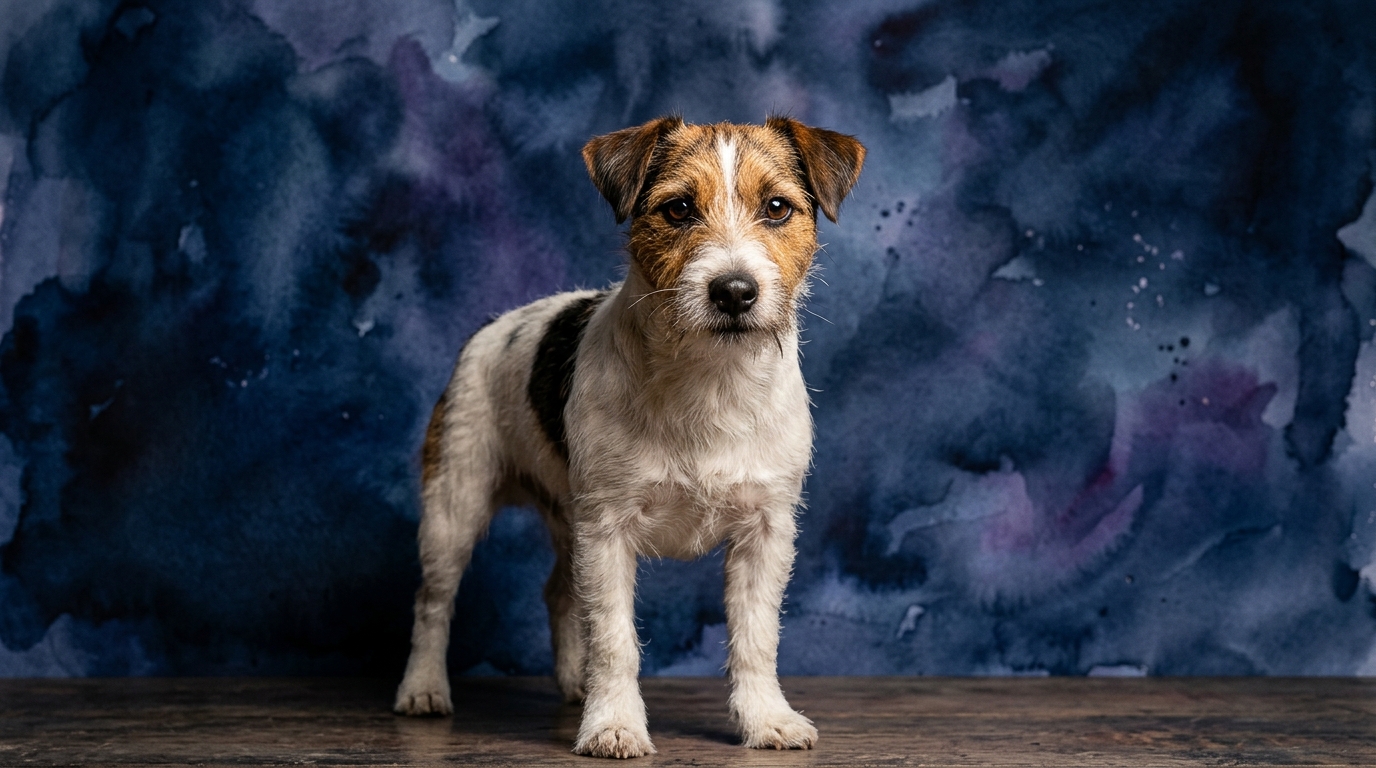
In stark contrast, the Jack Russell Terrier, a vibrant terrier breed, does not appear on the Coren ranking, often due to its working origins and more recent standardization, yet its IQ scores paint a vivid picture of its mental capabilities. Its profile boasts Problem Solving at 5/5, Training Speed at 3/5, Social Intelligence at 3/5, Instinctive Drive at 5/5, and Memory at 4/5. This indicates a highly adaptive, quick-witted canine with a strong drive to act, a notable capacity for learning, and a more interactive social disposition.
Where the Afghan Hound Excels Cognitively
Despite its lower Coren ranking, the Afghan Hound demonstrates formidable cognitive strengths, particularly in its Problem Solving (4/5) and Instinctive Drive (5/5). This breed's problem-solving prowess is not typically applied to figuring out puzzle toys or complex obedience sequences, but rather in navigating its environment with independence and strategic thought. An Afghan Hound excels at assessing terrain, finding optimal routes, and making split-second decisions during a chase, a vestige of its sighthound heritage where it needed to independently track and pursue game across vast distances without human direction. Their high instinctive drive means they are profoundly motivated by their innate urges, such as chasing moving objects or exploring, which fuels their problem-solving in real-world, self-directed scenarios.
Their memory, rated at 3/5, is sufficient for retaining important environmental cues and routines vital to their independent life, even if it doesn't translate to immediate recall of every command. They remember specific paths, the layout of their territory, and the habits of their household members, utilizing this information to navigate their world efficiently and predictably on their own terms. This breed's cognitive strengths lie in their capacity for autonomous action and their profound connection to their primal drives, allowing them to thrive in environments that respect their self-sufficiency.
Where the Jack Russell Terrier Excels Cognitively
The Jack Russell Terrier's cognitive profile showcases a breed built for active engagement and rapid adaptation, particularly evident in its top-tier Problem Solving (5/5) and robust Memory (4/5). This terrier's problem-solving is often directed towards immediate, tangible goals, whether it's figuring out how to retrieve a toy from a tight spot, bypass an obstacle to reach a perceived 'prey,' or manipulate objects to achieve a desired outcome. Their quick wit and persistent nature mean they're less likely to give up on a mental challenge, constantly experimenting with solutions until they find one that works.
Their superior memory allows them to quickly internalize patterns, remember complex sequences of commands, and recall specific events or locations with clarity. This is crucial for a working terrier that needs to remember intricate den systems or the location of quarry. Furthermore, their elevated Training Speed (3/5) and Social Intelligence (3/5) mean they are more attuned to human instruction and social cues, making them adept at learning and responding within a human-centric framework. Their instinctive drive (5/5) is equally strong, but often manifested in interactive, goal-oriented pursuits like retrieving, agility, or earthdog trials, where their natural drives are channeled into structured activities alongside their handler.
Training Dynamics: Afghan Hound vs. Jack Russell Terrier
When considering trainability, the differences between these two breeds are stark and rooted deeply in their cognitive profiles. The Afghan Hound's Training Speed of 1/5 and Social Intelligence of 2/5 indicate a dog that approaches instruction with a significant degree of independence. They are not inherently driven to please or to rapidly absorb human commands. Training an Afghan Hound requires immense patience, consistency, and a deep understanding of positive reinforcement, often needing to make the desired action seem like the dog's own idea or intrinsically rewarding. Their independent problem-solving means they might find alternative, less 'obedient' solutions to scenarios, rather than defaulting to human direction.
Conversely, the Jack Russell Terrier's Training Speed of 3/5 and Social Intelligence of 3/5 suggest a much more receptive and interactive learner. While still possessing a strong will and high instinctive drive, JRTs are generally more motivated by interaction, praise, and rewards from their human companions. They pick up new commands and routines more quickly and are often eager to participate in training sessions, viewing them as engaging challenges. Their higher social intelligence means they are more attuned to human body language and vocal cues, which facilitates communication during training. While their enthusiasm and drive can sometimes lead to distraction, their fundamental desire to engage and learn makes them significantly easier to shape through consistent, positive training methods.
Matching Breeds to Lifestyles: Active vs. Relaxed Owners
The distinct cognitive and physical needs of the Afghan Hound and Jack Russell Terrier dictate very different ideal owner profiles. The Afghan Hound, with its profound instinctive drive (5/5) for running and chasing, coupled with its independent nature, is best suited for owners who appreciate a dog with a mind of its own and can provide ample opportunities for expansive, off-leash exercise in secure areas. They require owners who understand their need for personal space and are comfortable with a dog that isn't constantly seeking interaction or instruction. A relaxed owner in the context of an Afghan Hound means one who is relaxed about traditional obedience and values a companion that is more of a majestic, self-sufficient presence than an eager-to-please partner. Their exercise needs are high-intensity but can be self-directed, making them suitable for owners who enjoy long walks or runs where the dog can stretch its legs, rather than constant interactive play.
The Jack Russell Terrier, also with an instinctive drive of 5/5, manifests this drive in a highly energetic and interactive manner. They thrive with active owners who can provide consistent mental stimulation alongside rigorous physical exercise. Their problem-solving (5/5) and memory (4/5) capacities demand engaging activities like agility, earthdog trials, puzzle toys, and extensive training, not just physical exertion. A 'relaxed' owner would likely find themselves overwhelmed by a JRT's persistent demands for engagement and activity. They are suited for owners who enjoy being hands-on, providing structure, and channeling the terrier's boundless energy and sharp mind into productive outlets, making them a fantastic fit for outdoor enthusiasts, dog sports competitors, or families dedicated to interactive play and training.
The Verdict
Choose an Afghan Hound if you appreciate an independent, elegant companion with a deep, quiet intelligence, and are prepared to accommodate its need for vast, secure spaces and a relaxed approach to traditional obedience.
Opt for a Jack Russell Terrier if you seek a highly interactive, quick-witted partner eager for constant mental and physical challenges, and are ready to commit to consistent training and engaging activities.
🧠 Find Your Pet's IQ Score
Our Pet IQ Lab assessment covers 25+ tests across 5 cognitive dimensions — personalized to your breed.
Take the Full IQ Test →Frequently Asked Questions
Is the Afghan Hound difficult to train?
Based on its Training Speed of 1/5, the Afghan Hound is considered challenging to train in traditional obedience. They are independent thinkers who require patient, consistent, and reward-based methods, often responding better when tasks appear to be their own idea.
Do Jack Russell Terriers need a lot of exercise?
Yes, with an Instinctive Drive of 5/5, Jack Russell Terriers require substantial daily exercise and mental stimulation. Their energy is boundless, demanding activities like long walks, runs, interactive play, and dog sports to keep them content and prevent boredom-related behaviors.
Which breed is better for a first-time dog owner?
Given its higher Training Speed (3/5) and Social Intelligence (3/5), the Jack Russell Terrier is generally more manageable for a first-time owner willing to dedicate significant time to training and activity. The Afghan Hound's profound independence and low training speed make it a more suitable choice for experienced dog owners.