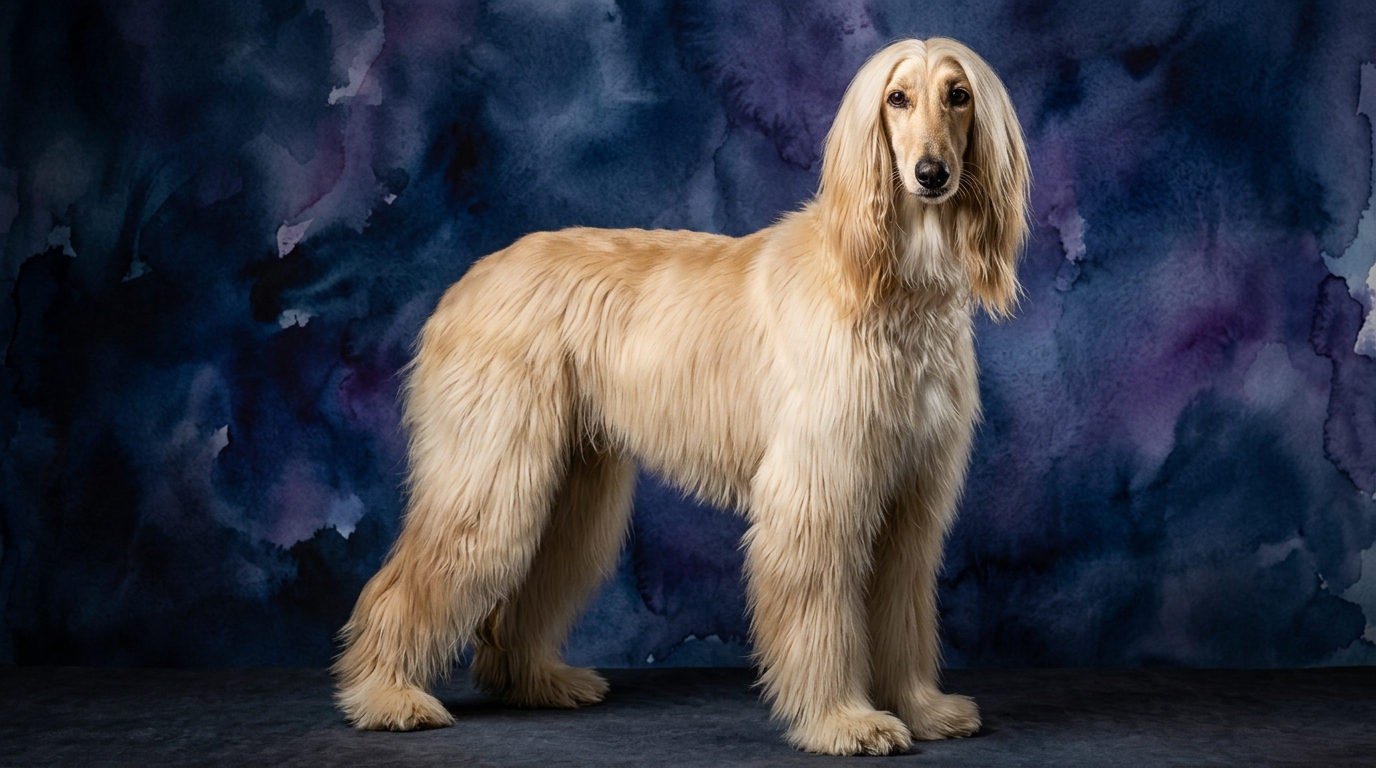
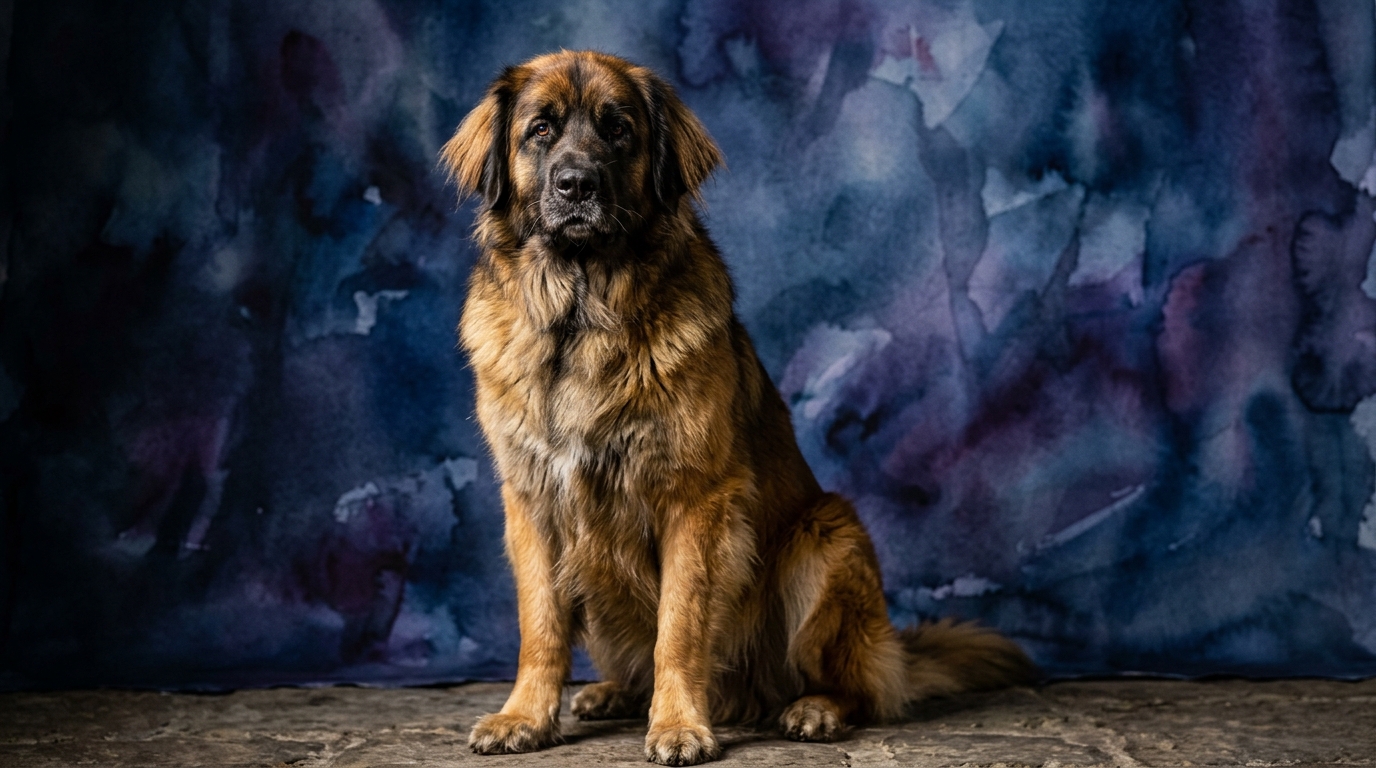
Side-by-Side Cognitive Profiles: Afghan Hound vs. Leonberger
To understand the distinct cognitive frameworks of these two breeds, The Cosmic Pet Pet IQ Lab evaluates five key dimensions of canine intelligence. The Afghan Hound, a sighthound with a Coren rank of #79, presents a unique profile shaped by its ancient heritage as a hunter in challenging terrains. Its Problem Solving score of 4/5 indicates a high capacity for independent thought and devising creative solutions, often towards its own goals. However, its Training Speed is notably low at 1/5, suggesting a strong disinclination to follow human directives quickly or consistently. Social Intelligence, at 2/5, points to a reserved nature and a preference for selective engagement rather than broad social compliance. A dominant Instinctive Drive of 5/5 highlights an overwhelming impulse to act on primal urges, particularly scent and sight pursuits. Lastly, its Memory score of 3/5 suggests an average recall ability, though often overshadowed by its powerful drive and independent nature.
The Leonberger, a giant working breed not included in Coren's ranking, presents a more balanced and cooperative cognitive blueprint. Its Problem Solving score of 3/5 indicates a moderate ability to navigate challenges, often leaning towards practical, learned solutions rather than innovative ones. Training Speed, at 3/5, suggests a willingness to learn and respond to commands at an average pace, making them more amenable to instruction. Social Intelligence also scores 3/5, reflecting a generally amiable and adaptable disposition towards both humans and other animals. An Instinctive Drive of 3/5 signifies a presence of natural urges, but these are typically manageable and less overwhelming than in the Afghan Hound. Finally, its Memory score of 3/5 aligns with the Afghan Hound, indicating an average capacity for retaining information over time.
Where the Afghan Hound Excels Cognitively
The Afghan Hound's cognitive strengths primarily lie in its exceptional Problem Solving and overwhelming Instinctive Drive. With a 4/5 in Problem Solving, these dogs are adept at navigating complex environments and devising strategies to achieve their objectives, whether it's finding a way around a fence to pursue a perceived quarry or creatively avoiding an unwanted command. This capacity for independent thought is a direct legacy of their sighthound ancestry, where they were expected to hunt autonomously, making swift decisions without human direction across vast landscapes. Their 5/5 Instinctive Drive further fuels this problem-solving prowess; when a strong instinct, such as the urge to chase, takes hold, they will employ considerable mental effort to overcome any obstacle in their path. This doesn't mean they are easy to direct, but rather that their minds are constantly active, evaluating opportunities to satisfy their deep-seated urges, demonstrating a singular focus and determination that few breeds possess.
Where the Leonberger Excels Cognitively
In contrast, the Leonberger's cognitive advantages shine in areas that foster cooperation and harmonious living. Its balanced scores in Training Speed (3/5) and Social Intelligence (3/5) are key indicators of its more amenable nature. Unlike the Afghan Hound's independent streak, the Leonberger demonstrates a greater willingness to engage with and respond to human cues, making the learning process more straightforward. Their moderate Social Intelligence means they are generally receptive to social interactions, understanding subtle communication and adapting their behavior accordingly. This makes them more pleasant companions and easier to integrate into diverse social settings. Furthermore, their moderate Instinctive Drive (3/5) suggests that while they possess natural dog behaviors, these are less likely to override learned commands or social courtesies, allowing for more consistent and predictable behavior in varied situations, a hallmark of a good working and companion dog.
Trainability: Afghan Hound vs. Leonberger
When it comes to trainability, the differences between these two breeds are stark and directly tied to their cognitive profiles. The Leonberger, with its Training Speed of 3/5 and Social Intelligence of 3/5, is generally considered much easier to train. They possess a natural inclination to please and work alongside their human companions, making them receptive to commands and consistent in their responses. Their moderate instinctive drive means they are less likely to be sidetracked by environmental stimuli, allowing them to focus on learning. Behavioral differences include a higher likelihood of sustained eye contact, quicker recall, and a more eager attitude towards repetition during training sessions.
The Afghan Hound, on the other hand, with a Training Speed of 1/5 and Social Intelligence of 2/5, presents a significant challenge to trainers. Their low training speed reflects a profound independence and a tendency to prioritize their own agenda over human directives. Their strong instinctive drive (5/5), particularly for chasing, means that once a scent or movement captures their attention, recalling them can be nearly impossible, as their drive overrides all learned commands. Real behavioral differences include a propensity for 'selective hearing,' a disinterest in repetitive tasks, and a strong preference for making their own decisions, which often conflicts with structured training goals. Patience, consistency, and creative, engaging methods are paramount when working with an Afghan Hound, and even then, absolute obedience is rarely their strong suit.
Lifestyle Suitability: Active vs. Relaxed Owners
The cognitive makeup of these breeds dictates vastly different lifestyle requirements. The Afghan Hound, driven by a 5/5 Instinctive Drive and 4/5 Problem Solving, is best suited for active owners who understand and appreciate their independent, often aloof nature. These dogs require consistent outlets for their powerful physical energy and mental stimulation, often through lure coursing, long off-leash runs in secure areas, or activities that engage their chasing instincts. A relaxed owner who expects a dog to be a consistently obedient companion will find the Afghan Hound frustrating, as their low Training Speed and Social Intelligence mean they are not prone to constant interaction or eager compliance. Owners must be prepared for a dog that often thinks for itself and might not always prioritize human companionship over its own pursuits.
Conversely, the Leonberger, with its balanced scores in Training Speed (3/5), Social Intelligence (3/5), and Instinctive Drive (3/5), is an excellent fit for owners who appreciate a more relaxed yet engaged companion. While they are large and require regular exercise, their cognitive profile suggests a more adaptable and cooperative demeanor. They thrive on being part of the family, enjoying moderate activity balanced with quiet time. Their willingness to learn and social nature makes them suitable for owners who enjoy training, family outings, and a dog that is generally responsive and eager to participate in daily life. They are less likely to bolt after a squirrel and more likely to stay by your side, making them a more 'relaxed' choice in terms of management and predictability, despite their size.
The Verdict
Choose an Afghan Hound if you are an experienced, active owner who values an independent, visually stunning companion with a unique, self-directed intellect and are prepared for significant training challenges.
Opt for a Leonberger if you desire a gentle giant, a cooperative family companion that is trainable, socially adaptable, and enjoys being an integrated part of a moderately active household.
🧠 Find Your Pet's IQ Score
Our Pet IQ Lab assessment covers 25+ tests across 5 cognitive dimensions — personalized to your breed.
Take the Full IQ Test →Frequently Asked Questions
Is the Afghan Hound difficult to live with due to its low training speed?
The Afghan Hound's low training speed (1/5) means they are highly independent and often prioritize their own instincts over human commands. While not 'difficult' in a destructive sense, they require owners who understand and respect their unique temperament and are prepared for an ongoing commitment to patience and consistent, positive reinforcement rather than expecting strict obedience.
Do Leonbergers need a lot of mental stimulation despite their moderate problem-solving score?
Yes, while their Problem Solving score is 3/5, Leonbergers are still working dogs that benefit from regular mental engagement. This can include training sessions, puzzle toys, or participating in dog sports like obedience or therapy work. Mental stimulation helps prevent boredom and reinforces their cooperative nature, contributing to their overall well-being.
How does the 'Instinctive Drive' difference impact daily life for these breeds?
The Afghan Hound's 5/5 Instinctive Drive, particularly for chasing, means secure fencing and leashed walks are crucial, as they will likely pursue perceived prey regardless of commands. The Leonberger's 3/5 Instinctive Drive is more manageable; while they have natural instincts, they are generally less overwhelming and more amenable to being redirected with training, making them more predictable in various environments.