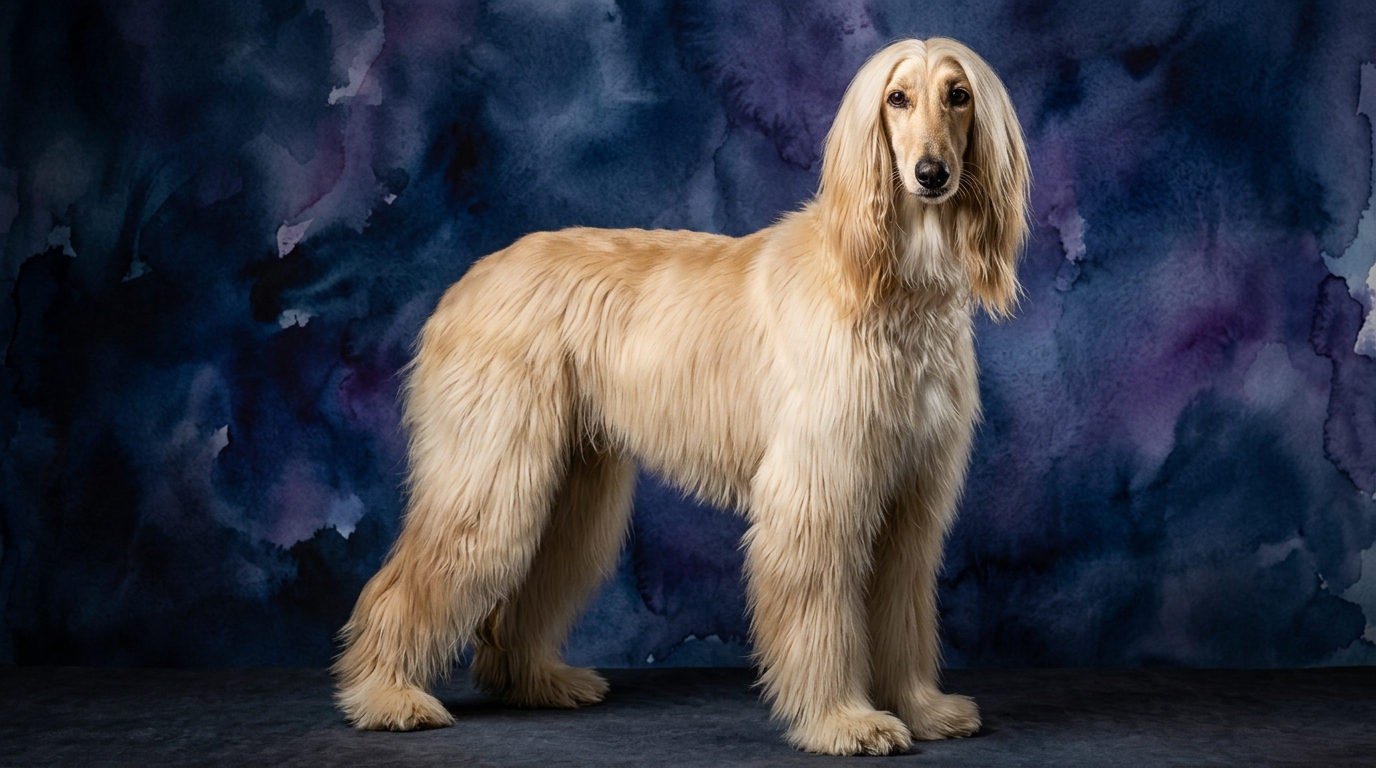

Side-by-Side IQ Profile: Afghan Hound vs. Manchester Terrier
The Afghan Hound, ranked #79 on the Coren scale, presents a distinctive cognitive blueprint. Their problem-solving ability scores an impressive 4/5, indicating a strong capacity for independent thought and strategic action, particularly when pursuing a goal. However, their training speed is a low 1/5, meaning they require extensive repetition and patience to learn commands. Social intelligence sits at 2/5, suggesting a more aloof demeanor and less reliance on human social cues, while their instinctive drive is an unparalleled 5/5, reflecting an intense, innate urge to chase and track. Memory is rated at 3/5, an average capacity for retaining information.
In contrast, the Manchester Terrier, without a specific Coren ranking, demonstrates a more balanced cognitive profile. Their problem-solving scores 3/5, indicating a moderate ability to figure things out, but perhaps without the deep, independent strategizing of the Afghan. Training speed is a more accommodating 3/5, meaning they learn at an average pace and are generally more receptive to instruction. Social intelligence also stands at 3/5, suggesting a good aptitude for understanding human social cues and forming engaged relationships. Their instinctive drive is 3/5, present but less overwhelming than a sighthound's, often manifesting as a keen prey drive. Memory, like the Afghan, is rated at 3/5, indicating a solid ability to recall past experiences.
Where the Afghan Hound Excels Cognitively
The Afghan Hound's cognitive strengths primarily lie in their exceptional problem-solving (4/5) and formidable instinctive drive (5/5). These traits combine to make them masters of independent action, particularly in scenarios that tap into their sighthound heritage. For instance, an Afghan Hound can meticulously plan a chase, navigating complex terrains and anticipating prey movements with remarkable precision, all without human input. Their high problem-solving score reflects an ability to strategize and adapt on the fly during a pursuit, rather than waiting for direction.
This independent problem-solving means they excel at tasks requiring self-reliance and initiative. They are not dogs that look to their owner for every decision; instead, they process information and execute actions based on their own assessment of a situation. While this can be a challenge in obedience training, it is a profound asset in activities like lure coursing or navigating expansive, open environments where their keen senses and quick, strategic decisions are paramount. Their 5/5 instinctive drive is the engine behind this, a powerful, inherent motivation that fuels their cognitive processes.
Where the Manchester Terrier Shines Cognitively
The Manchester Terrier's cognitive advantages are rooted in their balanced and often more cooperative intellectual makeup. Their 3/5 training speed and 3/5 social intelligence are significant assets, indicating a dog that is generally more receptive to human instruction and better at integrating into a family unit. Unlike the independent Afghan, the Manchester Terrier is more inclined to engage with and respond to its human companions, making them more adaptable to various living situations and training methods.
Their moderate problem-solving (3/5) is sufficient for everyday challenges, allowing them to learn routines, navigate household environments, and engage in interactive puzzle toys effectively. This isn't the deep, specialized problem-solving of a sighthound strategizing a hunt, but rather a practical, adaptable intelligence. Their balanced instinctive drive (3/5) means they possess a natural curiosity and prey drive without it constantly overriding their desire for human interaction, making them enjoyable participants in a wider range of activities from agility to companion roles.
Training Dynamics: A Study in Contrasts
Training an Afghan Hound demands immense patience and a deep understanding of their unique cognitive profile. Their 1/5 training speed means they require an extraordinary number of repetitions to grasp commands, and their independent nature often makes them appear uninterested in pleasing. This isn't a lack of intelligence, but rather a cognitive preference for self-directed action over human-centric obedience. Real behavioral differences include their tendency to 'tune out' repetitive commands and their strong instinctive drive often overriding learned behaviors when stimulated by movement or scent. Positive reinforcement, short engaging sessions, and understanding their inherent independence are crucial.
Conversely, the Manchester Terrier's 3/5 training speed and 3/5 social intelligence make them considerably more amenable to training. They learn at an average pace and are generally more attuned to their owner's cues, eager to participate and respond. While they possess a terrier's characteristic tenacity, their desire to engage and their ability to quickly associate actions with rewards make them much more biddable. They thrive on consistent, engaging training that taps into their moderate problem-solving and social intelligence, making them suitable for various dog sports and obedience challenges where the Afghan Hound might prove a formidable, if not impossible, student.
Ideal Owners: Active Engagement vs. Independent Spirit
The Afghan Hound is best suited for owners who appreciate a dog's independent spirit and are prepared for a companion that often makes its own decisions. These are not 'off-leash' dogs in open, unfenced areas due to their extreme instinctive drive (5/5). Owners must provide vast, secure spaces for exercise, such as a large, fenced yard or access to safe lure coursing fields, to satisfy their physical and cognitive need for running and chasing. They require owners who understand that their low training speed (1/5) means obedience will be a lifelong, patient endeavor, and who value a dog for its majestic presence and unique, often aloof, affection rather than its eagerness to please.
The Manchester Terrier, with its balanced cognitive profile, thrives with active owners who enjoy engaging in varied activities and appreciate a dog that is responsive and integrated into family life. Their moderate training speed (3/5) and social intelligence (3/5) mean they are excellent candidates for agility, obedience, or simply being an engaged companion on walks and adventures. They are energetic and require regular physical and mental stimulation, but their cognitive makeup allows for a more cooperative partnership. Owners who want a dynamic, communicative dog that learns readily and enjoys participation will find a Manchester Terrier a rewarding companion.
The Verdict
Choose an Afghan Hound if you are an experienced owner seeking a majestically independent companion, prepared for significant training commitment and able to provide extensive, secure space for their powerful instinctive drives.
Opt for a Manchester Terrier if you desire a highly engaged, responsive companion for varied activities, valuing a dog that learns readily and integrates smoothly into an active, social household.
🧠 Find Your Pet's IQ Score
Our Pet IQ Lab assessment covers 25+ tests across 5 cognitive dimensions — personalized to your breed.
Take the Full IQ Test →Frequently Asked Questions
Are Afghan Hounds truly difficult to train for basic obedience?
Yes, Afghan Hounds are considered one of the most challenging breeds for traditional obedience, primarily due to their 1/5 training speed and independent problem-solving. They learn slowly and their strong instinctive drives often take precedence over human commands, requiring exceptional patience and creative, positive reinforcement methods.
Which breed is generally better with children, based on their social intelligence?
The Manchester Terrier, with a social intelligence score of 3/5, is generally more adept at understanding and responding to human social cues, making them often a better fit for families with children. Afghan Hounds, scoring 2/5 in social intelligence, tend to be more aloof and less tolerant of boisterous child play, preferring a quieter environment.
Do Manchester Terriers require as much exercise as Afghan Hounds?
While both breeds are energetic, their exercise needs differ in nature. Afghan Hounds require vast, secure spaces for sustained, high-speed running due to their 5/5 instinctive drive. Manchester Terriers need regular, vigorous exercise, but their 3/5 instinctive drive means their needs can often be met with varied activities like long walks, fetch, or dog sports rather than continuous, open-field sprinting.