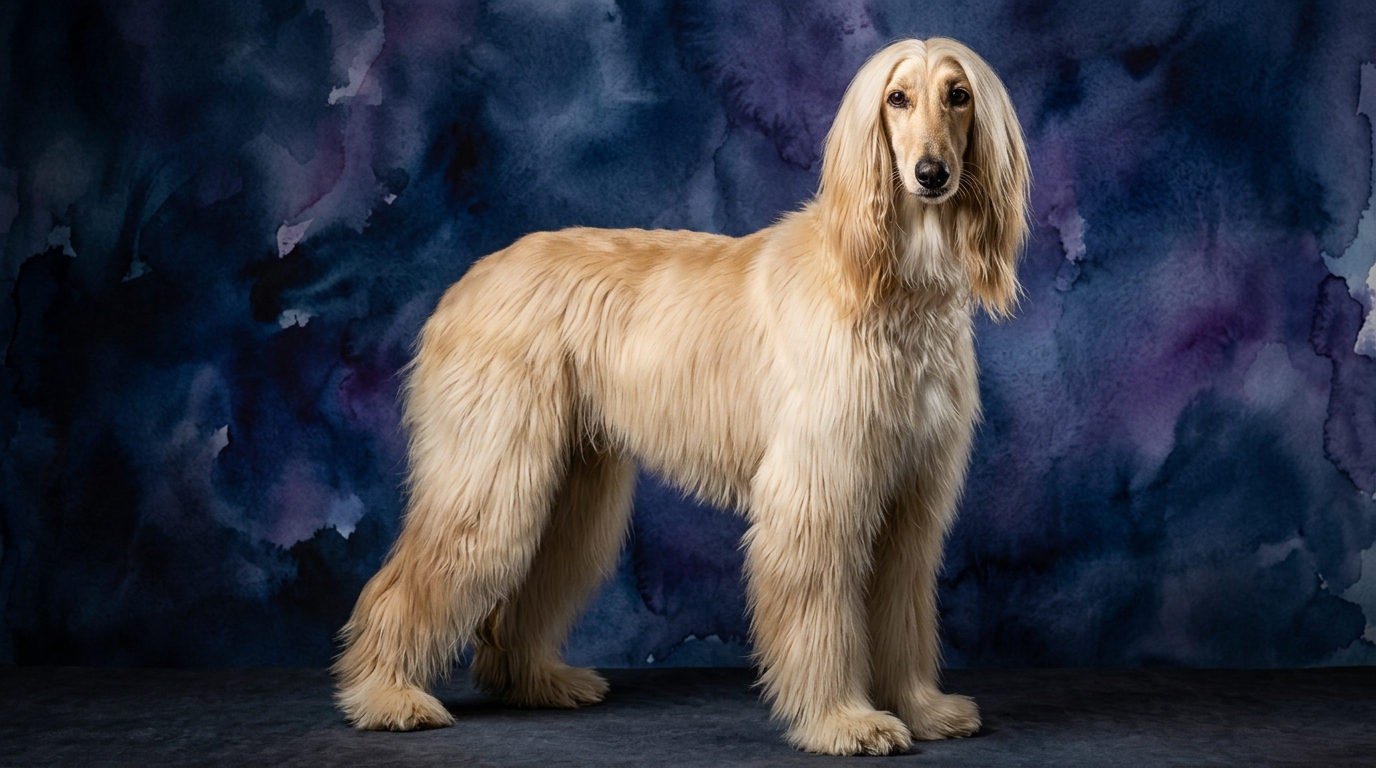
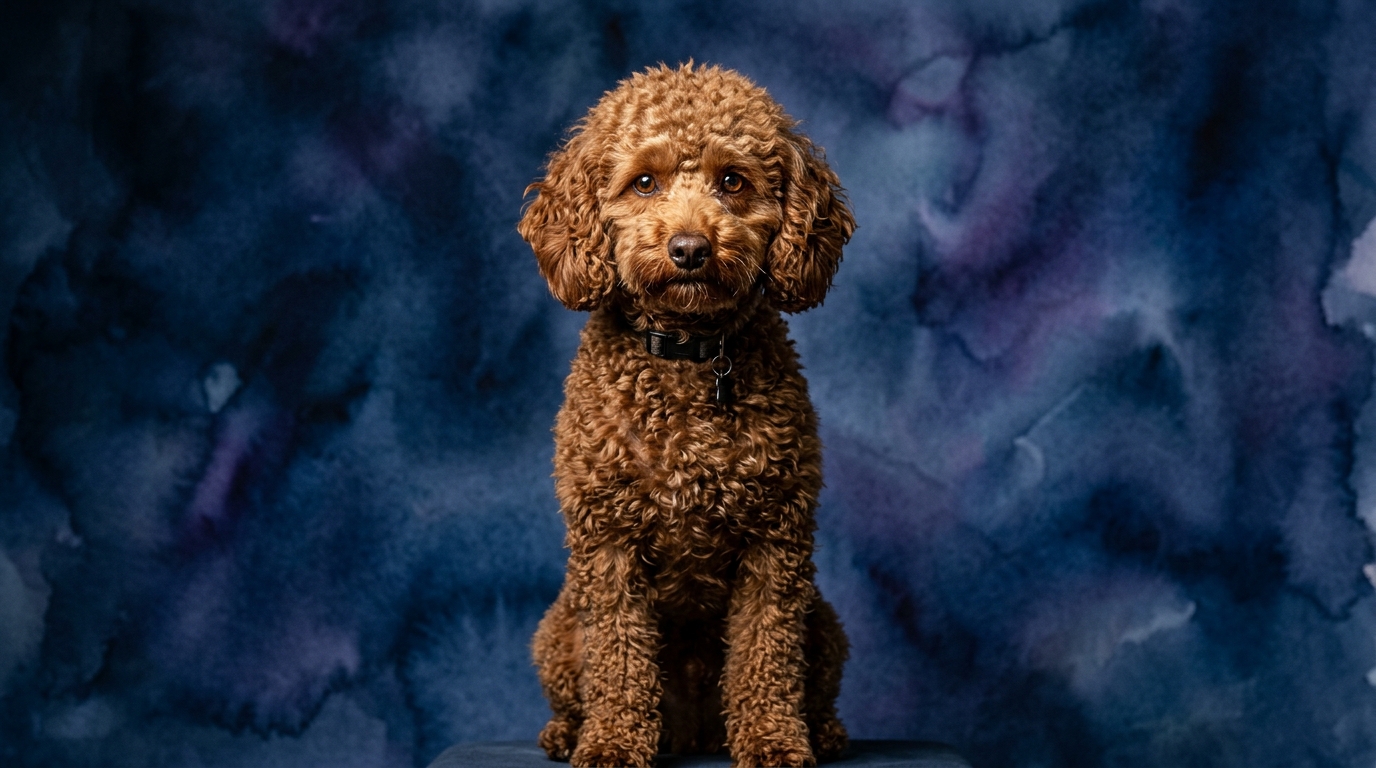
Side-by-Side Cognitive Profiles
The Cosmic Pet Pet IQ Lab assesses canine intelligence across five critical dimensions, painting a nuanced picture of each breed's cognitive strengths and inclinations. The Afghan Hound, ranking #79 on Coren's scale, exhibits a respectable problem-solving capacity at 4/5, indicating an ability to navigate complex situations and figure things out, albeit often on its own terms. Its training speed, however, stands at a stark 1/5, suggesting a significant challenge in absorbing and consistently executing commands. Social intelligence registers at 2/5, implying a more independent nature and less reliance on human cues for guidance. Where the Afghan Hound truly shines is its instinctive drive, scoring a perfect 5/5, a testament to its deep-seated hunting heritage and motivation for scent-driven pursuits. Memory is moderate at 3/5, meaning it retains information adequately but may require more repetition for lasting recall.
In stark contrast, the Miniature Poodle, an impressive #2 on Coren's ranking, presents a profile geared towards rapid learning and adaptability. Its problem-solving ability is exceptional at 5/5, demonstrating a profound capacity for abstract thought and strategic thinking. Training speed mirrors this at 5/5, indicating an eagerness and proficiency in acquiring new behaviors and commands with minimal effort. Social intelligence is moderate at 3/5, suggesting a balanced approach to interaction, attentive to human direction but not overly dependent. The Poodle's instinctive drive is 3/5, present but less overwhelming than that of a hound, allowing for focus on tasks beyond primal urges. Its memory is also top-tier at 5/5, ensuring that once a lesson is learned, it is retained effectively over time.
Where the Afghan Hound Exhibits Distinct Cognitive Strengths
While often celebrated for its majestic appearance, the Afghan Hound possesses a cognitive strength rooted deeply in its ancestral purpose: an unparalleled instinctive drive. Scoring 5/5 in this dimension, this breed is profoundly motivated by its sensory input, particularly scent and sight. This isn't merely about chasing squirrels; it's about an innate capacity for independent decision-making in pursuit of a perceived goal, often without direct human instruction. This drive means that an Afghan Hound can meticulously track a scent trail over long distances or survey a landscape with an intrinsic understanding of potential prey movement, abilities that are highly complex and require significant processing power, even if they don't manifest as 'obedience' in a traditional sense. Their problem-solving score of 4/5, paired with this drive, means they are adept at navigating physical obstacles or strategizing how to reach a desired object if their instincts are engaged, rather than waiting for human guidance. This self-reliant problem-solving, though slower to train, is a testament to their deep cognitive resourcefulness in specific, instinct-driven contexts.
This breed's cognitive prowess is less about conforming to human expectations and more about executing complex, self-directed tasks. An Afghan Hound's ability to independently assess a situation and act upon its powerful instincts, such as finding its way home through unfamiliar territory or persistently working to access a hidden treat, showcases a form of cognitive resilience and determination. Their lower social intelligence means they are less swayed by human emotional cues or direct commands when their instincts take over, requiring a different approach to engagement that respects their inherent autonomy rather than attempting to override it. This focus allows them to excel in pursuits that demand singular focus and self-motivation, such as lure coursing, where their deep instinctive drive is a significant asset.
Where the Miniature Poodle Displays Cognitive Superiority
The Miniature Poodle's cognitive profile positions it as a highly adaptable and eager learner, excelling in areas where the Afghan Hound presents challenges. With perfect scores of 5/5 in both problem-solving and training speed, the Poodle is adept at quickly grasping new concepts and applying them. This means they can learn complex sequences of commands, understand abstract cues, and generalize learned behaviors to novel situations with remarkable ease. Their capacity for rapid acquisition of skills makes them incredibly versatile, capable of excelling in various dog sports like agility, obedience, and even intricate trick training, which demands not just physical coordination but significant mental processing and memory. They don't just learn *what* to do; they seem to understand *why* they are doing it, often anticipating trainers' intentions.
Furthermore, the Miniature Poodle's outstanding memory (5/5) ensures that once a lesson is learned, it is retained with high fidelity, reducing the need for constant reinforcement. This cognitive durability makes them exceptionally reliable in performing tasks they've mastered. Their social intelligence, while not as high as their problem-solving or training speed, is sufficient (3/5) to make them attentive to human communication and eager to collaborate, which further enhances their trainability. This blend of rapid learning, strong retention, and willingness to engage makes the Miniature Poodle a breed that thrives on mental challenges and enjoys the process of learning and performing alongside their human companions, showcasing a distinct advantage in cooperative cognitive tasks.
Training: Afghan Hound vs. Miniature Poodle Ease
When it comes to ease of training, the difference between the Afghan Hound and the Miniature Poodle is profound, directly attributable to their respective training speed and instinctive drive scores. The Miniature Poodle, with its 5/5 training speed, is often described as a dream to teach. They pick up new commands rapidly, often needing only a few repetitions to understand what is expected. This speed is complemented by their high problem-solving ability, meaning they can quickly generalize learned behaviors and apply them in different contexts. Their moderate instinctive drive means they are generally less distracted by environmental stimuli and more focused on their human partners during training sessions. This breed thrives on mental engagement and positive reinforcement, making training a rewarding and efficient process for both dog and owner, leading to a wide repertoire of learned behaviors and reliable command execution.
In contrast, the Afghan Hound's 1/5 training speed rating signifies a significant challenge. This isn't due to a lack of intelligence, but rather a profoundly independent nature and an overwhelming instinctive drive (5/5). While they possess problem-solving skills (4/5), their high drive means they are often more interested in pursuing a scent or a visual stimulus than in conforming to human commands. Behavioral differences manifest as a perceived stubbornness; an Afghan Hound might understand a command perfectly but choose not to execute it if it conflicts with a more compelling instinct or if they simply don't see the immediate value. Training requires immense patience, consistency, and a deep understanding of their sighthound motivations, often relying on high-value rewards and engagement techniques that make the desired behavior more appealing than their innate urges. Owners must manage an expectation of slower progress and a need for creative, engaging methods to keep an Afghan Hound interested and cooperative.
Matching Breeds to Owner Lifestyles
Understanding the cognitive profiles of these two breeds is crucial for matching them with suitable owner lifestyles. The Afghan Hound, with its powerful instinctive drive and independent problem-solving, is an ideal companion for active owners who appreciate a dog with a strong will and a need for engaging, instinct-driven activities. This breed requires consistent, vigorous exercise, preferably in a securely fenced area where they can run freely and stretch their long legs without the risk of bolting after perceived prey. Owners who enjoy lure coursing, long hikes in varied terrain, or simply providing ample space for independent exploration will find the Afghan Hound a rewarding, albeit challenging, partner. Their lower social intelligence means they are not typically 'velcro dogs,' offering a more dignified and less overtly clingy companionship. They suit individuals who respect a dog's autonomy and are prepared for a dog that sometimes prioritizes its own agenda over human directives, thriving in an environment that caters to their inherent sighthound tendencies.
Conversely, the Miniature Poodle's superior problem-solving, training speed, and memory make it an excellent fit for owners who are either active and enjoy dog sports, or more relaxed owners who desire a highly trainable and mentally engaged companion for home life. For active owners, the Poodle excels in agility, obedience, rally, and even scent work, all of which provide crucial mental stimulation that this breed craves. Their moderate instinctive drive means they are less likely to be overwhelmed by environmental distractions during these activities. For more relaxed owners, a Miniature Poodle can be content with consistent daily walks and regular interactive play and training sessions at home that challenge their intellect. They thrive on learning new tricks and participating in family activities, enjoying close companionship and the opportunity to use their keen minds. This adaptability makes the Miniature Poodle suitable for a wider range of living situations and owner engagement levels, provided their mental and physical needs are adequately met through structured activities and positive interaction.
The Verdict
Choose the Afghan Hound if you are an experienced, active owner who values an independent, majestic companion with a powerful instinctive drive for outdoor pursuits and are prepared for a unique training journey.
Opt for the Miniature Poodle if you seek a highly trainable, versatile, and mentally agile companion for family life, dog sports, or simply a cooperative partner eager to learn and engage with you.
🧠 Find Your Pet's IQ Score
Our Pet IQ Lab assessment covers 25+ tests across 5 cognitive dimensions — personalized to your breed.
Take the Full IQ Test →Frequently Asked Questions
Is an Afghan Hound difficult to train?
Yes, an Afghan Hound can be challenging to train due to its exceptionally low training speed (1/5) and very high instinctive drive (5/5). They are independent thinkers who may prioritize their innate urges over human commands, requiring significant patience and creative, consistent training methods.
Do Miniature Poodles need a lot of mental stimulation?
Absolutely, Miniature Poodles possess high problem-solving (5/5) and memory (5/5) abilities, making them thrive on mental engagement. Without adequate mental challenges, they can become bored, so regular training, puzzle toys, and interactive play are essential for their well-being.
Which breed is better for first-time dog owners?
The Miniature Poodle is generally a more suitable choice for first-time dog owners due to its high trainability and eagerness to please. The Afghan Hound's independent nature and specific training needs often require an owner with prior experience and a deep understanding of sighthound behavior.