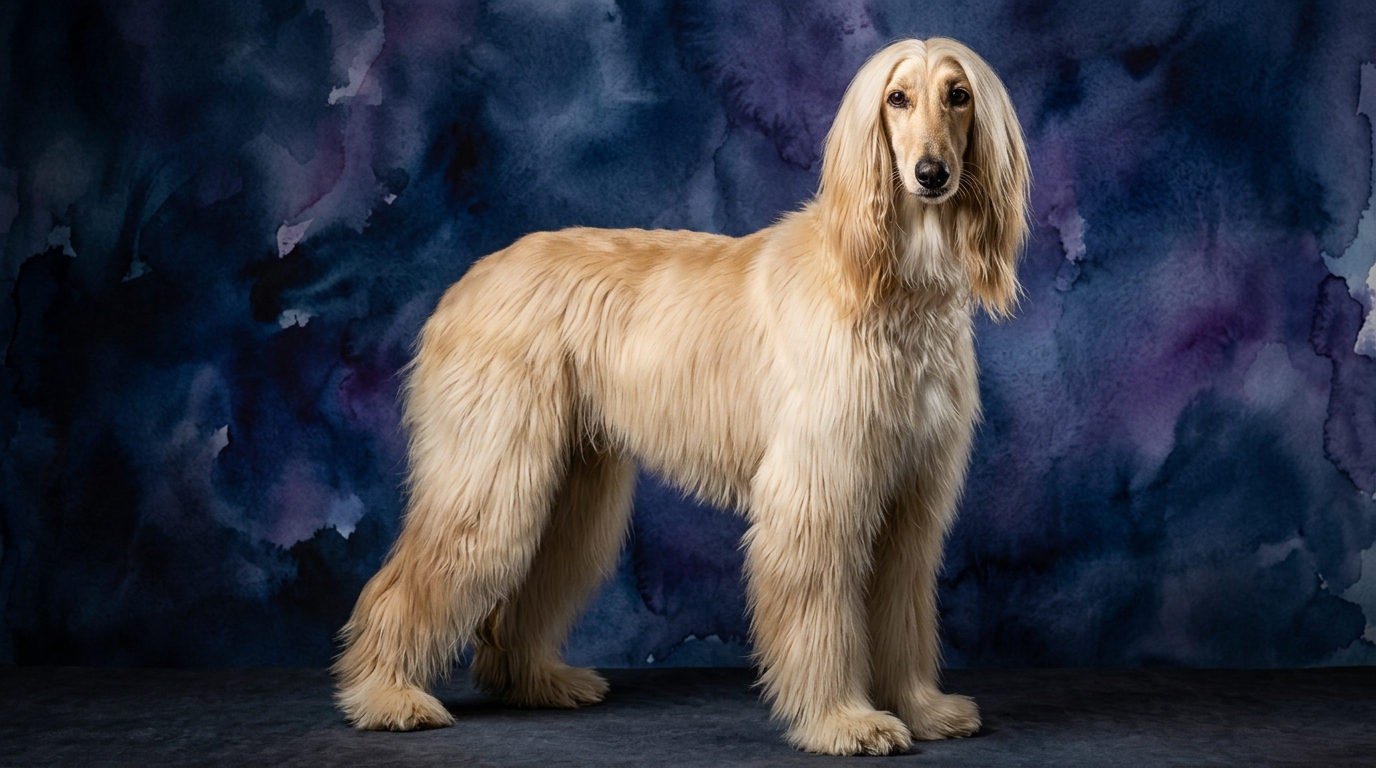
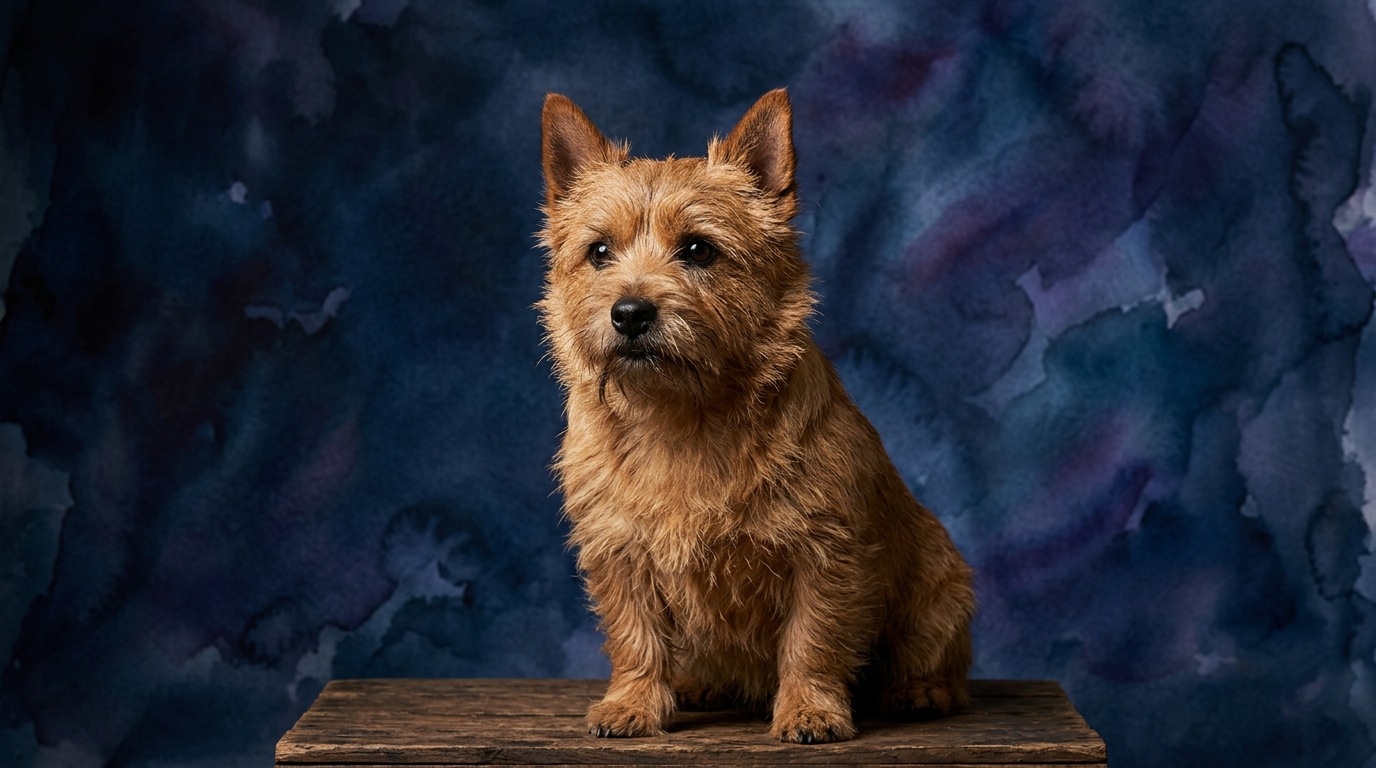
Side-by-Side IQ Profile: Afghan Hound vs. Norwich Terrier
At The Cosmic Pet Pet IQ Lab, we evaluate canine intelligence across five key dimensions, revealing fascinating insights into each breed's unique cognitive makeup. The Afghan Hound, originating as a sighthound, is ranked #79 by Coren, indicating a specific type of working intelligence. Its profile includes Problem Solving 4/5, Training Speed 1/5, Social Intelligence 2/5, Instinctive Drive 5/5, and Memory 3/5. This suggests a dog with strong independent thought and profound natural drives, but one that approaches human-directed learning and social interaction on its own terms.
In contrast, the Norwich Terrier, a robust terrier breed, does not have a formal Coren ranking but displays a balanced and adaptable cognitive blueprint. Its scores are Problem Solving 3/5, Training Speed 3/5, Social Intelligence 3/5, Instinctive Drive 3/5, and Memory 3/5. This profile indicates a dog with solid all-around cognitive capabilities, showing moderate aptitudes across the board that often translate to a more cooperative and socially engaged companion. The differences between these two breeds highlight how evolutionary purpose profoundly shapes the canine mind.
The Afghan Hound's Problem Solving at 4/5 means it possesses a strong capacity for independent thought and figuring out complex situations, often in pursuit of a goal, like navigating obstacles to reach a desired outcome. Its Training Speed of 1/5 indicates that learning new commands or routines can be a lengthy process, often requiring significant patience due to a strong independent streak. Social Intelligence at 2/5 suggests that while capable of deep bonds, their social interactions can be selective, preferring to operate on their own terms. An Instinctive Drive of 5/5 means their drive to chase and pursue moving objects is paramount, often overriding other cognitive processes. Memory at 3/5 is adequate for retaining significant experiences and preferred routines.
For the Norwich Terrier, Problem Solving at 3/5 demonstrates a moderate ability to solve problems, often using tenacity and keen senses. Training Speed at 3/5 means they pick up new commands and routines at a reasonable pace, responding well to positive reinforcement. Social Intelligence at 3/5 generally enjoys social interaction and is adept at reading human cues, thriving in family environments. Instinctive Drive at 3/5, while present, is generally more manageable than a sighthound's, allowing for easier redirection. Memory at 3/5 ensures a solid recall for routines, commands, and important associations, influencing future interactions and learning.
Where the Afghan Hound Wins Cognitively
The Afghan Hound’s formidable Instinctive Drive, rated at a perfect 5/5, is a profound cognitive strength. Originating as sighthounds, their brains are exquisitely wired for scanning horizons, identifying distant movement, and executing swift, determined pursuit. This isn't merely a physical attribute; it's a cognitive specialization, allowing them to filter out distractions and focus intensely on a perceived target with unparalleled single-mindedness. This cognitive trait makes them exceptional at tasks requiring independent initiative and a strong self-directed purpose, such as lure coursing, where their natural instincts are harnessed and celebrated.
Furthermore, their Problem Solving ability, at 4/5, when applied to their own interests, showcases a sophisticated capacity for independent thought. Unlike breeds that might wait for instructions, an Afghan Hound can ingeniously devise strategies to achieve a desired outcome, whether it's opening a gate, finding a comfortable sunbeam, or outmaneuvering a perceived obstacle. This isn't about solving human-set puzzles, but rather about leveraging their environmental understanding and inherent cunning to navigate their world on their own terms, demonstrating a high degree of situational awareness and adaptive reasoning when intrinsically motivated.
Where the Norwich Terrier Wins Cognitively
The Norwich Terrier excels in its balanced and adaptable cognitive profile, particularly in areas that foster harmonious human-animal partnerships. Their Training Speed, rated at 3/5, is a clear advantage, indicating a quicker assimilation of new commands and routines compared to the Afghan Hound. This isn't just about repetition; it reflects a greater intrinsic motivation to engage with human instruction and a readiness to form associative links between actions and consequences, making the learning process more fluid and rewarding for both dog and owner.
Complementing this is their Social Intelligence, also 3/5, which enables them to better interpret and respond to human social cues. This capacity allows for more nuanced interactions, facilitating cooperative play, shared attention, and a deeper understanding of household dynamics. While the Afghan Hound might operate more independently, the Norwich Terrier often thrives on social interaction, using its cognitive abilities to integrate seamlessly into a family unit and respond empathetically to its human companions' moods and desires. Their moderate Instinctive Drive (3/5), while present, is also a win in a domestic context, as it's less prone to overriding learned behaviors, making them generally more amenable to redirection and control in varied environments.
Which is Easier to Train and Why
When comparing ease of training, the Norwich Terrier clearly holds an advantage due to its balanced cognitive scores in Training Speed (3/5) and Social Intelligence (3/5). These breeds possess a natural inclination to engage with their human counterparts, often seeking to understand and comply with instructions. Their quicker learning curve means they form associations between commands and actions more readily, and they are generally more receptive to positive reinforcement methods. This responsiveness stems from a desire for social connection and a willingness to cooperate, which makes teaching basic obedience, tricks, or even complex tasks a more straightforward and less time-consuming endeavor.
In stark contrast, the Afghan Hound's Training Speed (1/5) coupled with its lower Social Intelligence (2/5) presents a unique training challenge. Their inherent independence and profound Instinctive Drive (5/5) mean they often prioritize their own perceptions and impulses over human directives. While they are capable of understanding, their motivation to *perform* a command on cue is often conditional. They require immense patience, creative engagement, and a deep understanding of their sighthound nature to achieve reliable obedience. Training an Afghan Hound is less about teaching them “what” to do, and more about finding the right motivation to convince them “why” they should do it, often involving high-value rewards and making training sessions feel like a game rather than a chore. Their strong prey drive means that in an uncontrolled environment, a command might be instantly forgotten if a squirrel appears.
Which Suits Active Owners vs. Relaxed Owners
For active owners who enjoy engaging in specific, high-energy activities or those who appreciate a dog with a strong, independent spirit, the Afghan Hound presents a compelling choice. Their supreme Instinctive Drive (5/5) means they thrive when given outlets for their natural sighthound behaviors, such as lure coursing, long, secure runs, or activities that simulate a chase. These are not dogs content with a casual stroll; they require opportunities to stretch their powerful bodies and engage their keen senses. Their independent Problem Solving (4/5) also means they appreciate mental challenges that allow them to figure things out on their own, making them suitable for owners who value a dog's self-directed exploration rather than constant instruction. A relaxed owner might find their energetic bursts and independent tendencies overwhelming, as their exercise needs are substantial and their training requires a dedicated, proactive approach to management.
The Norwich Terrier, with its balanced cognitive profile, is remarkably adaptable and can suit a wider range of lifestyles, including those of more relaxed owners who still appreciate engagement. Their moderate Instinctive Drive (3/5) means they enjoy walks and playtime but aren't typically driven by an overwhelming need for intense, specialized exercise like the Afghan. Their higher Social Intelligence (3/5) means they are generally content to be involved in family activities, whether it's a game of fetch in the yard, a walk around the neighborhood, or simply cuddling on the couch. They are curious and alert, enjoying mental stimulation through training or puzzle toys, but their needs are often more easily met within a typical family routine. An owner who prefers a dog that is generally biddable, sociable, and doesn't require constant, high-intensity physical outlets would likely find the Norwich Terrier a more harmonious companion.
The Verdict
Choose the Afghan Hound if you are an experienced, patient owner dedicated to understanding and channeling a sighthound's profound independent spirit and intense instinctive drives, providing ample space for their unique cognitive expressions.
Opt for the Norwich Terrier if you seek a resilient, sociable companion with a balanced cognitive profile, eager to participate in family life and offering a more straightforward and cooperative training experience for a variety of lifestyles.
🧠 Find Your Pet's IQ Score
Our Pet IQ Lab assessment covers 25+ tests across 5 cognitive dimensions — personalized to your breed.
Take the Full IQ Test →Frequently Asked Questions
Is the Afghan Hound truly difficult to train, or just independent?
The Afghan Hound isn't unintelligent, but possesses a strong independent streak and profound instinctive drives that often override a desire to please. Training requires immense patience, understanding of their sighthound nature, and finding high-value motivations rather than expecting immediate compliance.
Can a Norwich Terrier live in an apartment?
Yes, a Norwich Terrier can adapt well to apartment living provided they receive adequate daily exercise and mental stimulation. Their moderate instinctive drive and social nature mean they thrive on companionship and structured activity, rather than requiring vast outdoor spaces.
How do their problem-solving abilities differ in real-world scenarios?
An Afghan Hound's problem-solving often manifests in independent strategies to achieve a personal goal, like escaping a yard to explore, driven by instinct. A Norwich Terrier's problem-solving is typically more practical and adaptable to human-directed tasks, such as figuring out a puzzle toy or navigating a new environment with curiosity.