
Side-by-Side Cognitive Profiles
To understand the unique cognitive landscapes of the Afghan Hound and the Russian Toy, The Cosmic Pet Pet IQ Lab employs a multi-dimensional framework. We assess problem-solving, training speed, social intelligence, instinctive drive, and memory, providing a nuanced view of their mental capabilities and behavioral tendencies.
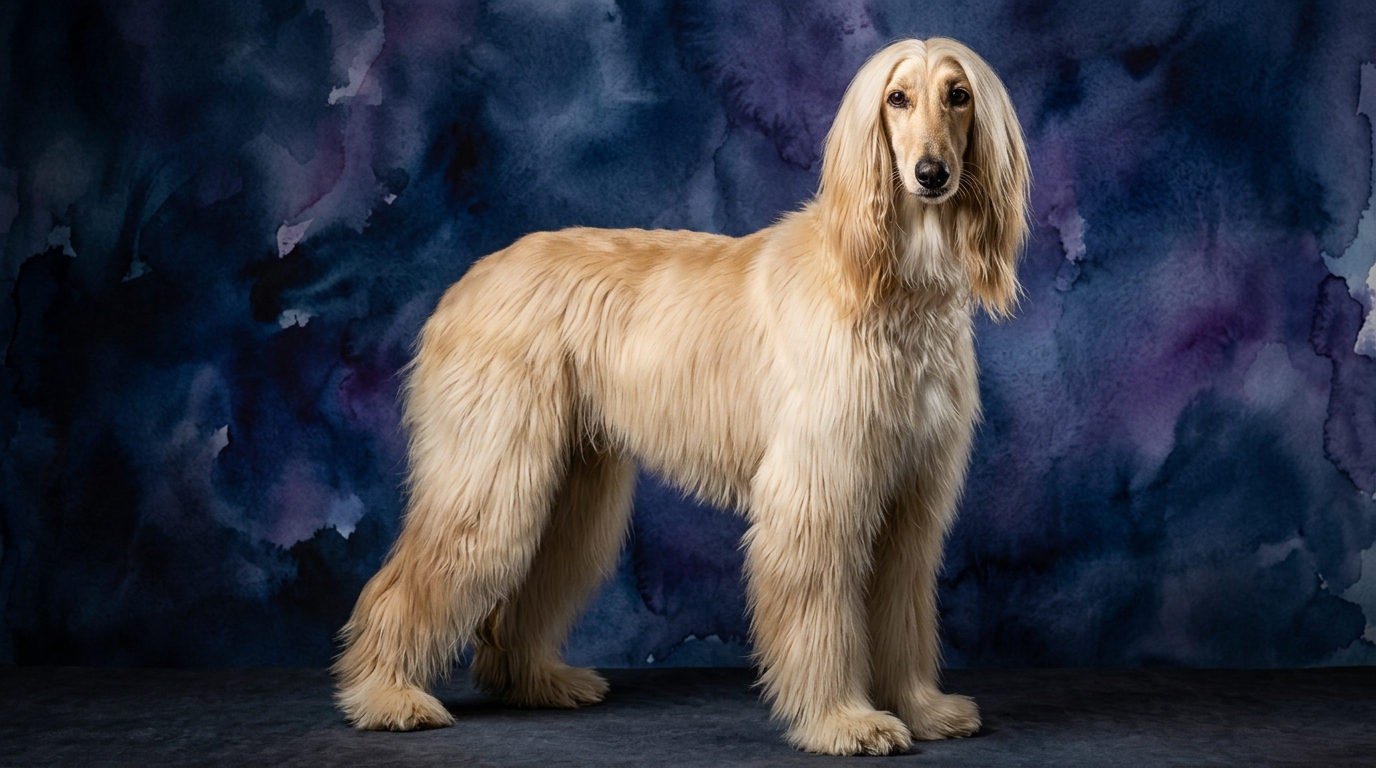
**Afghan Hound:** This sighthound is ranked #79 by Coren, indicating a specific cognitive makeup rather than a measure of overall capacity. Their **Problem Solving (4/5)** is robust, particularly in autonomous decision-making related to pursuit. **Training Speed (1/5)** is notably low, reflecting their independent nature and lack of motivation for repetitive tasks. **Social Intelligence (2/5)** suggests a reserved demeanor, often aloof even with family. A powerful **Instinctive Drive (5/5)** dominates their behavior, centered on chasing. Their **Memory (3/5)** is moderate, capable of retaining routines but often overridden by stronger instincts.
**Russian Toy:** While not Coren-ranked, this toy breed exhibits a distinct cognitive profile. Their **Problem Solving (3/5)** is moderate, demonstrating adaptability in navigating their environment and social situations. **Training Speed (3/5)** is moderate, indicating a greater willingness to engage in learning and respond to guidance. **Social Intelligence (3/5)** is also moderate, showing a good capacity for reading human cues and forming interactive bonds. Their **Instinctive Drive (3/5)** is moderate, present but generally manageable in a domestic setting. Like the Afghan Hound, their **Memory (3/5)** is moderate, aiding in their ability to learn and adapt to routines.
Where the Afghan Hound Excels Cognitively
The Afghan Hound's cognitive strengths lie in its profound independent problem-solving and unparalleled instinctive drive. Their 4/5 rating in problem-solving reflects a historical necessity; as sighthounds, they were bred to make split-second decisions in pursuit of prey across vast, varied landscapes, often far from their human handler. This isn't about solving puzzle toys but about navigating complex, dynamic environments autonomously. They excel at assessing a situation and acting decisively based on their own judgment, a trait that demands respect rather than redirection.
Their 5/5 instinctive drive is a testament to this heritage, manifesting as an intense focus on movement and a powerful urge to chase, which, while challenging in a domestic setting, is a pinnacle of their specialized cognitive programming. This deep-seated drive means they possess an innate, almost single-minded determination when a chase instinct is triggered, a cognitive state few other breeds can match in intensity. This focus allows them to process visual stimuli with exceptional speed and accuracy, making them masters of the chase.
Where the Russian Toy Excels Cognitively
The Russian Toy shines in areas that prioritize human-canine collaboration and domestic adaptability, particularly in training speed and social intelligence. With a 3/5 rating in training speed, they are significantly more amenable to learning and retaining commands than the Afghan Hound, a trait that makes them highly responsive to positive reinforcement and varied training approaches. Their willingness to engage and moderate drive means they are generally keen to participate in learning activities and delight in successfully performing tasks for their owners.
Their 3/5 social intelligence score indicates a greater attunement to human emotional states and a stronger inclination to engage in reciprocal communication. This allows them to pick up on subtle cues from their owners, making them more intuitive companions who readily integrate into family life and social dynamics, often seeking interaction and comfort from their people. This ability to interpret human intentions and respond appropriately is a key cognitive advantage for a companion animal.
Which Is Easier to Train and Why
When evaluating trainability, the Russian Toy holds a distinct advantage due to its higher training speed (3/5) and moderate social intelligence (3/5). This breed generally exhibits a willingness to engage with their human companions and a desire to please, making them receptive to learning new behaviors. Their behavioral responses are often guided by a curiosity about their environment and a preference for interaction, meaning they respond well to reward-based methods and consistent guidance. They are often motivated by praise, treats, and the opportunity to spend time with their owners, leading to a smoother training process and quicker acquisition of new skills.
In stark contrast, the Afghan Hound's training speed is rated at a challenging 1/5. Their deeply ingrained independence and formidable instinctive drive (5/5) mean they are less inclined to perform tasks simply to satisfy human desires. An Afghan Hound might understand a command perfectly but choose not to execute it if there's a more compelling scent or visual stimulus, or if they simply don't perceive the value in compliance. Training an Afghan Hound requires extraordinary patience, creative motivation that taps into their sighthound nature (like lure coursing), and an acceptance that absolute obedience is often secondary to their autonomous decision-making. Their memory (3/5) is sufficient, but their independent will often overrides recall in distracting situations, making consistent, reliable obedience a significant endeavor.
Which Suits Active Owners vs. Relaxed Owners
The choice between these breeds often comes down to an owner's lifestyle and expectations for canine companionship. The Afghan Hound, with its powerful instinctive drive (5/5) and strong problem-solving skills (4/5) applied to physical pursuits, is best suited for active owners who appreciate an independent companion. These owners must be prepared for regular, vigorous exercise, secure off-leash areas for running, and a commitment to managing a potent prey drive. Their independent nature also means they thrive with owners who understand and respect their aloofness, providing companionship without demanding constant, high-energy interaction. They are not dogs that will tirelessly fetch, but rather prefer to gallop freely, exploring their surroundings.
Conversely, the Russian Toy, with its moderate instinctive drive (3/5) and higher social intelligence (3/5), aligns well with owners seeking a more interactive, adaptable, and generally less physically demanding companion. While they benefit from regular walks and playtime, their exercise needs are modest compared to the Afghan Hound. They are content with indoor activities and thrive on being part of daily family life, often preferring to be close to their people. This makes them an excellent fit for relaxed owners, apartment dwellers, or those who desire a responsive, affectionate, and easily managed household member who enjoys participation in various family activities.
The Verdict
Choose the Afghan Hound if you are an experienced owner who values a majestic, independent companion with a profound sighthound heritage, are prepared for extensive exercise requirements, and appreciate a dog that thinks for itself rather than constantly seeking direction.
Choose the Russian Toy if you seek a spirited, adaptable, and highly interactive companion for a more relaxed or urban lifestyle, valuing a dog that is generally eager to please and thrives on close human connection and varied domestic activities.
🧠 Find Your Pet's IQ Score
Our Pet IQ Lab assessment covers 25+ tests across 5 cognitive dimensions — personalized to your breed.
Take the Full IQ Test →Frequently Asked Questions
Is the Afghan Hound truly untrainable?
No, 'untrainable' is inaccurate, but the Afghan Hound requires a unique approach. Their low training speed (1/5) and high independence mean traditional obedience methods are often ineffective. Success comes from patience, positive reinforcement, and understanding their sighthound instincts, making training more about negotiation than command.
Can a Russian Toy participate in dog sports?
Absolutely! With their moderate training speed (3/5) and social intelligence (3/5), Russian Toys can excel in various dog sports like agility, obedience, rally, and even flyball. Their enthusiasm and desire for interaction make them eager participants who enjoy working alongside their owners.
Which breed is better with children?
The Russian Toy's higher social intelligence (3/5) and adaptability generally make them a more suitable choice for families with respectful children. They are often more tolerant and interactive, enjoying gentle play. The Afghan Hound's reserved nature (social intelligence 2/5) and powerful prey drive may require more careful management around very young or boisterous children.