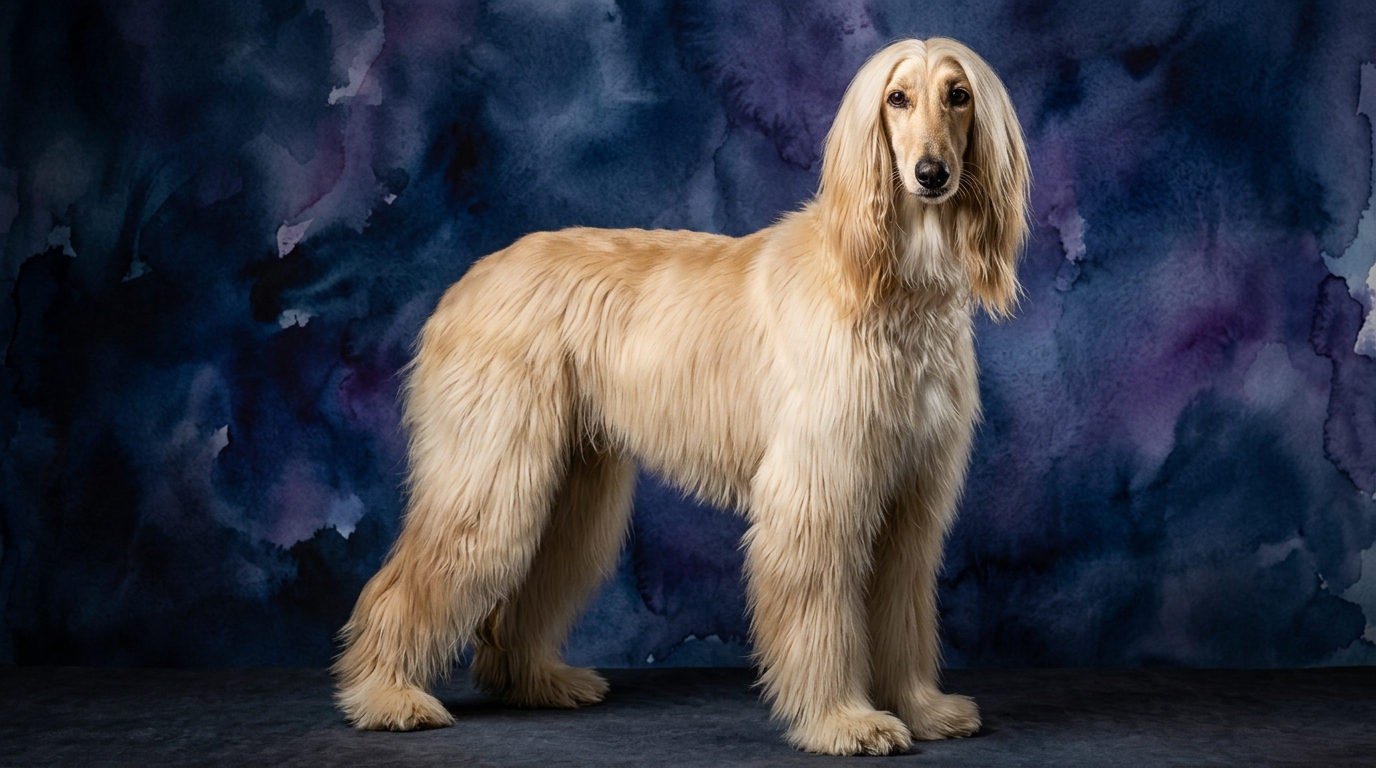
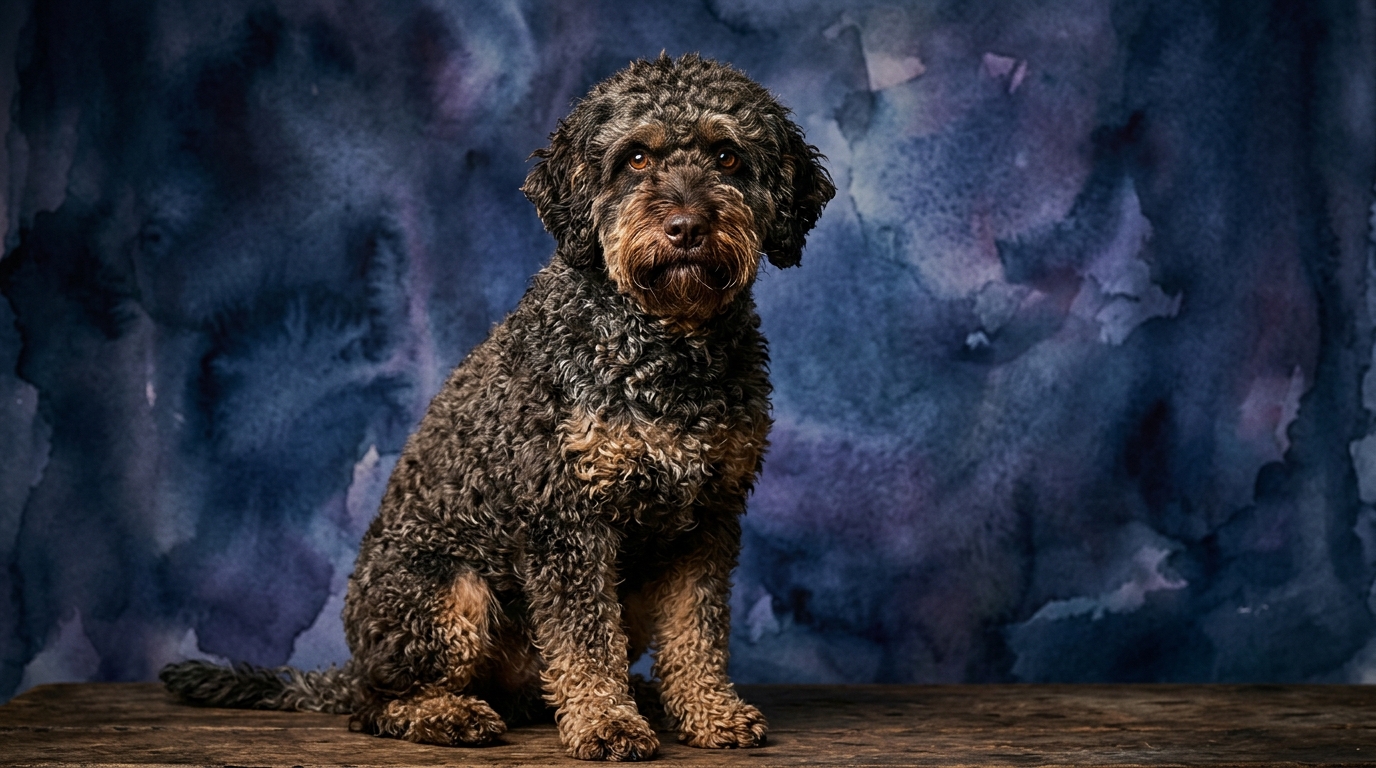
Side-by-Side Cognitive Profiles: Afghan Hound vs. Spanish Water Dog
At The Cosmic Pet Pet IQ Lab, we analyze canine cognition across five key dimensions. The Afghan Hound and Spanish Water Dog, despite both being dogs, present remarkably different profiles, shaped by their distinct histories and purposes.
The Afghan Hound, a breed of ancient lineage, showcases a unique cognitive makeup tailored for independent hunting. Their Problem Solving is rated 4/5, indicating a strong, self-reliant approach, particularly when navigating complex environments or overcoming obstacles in pursuit of a visual target. Solutions often stem from an innate drive rather than a desire for human approval. Their Training Speed stands at a low 1/5; learning new commands is a protracted process, requiring exceptional patience and consistency. They tend to evaluate directives rather than immediately comply, a trait rooted in their historical role as independent hunters. Social Intelligence is 2/5; Afghan Hounds possess a reserved social acumen, forming deep, loyal bonds with their immediate family but often remaining aloof or indifferent towards strangers. They are not typically driven by a need to please or interpret subtle human cues. Their Instinctive Drive is an exceptionally powerful 5/5, primarily focused on chasing and hunting. This deep-seated instinct dictates much of their behavior, making them highly responsive to visual stimuli and movement, often overriding other considerations. Lastly, their Memory is 3/5; while not noted for exceptional recall of complex command sequences, Afghan Hounds possess an average memory for routines and places, and an excellent memory for experiences related to their strong hunting instincts.
In contrast, the Spanish Water Dog, a versatile herding breed, exhibits a more balanced and collaborative cognitive profile. Their Problem Solving is 3/5, demonstrating a practical, moderate ability to solve problems, often applying their intelligence to tasks and challenges presented by their environment or handler. They are capable of figuring out how to achieve a goal, especially when it involves working alongside humans. Their Training Speed is 3/5; this breed learns new commands at an average pace, responding well to clear instructions and positive reinforcement. Their willingness to engage and work makes them more receptive to training efforts compared to more independent breeds. Social Intelligence is 3/5; with a moderate social acumen, Spanish Water Dogs are generally attuned to their human companions, capable of reading cues and responding appropriately within a family setting. They are often affectionate and engaging with their chosen people. Their Instinctive Drive is also 3/5, a balanced drive encompassing herding, retrieving, and guarding tendencies without being overwhelmingly dominant in any single area. This adaptability allows them to excel in various working roles. Their Memory is 3/5, meaning Spanish Water Dogs have an average memory, retaining learned behaviors, routines, and experiences effectively, which contributes to their trainability and consistency in performing tasks once mastered.
Where the Afghan Hound Cognitively Leads
The Afghan Hound truly shines in areas demanding independent thought and an unparalleled instinctive drive. Their problem-solving acumen, rated at 4/5, allows them to navigate complex environments or overcome obstacles with remarkable self-reliance, a trait honed over centuries of solitary hunting. This isn't about solving puzzles for treats, but about autonomously finding the most efficient path to their goal, often in high-stakes situations. Furthermore, their instinctive drive, a perfect 5/5, means they possess an inherent, unwavering focus and endurance when pursuing a visual target, demonstrating incredible capability without constant human direction. This profound drive is a cognitive asset for tasks requiring sustained, self-motivated action, making them masters of the chase, capable of making split-second decisions based on their environment and prey movement.
Where the Spanish Water Dog Cognitively Excels
Conversely, the Spanish Water Dog excels in cognitive dimensions that emphasize collaboration and adaptability, particularly in training speed and social intelligence. Their training speed, rated at 3/5, is significantly higher than the Afghan Hound's, indicating a greater willingness and capacity to absorb and respond to human instruction efficiently. This makes them far more pliable for various tasks and dog sports, from agility to obedience. Coupled with a social intelligence of 3/5, they are generally more attuned to human cues and eager to engage in cooperative activities, fostering a more direct and responsive partnership. Their balanced cognitive profile allows them to integrate smoothly into diverse family dynamics and adapt to a broader range of activities that require working alongside humans, making them a more versatile and cooperative companion.
Training Dynamics: Which Breed is Easier and Why
Without question, the Spanish Water Dog is considerably easier to train than the Afghan Hound, a difference rooted deeply in their historical roles and inherent behavioral tendencies. The Afghan Hound, with its 1/5 training speed, was selectively bred to hunt independently, making them naturally disinclined to seek or consistently follow human direction. Their decisions are often guided by their powerful 5/5 instinctive drive, meaning a visual stimulus or scent can easily override any learned command. Training an Afghan Hound is more akin to a patient negotiation, demanding an owner who understands their sighthound mentality and can make training feel like their idea, or at least highly rewarding on their terms. This independence can be frustrating for owners expecting quick obedience.
In contrast, the Spanish Water Dog, with a 3/5 training speed, comes from a background of versatile herding and water work, where cooperation with humans was essential. They are inherently more eager to please and respond to instruction, making them responsive to positive reinforcement and consistent methods. Their moderate instinctive drive (3/5) means they are less likely to be completely distracted by environmental stimuli, allowing for more focused and effective training sessions. This breed thrives on having a job and engaging with their handler, making them a far more straightforward and rewarding partner for training endeavors, capable of excelling in various dog sports and working roles.
Matching Breeds to Owner Lifestyles: Active vs. Relaxed
When considering activity levels, both breeds require dedicated owners, but for very different reasons. The Afghan Hound, despite its often-serene appearance indoors, is designed for explosive bursts of speed. Owners must be active in providing opportunities for vigorous, safe running in securely fenced areas where their powerful 5/5 instinctive drive can be safely expressed. While they aren't typically demanding of constant interaction or complex tasks, neglecting their need for speed can lead to frustration and destructive behaviors. Therefore, they suit active owners who prioritize providing specific physical outlets rather than continuous engagement, understanding that their exercise needs are intense but often self-directed.
Conversely, the Spanish Water Dog is better suited for owners who are consistently active and enjoy interactive, goal-oriented pursuits. Their balanced instinctive drive (3/5) and moderate problem-solving (3/5) mean they thrive on mental and physical engagement through activities like dog sports, hiking, or working tasks. They need to feel like they have a purpose and benefit from varied stimulation to prevent boredom. A truly 'relaxed' owner, one who prefers minimal structured activity or engagement, would likely find either breed challenging. The Afghan Hound's specific exercise needs and independent streak demand a certain level of active management, while the Spanish Water Dog's need for purpose and interaction means they would become bored and potentially destructive without an engaged owner.
The Verdict
Choose the Afghan Hound if you appreciate a noble, independent companion with breathtaking elegance, are prepared to embrace a significant training challenge rooted in their sighthound instincts, and can provide ample, secure space for their powerful, instinct-driven sprints.
Opt for the Spanish Water Dog if you seek an intelligent, versatile working companion, enjoy interactive training and dog sports, and are committed to providing consistent mental and physical stimulation to a dog that thrives on purpose and partnership.
🧠 Find Your Pet's IQ Score
Our Pet IQ Lab assessment covers 25+ tests across 5 cognitive dimensions — personalized to your breed.
Take the Full IQ Test →Frequently Asked Questions
Are Afghan Hounds suitable for first-time dog owners?
Generally, no. Their low training speed and strong independent nature make them a significant challenge, requiring experienced owners who understand their sighthound instincts and are patient with their unique approach to learning.
Do Spanish Water Dogs shed a lot?
Spanish Water Dogs have a single coat that is woolly and curly, which does not shed in the traditional sense. Instead, dead hairs get caught in the coat, requiring regular grooming, either by clipping or cord training, to prevent matting.
What kind of mental stimulation do Spanish Water Dogs need?
Spanish Water Dogs thrive on mental challenges, such as puzzle toys, obedience training, agility, herding trials, or scent work. Their problem-solving ability and moderate instinctive drive mean they enjoy having tasks to accomplish and benefit from varied activities that engage their minds.