
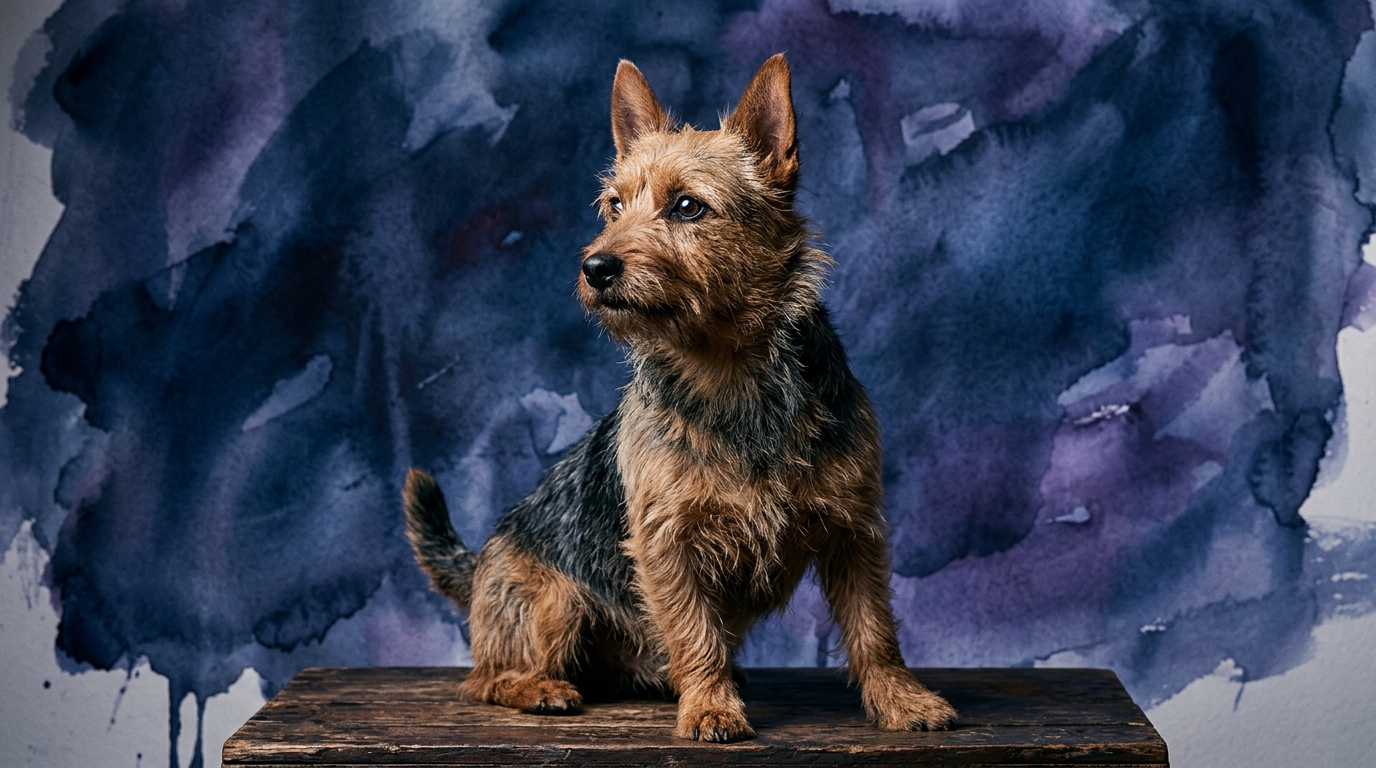
Side-by-Side Cognitive Profile: Airedale vs. Australian Terrier
The Cosmic Pet Pet IQ Lab employs a five-dimensional framework to assess canine intelligence, providing a detailed look beyond simple obedience. For the Airedale Terrier, ranked #29 by Coren, its profile shows a Problem Solving score of 4/5, indicating a strong capacity for independent thought and strategic navigation of obstacles. Its Training Speed is also 4/5, suggesting a quick grasp of new commands and concepts, while Social Intelligence stands at 3/5, reflecting selective but strong familial bonds. An Instinctive Drive of 3/5 points to a manageable yet present prey drive, and a Memory score of 4/5 highlights its excellent retention of learned behaviors and experiences.
In contrast, the Australian Terrier, though not Coren-ranked, presents a more uniformly balanced cognitive landscape. Its Problem Solving ability is rated at 3/5, meaning it can handle straightforward challenges but may require more structured guidance for complex tasks. Training Speed also sits at 3/5, indicating a steady, consistent learning pace that benefits from patient reinforcement. Similar to the Airedale, its Social Intelligence is 3/5, demonstrating a capacity for strong familial attachment while often maintaining a reserved stance with strangers. Its Instinctive Drive is likewise 3/5, reflecting a typical terrier inclination for digging and chasing, and its Memory score of 3/5 means it retains training effectively, though perhaps not with the immediate recall of its larger cousin.
Where the Airedale Terrier Excels Cognitively
The Airedale Terrier clearly distinguishes itself with higher metrics in Problem Solving, Training Speed, and Memory, offering distinct cognitive advantages. Its 4/5 Problem Solving score means it possesses a superior ability to analyze situations and devise solutions, whether it's figuring out how to open a gate or retrieving a specific item from a complex environment. This translates into a dog that can often anticipate routines or even outwit an unsuspecting owner if not mentally engaged.
Furthermore, the Airedale’s 4/5 Training Speed allows it to absorb new commands and multi-step sequences with impressive efficiency, requiring less repetition than many other breeds. This makes them particularly adept for advanced obedience, complex trick training, or dog sports that demand rapid learning and execution. Coupled with a 4/5 Memory, once an Airedale learns a task or behavior, it tends to stick, making consistent training efforts yield enduring results and building a robust repertoire of skills over their lifetime.
Where the Australian Terrier's Cognitive Profile Offers Distinct Advantages
While the Airedale showcases a clear edge in raw cognitive metrics, the Australian Terrier’s consistent 3/5 scores across the board present a unique set of advantages, particularly for certain lifestyles. Their steady problem-solving (3/5) means they are capable of navigating typical household challenges and learning routines without necessarily seeking out complex mental puzzles that could lead to mischievous behaviors if not adequately directed. This balanced cognitive profile often translates to a more predictable companion, less inclined to outmaneuver or 'think around' their owner's rules with intricate schemes.
Their social intelligence, also at 3/5, suggests they forge strong family bonds without the intense social demands or potential aloofness some higher-scoring breeds might exhibit, fostering a comfortable, less intense companionship. Furthermore, their 3/5 memory is perfectly functional for retaining essential training and household rules, ensuring a well-adjusted pet for owners who value consistency over lightning-fast conceptual leaps. This overall consistency in cognitive functions can make the Australian Terrier a more straightforward companion for many homes, providing reliability without the intense intellectual demands.
Training Dynamics: Which is Easier and Why?
When considering ease of training, the Airedale Terrier's 4/5 scores in Training Speed and Problem Solving generally make it quicker to teach complex commands and concepts. They grasp new ideas rapidly and retain them well, allowing for more advanced and nuanced training. However, their strong-willed Terrier nature and 3/5 social intelligence mean that while they learn fast, they require a confident, consistent handler who can make training engaging and establish clear leadership, as they are not inclined to blindly obey without purpose.
The Australian Terrier, with its consistent 3/5 scores, is easier to train for basic obedience due to its more predictable learning curve. They learn steadily and reliably, but require more repetition and patience compared to the Airedale. Their similar 3/5 social intelligence means they also need clear, positive guidance, but their smaller size can make managing their independent streak feel less overwhelming for some owners. Ultimately, the Airedale offers speed and conceptual understanding for advanced tasks, while the Australian Terrier provides a more steady, persistent learning journey for foundational skills.
Matching Canine Cognition to Owner Lifestyles
The Airedale Terrier, with its superior problem-solving and training speed, is an excellent match for active owners who can provide consistent mental and physical challenges. This breed thrives on engaging activities such as advanced obedience, agility, tracking, or even working roles where their capacity for complex thought and rapid learning can be fully utilized. A relaxed owner might find an Airedale's substantial cognitive capacity and need for engagement leads to boredom-driven behaviors like excessive chewing or digging if not properly channeled.
Conversely, the Australian Terrier, while still possessing a notable terrier drive, can suit active to moderately active owners. Their consistent 3/5 cognitive profile suggests they don't demand the same intense level of intellectual stimulation as an Airedale, making them manageable for owners who can provide regular, moderate physical outlets and consistent basic mental enrichment. They still need activity to satisfy their instinctive drive for chasing and exploring, but their needs are less about intricate puzzle-solving and more about consistent routine and engaging play, making them a good fit for owners who appreciate a spirited companion without the demands of a high-octane intellect.
The Verdict
Choose the Airedale Terrier if you seek a highly engaged, quick-learning partner for advanced training, dog sports, or a working role, and are prepared to provide consistent mental and physical challenges.
Choose the Australian Terrier if you prefer a sturdy, spirited companion who learns at a steady pace, enjoys regular activity, and will thrive with clear, patient guidance in a less demanding cognitive environment.
🧠 Find Your Pet's IQ Score
Our Pet IQ Lab assessment covers 25+ tests across 5 cognitive dimensions — personalized to your breed.
Take the Full IQ Test →Frequently Asked Questions
Does a Coren rank matter for a dog's daily life?
Yes, a Coren rank provides an indication of a breed's general aptitude for obedience and adaptive intelligence, influencing how quickly they pick up commands and adapt to new situations. For a dog like the Airedale, its higher rank suggests a greater capacity for complex learning and problem-solving, which can be both a blessing and a challenge for owners.
What does 'instinctive drive' mean for these terriers?
Instinctive drive refers to a dog's inherent tendencies, such as prey drive, territoriality, and digging behaviors, rooted in their breed's historical purpose. For both Airedales and Australian Terriers, a 3/5 score indicates a notable drive that requires consistent management and appropriate outlets to prevent unwanted behaviors.
Can an Australian Terrier learn complex tricks despite its 3/5 problem-solving score?
Absolutely, a 3/5 problem-solving score means the Australian Terrier is capable of learning complex tricks, though it might require more repetition and patience compared to a breed with a higher score. Their steady learning pace, combined with positive reinforcement, can lead to impressive skill acquisition over time.