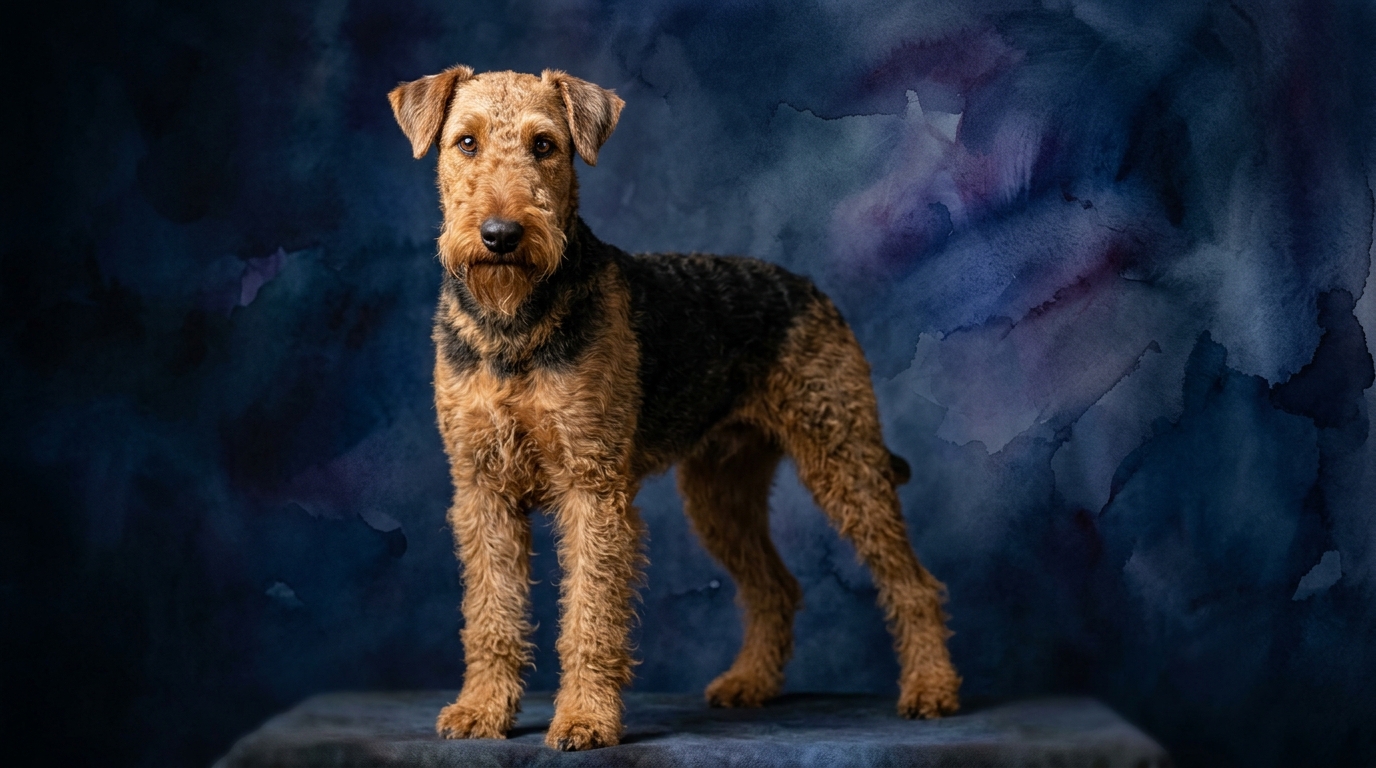
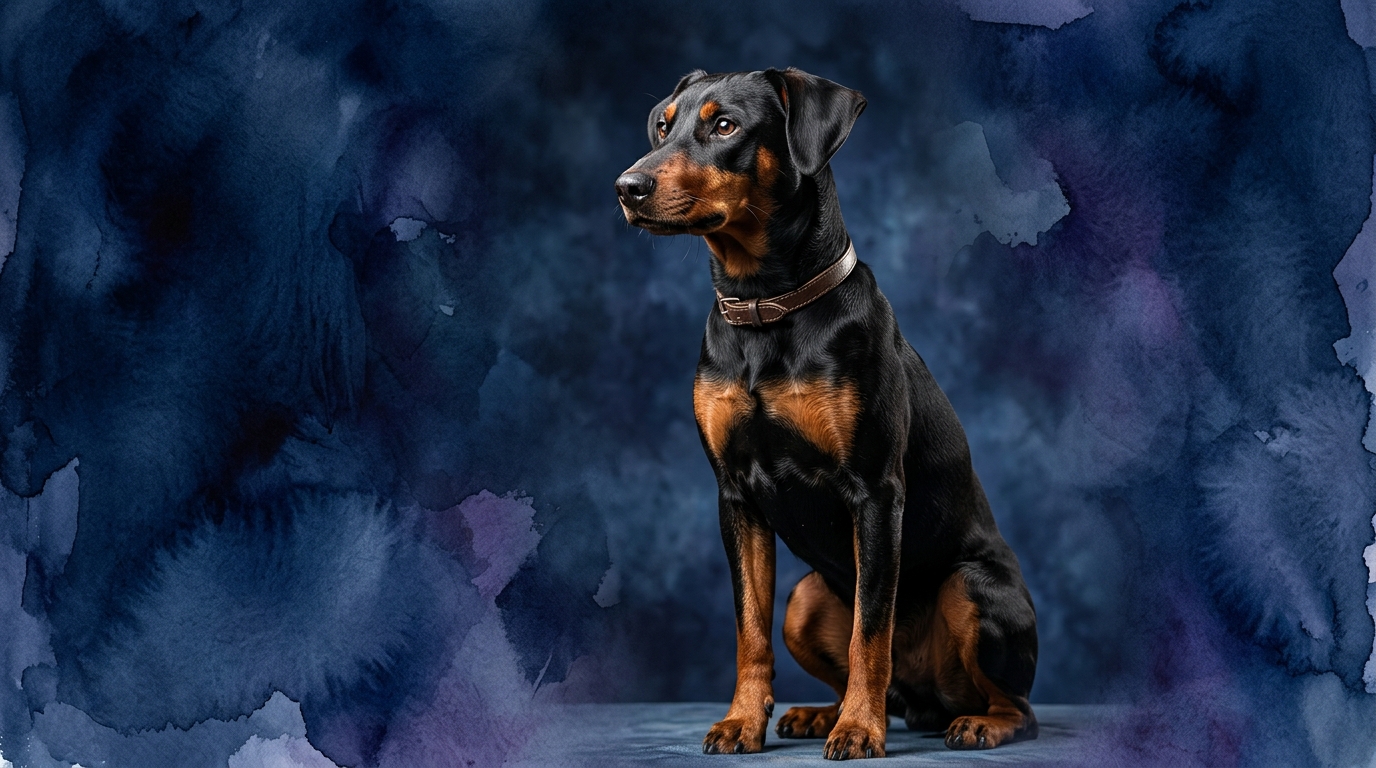
Side-by-Side Cognitive Profile
At The Cosmic Pet Pet IQ Lab, we evaluate canine intelligence across five key dimensions. For the Airedale Terrier, a breed from the Terrier group, its profile reveals: Problem Solving 4/5, indicating a strong capacity for figuring out complex situations and overcoming obstacles; Training Speed 4/5, meaning it typically grasps new commands and routines with impressive quickness; Social Intelligence 3/5, demonstrating an understanding of human cues but often with a degree of independent thought; Instinctive Drive 3/5, reflecting a moderate prey drive and territorial instincts; and Memory 4/5, signifying a strong retention of learned behaviors and experiences over time.
The German Pinscher, a member of the Working group, presents a consistent cognitive profile: Problem Solving 3/5, showing competence in practical challenges but less inclination towards independent, complex solutions; Training Speed 3/5, meaning it learns steadily and benefits from clear, consistent instruction; Social Intelligence 3/5, indicating it is attuned to family dynamics and responds well to consistent leadership; Instinctive Drive 3/5, typical of a working breed with strong prey and guarding instincts; and Memory 3/5, suggesting a reliable recall of learned behaviors and routines, but perhaps less associative memory for novel situations.
Where the Airedale Terrier Excels Cognitively
The Airedale Terrier, often referred to as the 'King of Terriers,' demonstrates a clear cognitive edge in several key areas. Its Problem Solving score of 4/5 signifies a breed that doesn't just react to situations but actively seeks solutions. This manifests in behaviors like cleverly figuring out how to open gates, retrieve out-of-reach toys, or navigate complex obstacle courses with a degree of innovation. This isn't just about brute force; it's about a systematic approach to overcoming challenges.
Complementing this is its Training Speed of 4/5. Airedales often pick up new commands and routines with remarkable alacrity, making them seem eager participants in learning sessions. They thrive on mental engagement and can quickly link actions to consequences, accelerating the training process. Furthermore, their Memory, also rated 4/5, means that lessons learned, whether positive or negative, tend to stick. An Airedale remembers complex command sequences, the layout of familiar environments, and even the nuances of past interactions, which can be both a blessing for consistent training and a challenge if unwanted habits are allowed to form.
Where the German Pinscher Holds Its Own Cognitively
While the German Pinscher doesn't outscore the Airedale in any individual cognitive dimension, its consistent 3/5 across all categories points to a balanced and predictable cognitive profile that offers its own distinct advantages. Unlike some breeds that may exhibit peaks and valleys in their cognitive abilities, the German Pinscher presents a steady, reliable mental landscape. This consistency can be a significant 'win' for owners who value a dog whose problem-solving is less inclined towards independent, sometimes mischievous, innovation and more towards focused, directed tasks.
Their balanced instinctive drive and social intelligence make them particularly adept at understanding and adhering to established routines, minimizing the 'clever' detours a terrier might invent. This steadfastness means their cognitive efforts are often channeled directly into fulfilling their roles, whether as a vigilant protector or a devoted companion, without the same level of self-directed 'figuring things out' that an Airedale might undertake. This reliable cognitive framework makes them dependable in predictable environments.
Training Dynamics: Airedale vs. German Pinscher
Determining which breed is 'easier' to train is nuanced, as it depends heavily on an owner's approach and expectations. The Airedale Terrier, with its 4/5 Training Speed and Problem Solving, often grasps new concepts quickly. They enjoy the mental challenge of learning and can be very responsive to positive reinforcement. However, their independent terrier spirit and high problem-solving capacity also mean they can be incredibly clever at finding loopholes or deciding for themselves if a command is worth obeying at a given moment. Training an Airedale requires consistency, creativity, and a firm but fair hand to channel their considerable mental energy. They aren't just learning commands; they're often evaluating them.
In contrast, the German Pinscher, with its consistent 3/5 in Training Speed and Problem Solving, learns steadily and reliably. They may not pick up new tricks as quickly as an Airedale, but once a command is learned, it tends to be deeply ingrained. Their working breed background means they generally thrive on having a job and responding to clear leadership. Training a German Pinscher often benefits from repetition, structure, and positive reinforcement, focusing on building a strong bond and clear communication. While less prone to the 'terrier mischief' of an Airedale, a Pinscher's occasional stubbornness or strong prey drive can present its own set of training challenges, requiring patience and early socialization.
Lifestyle Match: Active vs. Relaxed Owners
When considering lifestyle compatibility, both breeds lean towards active engagement, but their preferred types of activity differ based on their cognitive make-up. The Airedale Terrier, with its robust problem-solving and memory, thrives with owners who can provide ample mental stimulation alongside physical exercise. These dogs need more than just a walk; they need to think, explore, and solve. Activities like agility, advanced obedience, scent work, or even complex puzzle toys are excellent outlets for their cognitive energy. A relaxed owner who cannot commit to regular mental challenges might find an Airedale inventing its own 'problems' to solve, which often translates into destructive or attention-seeking behaviors.
The German Pinscher, while equally energetic with its 3/5 instinctive drive, often channels its activity into more focused, purposeful movement. They excel in activities that leverage their natural athleticism and working dog heritage, such as running, hiking, dog sports like Schutzhund, or even simply vigorous games of fetch. They need consistent physical outlets to prevent boredom and restlessness. While they appreciate mental engagement, their primary need is often for consistent physical activity paired with a clear role within the family structure, making them suitable for active owners who enjoy structured outdoor adventures rather than solely complex cognitive tasks.
The Verdict
Choose the Airedale Terrier if you are an experienced owner seeking a highly interactive, mentally agile companion who thrives on complex problem-solving and enjoys varied, engaging training challenges.
Opt for the German Pinscher if you prefer a balanced, predictable companion who excels in structured activities and responds well to consistent leadership, offering steadfast loyalty and vigilance.
🧠 Find Your Pet's IQ Score
Our Pet IQ Lab assessment covers 25+ tests across 5 cognitive dimensions — personalized to your breed.
Take the Full IQ Test →Frequently Asked Questions
Does the Airedale Terrier's higher problem-solving score mean it's harder to manage?
Not necessarily harder, but different. An Airedale's advanced problem-solving means they require consistent mental stimulation and clear boundaries, as they might otherwise find their own 'entertainment' which can be undesirable. Their cognitive prowess means they are always thinking, which an owner needs to guide constructively.
How does the German Pinscher's consistent 3/5 IQ profile impact its role as a family pet?
The German Pinscher's balanced 3/5 IQ profile often translates into a predictable and stable family companion. They are generally responsive to consistent training and clear household rules, providing a reliable presence without the independent 'cleverness' that might challenge less experienced owners. Their loyalty and vigilance are strong assets for a family.
Are both breeds suitable for first-time dog owners?
Both the Airedale Terrier and German Pinscher are generally recommended for owners with some dog experience due to their strong personalities and specific cognitive needs. While trainable, their independence and drive require consistent, knowledgeable handling to ensure they develop into well-adjusted companions. A first-time owner dedicated to consistent training and socialization could succeed, but it would require significant commitment.