A Side-by-Side Look at Cognitive Profiles
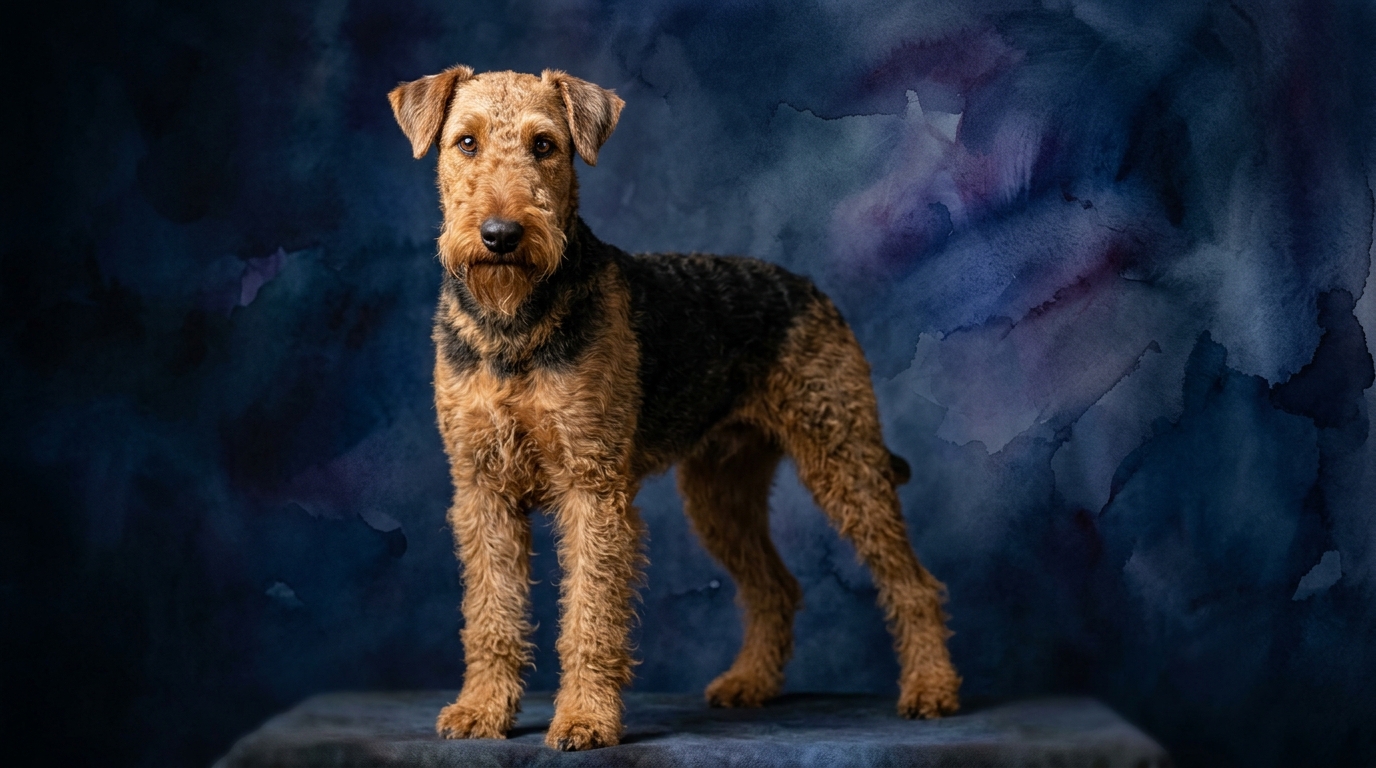
The Cosmic Pet Pet IQ Lab employs a five-dimensional framework to assess canine intelligence, moving beyond simplistic notions to provide a nuanced understanding of each breed's mental make-up. For the Airedale Terrier, a Coren-ranked breed at #29, its profile indicates a robust capacity for independent thought and learning, reflecting its heritage as a versatile working dog.
The Airedale Terrier's Problem Solving score of 4/5 suggests a dog capable of navigating complex situations and devising solutions without constant human intervention, a trait honed by its history of hunting and guarding. Its Training Speed, also at 4/5, points to a quick grasp of commands and routines, indicating a responsive learner eager to engage in structured activities. Social Intelligence, at 3/5, implies a competent understanding of pack dynamics and human-dog interaction, without necessarily being overly people-dependent. The Instinctive Drive, rated 3/5, highlights a balanced yet present urge to perform breed-specific behaviors, such as chasing or guarding. Finally, a Memory score of 4/5 means the Airedale retains learned information and experiences effectively, building on past lessons.
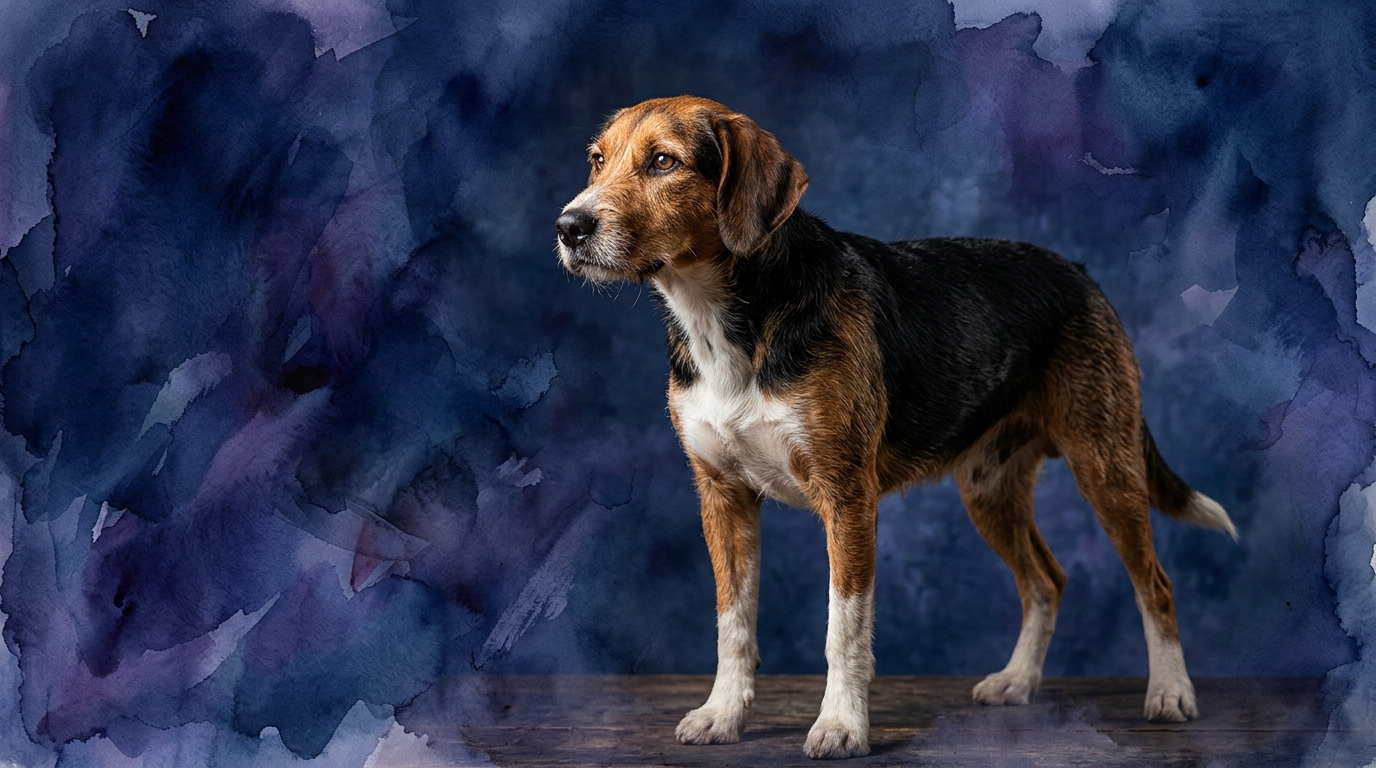
In contrast, the Harrier, an unranked hound breed, presents a different cognitive signature, optimized for its role in scent-driven pack hunting. Its Problem Solving score of 3/5 indicates a practical intelligence focused on task completion within a defined framework, rather than abstract problem-solving. A Training Speed of 3/5 suggests a dog that learns steadily but may require more repetition or motivation, often influenced by its powerful scent drive. The Harrier’s Social Intelligence, also at 3/5, is geared towards seamless interaction within a canine pack and cooperation with a handler during hunts. Its Instinctive Drive, matching the Airedale at 3/5, is profoundly rooted in scent work and sustained pursuit, a hallmark of the hound group. Lastly, a Memory score of 3/5 indicates a functional recall for hunting patterns and familiar environments, though perhaps less for intricate, human-directed sequences.
Where the Airedale Terrier's Cognitive Strengths Shine
The Airedale Terrier exhibits clear cognitive advantages in areas demanding individual initiative and rapid learning. Its superior Problem Solving score of 4/5, compared to the Harrier's 3/5, means an Airedale is often quicker to figure out how to open a gate, retrieve a hidden toy, or navigate a novel obstacle course. This aptitude stems from its terrier lineage, where dogs were required to independently strategize and overcome challenges in hunting vermin, often out of sight of their handlers. They are adept at assessing situations and executing multi-step solutions to reach a goal.
The Airedale's Training Speed of 4/5 outpaces the Harrier's 3/5, translating to a more efficient learning curve for obedience commands and complex tricks. An Airedale can typically form associations between a command and an action more rapidly, requiring fewer repetitions to solidify a new behavior. This responsiveness makes them a rewarding partner for owners interested in advanced training, dog sports, or even service work. Their strong Memory (4/5 versus Harrier's 3/5) reinforces this, ensuring that once a behavior is learned, it is retained effectively over time, reducing the need for constant refreshers and allowing for the build-up of a diverse skill set.
Understanding the Harrier's Specialized Cognitive Strengths
While the Harrier's numerical scores may be lower or equal in some dimensions compared to the Airedale, its cognitive profile is exceptionally optimized for its specific working purpose. The Harrier's Instinctive Drive, rated 3/5 like the Airedale's, is qualitatively different; it is an unwavering dedication to following a scent trail, often for hours. This persistence, combined with a remarkable ability to discriminate and interpret subtle olfactory cues, is a hallmark of its intelligence. A Harrier can process complex scent information to track quarry over varied terrain, a feat requiring immense focus and specialized problem-solving within its sensory domain.
The Harrier's Social Intelligence, also 3/5, is profoundly geared towards pack dynamics and cooperative hunting. While an Airedale's social acumen might focus on individual human-dog bonds, a Harrier excels at coordinating with other dogs, understanding their body language, and communicating effectively within a group to achieve a common goal. This pack-oriented intellect means they can read and respond to canine companions and human handlers in a cohesive hunting unit, demonstrating a different, yet equally valid, form of social aptitude. Their memory, at 3/5, is particularly adept at recalling specific scent trails and familiar hunting grounds, crucial for their work.
Training Dynamics: Airedale Terrier vs. Harrier
Training an Airedale Terrier generally involves a quicker initial learning phase due to their 4/5 Training Speed and 4/5 Memory. They pick up new commands with relative ease and retain them well. However, their strong problem-solving ability and terrier independence mean they require a trainer who is consistent, engaging, and capable of establishing clear leadership. An Airedale might try to 'outsmart' their handler or find loopholes in commands if the training isn't stimulating or sufficiently firm. Their tendency to make independent decisions, while a cognitive strength, can manifest as a challenge if not channeled appropriately through positive reinforcement and structured work.
The Harrier, with its 3/5 Training Speed and 3/5 Memory, typically requires more patience and repetition. Their strong instinctive drive for scent work means they are often highly distractible by interesting smells, which can make focus on human-directed tasks challenging, especially in stimulating environments. Training a Harrier necessitates understanding their hound nature: appealing to their desire to work as part of a 'pack' and using their social intelligence to foster cooperation. Consistency is paramount, and training sessions should be engaging, often incorporating elements that leverage their natural tracking abilities. While they may not learn a new trick as quickly, their persistence, once motivated, can lead to reliable long-term behaviors.
Matching Breeds to Lifestyles: Activity Levels
Neither the Airedale Terrier nor the Harrier are suited for truly relaxed, sedentary owners; both breeds possess considerable energy and require consistent engagement. The Airedale Terrier's cognitive profile, with its high problem-solving and training speed, means it thrives with active owners who can provide both physical exercise and ample mental stimulation. Owners who enjoy dog sports like agility, obedience, or even advanced trick training will find the Airedale a willing and capable partner. Without sufficient mental challenges, an Airedale may channel its problem-solving prowess into less desirable activities, such as destructive chewing or escape artistry.
The Harrier demands an owner committed to substantial physical activity, particularly activities that satisfy its potent instinctive drive for scent work. These dogs are built for endurance and sustained effort, making them ideal for owners who enjoy long hikes, running, or participating in scent-tracking sports. Their pack-oriented social intelligence also means they often thrive in multi-dog households or with owners who can facilitate regular, supervised group play. While a Harrier can adapt to various living situations, a truly relaxed owner will struggle to meet its fundamental needs for consistent, vigorous exercise, which is intrinsically linked to its cognitive satisfaction and overall well-being.
The Verdict: Choosing Your Companion
The Verdict
Choose an Airedale Terrier if you seek a clever, responsive, and independent companion eager for diverse mental challenges and structured training, capable of learning complex tasks and providing engaging companionship. They suit owners who appreciate a dog with a strong personality and the drive to think for themselves.
Opt for a Harrier if you are an active owner who embraces long outdoor adventures and values a persistent, scent-driven companion that thrives in a pack-like environment. They are ideal for those committed to understanding and fulfilling a hound's intrinsic desire to track and explore, offering a loyal and resilient partner.
🧠 Find Your Pet's IQ Score
Our Pet IQ Lab assessment covers 25+ tests across 5 cognitive dimensions — personalized to your breed.
Take the Full IQ Test →Frequently Asked Questions
Which breed is generally easier for a first-time dog owner?
Neither breed is typically recommended for absolute first-time owners due to their energy levels and specific training needs. However, the Airedale Terrier's higher training speed and adaptability might make it slightly more manageable for an inexperienced but dedicated owner willing to invest in consistent training.
Do Airedale Terriers and Harriers get along with other pets?
Airedale Terriers can coexist with other pets, especially if socialized early, but their prey drive means small, fast-moving animals might trigger their instincts. Harriers, being pack hounds, generally do well with other dogs, often thriving in multi-dog homes, though their prey drive for smaller, non-canine pets is also present and requires careful management.
What kind of mental stimulation do these breeds need?
Airedale Terriers benefit from puzzle toys, advanced obedience, agility, and interactive games that challenge their problem-solving skills. Harriers thrive on scent work, tracking games, long walks where they can follow scents, and opportunities for exploration that engage their powerful olfactory senses.