
Side-by-Side Cognitive Profile
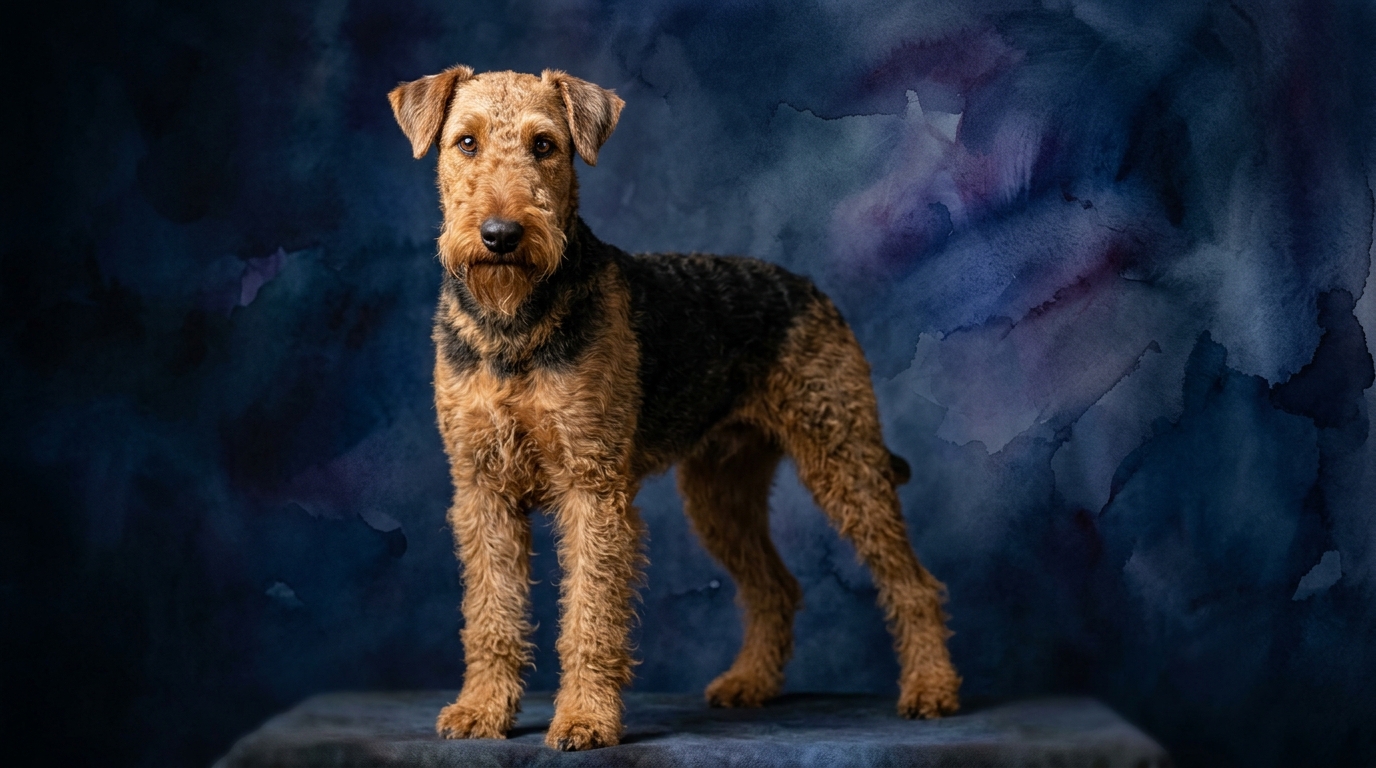
The Airedale Terrier, holding a Coren rank of #29, demonstrates a robust cognitive architecture. Its Problem Solving is rated 4/5, indicating a strong capacity for independent thought and strategic navigation of complex situations, often devising novel solutions rather than relying on simple trial-and-error. Training Speed scores 4/5, signifying a rapid assimilation of new commands and routines, requiring fewer repetitions to achieve proficiency. Social Intelligence sits at 3/5, suggesting a balanced understanding of social cues and family dynamics without being overly dependent or people-focused. An Instinctive Drive of 3/5 points to a moderate expression of typical terrier hunting and exploring instincts, manageable with appropriate outlets. Finally, a Memory score of 4/5 highlights an excellent ability to retain learned information and experiences over extended periods, contributing to consistent behavior and recall.
The Irish Terrier, while not Coren-ranked, presents a consistent and balanced cognitive profile across all dimensions. Its Problem Solving is rated 3/5, indicating a respectable ability to figure out practical challenges, often characterized by tenacity and persistence rather than immediate insight. Training Speed also scores 3/5, suggesting a steady learning pace where new commands are absorbed reliably with consistent repetition and clear communication. Social Intelligence, at 3/5, mirrors the Airedale's, showing an understanding of social structures and forming strong bonds while maintaining a self-sufficient spirit. An Instinctive Drive of 3/5 confirms a moderate expression of terrier urges, making them spirited yet generally manageable companions. Lastly, a Memory score of 3/5 means they retain information adequately, though perhaps benefiting from more frequent reinforcement to solidify long-term recall compared to breeds with higher memory scores.
Where the Airedale Terrier Excels Cognitively
The Airedale Terrier clearly distinguishes itself in several cognitive areas, primarily its superior problem-solving acumen. With a 4/5 score, Airedales often exhibit a more sophisticated approach to novel situations, demonstrating an ability to reason through challenges rather than merely relying on instinct or brute force. For example, an Airedale might quickly devise a method to open a tricky gate or understand the sequence required to retrieve a toy from a confined space, showcasing a level of strategic thinking. This isn't just about persistence; it’s about applying prior knowledge and adapting new solutions. Their faster training speed, also rated at 4/5, means they typically grasp complex command sequences or elaborate tricks with fewer repetitions. This efficiency stems from their ability to quickly form strong associations between verbal cues, physical actions, and desired outcomes. Furthermore, their 4/5 memory score reinforces this advantage; once an Airedale learns something, it tends to stick. This robust recall makes them exceptionally reliable in maintaining learned behaviors over time, even after periods without practice, and enables them to navigate complex environments or routines with consistent accuracy. This cognitive profile makes them particularly adept at tasks requiring sustained focus and intricate understanding.
Where the Irish Terrier Shows Unique Strengths
While the Irish Terrier's individual cognitive scores might not reach the peaks of the Airedale in specific dimensions, its unique blend of 3/5 ratings across the board for problem-solving, training speed, social intelligence, instinctive drive, and memory creates a remarkably resilient and consistent cognitive profile. This isn't a deficit; rather, it suggests a balanced and robust mental constitution that avoids extremes. For instance, their 3/5 problem-solving, while not as rapid, is often characterized by an unwavering tenacity. An Irish Terrier might take longer to figure out a puzzle, but their sheer determination means they are less likely to give up, often succeeding through persistent effort where a quicker-witted dog might become frustrated. Similarly, their 3/5 training speed means they are not easily overwhelmed by new information, processing commands at a steady, reliable pace. This consistency can be a 'win' for owners who prefer a dog that learns deliberately and retains information without sudden spikes or dips in comprehension. Their moderate instinctive drive means they embody the classic terrier spirit – courageous and spirited – but typically without the intense, singular focus that can make some working breeds challenging to redirect. This balanced drive allows them to engage with their environment robustly while remaining responsive to human guidance, making them a consistently spirited yet manageable companion.
Training Dynamics: Airedale vs. Irish Terrier
Based on The Cosmic Pet Pet IQ Lab's metrics, the Airedale Terrier generally presents as the easier of the two breeds to train. This stems directly from its higher scores in both training speed (4/5) and memory (4/5). An Airedale will typically assimilate new commands and behavioral expectations more rapidly, requiring fewer repetitions before a behavior is reliably established. For example, teaching an Airedale a complex chain of commands like 'sit, stay, come to heel' might take significantly less time than with an Irish Terrier. Their superior memory means that once a behavior is learned, it is retained more effectively over longer periods, reducing the need for constant refreshers. This translates into real-world behavioral differences: an Airedale is more likely to remember house rules, previously learned tricks, or recall commands even in distracting environments. The Irish Terrier, with its 3/5 scores in both categories, requires a more patient and consistent approach. They will certainly learn, but the process might be slower, and behaviors might need more frequent reinforcement to ensure long-term retention. Their independent terrier spirit, coupled with a slightly slower learning curve, means an owner needs to be particularly engaging and consistent to maintain their focus. While both breeds respond well to positive reinforcement, the Airedale's cognitive architecture provides a more direct and efficient pathway to successful training outcomes, making the overall experience potentially less demanding for the average owner.
Suitability for Active vs. Relaxed Owners
When considering which breed aligns better with different owner lifestyles, both the Airedale and Irish Terriers, as true terriers, demand a certain level of engagement. However, their cognitive nuances suggest subtle distinctions. The Airedale Terrier, with its 4/5 problem-solving and 4/5 memory, thrives with owners who are prepared to offer substantial mental enrichment alongside physical exercise. These dogs enjoy learning new things, participating in dog sports like agility or obedience, or engaging in complex puzzle games that challenge their intellect. An active owner for an Airedale isn't just someone who walks them; it's someone who actively engages their sharp mind, perhaps even teaching them multi-step tasks around the house. They are less suited for truly 'relaxed' owners who prefer minimal interaction beyond basic care, as their intellect can lead to boredom and destructive behaviors if not adequately stimulated. The Irish Terrier, with its balanced 3/5 scores, also requires regular physical activity to satisfy its instinctive drive, but its mental engagement needs might be slightly different. While they appreciate mental challenges, their problem-solving tends to be more tenacious than strategic, meaning they might enjoy repetitive, goal-oriented tasks more than intricate, novel puzzles. They are a good fit for active owners who enjoy consistent outdoor adventures – hiking, running, or extended play sessions – and appreciate a dog that is spirited and self-sufficient without demanding constant intellectual stimulation. For a more relaxed owner, the Irish Terrier, while requiring daily exercise, might be slightly more forgiving of less structured mental activities compared to the Airedale, provided their physical needs are met and they have a confident leader.
The Verdict
To summarize, the Airedale Terrier is ideal for owners seeking a highly trainable, cognitively agile companion who thrives on complex mental challenges and consistent engagement. Choose the Airedale if you desire a partner for advanced training, dog sports, and appreciate a dog that remembers quickly and solves problems strategically.
The Irish Terrier, conversely, suits owners who value a spirited, tenacious, and robust companion whose balanced cognitive profile makes them consistently reliable and resilient without demanding intense intellectual stimulation. Opt for the Irish Terrier if you appreciate a dog with unwavering determination, a steady learning pace, and a strong, independent personality for outdoor adventures.
🧠 Find Your Pet's IQ Score
Our Pet IQ Lab assessment covers 25+ tests across 5 cognitive dimensions — personalized to your breed.
Take the Full IQ Test →Frequently Asked Questions
Are Airedale Terriers good for first-time owners?
Airedales, with their quick learning and strong memory, can be good for first-time owners who are committed to consistent training and mental enrichment. However, their independent streak and need for stimulation mean they are not a 'set it and forget it' breed, requiring dedication.
What kind of activities do Irish Terriers enjoy most?
Irish Terriers typically enjoy activities that engage their natural tenacity and physical prowess, such as long walks, hiking, vigorous play sessions, and earthdog trials. Their balanced instinctive drive means they excel in pursuits requiring endurance and determination.
How do their social intelligence scores impact family life?
Both breeds score 3/5 in social intelligence, indicating they understand family dynamics and form strong bonds but maintain a degree of independence. They are not typically overly clingy, integrating well into family life while retaining their spirited, self-sufficient terrier character.