
Side-by-Side IQ Profile
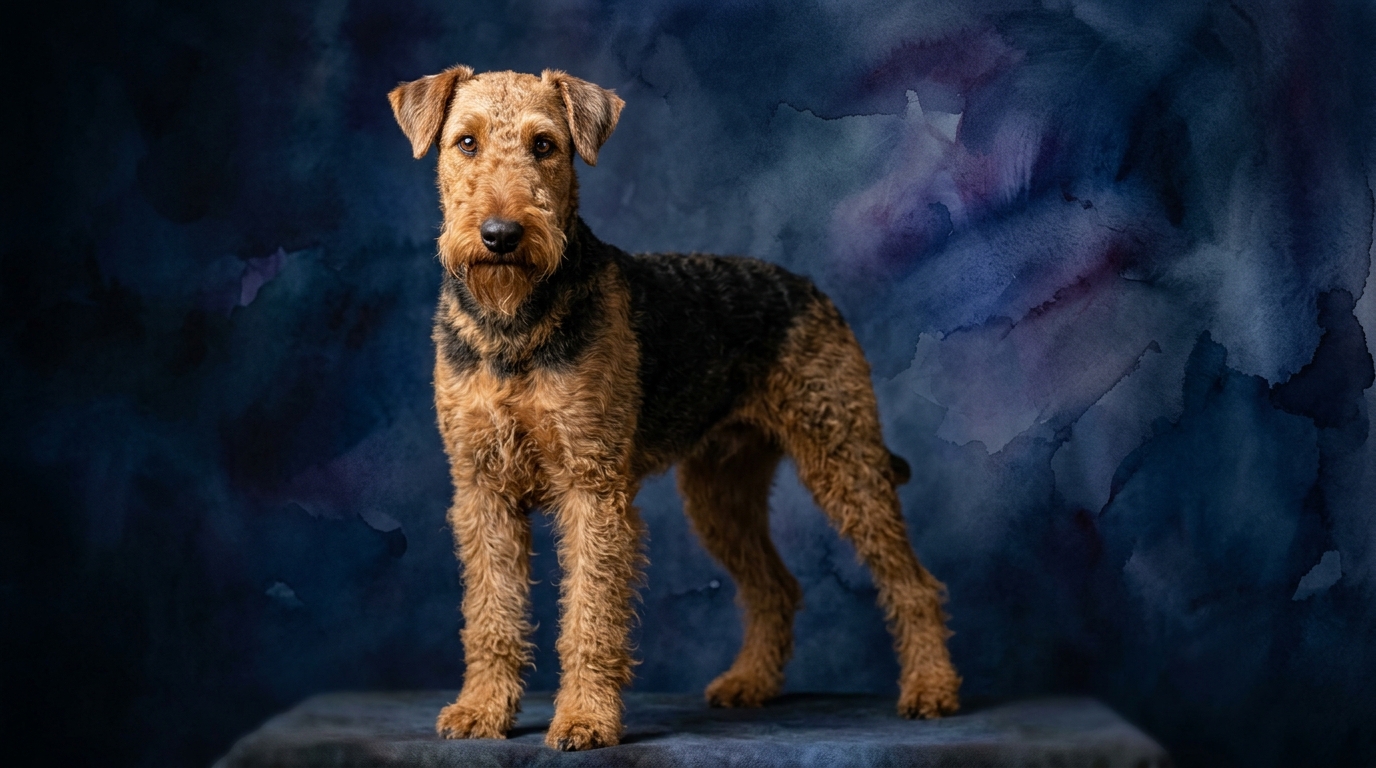
**Airedale Terrier (Coren rank #29):** The 'King of Terriers' boasts a Problem Solving score of 4/5, indicating a strong capacity for independent thought and resourceful solutions to new challenges, reflecting their versatile working heritage. Their Training Speed of 4/5 means they grasp new commands and routines with impressive alacrity, making them highly responsive learners in structured environments. Airedales exhibit a Social Intelligence of 3/5, capable of strong bonds but often maintaining independent judgment, gauging situations well without always prioritizing human approval. Their Instinctive Drive of 3/5 manifests as a moderate but persistent inclination for activities like chasing and exploring, which can be channeled effectively. Finally, with a Memory of 4/5, Airedales excel at retaining learned behaviors and past experiences, contributing to consistent performance once a skill is mastered.
**Lhasa Apso (Coren rank #68):** This ancient breed presents a balanced cognitive profile, starting with a Problem Solving score of 3/5, showing a solid ability to navigate their environment and solve straightforward issues, often relying on established patterns. Their Training Speed of 3/5 signifies they learn at a steady pace, absorbing new information consistently, though they may require more repetition due to their independent streak. Lhasa Apsos possess a discerning Social Intelligence of 3/5, understanding their family's dynamics but often reserved with strangers, attuned to their immediate human circle. Their Instinctive Drive of 3/5 is moderately present, typically expressed through vigilance and territoriality, aligning with their historical role as watchful companions. A Memory score of 3/5 ensures they reliably recall routines, specific people, and locations, adapting well to stable home environments.
Where Airedale Terrier Wins Cognitively
The Airedale Terrier distinctly excels in areas demanding rapid cognitive processing and independent problem-solving. Their Problem Solving score of 4/5 signifies a dog that doesn't merely await instructions but actively analyzes situations, devising solutions to novel challenges. This cognitive flexibility is invaluable for complex tasks or navigating unfamiliar environments, as they are less prone to becoming stuck and are more likely to experiment with different approaches until they succeed.
Complementing this, the Airedale's Training Speed of 4/5 means they absorb new concepts and commands with remarkable efficiency, making them highly receptive to advanced obedience, agility, or working roles. This rapid learning curve enables a broader and more sophisticated training repertoire, allowing them to master intricate sequences and adapt to evolving instructions more quickly. Their strong Memory (4/5) further solidifies these gains, ensuring that once a skill is acquired, it is retained long-term, reducing the need for constant refreshers and building a robust behavioral foundation.
Where Lhasa Apso Wins Cognitively
While the Lhasa Apso's scores are consistently moderate, their cognitive strengths lie in their balanced and judicious application of mental faculties, particularly within their designated role. Their Problem Solving at 3/5, combined with a 3/5 in Social Intelligence, enables them to navigate their domestic world with a pragmatic self-sufficiency. They are adept at understanding household routines and anticipating events, not through complex analysis, but through consistent observation and reliable memory, contributing to their calm presence.
The Lhasa Apso's particular brand of Social Intelligence (3/5) often manifests as a keen awareness of their immediate family's moods and needs, coupled with a naturally guarded approach to outsiders. This allows them to act as effective, though reserved, watchdogs, processing subtle environmental cues to alert their owners without being overly reactive. Their consistent, moderate Instinctive Drive (3/5) ensures they remain engaged with their duties without becoming overly demanding or restless, a cognitive balance that suits a stable, predictable home environment perfectly.
Which is Easier to Train and Why
The Airedale Terrier generally presents as the more straightforward breed to train, primarily due to its superior Training Speed (4/5) and robust Problem Solving (4/5) capabilities. They absorb new commands rapidly and often derive enjoyment from the mental stimulation that training provides, viewing it as an engaging challenge. Their strong memory (4/5) ensures that lessons stick, reducing the need for constant review sessions. However, their moderate Instinctive Drive (3/5) and inherent terrier independence mean training must be consistent, engaging, and perceived as rewarding to maintain their focus and cooperation.
The Lhasa Apso, with a Training Speed of 3/5, typically requires more patience and repetition. Their independent and sometimes stubborn nature, a hallmark of their ancient heritage, means they don't always prioritize human directives over their own inclinations. While they are capable learners, their motivation might stem more from the establishment of routine and consistency than from an eagerness to please or solve complex puzzles. Successful training with a Lhasa Apso often involves positive reinforcement, short, engaging sessions, and a deep understanding of their innate desire for self-determination.
Which Suits Active Owners vs Relaxed Owners
Active owners who relish engaging their canine companions in various pursuits will find the Airedale Terrier a more suitable match. Their higher Problem Solving, Training Speed, and Memory scores indicate a dog that thrives on mental and physical challenges, from advanced obedience and agility to hiking and exploring. They require consistent stimulation and structured activities to prevent boredom, making them ideal for individuals or families who enjoy an active, participatory lifestyle and can provide ample outdoor adventures and mental enrichment.
For relaxed owners seeking a more independent, yet devoted, companion, the Lhasa Apso is often a better fit. While they certainly enjoy walks and playtime, their moderate scores across all cognitive dimensions mean they are generally content with a more predictable routine and less intense, high-energy engagement. Their discerning Social Intelligence and moderate Instinctive Drive make them excellent indoor companions who are observant but not overly demanding, perfectly complementing a quieter home environment where they can offer steady companionship without requiring constant, vigorous interaction.
The Verdict
Opt for an Airedale Terrier if you are an active owner seeking a highly trainable, versatile companion eager for mental challenges and outdoor adventures, capable of quickly mastering complex tasks.
Select a Lhasa Apso if you desire a self-sufficient, observant, and loyal companion who thrives on routine and offers steady presence, perfectly suiting a relaxed household that appreciates a dog with an independent spirit.
🧠 Find Your Pet's IQ Score
Our Pet IQ Lab assessment covers 25+ tests across 5 cognitive dimensions — personalized to your breed.
Take the Full IQ Test →Frequently Asked Questions
Are Airedale Terriers good for first-time dog owners?
Airedales can be suitable for first-time owners who are committed to consistent training and providing ample mental and physical stimulation. Their intelligence makes them capable learners, but their independent terrier nature requires dedication to establish clear boundaries and leadership from the outset.
Do Lhasa Apsos bark a lot?
Lhasa Apsos, with their moderate instinctive drive and discerning social intelligence, are often prone to barking as a form of communication and territorial alert. This behavior stems from their historical role as watchdogs, and while manageable with training, owners should anticipate a vocal companion.
How much exercise does an Airedale Terrier need compared to a Lhasa Apso?
An Airedale Terrier requires significantly more exercise, typically needing at least an hour of vigorous activity daily, including walks, play, and mental stimulation. A Lhasa Apso is content with 30-45 minutes of moderate daily exercise, such as short walks and indoor play, aligning with their more relaxed energy levels.