Side-by-Side IQ Profile
The Cosmic Pet Pet IQ Lab employs five key dimensions to evaluate canine intelligence, offering a nuanced understanding beyond simple obedience. Let's examine how the Airedale Terrier and Pekingese stack up in each area.
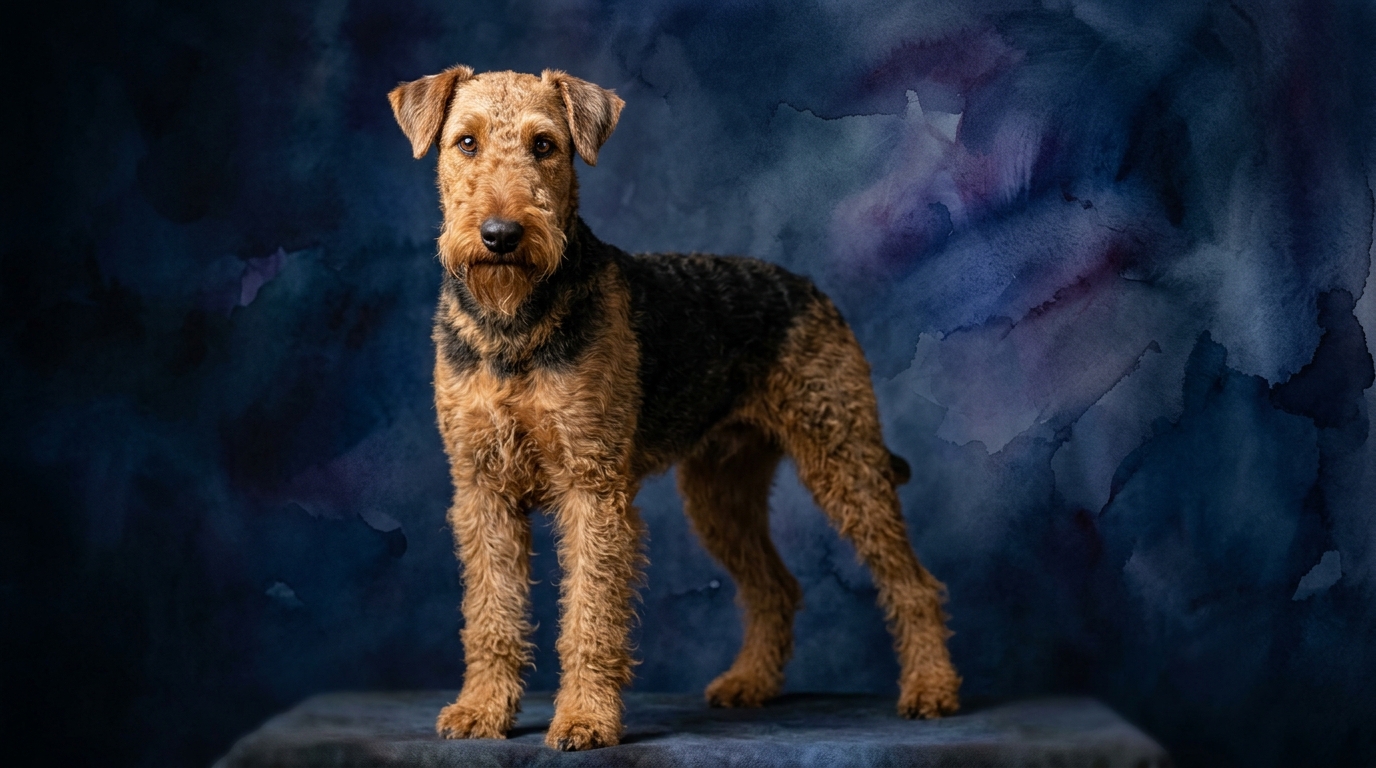
**Airedale Terrier (Terrier Group, Coren Rank #29):** This breed often exhibits a robust and engaged cognitive style.
**Problem Solving (4/5):** This score indicates the Airedale Terrier possesses a strong capacity to independently navigate novel situations and figure out solutions. They often demonstrate remarkable resourcefulness when faced with obstacles, whether it's discerning how to open a tricky gate latch or determining the best path to reach a hidden treat, showcasing a proactive approach to mental challenges.
**Training Speed (4/5):** Airedales exhibit a quick grasp of new commands and routines, translating to efficient learning. Their ability to form associations rapidly means they can pick up complex sequences and tasks with relative efficiency, provided the training methods are engaging, consistent, and tap into their natural curiosity.
**Social Intelligence (3/5):** While capable of forming deep bonds and understanding human cues, their social intelligence score suggests a balanced, sometimes independent, approach to interactions. They can interpret emotional signals and adapt to social situations but might not always prioritize pleasing their handler over their own investigative interests or a perceived more interesting distraction.
**Instinctive Drive (3/5):** This moderate drive reflects their heritage as robust working terriers, showing a pronounced inclination for activities like digging, chasing, or exploring. While present and sometimes strong, it's not overwhelmingly dominant, allowing for redirection and management through proper engagement and structured activities.
**Memory (4/5):** Their strong memory allows Airedales to retain learned behaviors, intricate commands, and recall past experiences over extended periods. This contributes significantly to their consistent performance once a skill is mastered and their impressive ability to remember specific people, places, or even complex sequences of events.
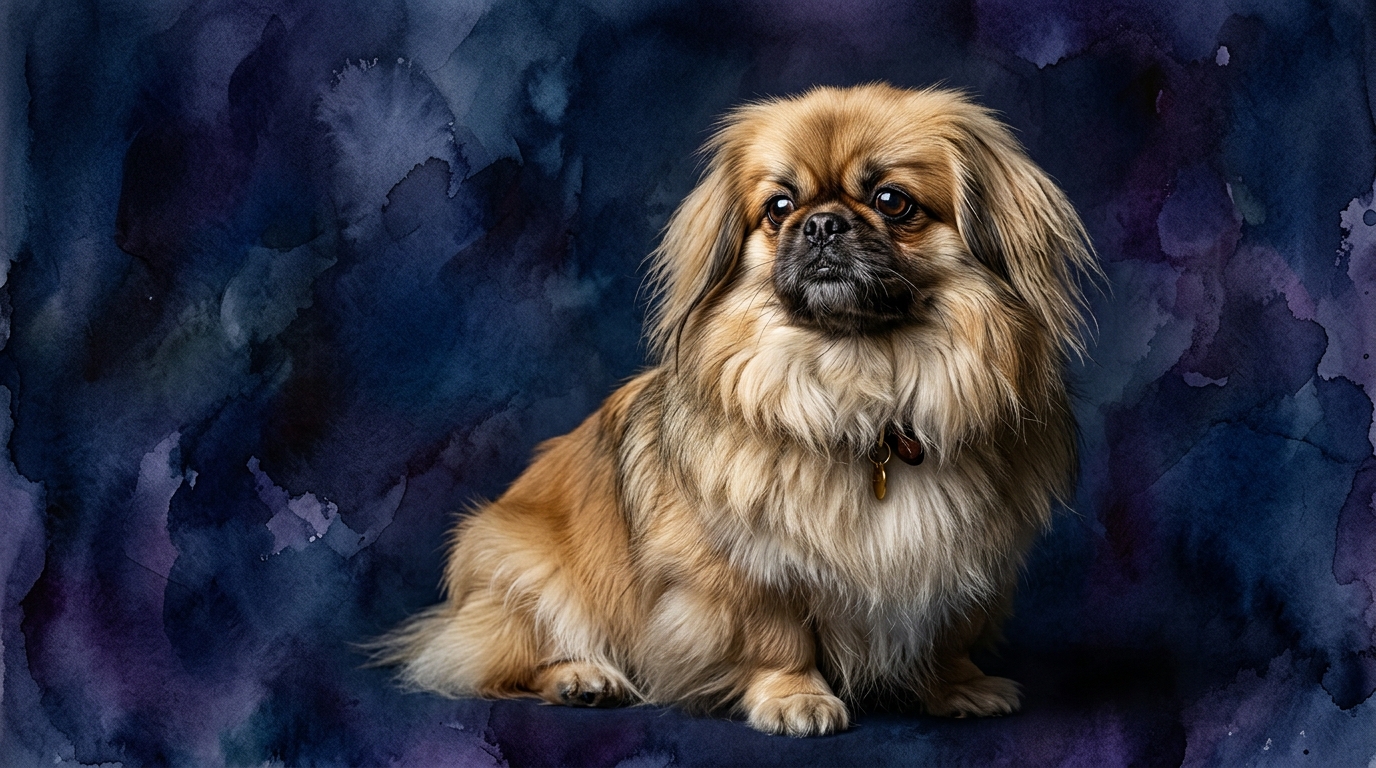
**Pekingese (Toy Group, Coren Rank #77):** This breed often displays a discerning and self-possessed cognitive style.
**Problem Solving (3/5):** The Pekingese shows a moderate aptitude for solving new problems. They can learn to navigate their environment effectively and adapt to changes, but they might rely more on established routines or seek human assistance rather than independently devising complex, multi-step solutions to novel challenges.
**Training Speed (3/5):** Pekingese demonstrate a steady ability to learn new commands and routines, though they may require more repetition, varied motivational techniques, or a gentler approach compared to faster learners. Their learning curve is consistent but typically not rapid, requiring patience and clear communication.
**Social Intelligence (3/5):** Similar to the Airedale, their social intelligence is moderate. They form strong attachments to their families and can understand emotional cues, but their inherently independent and sometimes regal nature means they might choose to engage on their own terms rather than constantly seeking social interaction or approval.
**Instinctive Drive (3/5):** Despite being a toy breed, the Pekingese also displays a moderate instinctive drive, often manifesting as a strong sense of territoriality, a watchful nature, or a desire to patrol their immediate domain. This drive is typically focused on home and family protection rather than the more active pursuits of hunting or herding.
**Memory (3/5):** A Pekingese possesses a solid memory for routines, familiar people, and established places. They will remember what they've learned and the familiar patterns of their day, but perhaps not with the same precision, depth, or long-term retention of more cognitively advanced or highly driven breeds.
Where Airedale Terrier Wins Cognitively
The Airedale Terrier's cognitive profile distinctly outperforms the Pekingese in several key areas, making them more adept at complex tasks and adaptable learning. Their Problem Solving score of 4/5 signifies a greater capacity for independent thought and strategic action. This means an Airedale is more likely to assess a novel situation, such as figuring out how to retrieve a toy stuck under furniture or navigating a new agility course, and devise a solution without constant handler guidance. This contrasts with the Pekingese's more routine-oriented approach to problem-solving.
Furthermore, the Airedale's Training Speed (4/5) and Memory (4/5) collectively offer a significant advantage. They acquire new commands and behaviors with greater efficiency and retain them for longer periods. This cognitive efficiency means fewer repetitions are needed during training sessions, and once a skill is mastered, it's less likely to fade. For tasks requiring sequential steps or quick adjustments, such as advanced obedience or scent work, the Airedale's superior cognitive processing and recall provide a noticeable edge. Their balanced instinctive drive of 3/5, while present, is often channeled into constructive activities when paired with their problem-solving prowess, allowing for directed engagement rather than purely reactive behaviors.
Where Pekingese Wins Cognitively
While the Pekingese doesn't boast higher scores in individual cognitive dimensions compared to the Airedale, its unique combination of moderate attributes presents a "win" in terms of suitability for specific lifestyles and owner expectations. The Pekingese's balanced cognitive profile—Problem Solving 3/5, Training Speed 3/5, Social Intelligence 3/5, Instinctive Drive 3/5, and Memory 3/5—cultivates a self-sufficient and often dignified demeanor. This isn't a breed that constantly seeks intellectual challenges or demanding tasks. Instead, their moderate instinctive drive, often manifesting as a strong sense of territoriality for their home, means their cognitive focus is typically directed inward, towards their immediate environment and family.
Their moderate social intelligence and problem-solving skills mean they are content with a predictable routine and less dependent on constant external stimulation. This allows the Pekingese to thrive in environments where independent contentment is valued over active participation in complex activities. For owners seeking a companion who is attentive but not incessantly demanding of cognitive engagement or strenuous physical exertion, the Pekingese's cognitive makeup provides a distinct advantage, fostering a calm and observant presence that requires less intensive mental management. Their cognitive profile supports a lifestyle of quiet companionship, where their moderate scores translate into a less "needy" intellectual demand on their human counterparts.
Which Is Easier to Train and Why
Based on their Pet IQ Lab scores, the Airedale Terrier is demonstrably easier to train than the Pekingese. The Airedale's Training Speed of 4/5, combined with a Problem Solving score of 4/5 and Memory of 4/5, indicates a dog that picks up new commands quickly, understands the underlying concepts, and retains that learning effectively. They are more apt to engage with training as a problem-solving exercise, actively trying to figure out what is being asked of them. For instance, teaching an Airedale to retrieve a specific item or perform a multi-step trick will likely involve fewer repetitions and a faster progression through training phases. Their higher cognitive capacity means they can generalize learned behaviors to new contexts more readily.
In contrast, the Pekingese, with a Training Speed of 3/5, Problem Solving of 3/5, and Memory of 3/5, will generally require more patience and consistency during training. While certainly capable of learning, their progress might be slower, and they may need more focused motivation to remain engaged. Their more independent nature, stemming from their balanced social intelligence, means they might not always prioritize handler directives over their own comfort or curiosity. For example, a Pekingese might take longer to master basic obedience cues or might require more creative incentives to maintain focus during a training session, often preferring to decide for themselves when and how to comply. Real behavioral differences include the Airedale's readiness to participate actively in learning versus the Pekingese's more discerning and self-directed engagement.
Which Suits Active Owners vs. Relaxed Owners
The Airedale Terrier's cognitive profile aligns best with active owners who can provide consistent mental and physical engagement. Their high Problem Solving (4/5), Training Speed (4/5), and Memory (4/5) mean they thrive when given tasks that stimulate their intellect, such as advanced obedience, agility, or scent work. An active owner would find the Airedale's moderate instinctive drive (3/5) a valuable asset, channeling it into constructive activities like long hikes, puzzle toys, or training sessions that challenge their keen mind. A lack of such engagement could lead to independent problem-solving that might not align with owner expectations, like digging or exploring boundaries.
Conversely, the Pekingese is an ideal match for more relaxed owners who appreciate a companion content with a calmer pace of life. Their balanced cognitive scores across the board (all 3/5) suggest a dog that doesn't demand constant mental stimulation or strenuous activity. While they certainly benefit from basic training and interactive play, their contentment often stems from a stable routine and close companionship rather than complex intellectual challenges. A relaxed owner would find the Pekingese's moderate instinctive drive, often expressed as territorial watchfulness, perfectly manageable within a home environment, without the need for extensive outdoor adventures or demanding training regimens. Their preference for comfort and a less intense cognitive workload makes them excellent companions for those seeking a tranquil presence.
The Verdict
Choose the Airedale Terrier if you are an active individual or family eager to engage a sharp, resourceful mind in diverse activities and appreciate a dog that learns and retains information efficiently. This breed thrives with consistent mental challenges and purposeful interaction, making them a rewarding partner for an engaged lifestyle.
Opt for the Pekingese if you seek a calm, independent companion content with a predictable routine and moderate activity levels, valuing a dog that offers quiet companionship without demanding constant intellectual or physical exertion. Their dignified presence and self-sufficient nature make them ideal for relaxed home environments.
🧠 Find Your Pet's IQ Score
Our Pet IQ Lab assessment covers 25+ tests across 5 cognitive dimensions — personalized to your breed.
Take the Full IQ Test →Frequently Asked Questions
Does the Airedale Terrier's instinctive drive make them difficult to manage?
The Airedale's instinctive drive (3/5) is moderate and, while present, means they have an innate inclination for activities like chasing or investigating. This drive is not inherently difficult to manage; rather, it indicates a need for structured outlets. Channeling this drive through training, puzzle toys, or supervised outdoor activities can prevent it from manifesting in undesirable ways, making them well-adjusted companions.
How does the Pekingese's social intelligence affect their family interactions?
The Pekingese's social intelligence (3/5) suggests they form strong bonds with their families but maintain a degree of independence. They are attentive and affectionate but may not constantly seek interaction or approval. This means they are capable of deep companionship but also comfortable with their own space, providing a balanced presence within the family dynamic without being overly clingy.
Are there specific training methods recommended for the Pekingese given their training speed score?
Given the Pekingese's Training Speed of 3/5, positive reinforcement methods with high-value rewards are particularly effective, along with shorter, more frequent training sessions to maintain engagement. Patience and consistency are key, as they may take more repetitions to grasp new concepts. Focusing on clear, concise commands and making training a rewarding experience will yield the best results for this discerning breed.