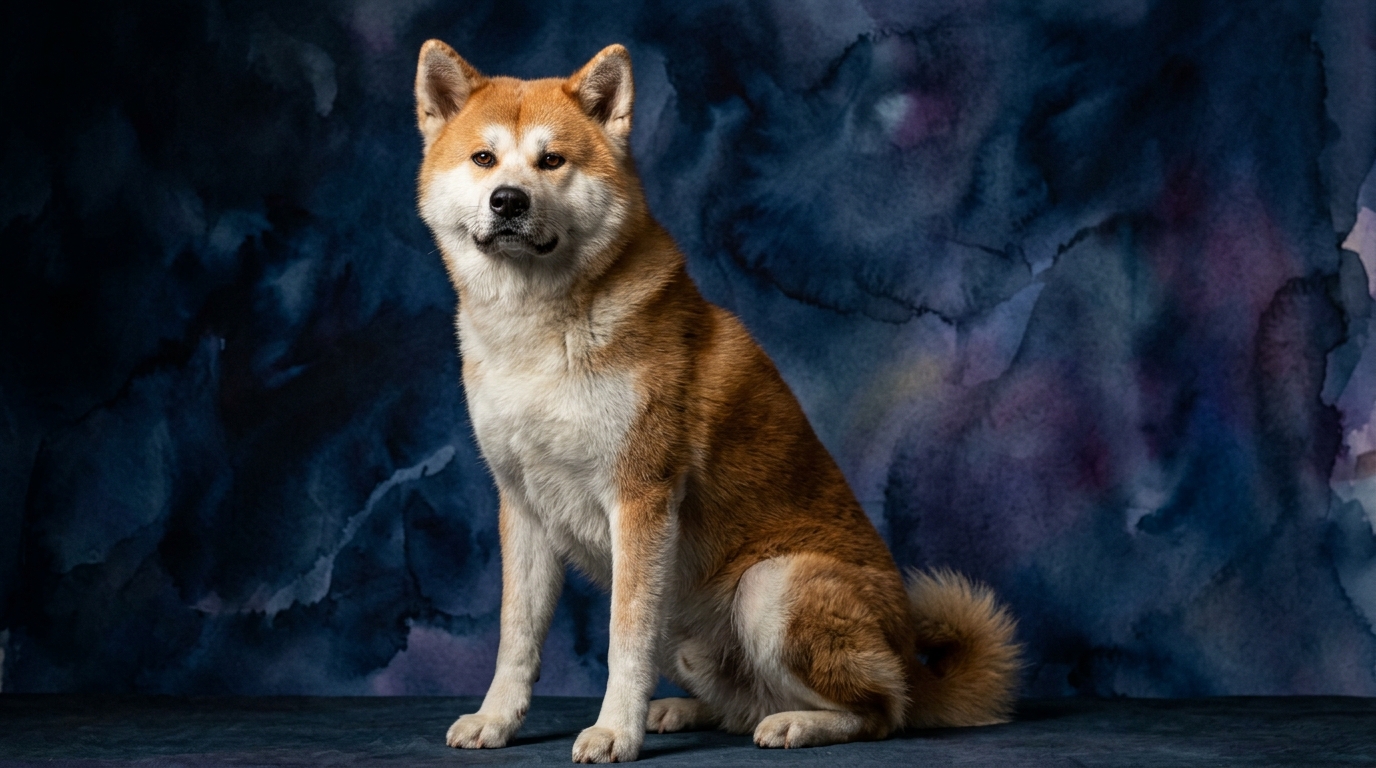

Side-by-Side Cognitive Profiles
The Cosmic Pet Pet IQ Lab employs a multi-dimensional approach to assess canine cognition, moving beyond simplistic 'smartness' metrics to provide a nuanced understanding of each breed's mental toolkit. We evaluate five key dimensions: Problem Solving, Training Speed, Social Intelligence, Instinctive Drive, and Memory.
For the Akita, a breed rooted in guarding and hunting, its cognitive profile reflects a powerful independence and formidable natural aptitudes. Its Problem Solving capacity rates at 3/5, indicating a moderate ability to navigate novel situations or overcome obstacles through independent thought. Training Speed is assessed at 2/5, suggesting a measured pace in acquiring new commands, often requiring patient, consistent reinforcement due to its inherent self-reliance. Social Intelligence, at 3/5, points to a discerning understanding of social cues, though often expressed with a reserved demeanor. Its Instinctive Drive stands out at a robust 5/5, signifying deeply ingrained and powerful natural urges for specific behaviors, such as guarding or prey pursuit. Memory is strong at 4/5, indicating an excellent capacity to retain learned information, routines, and spatial awareness.
The Canaan Dog, a breed with a history spanning herding and survival in harsh environments, presents a cognitive profile marked by adaptability and responsiveness. Its Problem Solving ability, like the Akita, scores 3/5, demonstrating a moderate capacity for devising solutions to challenges. Where it diverges significantly is in Training Speed, earning a 3/5, which suggests a comparatively quicker grasp of new commands and a more willing engagement in structured learning environments than the Akita. Social Intelligence also rates 3/5, indicating a solid understanding of social dynamics, though they can be watchful and somewhat independent. Instinctive Drive is present at 3/5, a moderate expression of innate behaviors, reflecting a balanced blend of herding, territorial, and survival instincts without the overwhelming intensity seen in some breeds. Memory aligns with the Akita at 4/5, showcasing a strong ability to recall past experiences and learned behaviors.
Where the Akita Wins Cognitively
The Akita’s primary cognitive advantage lies in its profound Instinctive Drive, rated at a commanding 5/5. This isn't merely an urge; it's a deep-seated behavioral blueprint that makes them exceptionally effective in roles requiring independent decision-making and self-sufficiency, such as guarding or protection. This strong drive means an Akita often possesses an unwavering resolve when pursuing a goal, whether it's patrolling its territory or engaging with a perceived threat. This cognitive trait contributes to their formidable presence and steadfast loyalty to their family.
Furthermore, the Akita’s impressive Memory, scoring 4/5, complements its strong drives. This allows them to retain complex routines, remember specific individuals or situations, and recall spatial layouts with precision. An Akita will remember its training, its boundaries, and the nuances of its environment over long periods, which, when combined with its instinctive drive, makes for a highly consistent and predictable guardian within its established parameters. This memory also aids in their reserved social intelligence, as they carefully catalog interactions and develop strong, lasting bonds with their inner circle.
Where the Canaan Dog Wins Cognitively
The Canaan Dog's cognitive edge is most apparent in its Training Speed, scoring 3/5 compared to the Akita’s 2/5. This indicates a greater aptitude for learning and executing new commands efficiently, often requiring fewer repetitions to solidify a behavior. Their historical role as herders and versatile survivalists fostered a responsiveness to environmental cues and a capacity for adaptable learning, making them generally more amenable to formal training protocols. This quicker uptake means they can progress through training stages with more fluidity, making them suitable for various dog sports or advanced obedience.
While both breeds share a 3/5 Problem Solving capacity, the Canaan Dog's overall cognitive package, combined with its more moderate Instinctive Drive (3/5), often translates into a dog that is more inclined to work cooperatively with a handler to solve tasks. Their higher Coren rank (#43 vs. Akita's #54) further supports the notion that they possess a generally quicker understanding of new commands and a greater willingness to comply, making them more adaptable to diverse learning scenarios and handler expectations.
Which Is Easier to Train and Why
Based on their respective cognitive profiles, the Canaan Dog is generally easier to train than the Akita. The primary reason for this difference lies in their Training Speed and Instinctive Drive. The Canaan Dog's 3/5 Training Speed indicates a more efficient learning curve for commands, meaning they tend to grasp new instructions more readily and require fewer repetitions to achieve proficiency. This efficiency is often coupled with a higher degree of biddability, or willingness to please, making them more receptive to positive reinforcement methods.
Conversely, the Akita's 2/5 Training Speed suggests a more deliberate and often independent approach to learning. Their formidable 5/5 Instinctive Drive means they possess powerful, innate urges that can sometimes override a handler's commands if those commands conflict with their deeply ingrained behaviors, such as guarding or patrolling. This independence means Akita training requires immense patience, consistency, and a deep understanding of their unique motivations. While Akitas certainly learn and remember, their process is often slower and demands a handler who can respect their self-reliant nature and guide them rather than merely command them. Real behavioral differences manifest as Akitas questioning the necessity of a command, whereas Canaan Dogs are often more eager to perform tasks for engagement and reward.
Which Suits Active Owners vs. Relaxed Owners
Owners considering an Akita should be prepared for a dog with a profound sense of purpose and robust physical and mental needs, making them suitable for owners who are active in a specific, consistent way. Their 5/5 Instinctive Drive requires outlets, whether it's through structured guarding, regular walks that allow for environmental exploration, or consistent engagement in independent thought-provoking activities. While Akitas can be reserved and calm indoors once bonded, their training demands are far from 'relaxed.' They require an owner who is actively engaged in consistent, patient training to channel their strong will and independent thinking effectively, rather than an owner seeking a dog that will passively follow instructions. They thrive with owners who appreciate their formidable presence and are committed to managing their strong drives with leadership and understanding.
The Canaan Dog, with its balanced 3/5 Instinctive Drive and 3/5 Training Speed, is better suited for owners who are active in a more versatile and interactive sense. They thrive on mental engagement and physical activity that often involves their owner, making them excellent companions for hiking, dog sports like agility, or advanced obedience. While they possess an independent streak, their higher biddability makes them more adaptable to various active lifestyles and training pursuits. They are suited for owners who enjoy consistent interaction and structured activities, but who also appreciate a dog that can adapt to different situations. Their moderate drives and quicker learning curve make them a good fit for owners who enjoy an engaged and responsive canine partner without the intense management required for a dog with an overwhelming instinctive drive.
The Verdict
Choose the Akita if you are an experienced owner seeking a powerful, steadfast companion with formidable guarding instincts, prepared for patient, consistent training and respectful of its independent nature.
Opt for the Canaan Dog if you desire a responsive, adaptable companion keen on interactive activities and training, well-suited for a variety of active lifestyles and dog sports.
🧠 Find Your Pet's IQ Score
Our Pet IQ Lab assessment covers 25+ tests across 5 cognitive dimensions — personalized to your breed.
Take the Full IQ Test →Frequently Asked Questions
Do Akitas and Canaan Dogs get along well with other pets?
The Akita's strong instinctive drive (5/5) and reserved social intelligence (3/5) mean they often prefer to be the sole canine in a household and require careful, early socialization if other pets are present. The Canaan Dog, with its moderate instinctive drive (3/5) and similar social intelligence (3/5), can be more adaptable with other pets, especially if introduced early, but their territorial instincts mean supervision is always wise.
Are Akita or Canaan Dogs better for first-time dog owners?
Neither breed is typically recommended for first-time dog owners due to their strong personalities and specific cognitive needs. The Akita's low training speed and high instinctive drive demand an experienced hand, while the Canaan Dog's independent nature and need for consistent, engaging mental stimulation also require a knowledgeable owner.
How do their memory capacities impact their daily lives?
Both breeds possess a strong memory (4/5), which means they excel at remembering routines, commands, and their home environment, contributing to consistency in their behavior. This also means they vividly recall both positive and negative experiences, making early positive socialization and consistent training crucial for shaping their long-term temperament and responses.