
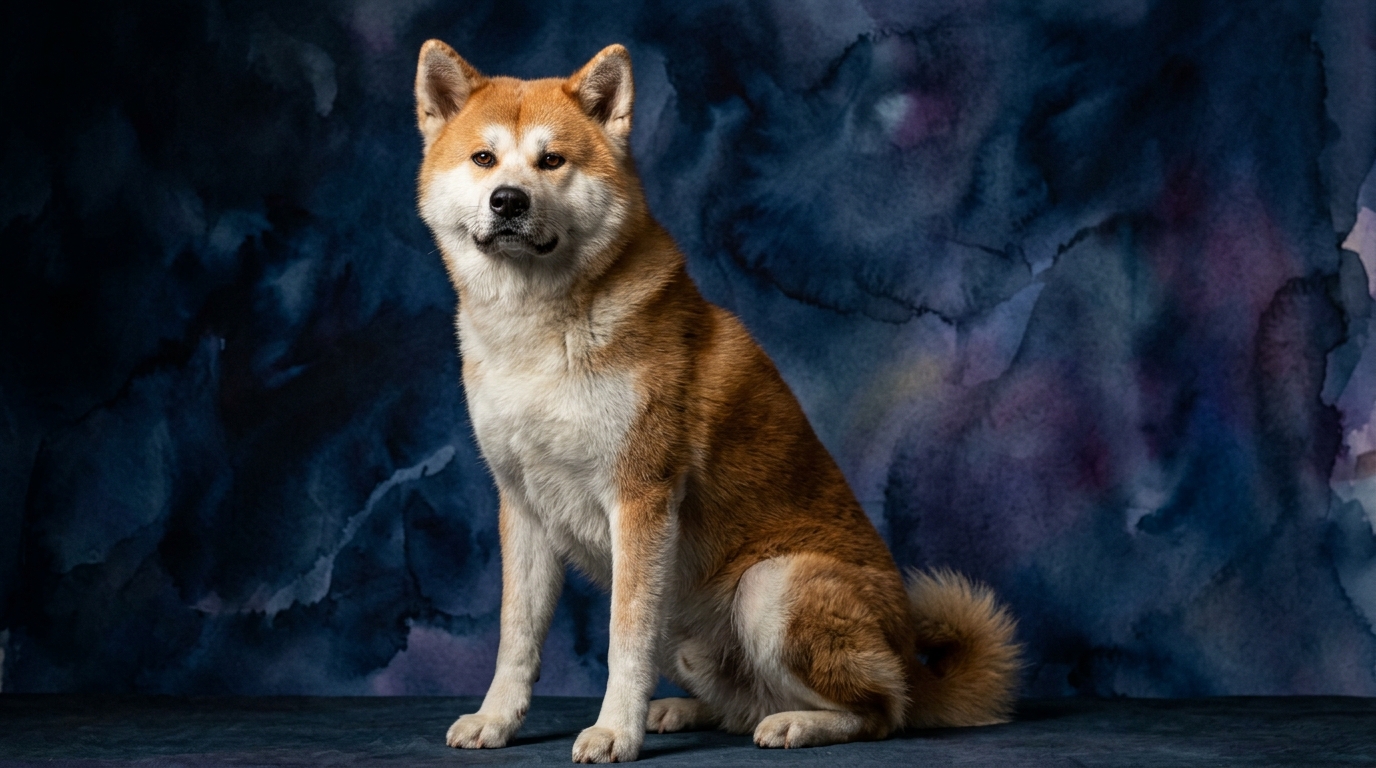
Side-by-Side IQ Profile: German Shepherd vs. Akita
The German Shepherd, a Herding breed, holds a remarkable Coren rank of #3, reflecting a comprehensive cognitive prowess across multiple dimensions. With a perfect 5/5 in Problem Solving, Training Speed, Social Intelligence, Instinctive Drive, and Memory, they demonstrate an exceptional capacity to navigate complex situations, assimilate new information rapidly, understand nuanced social cues, exhibit strong purpose-driven motivation, and retain learned experiences with enduring clarity.
In contrast, the Akita, a Working breed, occupies Coren rank #54, presenting a distinct cognitive profile characterized by self-reliance and dedication. Their Problem Solving is rated 3/5, indicating they tackle challenges on their own terms. Training Speed, at 2/5, means they require patient, consistent instruction, often needing to perceive personal value in a task. Social Intelligence, rated 3/5, points to a reserved and selective approach to interactions. Like the German Shepherd, the Akita possesses a potent Instinctive Drive of 5/5, manifesting as strong protective instincts and purpose. Their Memory, at 4/5, is solid, allowing recall of past lessons effectively, even if initial learning is protracted.
Where the German Shepherd Wins Cognitively
The German Shepherd's cognitive strengths shine particularly bright in areas demanding adaptability, rapid learning, and collaborative problem-solving. Their 5/5 Problem Solving capability means they excel at tasks requiring more than rote memorization; they can analyze novel situations, devise solutions, and even anticipate human needs. This translates into an animal that quickly assesses environmental changes, understands abstract concepts, and performs complex sequences of actions with minimal oversight, making them invaluable in roles from service work to search and rescue.
Their 5/5 Training Speed is a significant cognitive advantage, absorbing new commands with remarkable efficiency. This rapid learning curve is fueled by an eagerness to engage and a deep desire to understand. Their high Social Intelligence (5/5) complements this, enabling them to finely tune into human intentions and subtle body language, further accelerating training and strengthening the collaborative bond. This cognitive suite allows for a profound level of partnership, where the dog actively participates in decision-making.
Where the Akita Wins Cognitively
While the Akita's cognitive profile emphasizes different strengths, these attributes are equally valuable, particularly for owners who appreciate an independent and resolute companion. The Akita's 5/5 Instinctive Drive is a powerful cognitive asset, manifesting as unwavering loyalty and formidable protective instincts. This drive, combined with their 3/5 Problem Solving, means they possess the innate mental fortitude to act decisively when their territory or family is threatened, often making autonomous judgments based on their deep-seated protective nature. Their decision-making is often self-directed and robust.
The Akita's 4/5 Memory, though slightly less than the German Shepherd, is still a notable cognitive strength, retaining learned experiences and established routines with considerable tenacity. Once a concept is thoroughly ingrained, it is likely to stick, even if the initial teaching phase requires more patience. Their lower scores in Training Speed (2/5) and Social Intelligence (3/5) are not deficits but rather indicators of a cognitive style that prioritizes self-reliance and discerning engagement over eager compliance. This independent processing allows Akitas to form strong, deliberate bonds and respond to situations with a unique blend of steadfastness and personal conviction, making them formidable guardians who think for themselves.
Which is Easier to Train and Why
Based on their cognitive profiles, the German Shepherd is demonstrably easier to train for a broader range of tasks and obedience levels. Their 5/5 Training Speed means they pick up new commands and complex routines quickly, often with an inherent desire to please and engage with their handler. Their 5/5 Social Intelligence allows them to readily interpret human cues, facilitating a smooth and responsive learning experience. They thrive on clear communication and collaborative effort, making them highly receptive to various training methodologies.
The Akita, with a Training Speed of 2/5 and Social Intelligence of 3/5, presents a different training dynamic. While capable of learning, they typically require more patience, consistency, and a deep understanding of their independent nature. Akitas are not inherently eager to please in the same way; they often need to understand the *purpose* or *benefit* of a command from their own perspective. This can manifest as a "what's in it for me?" attitude, requiring handlers to be highly motivating. Their strong will means they might selectively obey if they don't perceive the command as valid, necessitating a firm, yet fair and consistent approach to avoid behavioral inconsistencies.
Which Suits Active Owners vs. Relaxed Owners
Both the German Shepherd and the Akita are breeds that require significant engagement and are generally not suited for truly "relaxed" or sedentary owners. However, the *type* of activity and mental stimulation they thrive on differs, making them suitable for different kinds of active lifestyles. The German Shepherd, with its 5/5 Instinctive Drive and 5/5 Problem Solving, needs owners who are prepared for a highly interactive and purpose-driven relationship. They excel in activities like advanced obedience, agility, or protection sports, thriving on structured training and integrating as a working partner.
The Akita, while also possessing a 5/5 Instinctive Drive, often channels this into protective vigilance and independent exploration rather than constant collaborative work. Owners suited for an Akita are active but might appreciate a dog that is less demanding of constant interaction and more content with patrolling its territory or accompanying them on walks. Their 3/5 Social Intelligence means they are often more reserved and less overtly "needy" for constant human attention, though they still require substantial daily exercise and mental enrichment. They are best for owners who are active outdoors, understand the need for consistent structure, and value a loyal, independent companion who enjoys their own space.
The Verdict
For owners seeking a highly collaborative, adaptable, and purpose-driven companion for advanced training, sports, or service roles, the German Shepherd's comprehensive cognitive abilities make them an unparalleled partner.
For individuals who appreciate an independent, loyal, and protective companion, willing to invest in consistent, patient training tailored to a strong-willed breed, the Akita offers a uniquely rewarding bond.
🧠 Find Your Pet's IQ Score
Our Pet IQ Lab assessment covers 25+ tests across 5 cognitive dimensions — personalized to your breed.
Take the Full IQ Test →Frequently Asked Questions
Are German Shepherds better guard dogs than Akitas?
Both breeds possess strong protective instincts, but their approach differs. German Shepherds are highly trainable and can be directed to guard specific areas or individuals, using their social intelligence to discern threats. Akitas are naturally more reserved and possess a formidable independent protective drive, often acting on their own judgment to defend their family and territory without extensive specific training.
Do Akitas get along with other dogs or pets?
Akitas generally have a lower social intelligence score (3/5) and a strong instinctive drive, making them less inclined to readily accept other dogs, especially those of the same sex, or smaller pets. Early and extensive socialization is crucial, but even then, they often thrive best as the sole canine in a household or with very careful introductions to compatible companions.
How much exercise do these breeds need daily?
Both breeds require significant daily exercise to maintain physical and mental well-being. German Shepherds, with their high instinctive drive and problem-solving, need at least 60-90 minutes of vigorous activity, often combined with mental challenges like training or puzzle toys. Akitas also need 45-60 minutes of solid exercise daily, such as long walks or secure off-leash play, to satisfy their drive and prevent boredom.