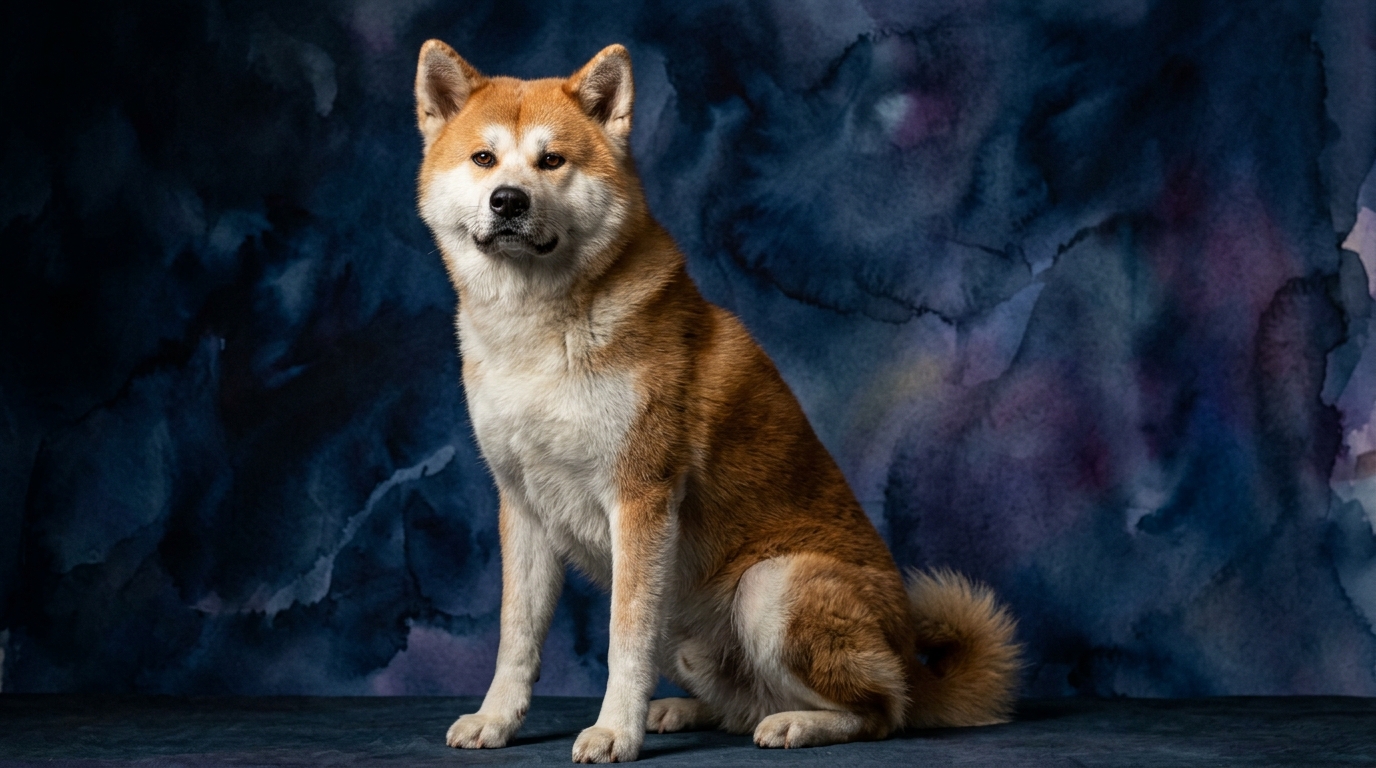
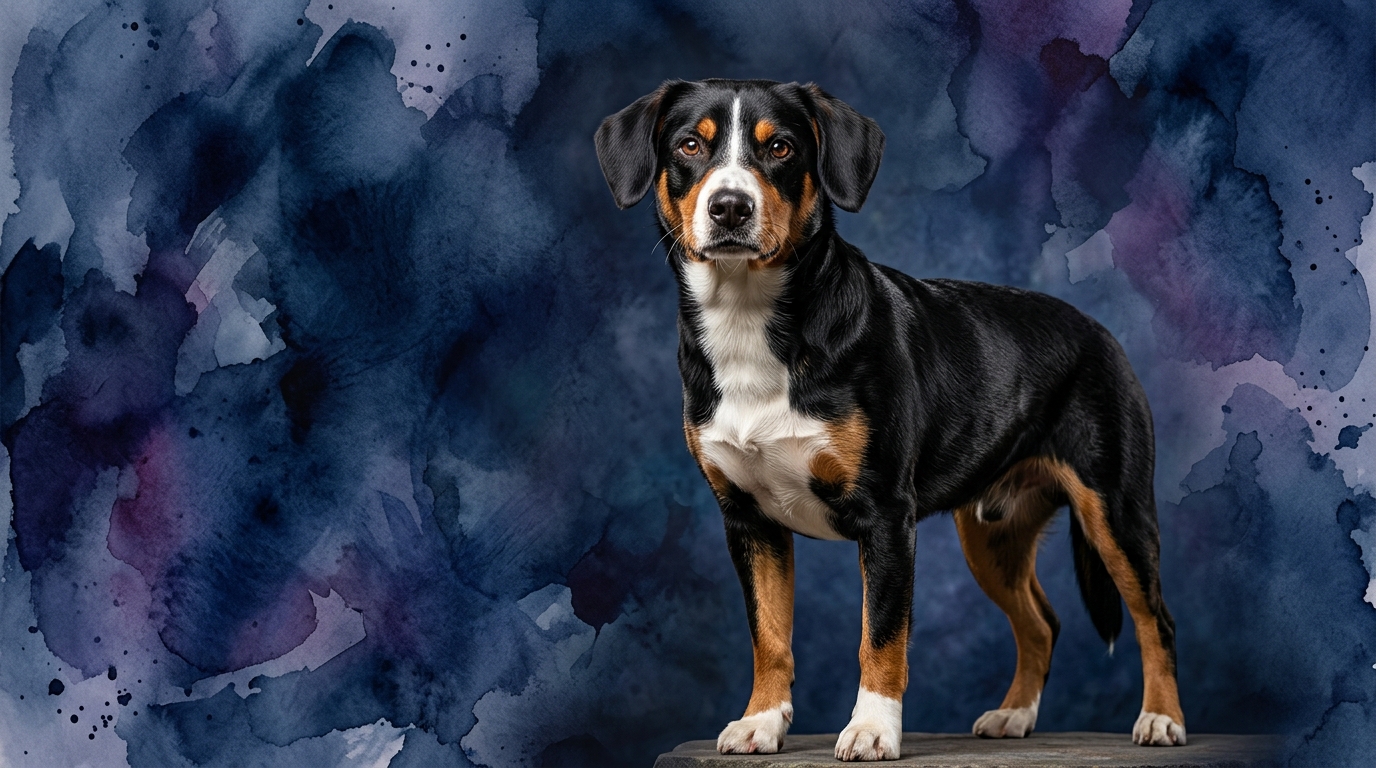
Side-by-Side IQ Profile: Akita vs. Entlebucher Mountain Dog
To understand the cognitive strengths of these two distinct breeds, The Cosmic Pet Pet IQ Lab employs a five-dimensional framework: Problem Solving, Training Speed, Social Intelligence, Instinctive Drive, and Memory. Each dimension offers insight into how these breeds perceive, learn, and interact with their world, moving beyond simplistic labels to provide specific cognitive snapshots.
The Akita (Working, Coren rank #54) presents a profile shaped by its heritage as a large game hunter and guardian. Its Problem Solving is rated 3/5, indicating a moderate capacity for independent thought, often leading to self-directed solutions rather than immediate human compliance. Training Speed scores 2/5, suggesting that Akitas require consistent, patient, and often creative approaches to learning new commands, owing to their independent streak. Social Intelligence is 3/5, meaning they possess a discerning understanding of social cues, particularly within their established inner circle, but can be reserved or aloof with outsiders. A standout feature is their Instinctive Drive at 5/5, reflecting powerful territorial, protective, and prey instincts deeply ingrained in their behavior. Finally, their Memory is strong at 4/5, allowing them to retain complex experiences and associations over extended periods.
The Entlebucher Mountain Dog (Herding, not Coren-ranked) offers a different cognitive blueprint, reflecting its role in managing livestock. Its Problem Solving is also 3/5, demonstrating an adaptive intelligence useful for navigating dynamic environments and executing tasks, often with a pragmatic approach. Notably, its Training Speed is 3/5, indicating a quicker aptitude for picking up commands and a greater eagerness to please during training sessions compared to the Akita. Social Intelligence also stands at 3/5, showing they are capable of reading situations and individuals, often displaying an alert and observant demeanor. Their Instinctive Drive is 3/5, primarily centered on their herding tendencies, which manifests as a moderate urge to gather, patrol, and be engaged in purposeful activity. Their Memory is rated 3/5, providing a solid foundation for consistent performance of learned tasks and routines.
Comparing these profiles reveals two breeds with similar capacities for problem-solving and social understanding, yet distinct approaches to learning and fundamental motivations. The Akita’s independence and profound instinctive drives contrast with the Entlebucher’s more cooperative training speed and moderate, task-oriented drives, setting the stage for different owner experiences.
Where the Akita Wins Cognitively
The Akita’s cognitive profile shines particularly in two key areas: Instinctive Drive and Memory. With a perfect 5/5 in Instinctive Drive, Akitas possess an unparalleled depth of inherent behavioral programming. This manifests as a powerful guardian instinct, a strong sense of territoriality, and a pronounced prey drive, all of which contribute to their self-assured and protective demeanor. This high drive means they are acutely aware of their surroundings and potential threats, making them naturally vigilant protectors of their home and family.
Furthermore, the Akita's Memory, rated at 4/5, provides a distinct cognitive advantage. This robust recall extends to past experiences, learned behaviors, and social interactions, enabling them to form deep, lasting bonds and remember both positive and negative encounters with remarkable clarity. An Akita will remember a perceived slight or a positive reinforcement for a long time, influencing their future responses and interactions. This strong memory underpins their consistent character and makes them reliable in established routines, once those routines are thoroughly ingrained.
These superior cognitive dimensions mean an Akita often operates with a profound internal compass, guided by deep-seated instincts and a vivid recollection of its world. Owners appreciate this breed for its unwavering loyalty and its ability to act decisively based on its perception and past learning, even if that means a slower path to initial training compliance.
Where the Entlebucher Mountain Dog Wins Cognitively
The Entlebucher Mountain Dog distinguishes itself with a superior Training Speed, scoring 3/5 compared to the Akita’s 2/5. This higher aptitude for learning means Entlebuchers typically grasp new commands and routines more quickly and with fewer repetitions. Their eagerness to engage and work alongside their human companions significantly streamlines the training process, making them more responsive to instruction.
This quicker training speed is often linked to their moderate Instinctive Drive (3/5), which is primarily focused on herding tasks rather than independent guardianship. This means their instincts are more easily channeled into cooperative activities, rather than conflicting with human directives. An Entlebucher is generally more amenable to redirection and less likely to prioritize its own agenda over a clear command, making them a more fluid partner in various activities.
The Entlebucher's cognitive edge in trainability translates into a more adaptable and versatile companion for owners seeking a dog that can quickly master a range of skills, from basic obedience to complex canine sports. Their capacity for faster learning allows for greater flexibility in training methods and a more immediate sense of progress, fostering a strong working relationship built on mutual understanding and responsiveness.
Which is Easier to Train and Why
Based on their cognitive profiles, the Entlebucher Mountain Dog is generally easier to train than the Akita. The Entlebucher’s Training Speed of 3/5 indicates a quicker uptake of commands and a more pronounced willingness to cooperate. This breed’s herding background predisposes them to working in tandem with a human, making them more receptive to instruction and eager to please, which greatly simplifies the learning process.
In contrast, the Akita’s Training Speed of 2/5 highlights a more deliberate and independent learning style. Their high Instinctive Drive (5/5) means they often possess a strong will and a clear sense of their own priorities, which can sometimes override human commands. Training an Akita requires exceptional patience, consistency, and a deep understanding of canine psychology, as they are less likely to perform a task simply because they are told. They often need to understand the 'why' or be highly motivated to comply.
Furthermore, the Akita's Problem Solving (3/5) combined with its strong Instinctive Drive can lead to a dog that figures out ways around commands or adapts training scenarios to suit its own agenda. For example, an Akita might learn to 'fake' a sit to get a treat, whereas an Entlebucher is more likely to genuinely perform the action. This difference in cognitive approach necessitates distinct training philosophies; the Entlebucher thrives on positive reinforcement and clear directives, while the Akita requires a more nuanced approach that respects its independence while establishing firm boundaries.
Ultimately, while both breeds are capable learners, the Entlebucher’s inherent biddability and quicker training speed make the journey to a well-behaved companion significantly smoother and less demanding for most owners. The Akita, while capable, demands a more experienced and dedicated trainer prepared for a slower, more challenging, yet ultimately rewarding, process.
Which Suits Active Owners vs. Relaxed Owners
When considering an active versus relaxed owner lifestyle, the cognitive profiles of the Akita and Entlebucher Mountain Dog offer clear distinctions. The Akita, with its profound Instinctive Drive (5/5) and moderate Problem Solving (3/5), is better suited for experienced, active owners who appreciate a dog with a strong, independent will and are prepared to channel its inherent drives. These owners must be committed to consistent training, socialization, and providing outlets for their Akita's powerful protective and territorial instincts, which often translate into a need for structured engagement rather than just casual exercise.
Akita owners need to be active in managing their dog's environment and interactions, understanding that their Akita's strong memory (4/5) and discerning social intelligence (3/5) mean they will remember past events and form strong opinions. A relaxed owner who prefers minimal structured activity or who is unwilling to dedicate significant time to consistent training and boundary setting may find an Akita's independent nature and strong drives challenging to manage. They require mental stimulation that respects their self-assured nature, not just physical exertion.
Conversely, the Entlebucher Mountain Dog, with its moderate Instinctive Drive (3/5) and quicker Training Speed (3/5), is an excellent match for active owners who desire a responsive, engaged, and cooperative companion for various pursuits. Their herding background means they thrive on purpose-driven activities like hiking, agility, or obedience, where they can utilize their problem-solving skills and eagerness to work. These owners can expect a dog that learns quickly and is more inclined to participate actively in family life and outdoor adventures.
While Entlebuchers are active and require regular mental and physical exercise, their higher training speed and more moderate drives make them generally more adaptable to an active family’s routine. They are less likely to challenge authority than an Akita, making them a more straightforward choice for owners who want a biddable partner for an active lifestyle without the intense management demands of a highly independent breed. A relaxed owner might struggle with their energy, but an active owner will find them a highly rewarding and responsive companion.
The Verdict
Choose an Akita if you are an experienced owner seeking a profoundly loyal, independent, and protective companion, prepared to commit to consistent, nuanced training and management of its deep-seated instincts.
Choose an Entlebucher Mountain Dog if you are an active owner looking for a responsive, biddable, and energetic partner who enjoys learning quickly and participating enthusiastically in various activities.
🧠 Find Your Pet's IQ Score
Our Pet IQ Lab assessment covers 25+ tests across 5 cognitive dimensions — personalized to your breed.
Take the Full IQ Test →Frequently Asked Questions
Is the Akita difficult to live with due to its high instinctive drive?
The Akita's high instinctive drive (5/5) means they possess strong protective and territorial instincts, which require consistent training and socialization from an early age. While not 'difficult,' they demand an owner who understands and can channel these natural behaviors effectively, providing clear boundaries and purpose.
Do Entlebucher Mountain Dogs require a lot of mental stimulation?
Yes, Entlebucher Mountain Dogs, with their herding background and moderate problem-solving skills, thrive on mental stimulation. Activities like obedience training, puzzle toys, and canine sports utilize their intelligence and prevent boredom, ensuring a well-adjusted and happy companion.
Which breed is better for a first-time dog owner?
Neither breed is typically recommended for first-time dog owners without significant prior research and commitment, but the Entlebucher Mountain Dog, with its quicker training speed and more moderate instinctive drive, would generally be a more manageable choice than the highly independent and strongly driven Akita.