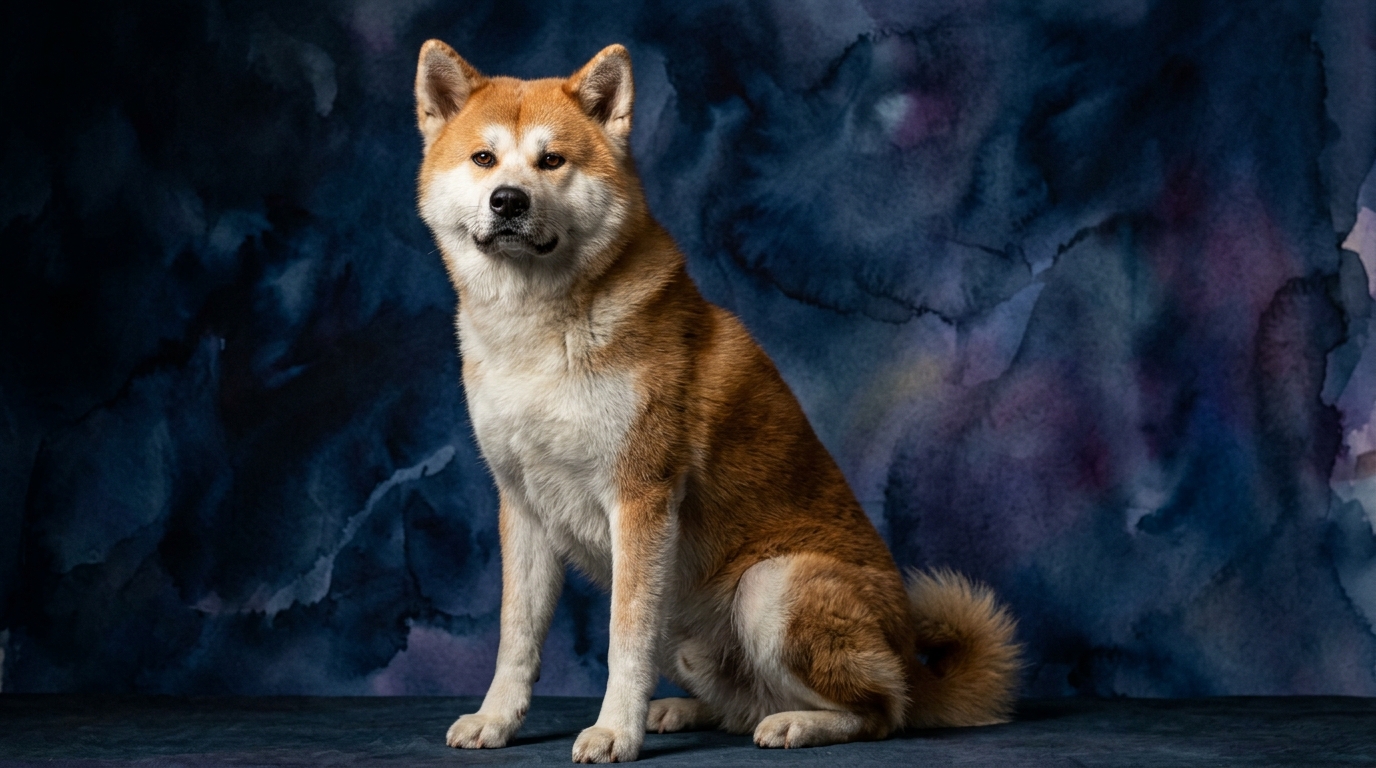

Side-by-Side IQ Profile: Akita vs. Irish Setter
The Cosmic Pet Pet IQ Lab employs a five-dimensional framework to unpack canine intelligence, moving beyond simplistic notions to reveal the nuanced cognitive strengths of each breed. For the Akita, a breed historically revered for its protective prowess in Japan, its cognitive profile reflects a formidable independence and acute awareness of its surroundings. Its Problem Solving score of 3/5 indicates a capacity for practical solutions, especially when guarding its territory or evaluating potential threats, often relying on its own judgment rather than seeking constant direction. The Akita’s Training Speed, rated at 2/5, highlights its discerning nature; while capable of learning, it requires patient and consistent methods, as it often weighs commands against its own internal priorities. Social Intelligence, at 3/5, reveals a selective but profound connection with its trusted human family, often appearing aloof or reserved with strangers, a trait consistent with its guardian heritage. Its Instinctive Drive, a powerful 5/5, is perhaps its most defining cognitive feature, encompassing an intense motivation for protection, vigilance, and a strong sense of territory. Finally, the Akita’s Memory, at 4/5, allows it to retain complex information about its environment, past interactions, and established routines, contributing to its stable and predictable demeanor within its defined world.
In contrast, the Irish Setter, bred for its tireless energy and keen senses in the field, showcases a different but equally compelling set of cognitive strengths. Its Problem Solving ability scores a higher 4/5, reflecting its aptitude for navigating complex hunting scenarios, such as tracking game through varied terrain or retrieving downed birds, often adapting strategies on the fly. The Irish Setter’s Training Speed, also a strong 4/5, underscores its eagerness to please and responsiveness to instruction, making it a highly trainable companion for a variety of tasks and sports. Social Intelligence, matching the Akita at 3/5, manifests as an outgoing and amiable disposition, thriving on companionship and interaction within its human family, though perhaps less reserved than the Akita with new acquaintances. Its Instinctive Drive, a moderate 3/5, is channeled towards sporting pursuits like pointing and retrieving, driven by scent and prey drive but typically in collaboration with a handler. The Irish Setter's Memory, like the Akita, scores a robust 4/5, enabling it to recall complex patterns, commands, and locations, crucial for consistent performance in field work and competitive obedience.
Where the Akita Wins Cognitively
The Akita’s unparalleled instinctive drive, rated at a powerful 5/5, represents a significant cognitive advantage in specific contexts. This isn't merely a physical predisposition but a deeply ingrained mental framework that prioritizes vigilance, protection, and territorial awareness. An Akita processes its environment with a constant, subtle assessment of potential threats and changes, making quick, independent judgments without needing constant human input. This allows them to excel in roles requiring a self-reliant guardian, where their decision-making is guided by a profound internal compass rather than solely by external commands. Their robust memory, scoring 4/5, further amplifies this strength, enabling them to recall specific individuals, past events, and established patterns within their territory, contributing to their nuanced understanding of safety and threat. This cognitive combination fosters a dog that is exceptionally discerning and resolute in its protective duties, demonstrating a focused intelligence geared towards security and stability.
Where the Irish Setter Wins Cognitively
The Irish Setter’s superior problem-solving ability, rated at 4/5, coupled with its impressive training speed, also at 4/5, marks its cognitive triumph in areas requiring adaptability and rapid learning. Their historical role as a bird dog demanded a keen intellect to interpret complex scent trails, navigate varied terrain, and execute intricate retrieving tasks, often adapting to changing conditions in the field. This breed displays a flexible cognitive style, capable of processing new information quickly and applying it effectively to achieve desired outcomes, whether in competitive dog sports or cooperative hunting. Their eagerness to engage with human directives accelerates this learning process, making them highly receptive to mastering new skills and commands. The Irish Setter's cognitive strength lies in its ability to quickly form associations, understand sequential tasks, and apply learned behaviors with enthusiasm, making them exceptionally adept at collaborative work and dynamic challenges.
Which Is Easier to Train and Why
When considering ease of training, the Irish Setter generally proves to be the more straightforward companion, primarily due to its higher training speed (4/5) and inherent disposition for cooperation. Their historical purpose required them to work closely with human handlers, fostering a strong desire to please and a natural responsiveness to cues and commands. This translates into a dog that typically enjoys the learning process, readily engages with positive reinforcement, and quickly grasps new concepts, making them a joy to guide through obedience or sports training. Their social intelligence, while equal to the Akita’s numerical score, often manifests as a more overtly amiable and communicative nature, eager for shared activity and mental stimulation.
In contrast, the Akita’s lower training speed (2/5) is not an indicator of inability, but rather a reflection of its independent and discerning cognitive style. An Akita learns, but often on its own terms and at its own pace, requiring significant patience, consistency, and a deep understanding from its handler. Their powerful instinctive drive (5/5) means they may prioritize their own perceived duties, such as surveying their territory or assessing a novel situation, over immediate compliance with a command if they don't see the immediate utility or if it conflicts with their internal priorities. Training an Akita involves building a relationship of mutual respect and trust, where the handler consistently demonstrates value and clear leadership, convincing the Akita that cooperation is a worthwhile endeavor. Their memory (4/5) ensures they retain what they learn, but their initial willingness to engage requires a more nuanced approach than the naturally compliant Irish Setter.
Suited for Active vs. Relaxed Owners
The cognitive profiles of the Akita and Irish Setter paint a clear picture for matching them with owner lifestyles. Owners seeking a highly interactive, physically demanding, and mentally engaging companion will find the Irish Setter a more suitable match. Their combination of superior problem-solving (4/5) and rapid training speed (4/5) means they thrive on consistent mental and physical challenges, from agility and field trials to extensive hiking and complex obedience routines. An Irish Setter requires an owner who is committed to channeling their boundless energy and cognitive agility into structured activities, as they genuinely enjoy being an active, cooperative participant in their human's life. Their moderate instinctive drive (3/5) for sporting activities is best satisfied through regular, purposeful engagement that prevents boredom and destructive behaviors.
Conversely, the Akita, while certainly requiring regular exercise for its physical well-being, is better suited for owners who appreciate a more self-contained, dignified, and watchful companion. Their powerful instinctive drive (5/5) and independent problem-solving (3/5) mean they are content with a routine that includes secure territory patrolling, consistent boundaries, and calm, respectful interaction. They don't demand constant entertainment or complex, high-energy tasks in the same way an Irish Setter does, but rather a clear understanding of their role within the family and a stable environment. Owners who value profound loyalty, a strong protective presence, and a dog that is reserved with strangers but deeply devoted to its inner circle, without the need for constant overt direction, would find the Akita a fitting and rewarding choice.
The Verdict
Choose an Akita if you value a loyal, independent guardian with a strong internal compass, appreciating a dog that thinks for itself and offers a profound, reserved companionship.
Opt for an Irish Setter if you desire an energetic, cooperative partner for active pursuits, one who thrives on engagement and quickly masters complex tasks with joyful enthusiasm.
🧠 Find Your Pet's IQ Score
Our Pet IQ Lab assessment covers 25+ tests across 5 cognitive dimensions — personalized to your breed.
Take the Full IQ Test →Frequently Asked Questions
Is an Akita difficult to live with due to its independence?
An Akita's independence (training speed 2/5) requires consistent boundaries and early socialization, but it fosters a self-reliant companion rather than a 'difficult' one. They thrive with owners who respect their discerning nature and provide clear leadership.
Do Irish Setters get bored easily if not given enough activity?
Yes, Irish Setters, with their high problem-solving (4/5) and training speed (4/5), require significant mental and physical engagement to prevent boredom. A lack of activity can lead to restless behaviors as they seek outlets for their energy and cognitive capacity.
How do their social intelligence scores (3/5 for both) manifest differently?
For the Akita, a 3/5 social intelligence often means reservedness towards strangers but deep bonding with family, showing selective social engagement. The Irish Setter's 3/5 indicates general amiability and responsiveness to human interaction, thriving on companionship within their social circle and generally being more outgoing.