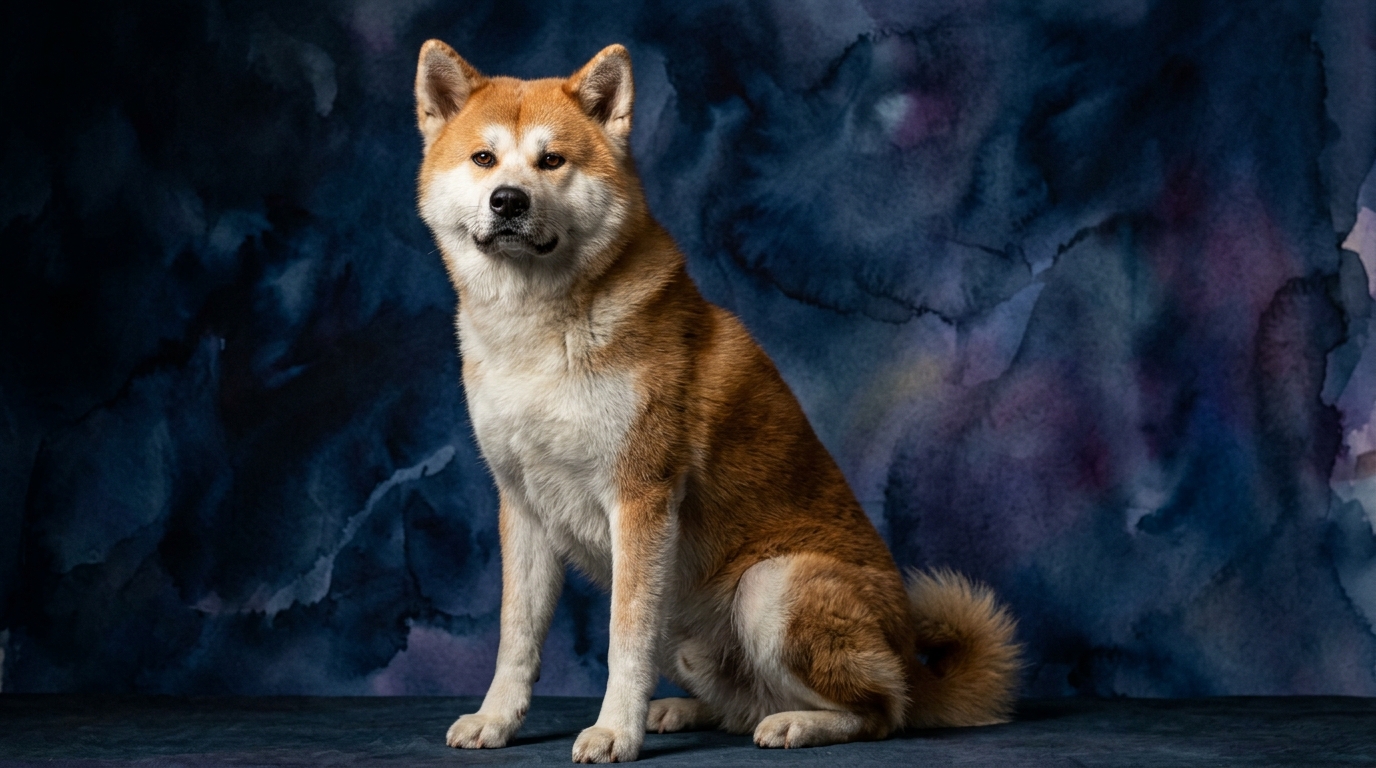
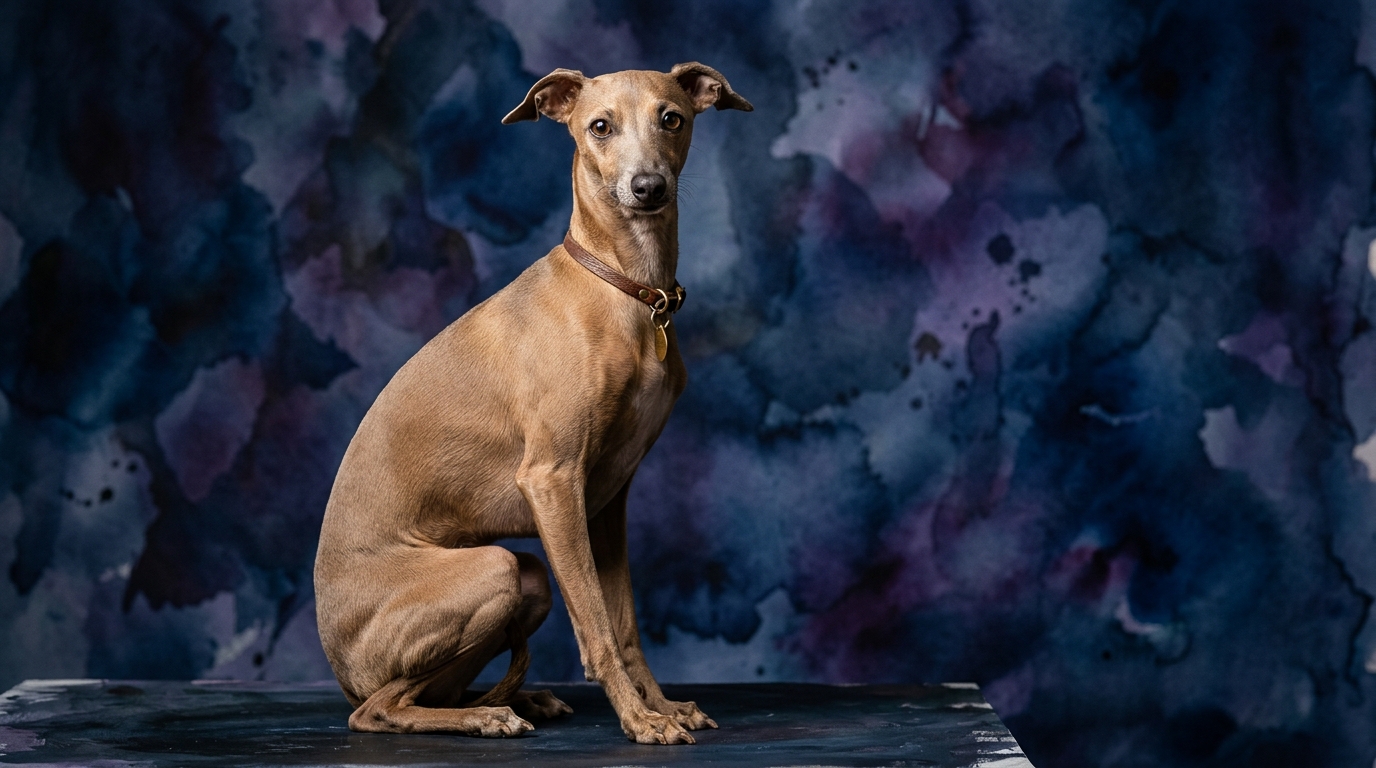
Side-by-Side Cognitive Profiles: Akita vs. Italian Greyhound
To truly understand the Akita and Italian Greyhound, we delve into their specific cognitive dimensions, revealing how each breed approaches the world. The Akita, a robust working dog, holds a Coren rank of #54, indicating its capacity for understanding and performing learned tasks, while the Italian Greyhound, a refined toy breed, is not specifically listed in Coren's traditional ranking, suggesting a different focus in its cognitive strengths.
For the Akita, problem Solving is rated at 3/5, indicating a moderate ability to figure out novel situations or overcome obstacles independently. Their training Speed is 2/5, suggesting a slower acquisition of new commands or routines compared to many breeds. Social Intelligence stands at 3/5, meaning they possess a moderate capacity to understand and respond to human cues and social dynamics. Instinctive Drive is notably high at 5/5, reflecting a powerful innate predisposition for behaviors like guarding, hunting, or herding. Memory for the Akita is strong at 4/5, implying they retain learned information and experiences over significant periods.
The Italian Greyhound shares the Akita’s problem Solving score of 3/5, indicating a similar moderate aptitude for navigating challenges. However, its training Speed is 3/5, suggesting a quicker grasp of new commands than the Akita. Social Intelligence is also 3/5, mirroring the Akita’s capacity for understanding social cues. Instinctive Drive is rated 3/5, which is moderate, implying less intense hardwired behaviors compared to the Akita. Memory for the Italian Greyhound is 3/5, indicating a solid but not exceptional ability to recall information.
Where the Akita Wins Cognitively
The Akita’s cognitive strengths shine particularly bright in areas demanding deep-seated purpose and self-reliance. Its exceptional Instinctive Drive, scoring a perfect 5/5, means the Akita possesses a profound natural inclination for specific tasks, whether it’s guarding territory, protecting its family, or exhibiting strong prey drive. This isn't just about physical action; it's a cognitive framework that drives their decision-making, enabling them to act decisively based on ingrained patterns, often without direct human instruction.
Coupled with this, the Akita's Memory, rated 4/5, provides a significant cognitive advantage. This strong recall allows them to remember complex sequences of events, specific people, or past experiences with remarkable clarity. This contributes to their independent nature; they learn from past interactions and can apply those lessons to future situations, making them adept at understanding the nuances of their environment and the routines of their household. This robust memory, combined with high instinctive drive, allows them to be incredibly reliable in roles requiring vigilance and long-term understanding of their duties, even if training new, arbitrary commands takes more repetition.
Where the Italian Greyhound Wins Cognitively
The Italian Greyhound demonstrates a distinct cognitive edge primarily in its Training Speed, scoring 3/5 compared to the Akita's 2/5. This indicates a relatively quicker ability to pick up new commands and routines, making them generally more responsive to initial obedience lessons. While they might not possess the Akita’s profound instinctive drives, their capacity to process and integrate new information efficiently means they can adapt to novel situations and learn desired behaviors with fewer repetitions.
Furthermore, the Italian Greyhound's moderate Instinctive Drive of 3/5, while lower than the Akita's, can be seen as a cognitive advantage for certain lifestyles. This means they are less likely to be overwhelmed by powerful, hardwired urges that require extensive channeling or management. Their cognitive energy isn't as heavily directed towards strong guarding or hunting behaviors, allowing for a more flexible and adaptable response to their environment and human companionship. This makes them potentially easier to integrate into a variety of home settings without constant vigilance against strong innate directives.
Which is Easier to Train and Why
When it comes to ease of training, the Italian Greyhound generally offers a less challenging experience due to its higher Training Speed score of 3/5. This suggests they process and internalize new commands more readily than the Akita, which scores 2/5 in this dimension. An Italian Greyhound often requires fewer repetitions to grasp a new cue, and while they may have their moments of playful distraction, their cognitive processing for learning new behaviors is often swifter.
The Akita, with its lower training speed and formidable Instinctive Drive (5/5), presents a different training landscape. They are deeply independent thinkers, often weighing a command against their own judgment or strong inherent instincts. A behavioral difference often observed is the Akita's tendency to question the necessity of a command, especially if it doesn't align with what they perceive as their purpose or natural inclination. This doesn't mean they are incapable of learning; rather, it implies a need for highly consistent, motivation-based training that respects their intelligence and strong will. Training an Akita requires patience, understanding of their inherent drives, and methods that make them want to cooperate, rather than simply comply, which can be a more demanding cognitive exercise for the owner.
For instance, teaching a 'stay' command might be quicker with an Italian Greyhound, who can link the action to a reward more directly. An Akita, however, might perform the 'stay' but also be evaluating its surroundings, ready to break it if a perceived threat or strong internal drive (like chasing a squirrel) overrides the command, highlighting the cognitive challenge of redirecting their powerful instincts and independent decision-making during training.
Cognitive Suitability for Active vs. Relaxed Owners
The cognitive profiles of the Akita and Italian Greyhound lend themselves to different owner lifestyles, particularly concerning activity levels and mental engagement. An Akita, with its profound Instinctive Drive (5/5) and strong Memory (4/5), thrives with owners who can provide consistent structure and channel their innate cognitive needs. This breed requires more than just physical exercise; it needs mental stimulation that engages its problem-solving abilities and strong purpose. Owners who appreciate a dog with a clear sense of self, who can commit to firm, fair, and consistent training, and who are prepared to manage a dog with powerful intrinsic motivations, will find the Akita a rewarding companion. They suit active owners who enjoy structured outdoor activities, training challenges, and who can dedicate time to understanding and fulfilling their dog's mental requirements.
Conversely, the Italian Greyhound, with its moderate Instinctive Drive (3/5) and quicker Training Speed (3/5), is often a better fit for more relaxed owners. While they certainly enjoy bursts of activity and playful interaction, their cognitive makeup doesn't demand the same intense level of purposeful engagement as an Akita. Their social intelligence (3/5) allows them to form strong bonds and enjoy companionship without the dominant, independent streak often seen in the Akita. Owners who prefer a less demanding cognitive challenge, who appreciate a dog that learns quickly, enjoys quiet companionship, and can be content with moderate exercise interspersed with long periods of rest, will find the Italian Greyhound a delightful match. They thrive in environments where affection and comfort are paramount, and where their sharp wit can be appreciated in playful interactions rather than rigorous working tasks.
The Verdict: When to Choose Each
Choosing between an Akita and an Italian Greyhound ultimately hinges on the owner's lifestyle, experience, and the kind of cognitive relationship they seek. The Akita's cognitive profile, marked by high instinctive drive and strong memory, makes them suitable for dedicated, experienced owners who appreciate a dog with a powerful, independent mind and are prepared for consistent, patient training and engagement.
The Italian Greyhound, with its quicker training speed and moderate instinctive drives, is ideal for owners seeking an affectionate, responsive companion who learns readily and integrates smoothly into a home environment that values companionship and gentler forms of mental stimulation.
The Verdict
Choose the Akita if you are an experienced owner seeking a deeply loyal, independent, and protective companion who thrives on purpose and intelligent engagement, and you are prepared for consistent, patient training to channel its strong instincts.
Opt for the Italian Greyhound if you desire a swift-learning, affectionate, and relatively low-maintenance cognitive companion in terms of managing strong natural drives, and you can provide a loving home that appreciates their quick wit and gentle nature.
🧠 Find Your Pet's IQ Score
Our Pet IQ Lab assessment covers 25+ tests across 5 cognitive dimensions — personalized to your breed.
Take the Full IQ Test →Frequently Asked Questions
Is an Akita's independence a sign of lower intelligence?
Not at all; an Akita's independence stems from its strong instinctive drive and excellent memory, allowing it to make decisions based on past experiences and ingrained purpose. This cognitive approach requires a different training methodology, focusing on respect and motivation rather than simple compliance.
Are Italian Greyhounds difficult to train despite their 'training speed' score?
While Italian Greyhounds have a relatively good training speed, their sensitive nature and occasional stubbornness mean consistency and positive reinforcement are key. Their cognitive strengths lie in quick learning, but they respond best to gentle, engaging methods that build trust rather than harsh corrections.
How does 'social intelligence' differ between these two breeds?
Both breeds score 3/5 in social intelligence, indicating a moderate capacity to understand human cues and social dynamics. However, the Akita's strong independent nature means its social interactions often come with a distinct aloofness, while the Italian Greyhound tends to be more openly affectionate and attuned to its primary human companions, despite similar underlying cognitive abilities in this area.