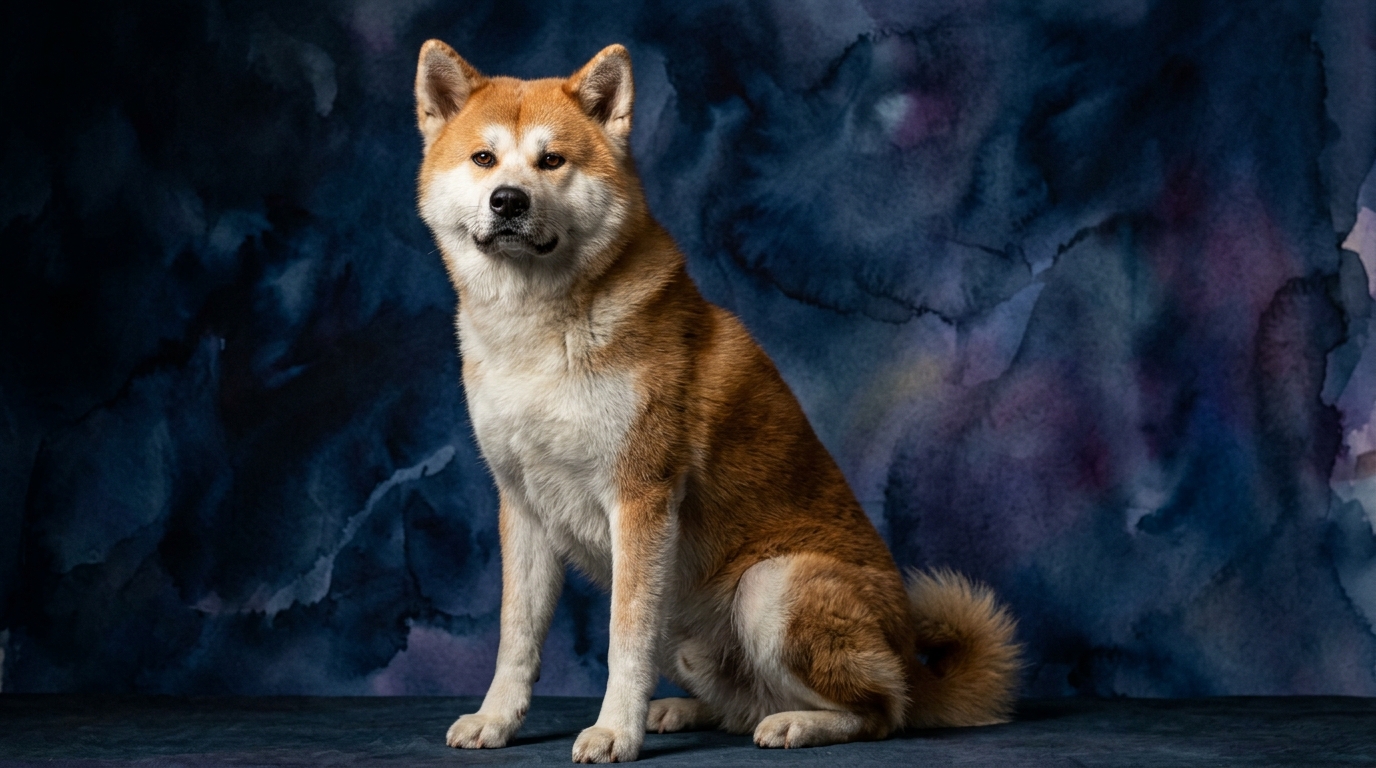
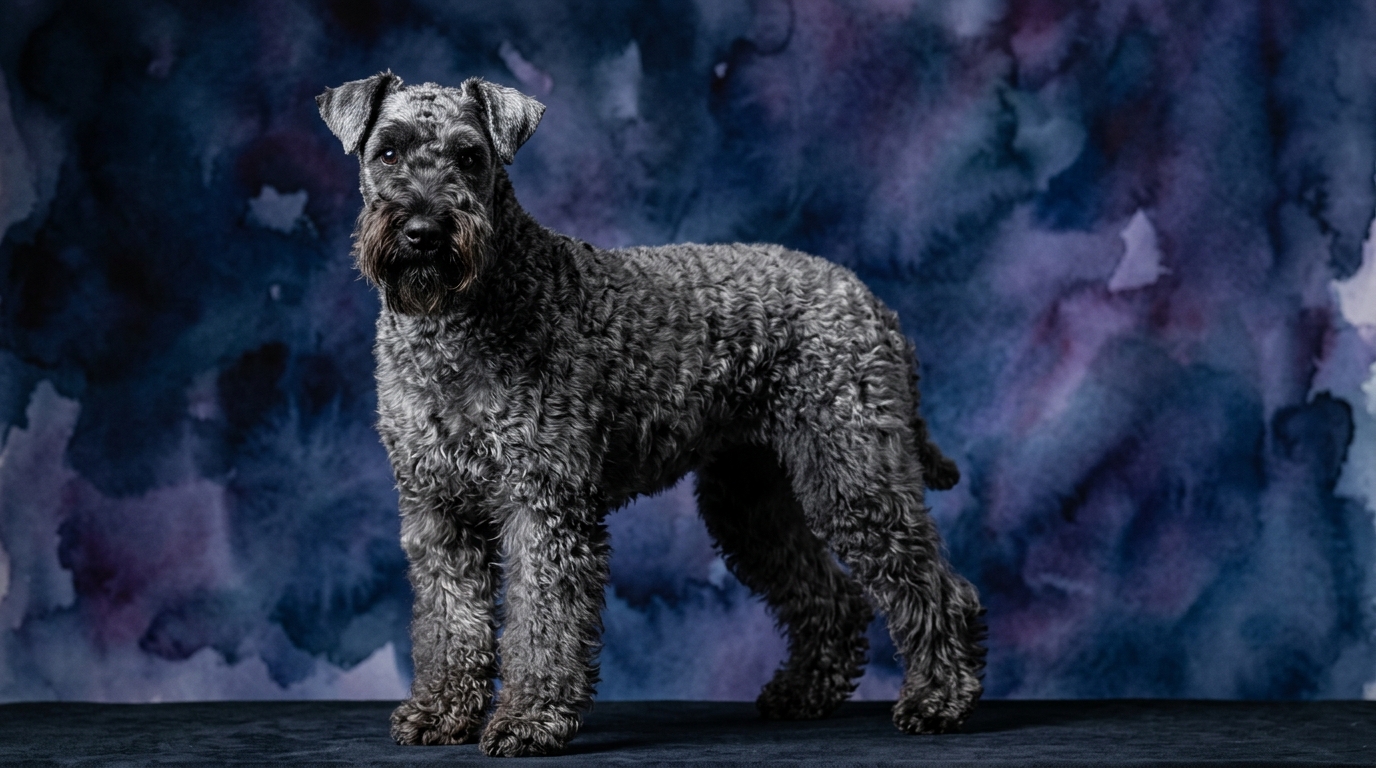
Side-by-Side Cognitive Profiles: Akita vs. Kerry Blue Terrier
The Cosmic Pet Pet IQ Lab employs a five-dimensional framework to assess canine cognitive abilities, offering a nuanced perspective beyond simple obedience. Let's delve into how the Akita and Kerry Blue Terrier measure up in problem-solving, training speed, social intelligence, instinctive drive, and memory.
The Akita, a robust member of the Working Group and Coren-ranked at #54, presents a profile reflecting its heritage. Its Problem Solving is rated 3/5, indicating a moderate capacity for independent thought, often geared towards practical, self-serving solutions like navigating its environment or securing resources. Training Speed scores 2/5; these dogs typically require more repetition and patience, as their independent spirit often demands a clear 'why' for compliance. Social Intelligence is 3/5, showing a perceptive understanding of established pack dynamics, though often reserved with strangers. With an Instinctive Drive of 5/5, the Akita possesses exceptionally strong natural tendencies for guarding, protection, and prey drive, dictating much of its spontaneous behavior. Finally, its Memory is 4/5, demonstrating a commendable ability to retain learned behaviors, experiences, and social interactions over long periods.
The Kerry Blue Terrier, a lively member of the Terrier Group and not Coren-ranked, brings a different set of mental strengths. Its Problem Solving also scores 3/5, reflecting a tenacious curiosity and ability to figure out solutions, often with a mischievous flair inherent to terriers. Training Speed is rated 3/5; these terriers generally pick up commands at an average pace, eager to learn when engaged, though their independent streak requires consistency. Social Intelligence stands at 3/5, indicating a moderate perceptiveness of human emotions within their family, capable of forming strong bonds, but with potential assertiveness towards other dogs. The Kerry Blue's Instinctive Drive is 3/5, encompassing a natural prey drive for small vermin and a certain confidence, but less intense than the Akita's profound protective instincts. Its Memory is 3/5, an average capacity for retaining training and experiences, remembering routines and people reliably.
Where the Akita Wins Cognitively
The Akita's cognitive advantages are most pronounced in its exceptional memory and powerful instinctive drives. With a memory score of 4/5, the Akita demonstrates a superior ability to recall complex information, routines, and past interactions over extended periods. This strong recall is fundamental to their unwavering loyalty and their consistent understanding of family habits, contributing to their reliability in established roles. This deep memory also underpins their formidable guarding capabilities, as they distinctly remember who belongs and who doesn't, reacting accordingly.
Furthermore, the Akita's remarkable 5/5 instinctive drive is a significant cognitive strength. This represents a deeply ingrained, automatic set of behaviors crucial for their historical functions as hunters and protectors. It means they possess an innate, profound understanding of vigilance, territoriality, and protective responses, allowing them to act decisively in situations where these instincts are triggered, often without extensive conditioning. This intrinsic motivation for specific, purposeful tasks makes them singularly focused and effective in their traditional duties, offering a distinct advantage in roles requiring steadfast, instinctual responses.
Where the Kerry Blue Terrier Wins Cognitively
The Kerry Blue Terrier's cognitive strengths primarily lie in its more flexible training speed and a more balanced expression of its instinctive drives. Scoring 3/5 in Training Speed compared to the Akita's 2/5, Kerry Blues typically assimilate new commands and concepts with greater alacrity. This isn't just about pace; it often reflects a higher willingness to engage in cooperative learning when the training is stimulating and varied. Their characteristic terrier enthusiasm, while occasionally requiring direction, can be effectively channeled into productive learning, making them generally more responsive to consistent guidance.
Moreover, the Kerry Blue's instinctive drive, rated at 3/5, offers a different kind of cognitive advantage: versatility. While they retain the typical terrier tenacity and prey drive for small vermin, these instincts are generally more manageable and less all-consuming than the Akita's intense protective nature. This more moderate drive allows for greater adaptability in their behavioral responses, making them potentially more suited to diverse living environments and less prone to singular, intense focus on guarding or hunting. This balance provides a cognitive profile that often translates to greater overall behavioral flexibility and a broader scope for various activities.
Ease of Training: Behavioral Differences
When evaluating ease of training, the Kerry Blue Terrier generally holds an advantage over the Akita, primarily due to its faster training speed (3/5 vs. Akita's 2/5) and more moderate instinctive drives. The Akita's independent nature often translates to a need for more repetition and a clear understanding of the 'why' behind a command before full compliance. Their powerful instinctive drives, especially for guarding and hunting, can occasionally override learned behaviors in high-stimulation environments, demanding extensive early socialization and consistent, fair, yet firm guidance throughout their lives. For instance, an Akita's deep-seated protective instinct might lead it to react assertively to a stranger, even with prior training for calm introductions, requiring careful management.
In contrast, the Kerry Blue Terrier, despite its characteristic terrier stubbornness, tends to be more eager to please when properly engaged. Their moderate instinctive drives mean their natural predispositions are less likely to intensely conflict with training objectives, making them more receptive to learning a wider array of behaviors without profound resistance. While a Kerry Blue might enthusiastically pursue a squirrel due to its prey drive, redirection is often more achievable than managing an Akita's deeply ingrained territoriality. Their higher training speed suggests they form associations between commands and actions more rapidly, making the training process feel more rewarding and progressive for both dog and owner, provided the sessions are kept engaging and varied.
Matching Breeds to Owner Lifestyles
For owners with active lifestyles, both breeds offer engagement, but with distinct requirements. The Akita, despite its lower training speed, is an excellent match for active owners who appreciate a dog with immense physical stamina and a profound sense of purpose. Their high instinctive drive (5/5) means they thrive with owners who can provide consistent mental and physical challenges that appropriately tap into their guarding, tracking, or even protection instincts in a controlled and safe manner. They benefit from long walks, hikes, and activities that allow them to survey their surroundings and fulfill a perceived 'working' role. A relaxed, sedentary owner might find an Akita's intense drives and independent nature challenging to manage without sufficient outlets, potentially leading to frustration.
The Kerry Blue Terrier, with its moderate instinctive drive (3/5) and good training speed (3/5), is also well-suited for active owners, particularly those who enjoy interactive games, agility, or competitive obedience. Their spirited nature and desire for engagement mean they thrive on varied activities that challenge both their intellect and physical prowess. They are less about stoic guardianship and more about playful, enthusiastic participation. However, a purely relaxed owner might find the Kerry Blue's perpetual curiosity and consistent need for mental stimulation, combined with its characteristic terrier energy, to be more demanding than anticipated. Neither breed is ideally suited for a purely relaxed, sedentary lifestyle, as both require significant exercise and mental engagement to prevent boredom and potential behavioral issues.
The Verdict
Choose an Akita if you are an experienced dog owner seeking a stoic, deeply loyal companion with formidable protective instincts and a strong memory for routines and relationships. You must be prepared for consistent, patient training to manage their independent nature and powerful drives, offering them a clear role and ample mental and physical engagement.
Opt for a Kerry Blue Terrier if you desire an energetic, spirited companion eager for engagement and learning, capable of picking up new tasks with relative ease. You should be prepared to provide consistent, stimulating training and varied activities to channel their curious terrier energy and moderate instinctive drives.
🧠 Find Your Pet's IQ Score
Our Pet IQ Lab assessment covers 25+ tests across 5 cognitive dimensions — personalized to your breed.
Take the Full IQ Test →Frequently Asked Questions
Do Akitas generally get along with other dogs?
Akitas can be reserved or even assertive with other dogs, especially those of the same sex, due to their strong territorial and protective instincts. Early and extensive socialization is crucial, but they often thrive best as the sole canine in a household or with a carefully introduced, compatible companion.
Are Kerry Blue Terriers typically good with children?
Kerry Blue Terriers can be wonderful family companions and good with children, particularly if raised with them from a young age and properly socialized. Their playful and energetic nature can be a good match, but supervision is always recommended due to their characteristic terrier exuberance and occasional boisterousness.
Which breed between the Akita and Kerry Blue Terrier requires more grooming attention?
The Kerry Blue Terrier generally requires more involved grooming due to its unique soft, wavy, non-shedding coat that needs regular brushing and professional clipping every 6-8 weeks to prevent matting and maintain its distinctive appearance. Akitas have a dense double coat that sheds seasonally and benefits from regular brushing, but typically less specialized grooming than the Kerry Blue.