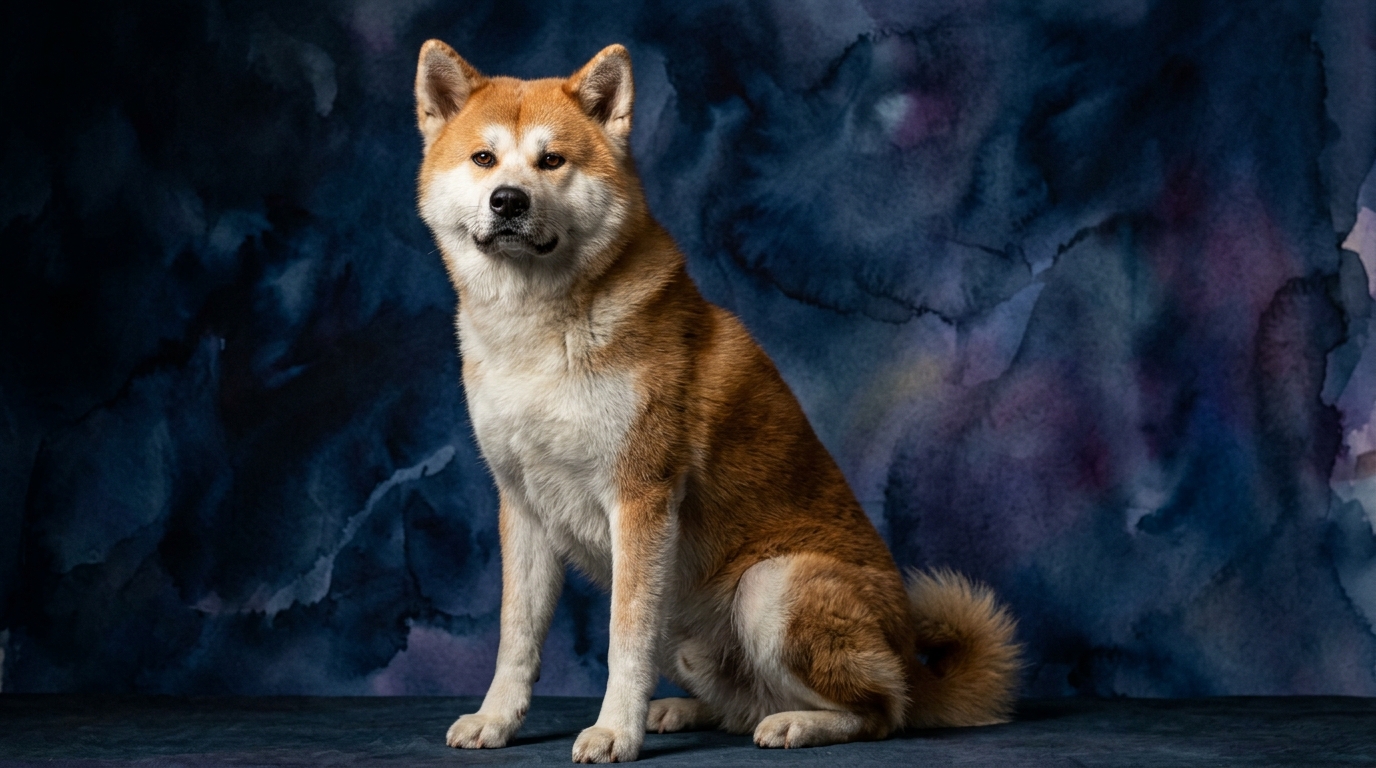

Side-by-Side Cognitive Profiles: Akita vs. Redbone Coonhound
Delving into the cognitive makeup of the Akita and Redbone Coonhound reveals nuanced differences that stem from their historical roles. The Akita, a breed with a Coren rank of #54, exhibits a cognitive profile tailored for guardianship and independent decision-making. Its problem-solving ability scores a 3 out of 5, indicating a capacity to navigate complex situations, often with a self-reliant approach. Training speed for the Akita is rated at 2 out of 5, suggesting a need for patience and consistent methods, as this breed processes commands and forms associations at a more measured pace. Social intelligence, at 3 out of 5, reflects a selective engagement with its environment and individuals, often reserved but observant. The Akita's instinctive drive is notably high at 5 out of 5, underscoring its profound protective instincts and territorial awareness. Its memory, at 4 out of 5, allows it to retain routines, commands, and experiences over extended periods, contributing to its reliability in established roles.
The Redbone Coonhound, while not Coren-ranked, presents a cognitive blueprint optimized for sustained pursuit and cooperative hunting. Its problem-solving capacity also stands at 3 out of 5, demonstrating an ability to overcome obstacles in the pursuit of a scent, often employing trial-and-error. The Redbone Coonhound's training speed is a balanced 3 out of 5, indicating a moderate receptiveness to learning new commands and behaviors, making it somewhat more adaptable in a training context than the Akita. Social intelligence matches the Akita at 3 out of 5, suggesting an ability to interact effectively within a pack or family unit, though perhaps less reserved than its Akita counterpart. Its instinctive drive, rated at 3 out of 5, is primarily focused on tracking and scent work, a persistent yet manageable drive compared to the Akita's intense protective nature. Memory for the Redbone Coonhound is 3 out of 5, sufficient for remembering scent trails and learned hunting strategies, though perhaps not as robust for complex, multi-step routines as the Akita.
Where the Akita Demonstrates Cognitive Strengths
The Akita’s cognitive strengths are particularly evident in its remarkable memory and profound instinctive drive. With a memory score of 4 out of 5, Akitas excel at retaining complex sequences of events and commands, making them highly reliable in established routines and expectations. This robust memory allows them to recall past interactions, understand spatial layouts, and remember specific boundaries with precision. For instance, an Akita can consistently remember the proper placement of household items or the intricate steps of a daily walk, demonstrating a consistent understanding of their environment. This strong memory also contributes to their effectiveness as guardians, as they remember who belongs and who does not, and where potential threats might originate.
Furthermore, the Akita's instinctive drive, rated at 5 out of 5, is a significant cognitive advantage in its intended role. This is not simply a high energy level, but a deep-seated, independent decision-making process rooted in protection and territoriality. This drive empowers Akitas to assess situations and act decisively without constant human direction, a trait honed over centuries for guarding homes and families. When faced with an unfamiliar presence or perceived threat, an Akita's cognitive process rapidly evaluates the situation, drawing on its innate drive to protect its domain. This independent thought process, while requiring careful management, makes the Akita a formidable and self-assured protector, capable of complex threat assessment and response.
Where the Redbone Coonhound Demonstrates Cognitive Strengths
The Redbone Coonhound’s cognitive strengths shine in its balanced training speed and its distinct, focused instinctive drive. With a training speed score of 3 out of 5, the Redbone Coonhound generally processes new information and forms associations more readily than the Akita. This means they often pick up new commands or learn new tasks with moderate repetition, making them more amenable to diverse training regimens. For example, a Redbone Coonhound might adapt to learning intricate scent discrimination tasks or agility courses with a relatively quicker uptake compared to a breed that leans more heavily on independent decision-making. Their willingness to engage in structured learning, even if not always immediate, provides a broader scope for teaching various skills beyond their core hunting purpose.
The Redbone Coonhound's instinctive drive, rated at 3 out of 5, while not as intense as the Akita's protective instinct, is a powerful cognitive asset for its primary purpose: scent work. This drive manifests as a persistent, focused determination to follow a trail, exhibiting remarkable cognitive endurance and problem-solving within the context of scent. A Redbone Coonhound uses its problem-solving (3/5) to navigate obstacles and decipher complex scent puzzles, demonstrating a cognitive flexibility specific to its tracking needs. This moderate yet tenacious drive allows them to maintain focus over long periods, making intricate decisions about scent changes and direction, without the overwhelming independence seen in Akita's protective drive. This focused, sustained cognitive effort is a hallmark of the Redbone Coonhound's unique intellectual contribution.
Training Dynamics: Akita vs. Redbone Coonhound
When it comes to trainability, the Akita and Redbone Coonhound present distinct challenges and rewards rooted in their cognitive profiles. The Akita, with its training speed of 2/5 and a potent instinctive drive of 5/5, often requires a highly patient, consistent, and experienced handler. Their independent nature means they are not inherently motivated by a desire to please, but rather by what makes sense to them or benefits their perceived role. For example, an Akita might understand a command perfectly but choose not to execute it if it doesn't align with its current priorities or if it deems the command unnecessary. This behavioral characteristic stems from their history as independent guardians, where self-reliance was paramount. Training an Akita involves building a strong, trusting relationship and convincing them that cooperation is beneficial, often through positive reinforcement and clear boundaries, rather than rote obedience. Their strong memory (4/5) means they remember both good and bad training experiences, so consistency is crucial to avoid reinforcing undesirable behaviors.
The Redbone Coonhound, with a training speed of 3/5 and a more moderate instinctive drive of 3/5, generally presents a somewhat more amenable training experience. While still a hound with an independent streak, particularly when a compelling scent is present, they tend to be more responsive to direction. Their problem-solving (3/5) and social intelligence (3/5) can be harnessed to engage them in training exercises, especially those involving scent work or puzzles. For instance, a Redbone Coonhound might initially be distracted by an interesting smell during a 'sit' command, but with consistent, engaging methods, they are often quicker to grasp and reliably perform the command than an Akita. Their moderate instinctive drive, while persistent for tracking, is less overwhelming in general obedience contexts, allowing for a broader range of training activities. However, their drive for scent means that off-leash reliability in open, scent-rich environments can be a significant challenge, requiring extensive recall training and management.
Matching Breeds to Lifestyles: Active vs. Relaxed Owners
The cognitive and temperamental differences between the Akita and Redbone Coonhound make them suitable for vastly different owner lifestyles. The Akita's profile, characterized by a potent instinctive drive (5/5), strong memory (4/5), and reserved social intelligence (3/5), aligns best with experienced, consistent owners who appreciate a confident, independent companion and can provide structured leadership. These are not dogs for the casual or relaxed owner, as their strong protective instincts and lower training speed demand a dedicated commitment to ongoing socialization and training. An Akita owner must be prepared for a dog that forms deep bonds with its inner circle but remains wary of strangers, requiring active management in public settings. They thrive in environments where their loyalty and guarding abilities are respected, and where they receive consistent mental and physical exercise that respects their independence, such as long, structured walks or controlled play in secure areas. Their need for a clear hierarchy and consistent boundaries means a relaxed, permissive owner will likely struggle.
Conversely, the Redbone Coonhound, with its balanced training speed (3/5), moderate instinctive drive (3/5), and problem-solving aptitude (3/5), is an excellent fit for active owners who enjoy engaging in outdoor activities and can provide outlets for its scenting abilities. These dogs flourish when given opportunities to use their noses, making them ideal partners for hiking, scent work classes, or even competitive tracking. Their generally more amenable training speed, compared to the Akita, means they can be more adaptable to various family dynamics, though their vocal nature and persistent tracking drive need to be understood and managed. A Redbone Coonhound owner should be prepared for a dog that requires significant physical activity and mental stimulation, but one that is often more overtly social and playful than an Akita. While they can enjoy downtime, a truly relaxed owner who cannot commit to daily exercise and mental engagement might find their Redbone Coonhound developing undesirable behaviors due to boredom or unmet needs for activity.
The Verdict: When to Choose Each Companion
Choosing between an Akita and a Redbone Coonhound hinges on an owner’s lifestyle, experience, and desired dog-owner dynamic. The Akita is an exceptional companion for experienced individuals or families seeking a deeply loyal, protective, and independent guardian who values a reserved yet profound bond, provided they can offer consistent, firm, and positive leadership.
The Redbone Coonhound is better suited for active, outdoor-oriented individuals or families who desire a tenacious, vocal, and affectionate companion for adventures, particularly those involving scent work or extensive physical activity, and are prepared to manage a strong tracking drive.
The Verdict
Choose an Akita if you are an experienced owner seeking a supremely loyal, independent guardian with a reserved nature and are prepared for consistent training and socialization to manage its powerful protective instincts.
Opt for a Redbone Coonhound if you lead an active, outdoor lifestyle, enjoy engaging in scent-based activities, and are looking for an affectionate, tenacious companion that thrives on physical and mental stimulation.
🧠 Find Your Pet's IQ Score
Our Pet IQ Lab assessment covers 25+ tests across 5 cognitive dimensions — personalized to your breed.
Take the Full IQ Test →Frequently Asked Questions
Are Akitas good with other pets?
Akitas, with their strong instinctive drive (5/5) and selective social intelligence (3/5), often exhibit a low tolerance for other dogs, especially those of the same sex, and smaller pets due to their prey drive. Early and continuous socialization from puppyhood is critical, but even then, supervision and careful management are frequently necessary to ensure harmonious interactions.
Do Redbone Coonhounds bark a lot?
Redbone Coonhounds are known for their vocalizations, including baying, which is a deep, melodious bark used to communicate during a hunt. While their social intelligence (3/5) allows them to adapt to family life, their natural tendency to 'speak' can be considerable, especially if bored or left alone, so potential owners should be prepared for a talkative companion.
What kind of exercise do these breeds need?
Akitas require moderate, consistent exercise like daily long walks or controlled play in a secure area to satisfy their physical needs and reinforce their structure. Redbone Coonhounds, with their hunting heritage and moderate instinctive drive, need significant daily exercise, ideally involving opportunities for scent work or long runs to keep them mentally stimulated and physically fit.