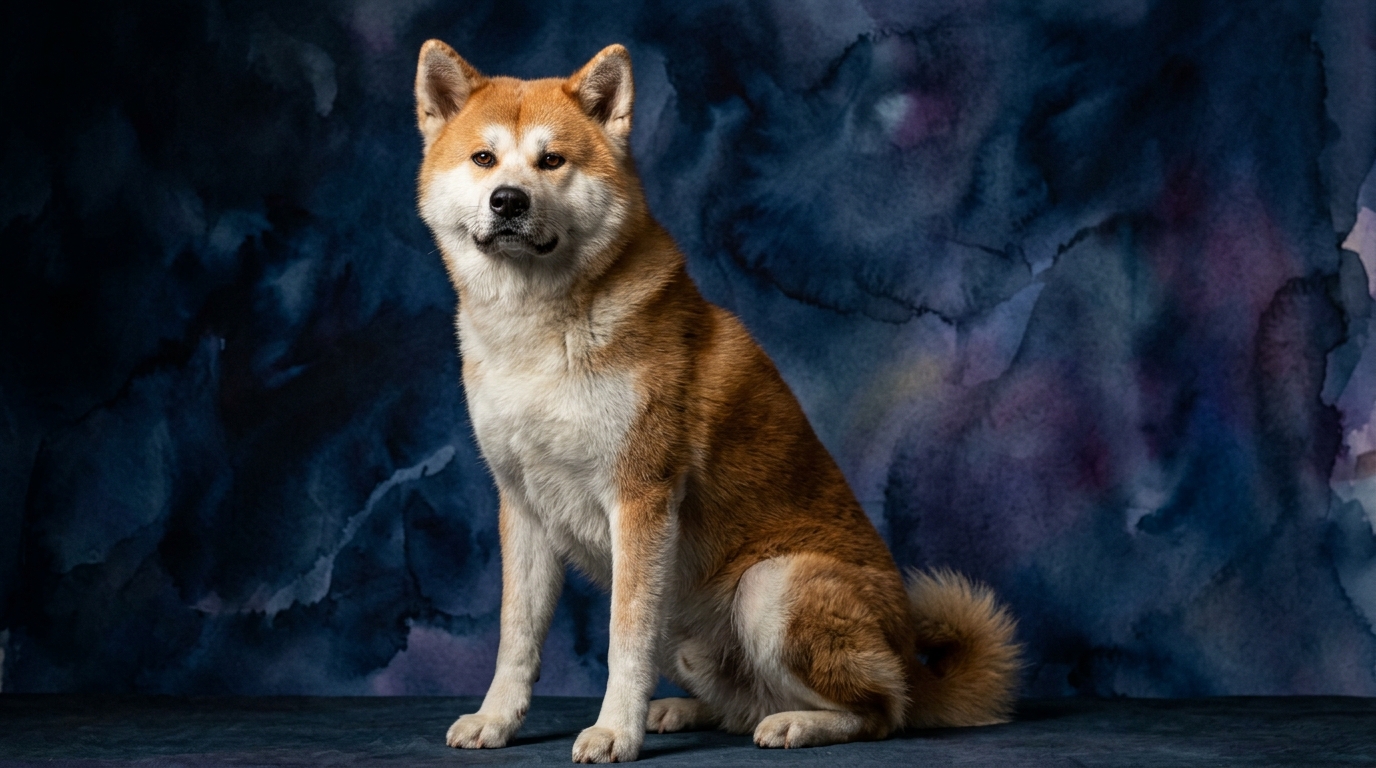

Side-by-Side Cognitive Profiles: Akita vs. Saint Bernard
The Cosmic Pet Pet IQ Lab employs a five-dimensional framework to assess canine intelligence, offering a granular view of how different breeds process information, learn, and interact with their world. For the Akita, ranked #54 by Coren, its cognitive landscape is shaped by a Problem Solving score of 3/5, indicating a capacity for practical solutions without always seeking novel approaches. Its Training Speed, at 2/5, suggests a deliberate learning pace, requiring consistent and patient instruction to integrate new commands. Social Intelligence, also 3/5, points to a reserved, selective approach to interactions, often preferring the company of its inner circle rather than eager engagement with strangers. A powerful Instinctive Drive of 5/5 highlights its deep-seated motivations for guarding and protection, rooted in its historical working roles. Finally, a Memory score of 4/5 means the Akita retains experiences and learned behaviors over extended periods, influencing its future responses and interactions.
The Saint Bernard, holding Coren's #65 rank, presents a slightly different cognitive emphasis within the working group. Like the Akita, its Problem Solving ability stands at 3/5, demonstrating competence in navigating practical challenges but not necessarily a propensity for abstract or creative problem-solving. Its Training Speed mirrors the Akita's at 2/5, indicating that learning new tasks requires repetition and a calm, consistent approach. Where the Saint Bernard notably diverges is its Social Intelligence, scoring a robust 4/5, which signifies a strong capacity for empathy, understanding human cues, and fostering deep, patient bonds. Its Instinctive Drive is also a perfect 5/5, reflecting its powerful heritage in search and rescue, driven by an innate desire to assist. The Saint Bernard's Memory score of 3/5 suggests it can recall important information and routines, though perhaps with less vivid detail or longevity compared to the Akita.
Where the Akita Wins Cognitively
The Akita's cognitive strengths primarily lie in its exceptional memory and the independent application of its problem-solving and instinctive drives. With a Memory score of 4/5, the Akita excels at retaining complex sequences, boundaries, and past interactions with remarkable clarity. This superior recall means an Akita will remember training commands, household rules, and even subtle social cues from its family over long durations, contributing to its consistent behavior and predictable responses within its established environment. This strong memory also allows them to learn from past experiences, making them adept at navigating familiar situations with practiced ease. Furthermore, the Akita's high instinctive drive combined with its problem-solving ability often manifests as a self-reliant approach to tasks, enabling them to make decisions independently, particularly in scenarios where their guarding instincts are activated. This self-sufficiency, while sometimes perceived as stubbornness, is a cognitive advantage for roles requiring autonomy and sustained focus without constant human direction.
Where the Saint Bernard Wins Cognitively
The Saint Bernard's cognitive edge is undeniably its elevated Social Intelligence, scoring 4/5, which fosters a profoundly empathetic and responsive connection with its human companions. This higher social acumen means a Saint Bernard is more attuned to human emotions, intentions, and non-verbal cues, often demonstrating an innate understanding of its family's mood or needs. This sensitivity allows them to offer comfort and companionship with a gentle patience that is a hallmark of the breed. Their strong social intelligence facilitates a deeper bond, making them highly receptive to their family's presence and fostering a harmonious household environment. While both breeds share a powerful instinctive drive, the Saint Bernard's combines with its social intelligence to produce a benevolent, protective nature, particularly towards children or vulnerable family members. This cognitive blend results in a dog that is not only driven by purpose but also deeply connected to the emotional well-being of its human pack, making them exceptional therapy or family companions.
Which Is Easier to Train and Why?
Neither the Akita nor the Saint Bernard is characterized by rapid command acquisition, both scoring 2/5 in Training Speed, suggesting that patience and consistency are paramount for both breeds. However, their differing social intelligence levels significantly influence the training experience. The Saint Bernard's higher Social Intelligence (4/5) often translates into a greater willingness to cooperate and an eagerness to please its human, driven by a desire for connection and positive social interaction. This makes them generally more amenable to training, as they are more likely to respond to praise and affection, even if the learning process is deliberate. Their empathetic nature means they are less likely to intentionally defy a command, though their large size and occasional clumsiness might require physical guidance.
Conversely, the Akita's more reserved Social Intelligence (3/5) and inherent independence can make training a more nuanced endeavor. While capable of learning, the Akita often requires a trainer who respects its strong will and builds a relationship based on mutual trust and clear communication rather than expecting eager compliance. Their intelligence allows them to understand commands, but their independent nature means they might assess whether a command aligns with their own interests before complying. Training an Akita demands a firm, fair, and consistent approach, focusing on positive reinforcement and avoiding harsh methods that can damage their trust. Therefore, while both require time, the Saint Bernard's social disposition often makes the training journey feel more collaborative, whereas the Akita's requires a more strategic and respectful partnership.
Which Suits Active Owners vs. Relaxed Owners?
The Akita, with its powerful instinctive drive (5/5) and a problem-solving capacity that leans towards self-reliance, is generally better suited for active owners who can provide structured activities and mental engagement. While not necessarily requiring constant high-intensity exercise like some sporting breeds, Akitas thrive with owners who understand their need for a purpose, whether it's consistent training sessions, scent work, or engaging in activities that challenge their intellect and channel their guarding instincts appropriately. They benefit from clear leadership and a consistent routine, making them ideal for individuals or families who are experienced with strong-willed breeds and committed to providing consistent mental and physical stimulation. Their independent nature means they can be content with less constant supervision than more clingy breeds, but they still require their owners to be 'active' in guiding their behavior and providing enrichment.
The Saint Bernard, despite its equally strong instinctive drive (5/5), often aligns better with more relaxed owners who appreciate companionship and a gentle presence. While they are large and require regular, moderate exercise to maintain their health, their higher social intelligence and patient demeanor mean they excel in environments where their primary 'job' is to be a beloved family member. They thrive on social interaction and being part of the family's daily life, content to lounge nearby or enjoy a leisurely walk. Owners who value an empathetic, affectionate companion and are prepared to manage the physical demands of a giant breed without requiring a high-octane partner will find the Saint Bernard a rewarding choice. Their gentle nature makes them particularly suitable for families with children, provided their sheer size is safely managed, and their training is consistent.
The Verdict
Choose an Akita if you are an experienced owner seeking a loyal, independent guardian with exceptional memory, ready to invest in consistent, respectful training and provide structured mental engagement for a self-reliant companion.
Opt for a Saint Bernard if you prioritize a deeply empathetic, patient, and socially attuned family companion, valuing their gentle nature and strong desire for connection, and are prepared for deliberate training and managing a giant breed's needs.
🧠 Find Your Pet's IQ Score
Our Pet IQ Lab assessment covers 25+ tests across 5 cognitive dimensions — personalized to your breed.
Take the Full IQ Test →Frequently Asked Questions
Do Akitas and Saint Bernards learn new tricks quickly?
Neither breed is known for rapid command acquisition, both scoring 2/5 in Training Speed. They require consistent, patient training with plenty of repetition to master new tasks and integrate them into their behavioral repertoire.
Which breed is more affectionate towards its family?
The Saint Bernard, with its higher Social Intelligence (4/5), tends to be more overtly affectionate and attuned to its family's emotions, often forming deeply empathetic bonds. Akitas are loyal but generally more reserved in their displays of affection, preferring a dignified companionship.
Are Akitas or Saint Bernards better with children?
Saint Bernards are generally more patient and gentle with children due to their superior Social Intelligence and benevolent nature, making them a common choice for families. Akitas can be good with children in their own family but require careful socialization and supervision due to their strong guarding instincts and independent temperament.