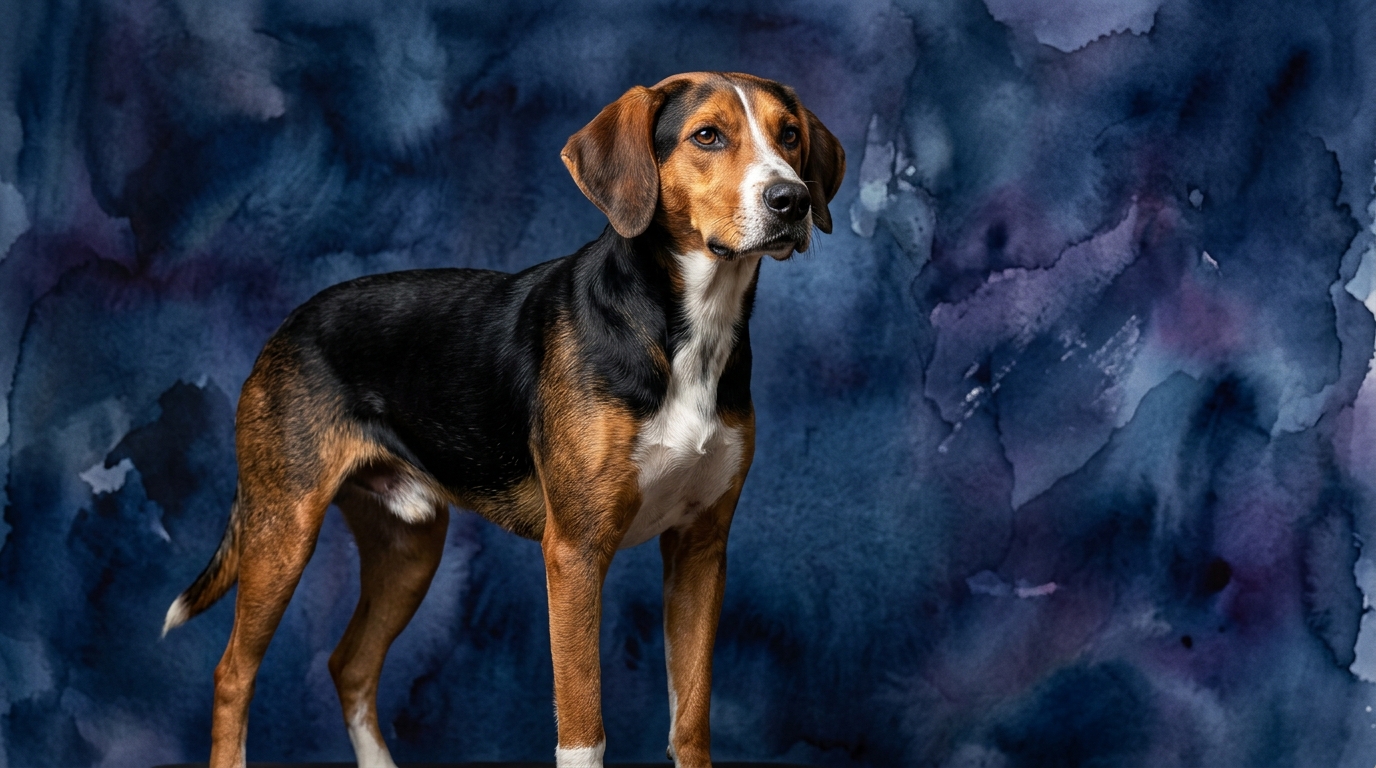
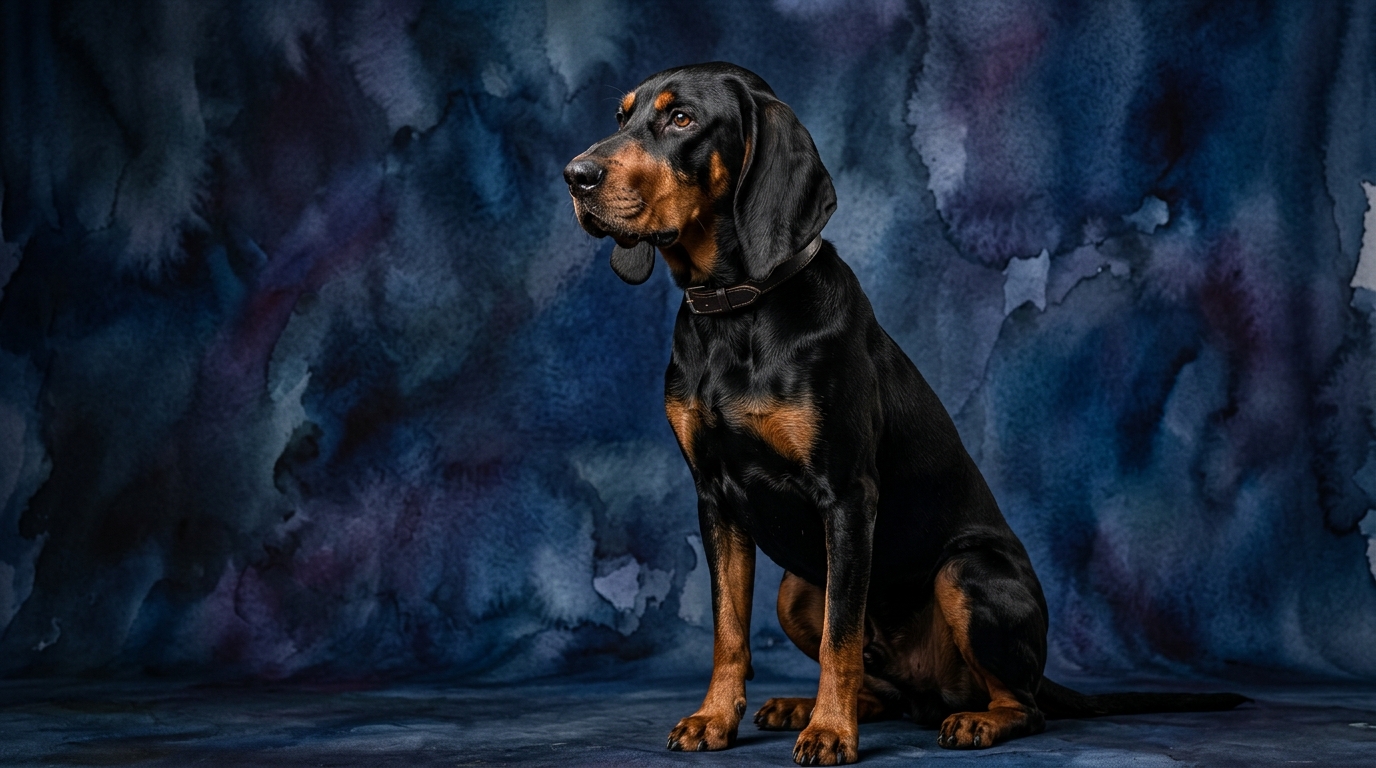
Side-by-Side IQ Profile: Unpacking Identical Scores
At first glance, the IQ profiles for both the American Foxhound and the Black and Tan Coonhound seem indistinguishable: Problem Solving 3/5, Training Speed 3/5, Social Intelligence 3/5, Instinctive Drive 3/5, and Memory 3/5. However, these identical scores belie nuanced differences in how each breed applies these cognitive strengths, shaped by centuries of selective breeding for specific hunting tasks. Understanding these subtle distinctions is key to appreciating their individual cognitive landscapes.
For the American Foxhound, a Problem Solving score of 3/5 often reflects their ability to navigate complex, expansive terrains while maintaining focus on a scent trail, often as part of a larger pack. Their problem-solving centers on sustained pursuit and adapting to environmental changes over long distances. Their Training Speed of 3/5 indicates a moderate pace for acquiring new commands, often tempered by an independent spirit that prioritizes scent over human directives, especially in stimulating environments. Social Intelligence at 3/5 is strongly geared towards pack cohesion; they excel at reading and responding to other dogs within a hunting group, displaying a cooperative nature with their canine peers. An Instinctive Drive of 3/5 is powerfully manifested in their relentless prey drive for fox, expressed through an enduring chase and vocalizations. Lastly, their Memory at 3/5 is excellent for recalling scent lines, terrain features, and established hunting routes, crucial for consistent performance over vast areas.
The Black and Tan Coonhound’s Problem Solving at 3/5, while numerically the same, manifests as an acute ability to decipher intricate scent puzzles, often tracking a single quarry like a raccoon through dense underbrush, across varied surfaces, and even up trees. Their problem-solving involves meticulous, persistent tracking and strategizing how a raccoon might evade capture. Their Training Speed of 3/5 also points to a moderate learning curve, but their independence is often characterized by a singular focus on a scent, making redirection challenging once they are locked onto a track. Social Intelligence at 3/5 is often expressed through deep, loyal bonds with their human handler and a more independent, yet cooperative, approach when working with a smaller group of dogs. Their Instinctive Drive of 3/5 is intensely focused on tracking and treeing raccoons, often working at night and demonstrating remarkable tenacity. Their Memory at 3/5 is particularly strong for recalling specific tracks, previously successful hunting spots, and the nuances of individual quarry behavior, essential for consistent success in their specialized role.
Where the American Foxhound Wins Cognitively
The American Foxhound exhibits a cognitive edge in scenarios demanding broad environmental awareness and seamless pack integration. Their Problem Solving, while rated 3/5, is specifically tuned for sustained, cooperative pursuit across open country. They excel at processing vast amounts of environmental data – wind shifts, subtle changes in terrain, and the collective actions of their pack mates – to maintain a relentless chase. This capacity for distributed problem-solving within a group, where individual decisions contribute to a larger, coordinated effort, is a distinctive cognitive strength. Their Social Intelligence (3/5) is uniquely adapted for intricate inter-dog communication, allowing for efficient, synchronized hunting strategies without constant human intervention. This makes them particularly adept at navigating complex social dynamics within a canine group, a nuanced form of intelligence often underestimated.
Where the Black and Tan Coonhound Wins Cognitively
The Black and Tan Coonhound demonstrates a cognitive advantage in tasks requiring intense, focused persistence and meticulous detail orientation. Their Problem Solving (3/5) shines brightest in deciphering incredibly faint or complex scent trails, often in challenging conditions like dense forests or at night. They possess a remarkable ability to 'unravel' a track, making subtle inferences about a quarry's movements and intentions. This specialized form of problem-solving demands a deep, singular focus that can filter out extraneous stimuli. Furthermore, their Memory (3/5) often manifests as an exceptional recall for specific scent patterns and the unique behaviors of individual animals they’ve tracked, allowing them to build a mental database of effective hunting strategies. This detailed, almost forensic, application of their cognitive abilities gives them a distinct edge in specialized tracking roles.
Which is Easier to Train and Why
Neither the American Foxhound nor the Black and Tan Coonhound are typically described as 'easy' to train, largely due to their shared hound independence and potent instinctive drives, reflected in their 3/5 Training Speed scores. The American Foxhound, bred for pack hunting over long distances, often exhibits a strong desire to follow a scent once detected, making consistent recall a significant challenge. Their attention is primarily directed outwards, towards the environment and potential quarry, rather than consistently towards a handler. While they can learn commands, their inherent motivation leans heavily towards their ancestral purpose, requiring immense patience and consistent, positive reinforcement to maintain focus in distracting environments. Their social intelligence is geared towards other dogs, meaning individual human engagement might not always be their primary motivator.
The Black and Tan Coonhound, while equally independent, might present different training challenges. Their singular focus on a track, a manifestation of their 3/5 Instinctive Drive, can make it nearly impossible to break their concentration once they’ve locked onto a scent. This intense dedication, while a cognitive strength in hunting, can translate to stubbornness in obedience training. However, their strong bond with a single handler, a facet of their 3/5 Social Intelligence that is often more individually directed than the Foxhound's pack-centric social nature, can sometimes be leveraged in training. Building a deep, trusting relationship and making training feel like a collaborative hunt for rewards can yield better results, though consistent effort is still paramount for both breeds.
Which Suits Active Owners vs. Relaxed Owners
For active owners seeking a canine companion for endurance activities, the American Foxhound is often the more suitable choice. Their cognitive makeup, particularly their problem-solving and memory skills, are geared towards sustained exertion over vast distances. They thrive on long runs, hikes, and activities that allow them to cover ground and engage their scenting abilities continuously. Their pack-oriented social intelligence also means they often enjoy the company of other dogs, making them good candidates for multi-dog households or group activities. An owner who can provide consistent, vigorous exercise and mental stimulation through scent work will find a fulfilling partnership with an American Foxhound. Their need for expansive movement means they are not suited for a sedentary lifestyle or owners who prefer minimal outdoor activity.
The Black and Tan Coonhound, while also requiring significant activity, caters to a different kind of active owner – one who appreciates focused, prolonged exploration and mental engagement through scent work rather than just covering distance. Their cognitive strengths lie in meticulous tracking, which translates to a need for activities like scent games, tracking sports, or long, exploratory walks where they can follow their nose at a deliberate pace. Owners who enjoy unraveling mysteries with their dog, spending time in varied natural environments, and engaging in mentally stimulating scent-based challenges will find the Coonhound a rewarding partner. While they can participate in endurance activities, their joy often comes from the 'puzzle' of a scent trail. They are less suited for owners who cannot commit to regular, engaging outdoor sessions that allow them to exercise their profound instinctive drive and problem-solving abilities.
The Verdict
Choose the American Foxhound if you are an active individual or family who can provide extensive outdoor exercise, preferably in open spaces, and appreciate a dog whose social intelligence thrives within a canine pack dynamic.
Opt for the Black and Tan Coonhound if you are a dedicated owner who enjoys focused, methodical scent work, can commit to consistent, engaging outdoor activities, and values a deep, loyal bond with a dog whose cognitive strengths lie in tenacious tracking.
🧠 Find Your Pet's IQ Score
Our Pet IQ Lab assessment covers 25+ tests across 5 cognitive dimensions — personalized to your breed.
Take the Full IQ Test →Frequently Asked Questions
Do American Foxhounds and Black and Tan Coonhounds bark a lot?
Yes, both breeds are known for their vocalizations, particularly their characteristic 'bay' or 'howl.' This is a direct manifestation of their 3/5 Instinctive Drive, as vocalizations are crucial for communicating during a hunt, whether signaling a chase or indicating a treed quarry. Owners should be prepared for this inherent trait.
Are these breeds good with children and other pets?
Both breeds generally possess a 3/5 Social Intelligence that allows them to be good family dogs, often gentle and tolerant with children, especially if raised with them. However, their strong 3/5 Instinctive Drive means careful introductions and supervision are necessary with smaller pets like cats or rabbits, as their prey drive can be powerful.
What kind of environment do these hounds thrive in?
Both the American Foxhound and Black and Tan Coonhound thrive in environments where they have ample space to exercise and engage their scenting abilities. A securely fenced yard is essential due to their potent 3/5 Instinctive Drive and tendency to follow interesting scents. They benefit from active homes where their cognitive needs for exploration and problem-solving are met daily.