
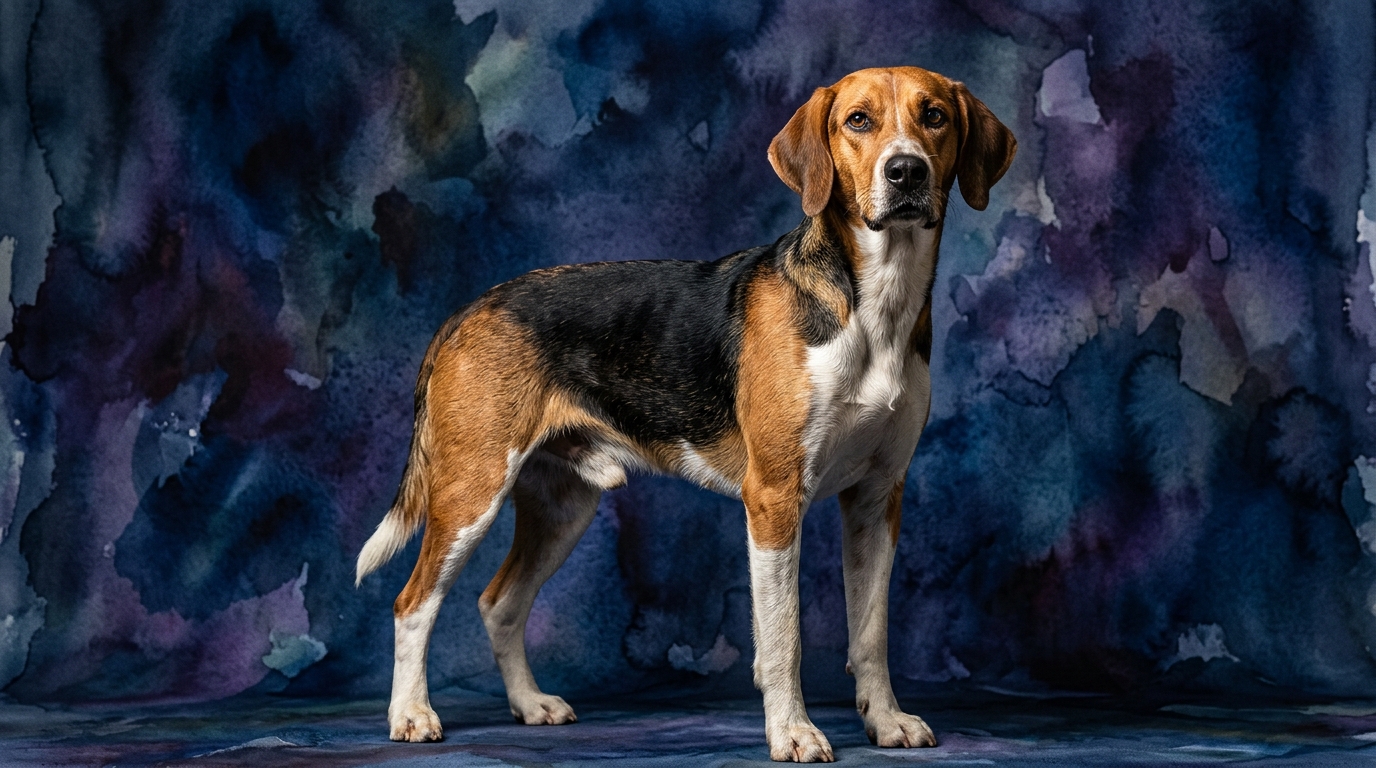
A Side-by-Side Look at Foxhound IQ Profiles
At first glance, The Cosmic Pet Pet IQ Lab data presents both the American Foxhound and the English Foxhound with identical scores across all five cognitive dimensions: Problem Solving (3/5), Training Speed (3/5), Social Intelligence (3/5), Instinctive Drive (3/5), and Memory (3/5). These uniform ratings might suggest an absence of cognitive differences, but a deeper dive into their historical roles and breed characteristics reveals how these identical numerical scores manifest in distinct behavioral patterns and cognitive styles. Understanding these nuances is key to appreciating the unique mental makeup of each breed.
For both breeds, a Problem Solving score of 3/5 indicates an average capacity to navigate environmental challenges, particularly those related to scent work and pursuit. They are adept at following complex scent trails, demonstrating a methodical approach to overcoming obstacles in their path to a quarry. However, this score also suggests they may not independently devise novel solutions to abstract puzzles or human-contrived tasks with the same speed as breeds bred for more diverse problem-solving roles. Their intelligence is highly specialized, honed for the hunt.
A Training Speed score of 3/5 for both points to an average pace of learning new commands and routines. This doesn't mean they are difficult to train, but rather that their primary motivation often lies in their instinctual drives. Consistent, patient, and highly engaging training methods are required, especially those that tap into their natural desire to follow a scent or work within a structured environment. Without compelling motivation, their independent nature can make them appear less responsive to conventional obedience training.
Social Intelligence at 3/5 signifies a solid understanding of pack dynamics and the ability to interpret cues from their handlers or fellow canines. They are generally cooperative within a group setting, aware of their place, and capable of forming bonds. However, this score also implies they are not typically overly eager to please or highly attuned to subtle human emotional shifts in the way some companion breeds might be. Their social understanding is primarily framed by their working relationships.
The Instinctive Drive score of 3/5 is a testament to their strong, persistent prey drive, particularly for scent. This is the engine of their being, fueling their endurance and determination during a chase. It means they possess an unshakeable focus when on a trail, often tuning out distractions. This powerful drive is a defining characteristic, making them relentless in their pursuit. Finally, a Memory score of 3/5 indicates they have a good capacity to recall scent patterns, learned hunting routes, and established routines over time, which is crucial for their specialized work.
While these scores are numerically identical, the historical breeding focus for each Foxhound variety subtly shapes how these cognitive traits express themselves in daily life. The American Foxhound, often bred for speed and agility in more varied, often denser, terrain, developed a slightly more individualistic approach to hunting. The English Foxhound, cultivated for large, coordinated packs in open countryside, refined its cognitive strengths for collective effort and unwavering adherence to established patterns.
Where the American Foxhound Shows Cognitive Edge
Despite identical numerical scores, the American Foxhound's cognitive strengths often lean towards independent adaptability within its specialized hunting context. Its Problem Solving (3/5) manifests in a slightly more agile and improvisational approach when navigating complex, varied terrain, making quick, individual decisions on a scent trail rather than strictly adhering to a pack's collective route. This breed’s history of often working in smaller packs or even individually in more rugged landscapes has perhaps fostered a cognitive style that prioritizes individual initiative. Their Memory (3/5) might be particularly sharp for recalling specific, intricate scent patterns and unique geographical markers encountered during solo or small-group pursuits, allowing them to map and re-trace complex individual paths efficiently. This subtle difference makes them particularly adept at handling unpredictable environmental shifts with individual ingenuity.
Where the English Foxhound Demonstrates Cognitive Strength
The English Foxhound, while sharing the same 3/5 cognitive scores, truly excels in areas that promote pack cohesion and sustained, methodical effort. Its Social Intelligence (3/5) is particularly refined for seamless integration into a large, highly coordinated pack, demonstrating an exceptional understanding of group dynamics and hierarchy essential for synchronized hunting. Their Problem Solving (3/5) shines in maintaining a consistent, unwavering pursuit as part of a collective, relying on the combined intelligence of the pack to meticulously follow a scent over long distances and varied but often open terrain. This methodical approach, coupled with their robust Instinctive Drive (3/5), means they are unsurpassed in sustained, collective scent work, demonstrating a profound cognitive ability to contribute to a unified, long-duration effort without breaking formation or individualizing the chase. Their Memory (3/5) excels in recalling established pack routes and routines, reinforcing their role as a reliable, consistent member of a hunting unit.
Training: Unpacking the 3/5 Score for Each Breed
While both breeds score 3/5 for Training Speed, their behavioral nuances create distinct training experiences. The American Foxhound's more independent streak, a cognitive trait that aids in individual problem-solving during a hunt, can translate into a greater challenge in traditional obedience settings. They are less inherently inclined to defer to human commands if a compelling scent or their own independent assessment of a situation presents a conflicting priority. Training an American Foxhound requires immense patience, consistency, and a deep understanding of their scent-driven motivations, often leveraging positive reinforcement tied to activities they naturally enjoy, like tracking or exploring. Their learning speed is average, but their follow-through depends heavily on the perceived value of the command versus the allure of their instincts.
The English Foxhound, bred for centuries to work in large, structured packs under a huntsman's direction, often appears more amenable to routine and formal training, especially if it mimics a structured environment. Their Social Intelligence (3/5), geared towards pack cooperation, can make them more receptive to commands that establish clear hierarchies and predictable patterns. While still possessing a powerful Instinctive Drive (3/5) for scent, their historical role has instilled a cognitive framework that values collective action and following established leadership. This means their 3/5 Training Speed might manifest as a more predictable and consistent response to commands within a well-defined routine, making them potentially 'easier' in a structured training scenario compared to their more independently-minded American cousins, though both still require dedicated effort to overcome their powerful hunting instincts.
Suitability: Matching Foxhound Cognition to Owner Lifestyles
Neither the American Foxhound nor the English Foxhound are suited for truly 'relaxed' owners in the sense of minimal daily engagement; both are working scent hounds with significant exercise and mental stimulation requirements. However, their cognitive leanings do inform which type of active owner they might best suit. The American Foxhound, with its slightly more independent Problem Solving (3/5) and agile nature, thrives with owners who enjoy varied outdoor activities like trail running, hiking in diverse landscapes, or engaging in scent work games that allow for individual exploration and decision-making. These owners should appreciate a dog that might follow its nose with singular focus, requiring secure environments and robust recall training, acknowledging their strong Instinctive Drive (3/5) can easily override other commands.
The English Foxhound, whose cognitive strengths lie in sustained, methodical pack work and routine, is better suited for owners who can provide long, structured daily exercise, perhaps in large, securely fenced areas where they can run consistently, or with other canine companions. Their Social Intelligence (3/5) makes them excellent candidates for multi-dog households or for owners who participate in activities that simulate pack dynamics, like group walks or canine sports emphasizing endurance. Owners who appreciate a dog with unwavering focus on a task once engaged, and who can provide a consistent routine, will find the English Foxhound a rewarding, albeit demanding, companion. While both require substantial activity, the American Foxhound might appeal to those seeking a slightly more individualistic adventure partner, whereas the English Foxhound might align better with owners who value a methodical, pack-oriented, and routine-driven companion.
The Verdict
Choose the American Foxhound if you seek an agile, independent scent hound ready for varied, exploratory adventures and are prepared to manage a strong, individualistic drive with engaging, consistent training.
Opt for the English Foxhound if you desire a methodical, pack-oriented scent hound that thrives on routine, structured exercise, and potentially the companionship of other dogs, appreciating its unwavering endurance and cooperative nature in a defined environment.
🧠 Find Your Pet's IQ Score
Our Pet IQ Lab assessment covers 25+ tests across 5 cognitive dimensions — personalized to your breed.
Take the Full IQ Test →Frequently Asked Questions
Do American Foxhounds and English Foxhounds bark a lot?
Both breeds possess a distinctive hound bay, which they use to alert during a scent trail or when excited. While they aren't typically nuisance barkers without reason, their vocalizations can be loud and persistent, especially if bored or left alone for extended periods.
Are American Foxhounds good with children?
American Foxhounds can be good with children, often displaying a patient and tolerant demeanor. However, their high energy levels and strong prey drive mean that supervision is always necessary, especially with very young children, to ensure respectful interactions from both sides.
Can an English Foxhound live in an apartment?
An English Foxhound is generally not well-suited for apartment living due to its size, high energy requirements, and vocal nature. They need ample space to run and explore, preferably a secure yard, and thrive on consistent, vigorous exercise that is difficult to provide adequately in a small living space.