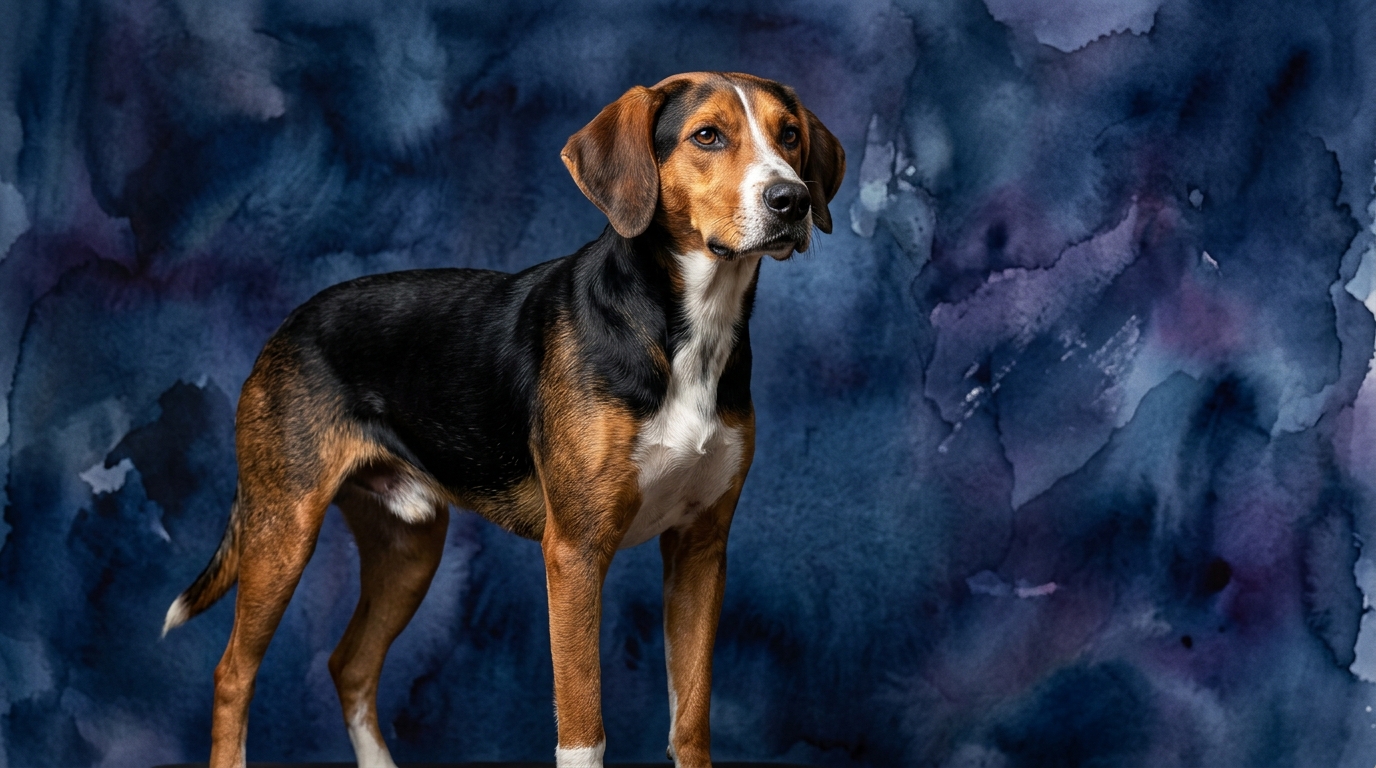
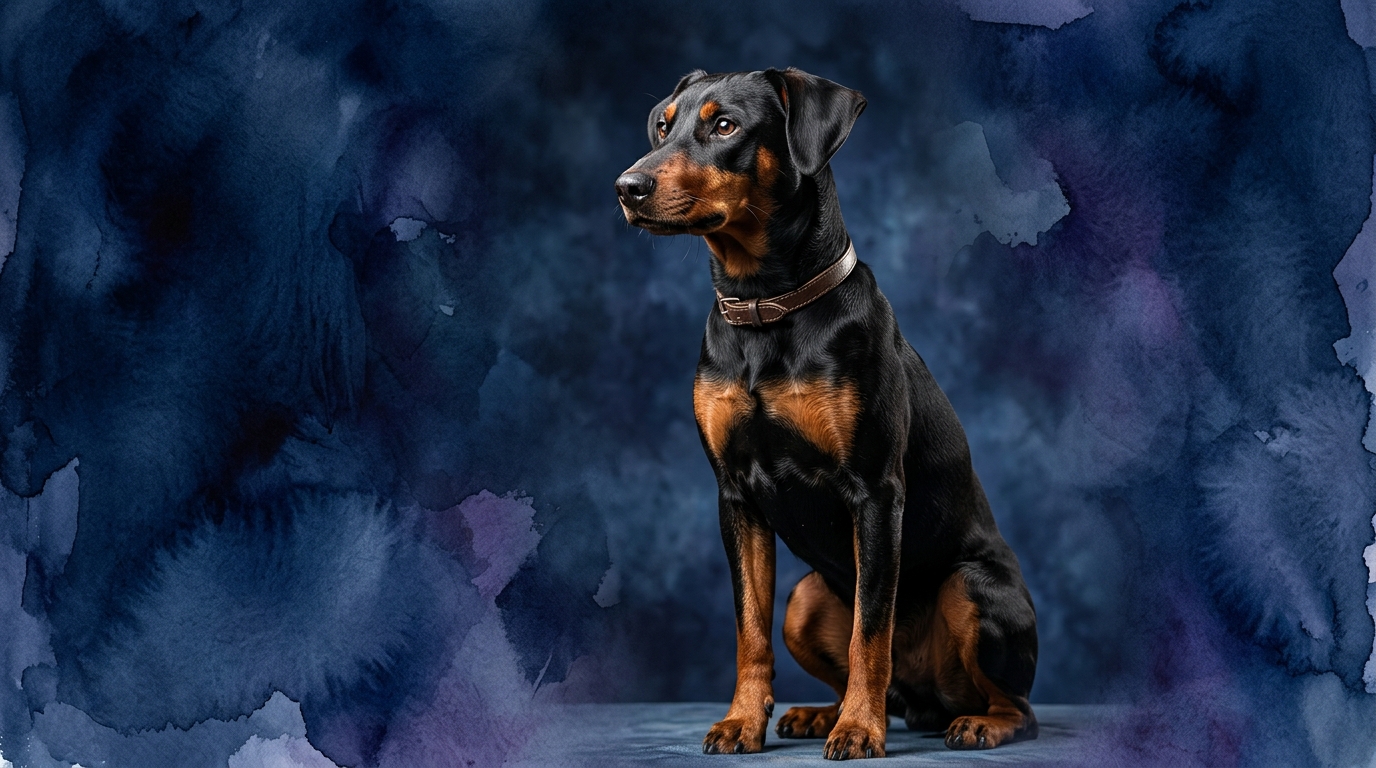
Side-by-Side IQ Profile
The Cosmic Pet Pet IQ Lab assesses canine intelligence across five key dimensions, with both the American Foxhound and German Pinscher consistently scoring 3 out of 5 in each. This identical numerical rating, however, belies the distinct ways their breed characteristics shape how these cognitive traits manifest in daily life.
For the American Foxhound, their Problem Solving (3/5) primarily involves tracking. They excel at deciphering complex scent trails, navigating varied terrain, and persisting through obstacles to locate a target, often relying on independent decisions rather than direct human instruction. Their Training Speed (3/5) reflects an ability to learn, but often at their own pace, with their keen nose frequently overriding handler commands; consistency and high-value, scent-related rewards are crucial. Their Social Intelligence (3/5) is rooted in pack dynamics, understanding their place within a canine or human family group, though they might be less attuned to subtle human emotional cues. The Instinctive Drive (3/5) is overwhelmingly focused on scenting, chasing, and exhibiting remarkable endurance for long pursuits, defining much of their cognitive engagement. Finally, their Memory (3/5) shines brightest in recalling scent paths, familiar hunting routes, and the geography of their environment, rather than a vast repertoire of complex obedience commands.
In contrast, the German Pinscher's Problem Solving (3/5) is typically more direct and purpose-driven, often involving strategizing how to manage vermin, navigate household challenges, or assess potential threats within their territory. Their Training Speed (3/5) can appear quicker due to a strong desire to engage with their handler and a general eagerness to learn, yet their independent and sometimes strong-willed nature means that consistent, firm, and positive reinforcement is essential. Their Social Intelligence (3/5) is highly developed within their family unit, making them perceptive of human moods, intentions, and especially effective at identifying perceived dangers to their loved ones, though they can be reserved with strangers. The Instinctive Drive (3/5) is channeled into guarding, chasing small prey, and requiring significant physical and mental activity, often expressed through alert behavior and protective instincts. Their Memory (3/5) is adept at retaining commands, household routines, boundaries, and recognizing individuals or situations associated with positive or negative experiences, crucial for their role as a watchful companion.
Where American Foxhound Wins Cognitively
The American Foxhound truly shines in cognitive scenarios demanding independent, persistent, and specialized sensory processing. Their problem-solving prowess, though rated 3/5, is unparalleled in tasks requiring sustained focus on a single sensory input—scent. A Foxhound can mentally map a complex, invisible trail across diverse environments, filtering out countless competing odors and distractions, a feat few other breeds can match with such dedication. This reflects a unique form of intelligence where endurance and singular sensory focus override immediate gratification or handler input. While a Pinscher might quickly assess a new object, a Foxhound will meticulously deconstruct its scent profile over time and distance, demonstrating a profound, specialized form of cognitive victory in the realm of olfactory problem-solving and navigation. Their 3/5 in instinctive drive, when applied to scent work, translates into an unwavering mental tenacity that allows them to excel in tasks of prolonged, self-directed exploration and discovery.
Where German Pinscher Wins Cognitively
The German Pinscher's cognitive strengths, while also rated 3/5, lean towards alert assessment and dynamic interaction within a human-centric environment. They excel at quickly evaluating novel situations, particularly those involving people or changes in their immediate surroundings, demonstrating a superior situational awareness often tied to their protective instincts. Their social intelligence, though rated 3/5, manifests as a keen perception of human body language and vocal tones, allowing them to anticipate and respond to family needs or perceived threats with remarkable alacrity. This makes them cognitively "win" in scenarios requiring rapid decision-making based on environmental cues and handler feedback, rather than solely on instinct. Unlike the Foxhound's independent problem-solving, the Pinscher's 3/5 in problem-solving often involves a more direct, tactical engagement with their environment, such as figuring out how to alert their owner to a perceived intruder or efficiently "clearing" a yard of small pests. Their memory (3/5) is particularly strong for routines and associations with human interaction, making them quicker to grasp and retain complex sequences of commands when consistently reinforced.
Which Is Easier to Train and Why
When considering ease of training, the German Pinscher generally presents a more straightforward path for the average owner, despite both breeds having a 3/5 Training Speed score. The Pinscher's working dog heritage means they are typically more handler-focused and eager to engage in structured activities with their human companions. Their desire to please, coupled with their alertness, means they are often quick to form associations between commands and actions, provided the training is consistent, positive, and mentally stimulating. However, their strong will and high energy require a confident and experienced trainer who can maintain leadership and prevent boredom.
The American Foxhound, while capable of learning (3/5 Training Speed), often proves more challenging due to their profound independence and overwhelming instinctive drive for scenting. When a Foxhound catches a scent, their cognitive focus shifts almost entirely to that stimulus, making recall and attention to handler commands incredibly difficult in distracting environments. Training a Foxhound is less about teaching new behaviors and more about finding ways to channel their powerful natural instincts into acceptable outlets, requiring immense patience, creativity, and a deep understanding of their motivations. While a Pinscher might be "strong-willed," a Foxhound can appear "deaf" to commands once a compelling scent is present, a fundamental behavioral difference that significantly impacts perceived training ease. Therefore, for general obedience and household integration, the German Pinscher often feels "easier" to train because they are more inclined to work *with* their human partner.
Which Suits Active Owners vs. Relaxed Owners
Neither the American Foxhound nor the German Pinscher is suited for genuinely relaxed owners, as both breeds possess a 3/5 instinctive drive that translates into substantial energy requirements. However, the *type* of activity they thrive on differs significantly. The American Foxhound is an ideal companion for owners who lead a highly active outdoor lifestyle, particularly those who enjoy long-distance running, hiking, or field activities where a dog can cover vast amounts of ground. They require extensive physical exercise, ideally in securely fenced areas where they can run freely and pursue scents. Their independent nature means they can sometimes be content to "do their own thing" during exercise, as long as it involves movement and scent exploration.
The German Pinscher, while equally active, thrives on more structured and interactive forms of exercise. They need owners who are not only active but also committed to providing regular mental stimulation through training, puzzle toys, and engaging play sessions. Their energy is often expressed through intense bursts and a desire to be involved in family activities. They are excellent partners for activities like agility, obedience, or long, brisk walks with their owner. While both demand active owners, the Foxhound suits those who appreciate an independent explorer, while the Pinscher suits those seeking an engaged and versatile working partner.
The Verdict
Choose the American Foxhound if you are an experienced owner who deeply appreciates an independent, scent-driven companion for extensive outdoor adventures and possess the patience to manage their profound hunting instincts.
Opt for the German Pinscher if you seek an alert, highly engaged, and protective working companion, prepared to provide consistent, stimulating training and integrate them fully into an active family life.
🧠 Find Your Pet's IQ Score
Our Pet IQ Lab assessment covers 25+ tests across 5 cognitive dimensions — personalized to your breed.
Take the Full IQ Test →Frequently Asked Questions
Do their identical 3/5 IQ scores mean they are equally smart?
While both breeds share a 3/5 rating across all cognitive dimensions, this numerical equality masks significant qualitative differences in how their intelligence manifests. Their historical roles shape their problem-solving approaches, social interactions, and training responsiveness in distinct ways, making them "smart" in different contexts.
Can an American Foxhound live happily in an apartment?
An American Foxhound would generally struggle in an apartment setting due to their immense need for space, extensive exercise, and strong instinctive drive to run and explore scents. They thrive in homes with large, securely fenced yards and owners committed to providing hours of daily outdoor activity.
Are German Pinschers good with children?
German Pinschers can be good with older, respectful children, especially if raised with them and properly socialized. Their protective instincts and high energy mean they require supervision with very young children and consistent training to ensure appropriate interactions.