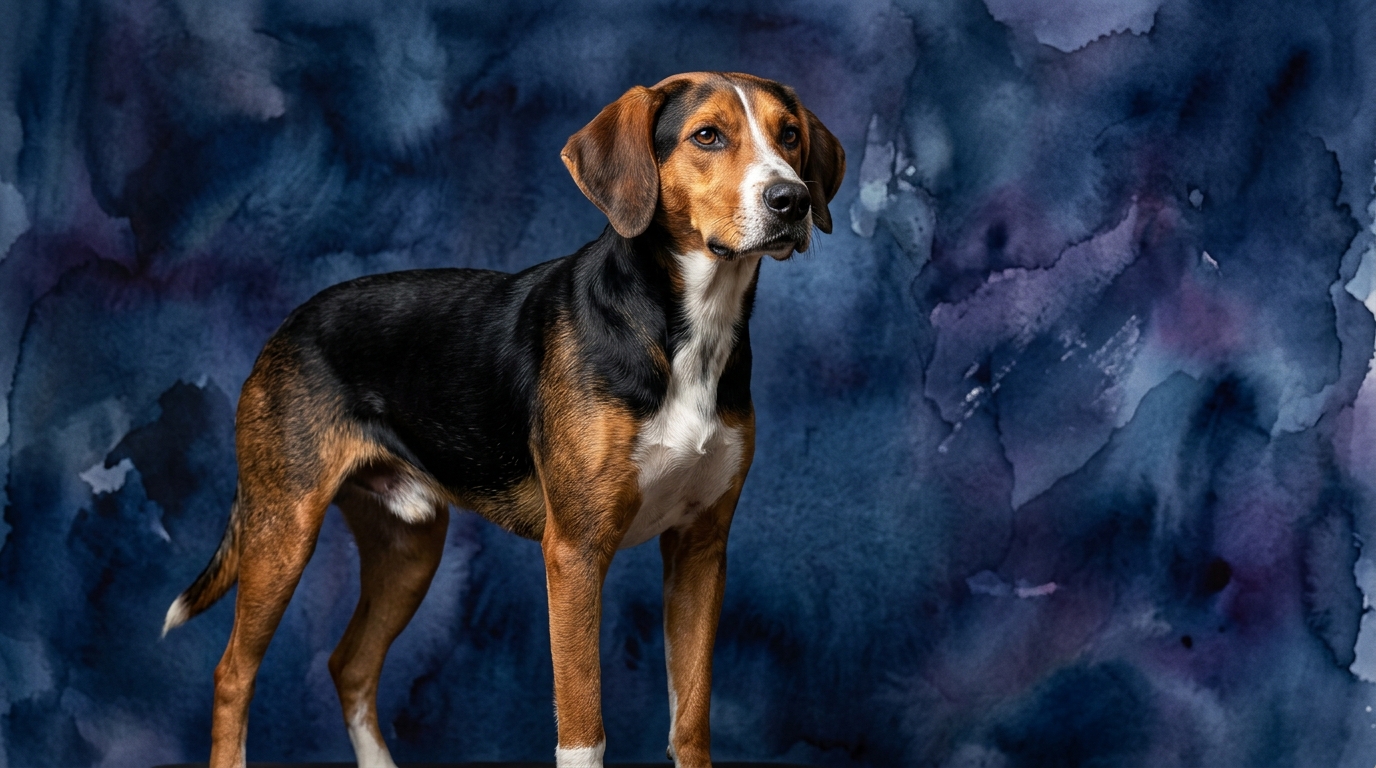
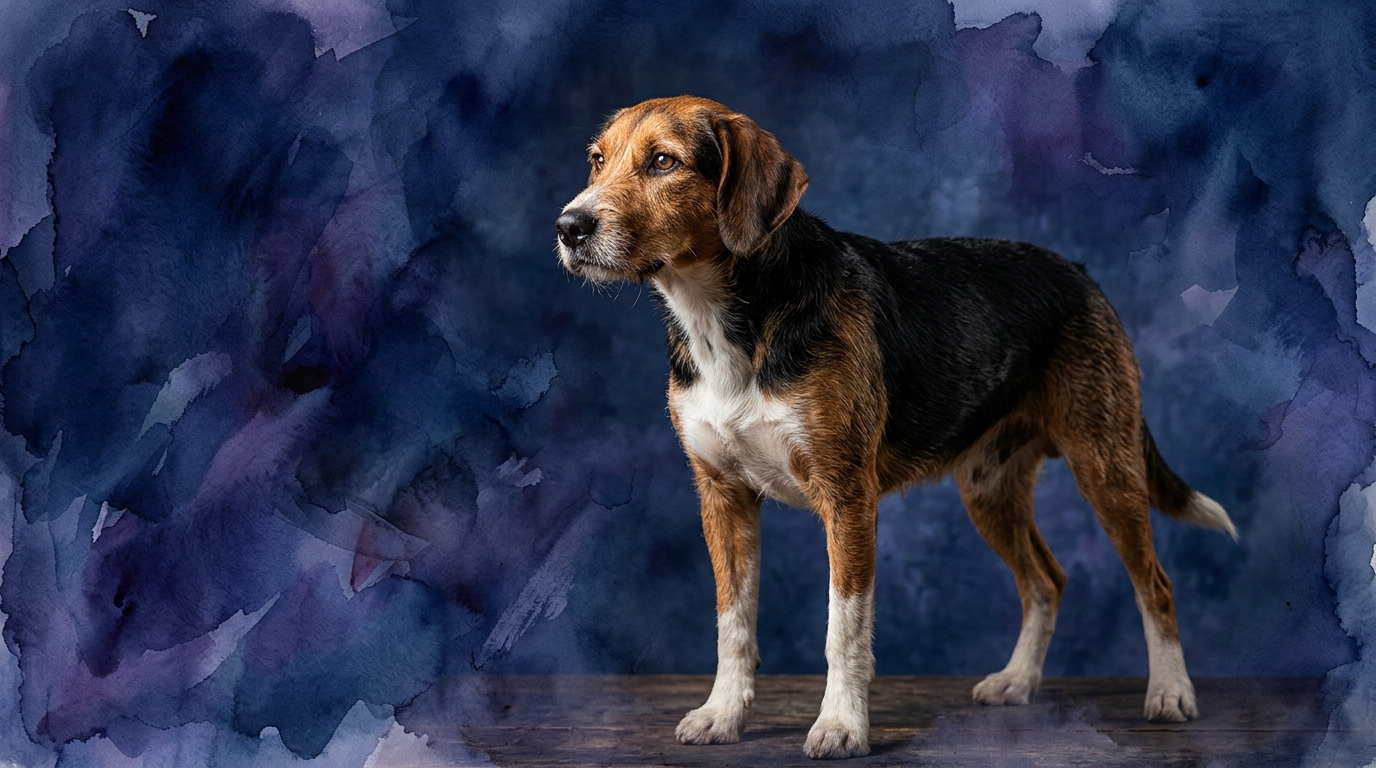
Side-by-Side IQ Profile: American Foxhound vs. Harrier
Both the American Foxhound and the Harrier register a 3/5 for Problem Solving, indicating a practical intelligence focused on their primary task: hunting. An American Foxhound demonstrates this by independently navigating varied terrain to follow a scent, perhaps finding creative ways around obstacles or through dense undergrowth to maintain a trail. Similarly, a Harrier applies this score by working with its pack to unravel complex scent puzzles, requiring a collective effort to track prey efficiently and persistently. Neither breed is expected to master intricate puzzle toys quickly, but their problem-solving shines in the pursuit of a quarry.
A 3/5 in Training Speed for both suggests they are not the fastest learners but are certainly capable with consistent effort. The American Foxhound, known for its independent streak, may require more patience and highly motivating rewards to commit new commands to memory, as its instincts often take precedence over handler directives. The Harrier, while also scent-driven, might respond slightly better to training within a structured, social context, leveraging its pack mentality for cooperation, though still requiring persistence to overcome its strong chase drive.
Both breeds possess a functional 3/5 social intelligence. The American Foxhound often displays this through a clear understanding of its human family's routine and mood, yet maintains a certain aloof independence, reflecting its historical role of working somewhat autonomously during the hunt. The Harrier, conversely, often exhibits its social acumen through strong bonds within its canine pack and a desire to interact cooperatively, aligning with its history as a concerted pack hunter, making it generally more attuned to group dynamics.
A robust 3/5 in Instinctive Drive is central to both breeds, manifesting primarily as an overwhelming desire to follow a scent. For the American Foxhound, this drive is often a solitary pursuit, leading them to range widely and single-mindedly once a compelling trail is detected, making recall a significant challenge in open environments. The Harrier's instinctive drive is equally potent but often channeled through a pack dynamic, where the collective drive fuels a relentless, coordinated pursuit, reinforcing their need for extensive physical and mental stimulation centered around scent work.
Both breeds register a 3/5 for Memory, indicating a solid capacity to retain information relevant to their lives and tasks. An American Foxhound's memory is robust enough to recall established scent lines, familiar territories, and the routines of its home environment, aiding in its independent ranging and return. A Harrier's memory allows it to remember complex pack formations, the locations of frequently run trails, and the specific commands associated with cooperative hunting, ensuring it can efficiently contribute to the group's efforts over time.
Where the American Foxhound Wins Cognitively
While their raw IQ scores are identical, the American Foxhound often presents a cognitive advantage in scenarios demanding independent thought and sustained focus on a singular objective. Its 3/5 problem-solving and memory scores, combined with its strong 3/5 instinctive drive, are historically channeled towards individual pursuit, where a dog must independently unravel a complex scent trail over vast distances without constant handler intervention. This translates into a perceived cognitive strength in self-reliance and autonomous decision-making in the field, making it adept at extended, solitary tracking tasks where persistence and independent navigation are paramount.
Where the Harrier Wins Cognitively
Conversely, the Harrier shines in cognitive situations that benefit from group cohesion and cooperative effort, leveraging its 3/5 social intelligence and instinctive drive within a pack context. Its ability to interpret and respond to the subtle cues of fellow hounds, combined with its persistent focus, allows for a coordinated effort in tracking prey, where collective problem-solving and shared memory of a trail are key. This breed's cognitive strengths are particularly evident in its capacity for synchronous action and understanding of group dynamics, making it exceptionally suited for activities requiring team effort and responsive interaction with other dogs or a human 'pack'.
Which is Easier to Train and Why?
Determining which breed is 'easier' to train, given their identical 3/5 training speed, requires looking at their inherent behavioral leanings. The American Foxhound's deep-seated independence, a hallmark of its solitary hunting heritage, means it often views commands as suggestions rather than directives, especially if they conflict with an enticing scent. Training requires immense patience, creativity to make commands more appealing than a trail, and a strong understanding that its 3/5 training speed is coupled with a powerful, often overriding, instinctive drive.
The Harrier, while equally driven by scent, typically possesses a stronger pack orientation; its 3/5 social intelligence often means it is more inclined to work *with* a human leader, viewing them as part of its pack. While still requiring consistent, positive reinforcement and an acknowledgment of its strong chase instinct, the Harrier's inherent desire for cooperation can make its 3/5 training speed feel slightly more manageable for an owner willing to engage its social side.
Which Suits Active Owners vs. Relaxed Owners?
Neither the American Foxhound nor the Harrier is suited for relaxed owners seeking a sedentary companion; both breeds demand substantial activity due to their robust 3/5 instinctive drive and historical roles. The American Foxhound, with its capacity for wide-ranging, independent pursuit, thrives with owners who can provide vast, secure spaces for exercise, such as large fenced properties or regular, extensive off-leash excursions in safe areas where its scent drive can be indulged. It needs an owner prepared for long walks, runs, or even cycling alongside, providing an outlet for its boundless energy and stamina.
The Harrier, while equally energetic, often prefers activities that involve companionship and structured engagement, making it a better fit for active owners who enjoy group activities, such as jogging with their dog, participating in scent work classes, or engaging in long hikes with a canine companion. Its pack nature means it typically prefers to be active *with* its people, rather than simply allowed to roam independently, making it a good match for owners who integrate their dog fully into their active lifestyle.
The Verdict
Choose the American Foxhound if you are an experienced owner who appreciates a dog's independent spirit and can provide vast, secure spaces for its boundless energy and singular focus on scent work, understanding its need for self-directed exploration.
Opt for the Harrier if you seek an active, companionable hound that thrives on cooperative activities and pack dynamics, and are committed to consistent training and daily engagement to channel its powerful scent drive and social energy.
🧠 Find Your Pet's IQ Score
Our Pet IQ Lab assessment covers 25+ tests across 5 cognitive dimensions — personalized to your breed.
Take the Full IQ Test →Frequently Asked Questions
Do American Foxhounds or Harriers make good family pets despite their strong hunting instincts?
Both breeds can be wonderful family pets, particularly in active households that understand their need for extensive exercise and mental stimulation. Their 3/5 social intelligence means they are generally amiable with family members, though their strong 3/5 instinctive drive necessitates careful management around smaller pets and secure containment.
How do their identical 3/5 training speed scores translate to real-world training challenges?
A 3/5 training speed indicates neither breed is inherently quick to learn, requiring consistency, patience, and highly motivating rewards. For the American Foxhound, the challenge often lies in overcoming its independent nature and strong scent distractions, while for the Harrier, it's about harnessing its pack drive and persistent focus within a structured training regimen.
Given their 3/5 memory, will these breeds easily forget commands or routines?
A 3/5 memory means they have a solid, functional recall, not a photographic one. They will remember commands and routines with regular reinforcement and practice. However, in the face of an overwhelming scent, their powerful 3/5 instinctive drive can momentarily override learned behaviors, making consistent recall practice in varied environments crucial for both breeds.