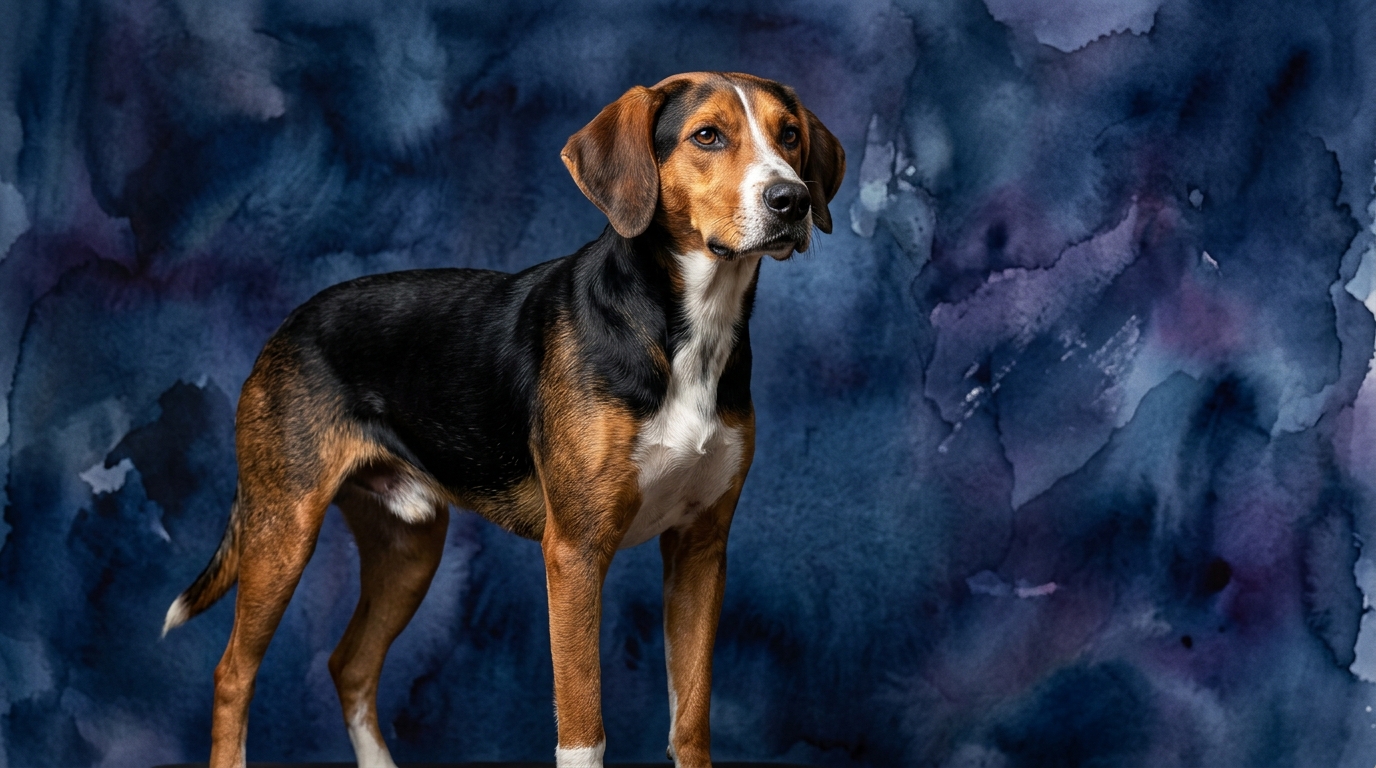

Side-by-Side IQ Profile: Hound vs. Companion
Delving into The Cosmic Pet Pet IQ Lab data reveals both the American Foxhound and the Lhasa Apso score 3/5 across all five measured cognitive dimensions. However, these identical ratings manifest in profoundly different ways, shaped by their breed-specific histories and inherent motivations.
For the American Foxhound, its Problem Solving (3/5) manifests in decoding complex scent trails, navigating varied terrains, and making autonomous decisions to locate quarry. This isn't about abstract puzzles, but about deciphering dynamic environmental cues crucial for their traditional hunting role. Their Training Speed (3/5) indicates a capacity to learn commands, yet their powerful, independent drive to follow a scent can often override immediate compliance; they absorb information, but consistent execution in distracting environments requires persistent, engaging training that competes with their instincts. Social Intelligence (3/5) is evident in their harmonious pack interactions, understanding hierarchy and cooperative strategies, forming strong bonds with human companions, often viewing them as part of their 'pack.' Instinctive Drive (3/5) is a dominant trait, compelling them to pursue scents with relentless focus and endurance, directing much of their activity and attention towards the thrill of the chase. Memory (3/5) is crucial for recalling extensive scent patterns, mapping territories, and remembering specific trails, allowing them to retrace steps or recognize familiar hunting grounds efficiently.
The Lhasa Apso’s Problem Solving (3/5) is demonstrated in their clever navigation of domestic environments, figuring out how to get attention or maneuvering to optimal vantage points. Their problem-solving often involves strategic thinking focused on comfort, security, or achieving desired outcomes within their home territory. Training Speed (3/5) indicates their ability to learn routines and commands, though their independent nature and strong will can make consistent application a deliberate process; they grasp concepts quickly but often choose when to comply based on perceived benefit or their own agenda. Social Intelligence (3/5) is apparent in their keen observation of human family dynamics, discerning moods, and forming deep, selective bonds, adept at communicating their needs and preferences to their chosen people with subtle cues. Instinctive Drive (3/5) is primarily expressed as a territorial guardian instinct, prompting them to alert to perceived threats and protect their home and family with unwavering commitment, focusing inward on their immediate environment and its security. Memory (3/5) is utilized for remembering household routines, the specific habits of family members, and distinguishing between familiar friends and potential strangers, contributing significantly to their role as a vigilant, discerning home guardian.
Where the American Foxhound Excels Cognitively
The American Foxhound's cognitive strengths are deeply rooted in its heritage as a scent hound, making its 3/5 Problem Solving manifest as exceptional environmental navigation. They adeptly decipher complex scent trails, making autonomous decisions in the field to locate quarry. This sophisticated application of sensory input and spatial reasoning is unique to their hound lineage, allowing them to solve dynamic, real-world puzzles in a way few other breeds can. Their 3/5 Instinctive Drive, specifically for scent work, fuels an unparalleled focus and endurance, enabling them to sustain cognitive effort over long periods and vast distances. This relentless dedication to a task, driven by innate motivation, is a distinct cognitive advantage in working contexts, far surpassing a companion dog's typical engagement. Furthermore, their 3/5 Memory for extensive scent maps and terrain features is crucial for efficient pursuit, demonstrating a practical, long-term recall of environmental data that supports their primary function.
Where the Lhasa Apso Shines Cognitively
The Lhasa Apso's cognitive acumen shines within the confines of its primary role as a discerning companion and vigilant sentinel. Their 3/5 Social Intelligence is particularly sharp within a family unit; they are acutely observant of human emotions and household dynamics, often anticipating needs or reacting subtly to changes in atmosphere. This nuanced understanding of their immediate human environment allows for a deep, if selective, bond. Their 3/5 Problem Solving is often applied to domestic strategy, such as cleverly communicating desires or finding optimal vantage points for observation, demonstrating a resourcefulness focused on their comfort and perceived duty within the home. The Lhasa Apso's 3/5 Instinctive Drive for territorial guardianship means they possess exceptional alertness and discernment regarding strangers and unusual sounds, processing environmental information with a keen protective instinct. Their 3/5 Memory is adept at recalling intricate routines and distinguishing between regular visitors and potential intruders, making them highly effective, if vocal, home guardians.
Training Dynamics: Effort vs. Independence
Despite both breeds scoring 3/5 in Training Speed, their approaches to learning and compliance differ significantly, influencing the perceived ease of training. The American Foxhound, while capable of learning, possesses a formidable 3/5 Instinctive Drive rooted in scent pursuit. This means that once a compelling scent is detected, their focus becomes singularly dedicated to tracking, often overriding even well-learned commands. Training a Foxhound requires immense patience, consistency, and creative strategies to compete with their powerful olfactory distractions, making reliable recall a particular challenge in an open environment. Their cognitive energy is often directed outwards, towards the environment’s myriad stimuli.
Conversely, the Lhasa Apso's 3/5 Training Speed is coupled with a strong independent streak and a 3/5 Instinctive Drive for territorial vigilance. They understand commands but are often motivated by their own agenda or what they perceive as necessary for their role as a home guardian. While less prone to bolting after a scent, a Lhasa Apso might simply choose not to comply if they don't see the immediate value or if their attention is directed elsewhere, perhaps by a perceived threat at the window. Training them requires consistent motivation, positive reinforcement, and a clear understanding of their desire for autonomy. They direct their cognitive energy inwards, towards their home and people. Therefore, neither is 'easier' in a straightforward sense; the challenge lies in understanding and working with their distinct motivational frameworks and inherent drives.
Matching Breeds to Lifestyles: Active Pursuit vs. Relaxed Vigilance
For active owners seeking a partner for outdoor adventures, the American Foxhound is a compelling choice. Their 3/5 Instinctive Drive and 3/5 Problem Solving are best engaged through activities that leverage their natural abilities, such as scent work, long hikes, trail running, or even canine sports like tracking and agility. They thrive on physical and mental stimulation that allows them to use their nose and cover ground, making them ideal companions for those who enjoy exploring the outdoors. A Foxhound needs significant daily exercise and mental engagement to prevent boredom and channel their formidable energy constructively, ensuring their cognitive abilities are well-utilized.
In contrast, the Lhasa Apso aligns well with more relaxed owners who appreciate a vigilant, independent companion within a home setting. While they enjoy walks and playtime, their 3/5 Instinctive Drive is more focused on guarding their territory and family rather than extensive outdoor pursuits. Owners who value a dog that is alert to its surroundings, content with indoor routines, and offers a strong, discerning presence will find the Lhasa Apso a suitable match. They require consistent interaction and mental stimulation through companionship and moderate play, but their exercise needs are considerably lower than the Foxhound's. Their cognitive strengths are applied to observing and managing their immediate environment with a watchful eye.
The Verdict
Select an American Foxhound if you are an active individual or family prepared to channel a powerful scent drive into extensive outdoor activities, offering opportunities for their problem-solving and memory to thrive in tracking and exploration.
Opt for a Lhasa Apso if you seek a discerning, independent companion who excels as a vigilant home guardian, appreciating their social intelligence and memory applied to domestic routines and family dynamics.
🧠 Find Your Pet's IQ Score
Our Pet IQ Lab assessment covers 25+ tests across 5 cognitive dimensions — personalized to your breed.
Take the Full IQ Test →Frequently Asked Questions
Do American Foxhounds and Lhasa Apsos learn at the same pace?
Both breeds score 3/5 in Training Speed, indicating they have similar capacities for learning. However, their strong breed-specific drives—scent for the Foxhound and independence for the Lhasa Apso—mean that external distractions or internal motivations can significantly influence how quickly and consistently they apply what they've learned.
How do their problem-solving skills differ with the same 3/5 rating?
The American Foxhound's 3/5 Problem Solving manifests in navigating complex scent trails and environmental obstacles in the field, making autonomous decisions for pursuit. The Lhasa Apso's 3/5 Problem Solving is typically applied to strategic domestic situations, such as finding the best vantage point or cleverly communicating desires within the home.
Which breed is better for a first-time dog owner?
Neither breed is typically recommended for absolute first-time owners without prior research, due to their distinct needs. The American Foxhound's intense drive and exercise requirements can be challenging, while the Lhasa Apso's independent nature often requires a confident trainer. Both benefit from owners who understand their specific breed characteristics and are prepared to meet their unique demands.