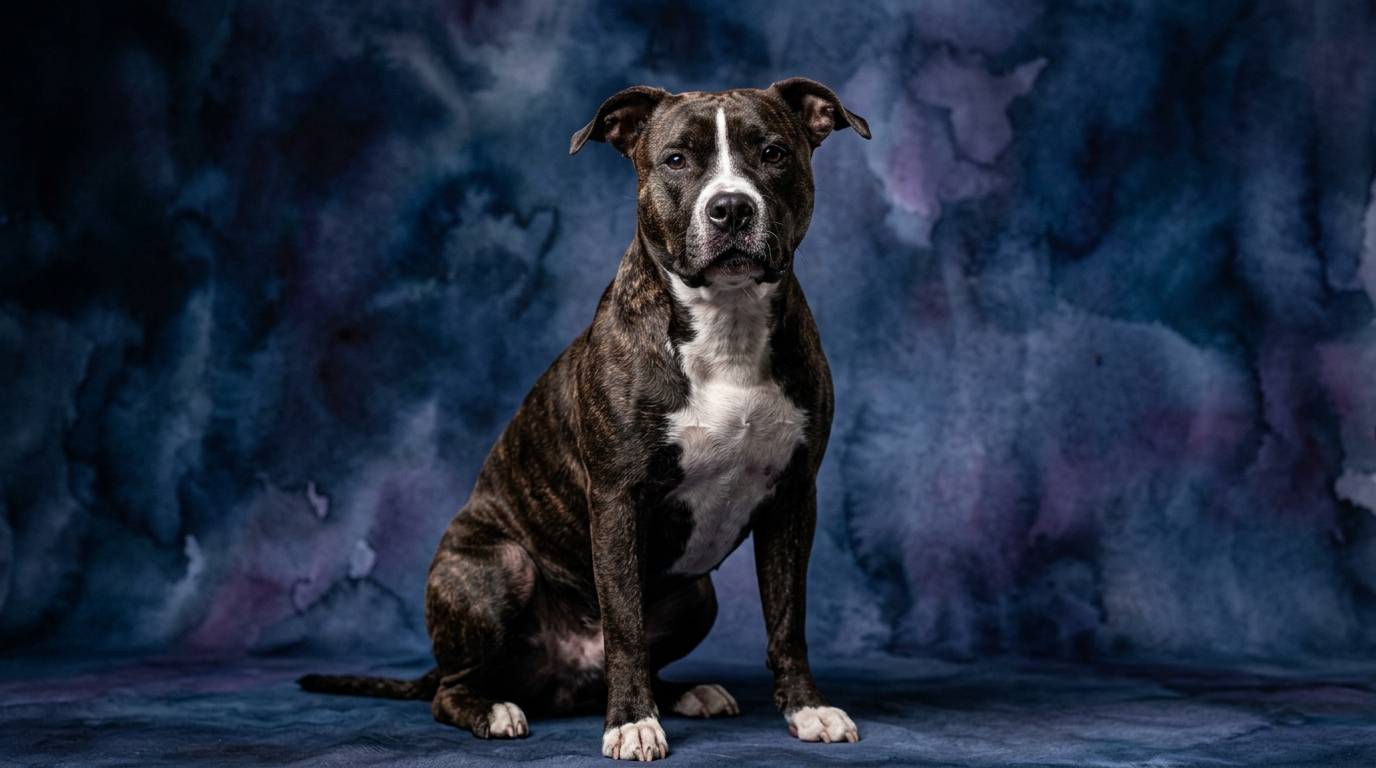
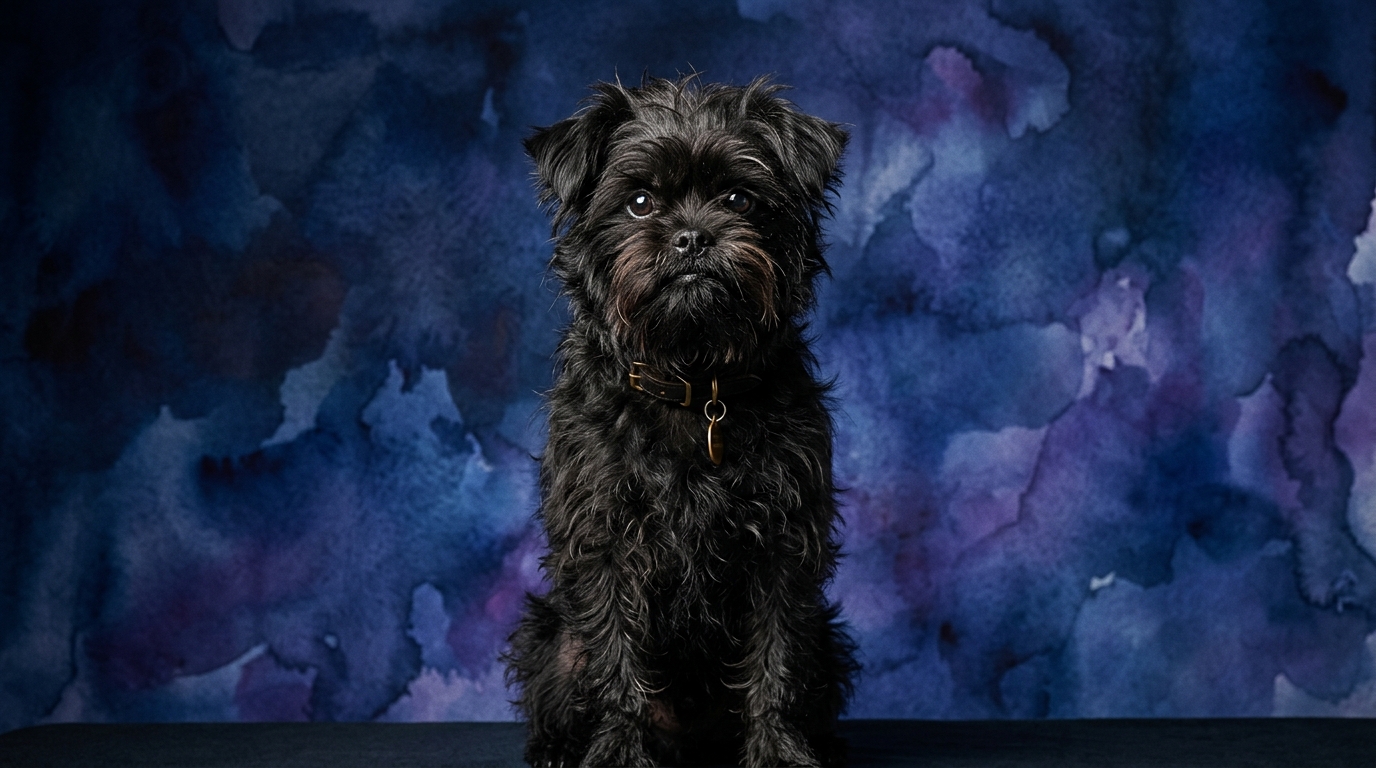
Side-by-Side IQ Profile
At The Cosmic Pet Pet IQ Lab, we assess canine intelligence across five key dimensions. For the American Staffordshire Terrier, we see a balanced profile with a standout memory.
Problem Solving (3/5): AmStaffs demonstrate a competent ability to navigate challenges and find solutions, often with a direct approach.
Training Speed (3/5): They pick up new commands and routines at a moderate pace, benefiting from consistent, engaging methods.
Social Intelligence (3/5): AmStaffs show a solid capacity for understanding and responding to human cues and social dynamics within their family unit.
Instinctive Drive (3/5): Their inherent drives, stemming from terrier heritage, are present at a moderate level, manifesting as curiosity and a desire for engagement.
Memory (4/5): A notable strength, their memory allows them to retain a significant amount of learned information and past experiences, aiding long-term skill retention.
The Affenpinscher, while not Coren-ranked, presents a consistent cognitive profile across the board, reflecting its unique role as a companion.
Problem Solving (3/5): Affenpinschers display similar problem-solving acumen, often applying cleverness to everyday household situations.
Training Speed (3/5): They learn new behaviors at a steady, moderate rate, requiring patient, positive reinforcement.
Social Intelligence (3/5): These small dogs possess a good understanding of social interactions, forming strong bonds and communicating effectively with immediate human companions.
Instinctive Drive (3/5): Their instinctive drives are moderately expressed, often seen in their alert nature and engagement with surroundings, characteristic of their ratter lineage.
Memory (3/5): Affenpinschers exhibit functional memory, capable of recalling commands and routines, though perhaps not with the same depth as their AmStaff counterparts.
Where American Staffordshire Terrier Wins Cognitively
The American Staffordshire Terrier's cognitive profile distinguishes itself most clearly in its superior memory, scoring a 4/5 compared to the Affenpinscher's 3/5. This enhanced capacity for recall means an AmStaff is more likely to retain complex command sequences and past learning experiences over extended periods, making the reinforcement of previously taught behaviors more efficient. Furthermore, their inclusion in the Coren ranking at #48 suggests a general aptitude for obedience and working intelligence, indicating a breed that processes and responds to human instruction with a higher degree of consistency. While both breeds share a 3/5 in problem-solving and training speed, the AmStaff's more robust memory translates into more reliable performance in structured learning environments and long-term skill application, allowing them to build a larger repertoire of understood commands and tricks.
Where Affenpinscher's Cognitive Profile Shines Uniquely
While the Affenpinscher does not boast higher scores in any specific cognitive dimension compared to the American Staffordshire Terrier, its unique combination of 3/5 scores creates a distinct cognitive advantage suited for particular lifestyles. Their 3/5 problem-solving ability, combined with small stature, often manifests as cleverness in navigating tight spaces or accessing desired objects, sometimes with a mischievous flair. Their 3/5 social intelligence, though equal to the AmStaff, often presents as a highly attentive and engaging interaction style with their immediate family, fostering deep, focused bonds. This concentrated social awareness, coupled with their moderate instinctive drive (3/5) rooted in their ratter history, means they are often highly alert and responsive to their immediate environment, making them excellent, albeit small, watchdogs. Their cognitive strengths lie in adaptability and focused engagement within a close-knit human family, demonstrating a clever, attentive, and sometimes tenacious spirit in a compact package.
Which is Easier to Train and Why
When considering ease of training, the American Staffordshire Terrier holds a subtle advantage, primarily due to its stronger memory score of 4/5 compared to the Affenpinscher's 3/5. While both breeds share a 3/5 training speed, indicating they learn new commands at a moderate pace, the AmStaff's superior recall means they are more likely to retain those commands with fewer refreshers over time. This translates into greater efficiency in building a repertoire of behaviors and more reliable performance of learned tasks. Real behavioral differences also play a role; AmStaffs, as working terriers, often possess a strong desire to please and a drive for interaction, which can be harnessed effectively in training. Affenpinschers, while intelligent, can exhibit a more independent or "monkey-like" will, characteristic of many toy breeds. Their smaller size and potential for being easily distracted might also present unique training challenges, requiring more consistent focus and patience. Therefore, while both require dedicated training, the AmStaff's memory and working heritage generally make the training journey smoother for sustained results.
Which Suits Active Owners vs. Relaxed Owners
The cognitive and inherent traits of these breeds naturally align them with different owner lifestyles. The American Staffordshire Terrier, with its moderate instinctive drive (3/5) and history rooted in working tasks, generally thrives with active owners. Their problem-solving capabilities (3/5) and robust memory (4/5) make them excellent candidates for advanced obedience, agility, or other dog sports providing both physical and mental stimulation. Owners who enjoy regular, vigorous exercise, structured training sessions, and engaging their dog in various activities will find the AmStaff a willing and capable partner. Conversely, the Affenpinscher, while possessing a similar instinctive drive (3/5), channels this energy into more compact forms of engagement, suiting relaxed owners who still appreciate a dog with personality and alertness. Their social intelligence (3/5) and problem-solving (3/5) are well-suited for interactive play and companionship within the home, rather than extensive outdoor adventures. Owners who prefer shorter, regular walks, indoor games, and a close, attentive companion will find the Affenpinscher's cognitive makeup fits their more relaxed pace, providing clever engagement without requiring high-intensity physical output.
The Verdict
Choose an American Staffordshire Terrier if you seek a canine companion with robust memory for training, capable of mastering a broad range of commands and excelling in structured activities. They are ideal for active owners prepared to provide consistent mental and physical engagement, appreciating a dog that retains learned behaviors reliably.
Opt for an Affenpinscher if you desire a clever, attentive companion whose cognitive strengths shine in close domestic settings and who provides focused social interaction without demanding extensive physical exercise. They suit relaxed owners who enjoy a dog with distinct personality and a moderate need for intellectual stimulation through indoor games and companionship.
🧠 Find Your Pet's IQ Score
Our Pet IQ Lab assessment covers 25+ tests across 5 cognitive dimensions — personalized to your breed.
Take the Full IQ Test →Frequently Asked Questions
Does the Affenpinscher's lack of Coren ranking mean it's less trainable than the AmStaff?
Not necessarily. The Coren ranking primarily assesses obedience and working intelligence, often favoring breeds historically used for specific tasks. While the AmStaff's #48 rank indicates strong trainability, the Affenpinscher's equal training speed (3/5) means it is still capable of learning, just perhaps not in the same competitive obedience context.
How does the "instinctive drive" score impact daily life for these breeds?
A 3/5 instinctive drive for both breeds means they possess a moderate level of inherent motivations, such as chasing, exploring, or guarding. For AmStaffs, this might manifest as a desire for structured activities or a strong prey drive needing management. For Affenpinschers, it could mean being alert to household sounds or engaging in playful "hunting" of toys, requiring owners to provide appropriate outlets for these natural tendencies.
Can an Affenpinscher perform complex problem-solving tasks like an AmStaff?
Both breeds score 3/5 in problem-solving, indicating a similar baseline capacity for navigating challenges. However, the type of problem-solving might differ; an AmStaff might excel at more physical, task-oriented puzzles, while an Affenpinscher might use its cleverness for more nuanced, domestic challenges or creative ways to get attention or treats.