Side-by-Side IQ Profile: American Staffordshire Terrier vs. Australian Terrier
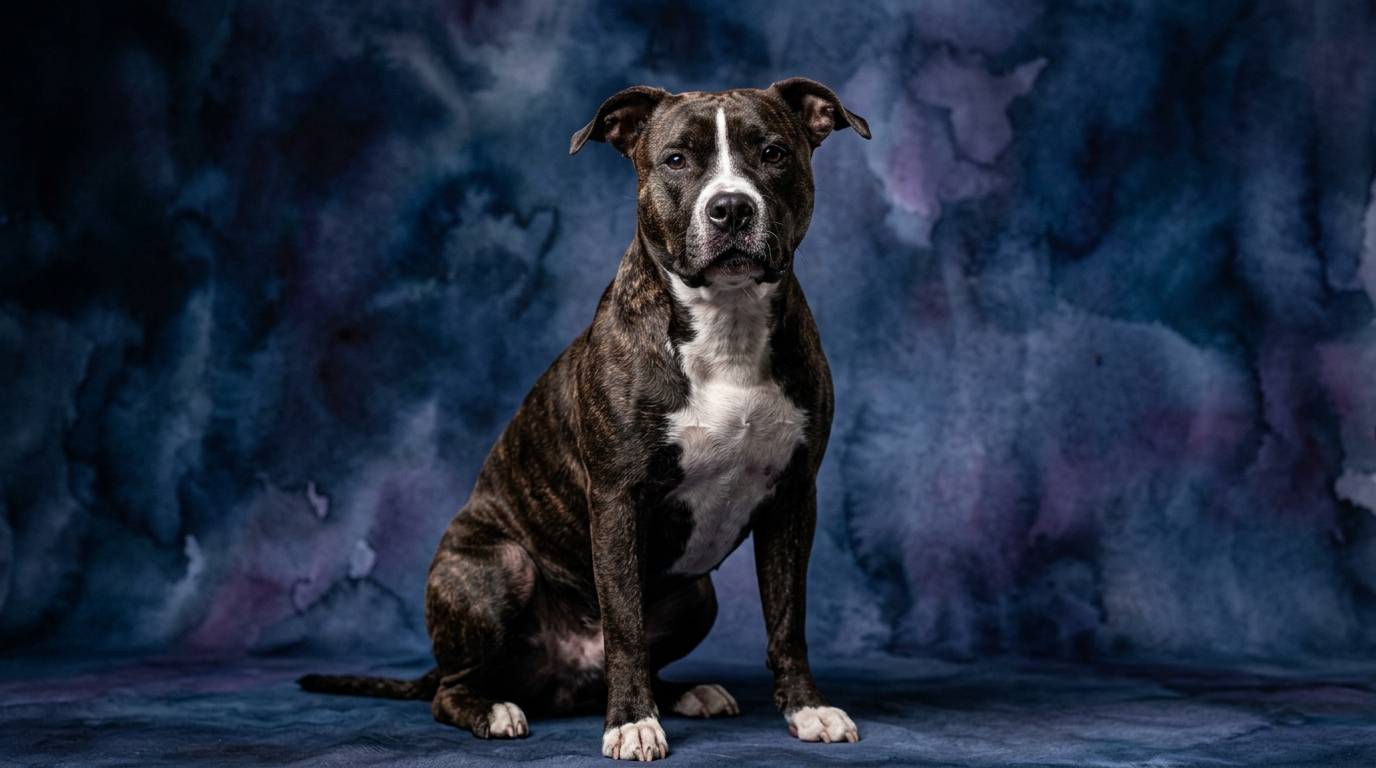
The American Staffordshire Terrier, notably ranked #48 by Stanley Coren, presents a well-rounded cognitive architecture. Its Problem Solving ability is rated 3/5, indicating a capacity for navigating moderately intricate challenges through direct and persistent effort rather than elaborate strategizing. Training Speed also registers 3/5, suggesting they grasp new commands and routines at an average pace, responding well to consistent, positive reinforcement. Social Intelligence, at 3/5, points to a moderate aptitude for interpreting human cues and household social dynamics, generally fostering responsive companionship. Their Instinctive Drive, also 3/5, signifies a moderate expression of inherent terrier traits like prey drive or guarding tendencies, which are present but typically manageable. A distinct cognitive strength for the AmStaff lies in their Memory, scoring 4/5, reflecting a robust capacity to retain learned behaviors and experiences over extended periods, a significant asset for sustained training and recall.
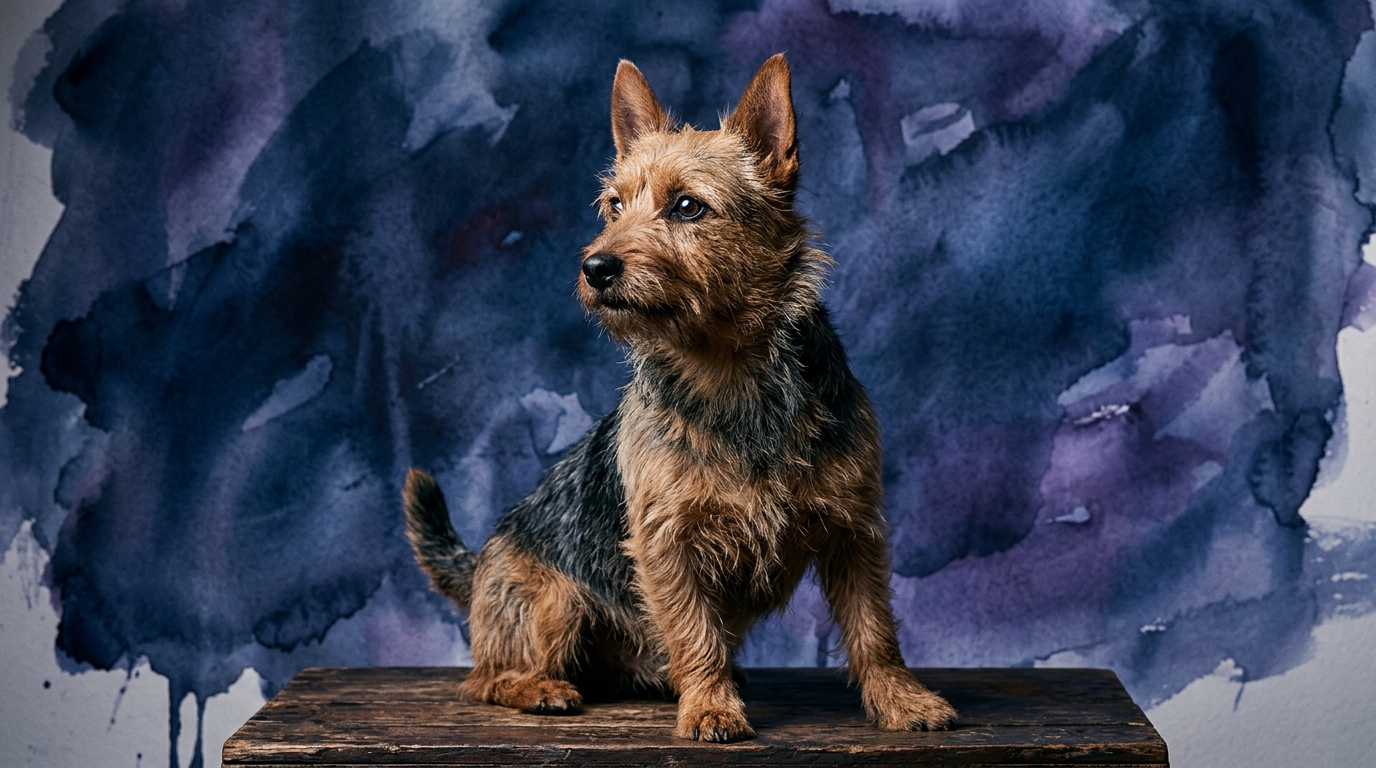
The Australian Terrier, while not specifically ranked by Coren, demonstrates a remarkably consistent cognitive pattern across several dimensions. Their Problem Solving capability aligns with the AmStaff at 3/5, implying a similar aptitude for tackling practical, everyday puzzles with a determined spirit. Training Speed is likewise 3/5, meaning they learn new tasks at an average rate, thriving on clear instructions and engaging interactions. Social Intelligence also scores 3/5, indicating a fair understanding of social interactions and a capacity to form strong bonds with their human families. Their Instinctive Drive is 3/5, reflecting a moderate yet discernible expression of their terrier heritage, including a keen interest in exploring and tracking small prey, characteristic of a working terrier. Unlike the AmStaff, their Memory is rated 3/5, suggesting a solid but not exceptional capacity for retaining information, which might necessitate more frequent refreshers for complex or infrequently practiced tasks.
Where the American Staffordshire Terrier Wins Cognitively
The American Staffordshire Terrier’s primary cognitive advantage lies in its superior Memory, scoring 4/5 compared to the Australian Terrier’s 3/5. This enhanced retention means an AmStaff is more likely to recall commands and routines accurately even after periods of inactivity, making the reinforcement of complex behaviors more efficient over the long term. For instance, an AmStaff might remember a multi-step agility course or a series of obedience commands with fewer refreshers than an Australian Terrier. This robust memory also contributes to their ability to generalize learned behaviors across different environments more effectively, requiring less re-teaching when a familiar command is issued in a new setting. Owners might find that once an AmStaff has mastered a particular skill, it remains firmly embedded in their cognitive repertoire, facilitating advanced training and reliability in varied situations.
Where the Australian Terrier Wins Cognitively
While the Australian Terrier’s individual cognitive scores largely align with or are slightly below the AmStaff's, their "win" isn't in a single higher score but in the specific way their balanced 3/5 profile integrates with their core purpose and temperament. Their consistent 3/5 across Problem Solving, Training Speed, Social Intelligence, and Instinctive Drive, combined with their smaller stature, often translates into a keen, focused persistence suited for independent tasks. For example, an Australian Terrier's 3/5 Problem Solving, though not exceptional, is typically applied with a tenacious, single-minded focus when confronted with a task like digging out a perceived rodent or navigating a complex scent trail. This determined application of their cognitive abilities means they excel at tasks requiring sustained, independent effort, often compensating for a slightly less powerful memory with sheer, unwavering application. Their balanced profile also makes them remarkably adaptable to various household dynamics, where their moderate social intelligence and manageable instinctive drives allow them to integrate smoothly without the intense demands that some breeds with higher drives might present.
Which is Easier to Train and Why
Both breeds share a Training Speed rating of 3/5, indicating they grasp new concepts at a similar, average pace. However, the American Staffordshire Terrier holds a subtle edge in overall ease of training, primarily due to its 4/5 Memory score. While both dogs will learn new commands, the AmStaff is likely to retain them more consistently and require fewer refreshers over time, making the long-term maintenance of trained behaviors more straightforward. For instance, an AmStaff taught to perform a specific trick might retrieve that skill more readily after a month without practice than an Australian Terrier, whose 3/5 memory might necessitate a quick review. Both breeds possess an Instinctive Drive of 3/5; for the AmStaff, this might manifest as a moderate desire to please and engage in structured activities, while for the Australian Terrier, it often translates into a moderate prey drive and an independent streak. Managing these drives in training is crucial for both; the AmStaff's better memory can help solidify impulse control commands more enduringly, whereas the Australian Terrier might require more consistent reinforcement to counteract its inherent independent inclinations and focus on the handler. Therefore, while initial learning might feel similar, the AmStaff's superior recall offers a distinct advantage in maintaining a well-trained companion over their lifetime.
Which Suits Active Owners vs. Relaxed Owners
Both the American Staffordshire Terrier and Australian Terrier are dogs with moderate energy levels, but their ideal ownership profiles diverge slightly when considering their cognitive and physical needs. The American Staffordshire Terrier, with its balanced cognitive scores and robust build, thrives with active owners who enjoy structured activities like obedience training, agility, or long hikes. Their 4/5 memory makes them excellent candidates for advanced training and dog sports, where consistent application of learned skills is key. They benefit from mentally stimulating tasks that leverage their capacity for retention and problem-solving, making them a good fit for owners who want an engaged, trainable partner in various pursuits.
The Australian Terrier, while also active, often suits owners who appreciate a more independent spirit and a dog that can entertain itself with moderate activity. Their consistent 3/5 scores across most cognitive dimensions, coupled with their smaller size and terrier tenacity, mean they enjoy exploring and engaging with their environment but might not demand the same intensity of structured mental work as an AmStaff. They are excellent companions for owners who enjoy regular walks, playtime in a secure yard, and perhaps some casual scent work or puzzle toys. While they can participate in dog sports, their slightly lower memory score might mean a slightly different training approach, perhaps focusing on consistency over complexity. Owners who are relaxed but consistent in their routines and appreciate a dog with a strong, independent personality will find the Australian Terrier a delightful fit.
The Verdict
Select an American Staffordshire Terrier if you're an engaged owner seeking a robust, trainable companion for structured activities and appreciate a dog with strong long-term memory for consistent skill retention.
Opt for an Australian Terrier if you prefer a spirited, independent companion that enjoys moderate activity and thrives with consistent, clear guidance without the need for highly complex, memory-intensive training regimens.
🧠 Find Your Pet's IQ Score
Our Pet IQ Lab assessment covers 25+ tests across 5 cognitive dimensions — personalized to your breed.
Take the Full IQ Test →Frequently Asked Questions
Does the American Staffordshire Terrier's higher memory score mean it's "smarter" overall than the Australian Terrier?
Not necessarily. While the AmStaff has a stronger memory (4/5 vs 3/5), both breeds share similar scores in problem-solving, training speed, and social intelligence. "Intelligence" is multi-faceted; the AmStaff excels in retention, while the Australian Terrier's balanced profile supports its independent, tenacious terrier nature effectively.
How do their instinctive drives (both 3/5) manifest differently in each breed?
Both breeds have a moderate instinctive drive, but its expression can vary. For the AmStaff, it might lean towards a moderate desire to guard or a strong attachment to their handler, often channeled through engagement with their human family. The Australian Terrier's drive often manifests as a keen prey drive for small animals and a natural inclination to explore and dig, reflecting its traditional working terrier heritage.
Can an Australian Terrier still excel in training despite a lower memory score than the AmStaff?
Absolutely. While their memory score is 3/5, Australian Terriers are still capable learners with a 3/5 training speed. Consistency, clear communication, and positive reinforcement are key; they may simply require more frequent refreshers for complex or less-practiced commands compared to an AmStaff, but can certainly achieve high levels of training.