
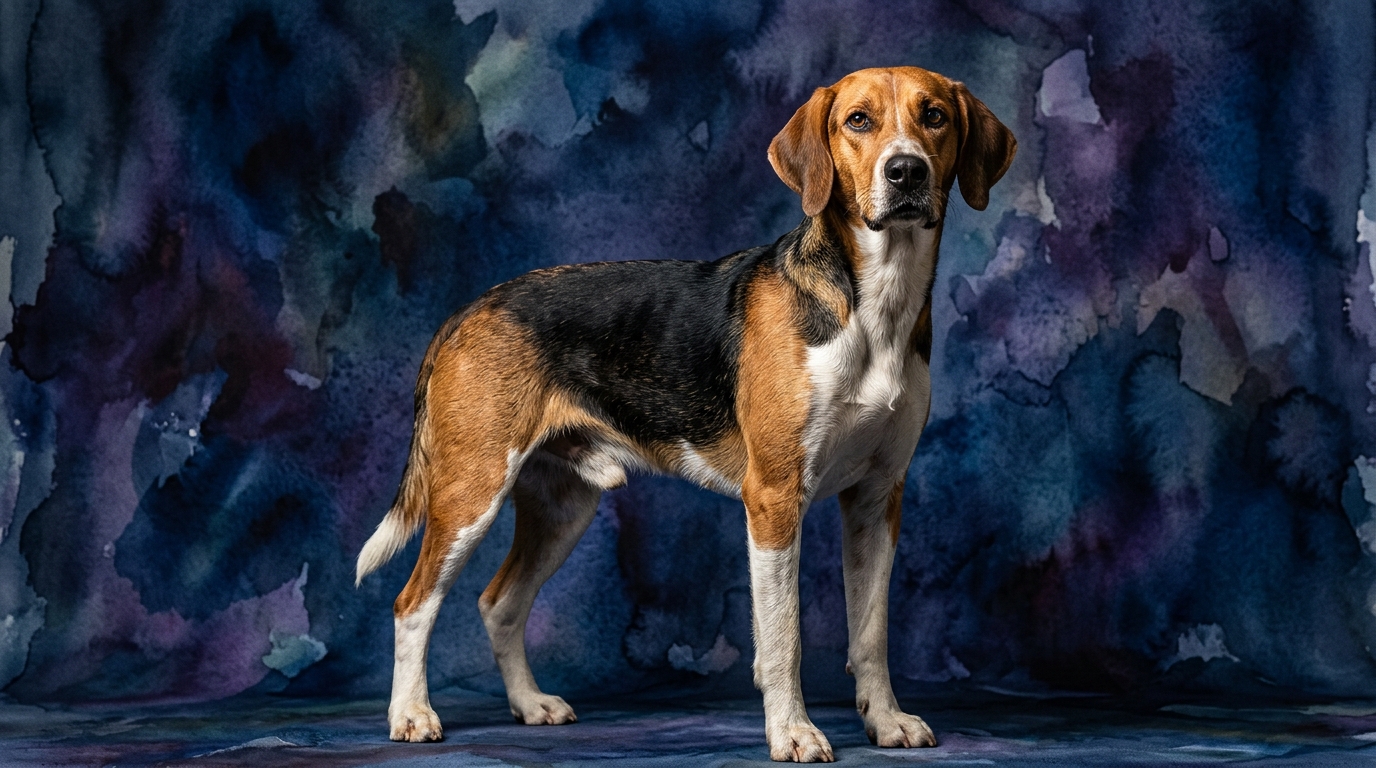
Side-by-Side Cognitive Profiles: American Staffordshire Terrier vs. English Foxhound
The Cosmic Pet Pet IQ Lab employs a multi-dimensional framework to assess canine intelligence, moving beyond simplistic 'smartest breed' labels. For the American Staffordshire Terrier, its cognitive profile reveals a balanced intellect with particular strengths in retention. In problem-solving, the AmStaff scores 3 out of 5, indicating a solid capacity to navigate novel situations and figure out solutions, though perhaps not with the rapid ingenuity seen in some herding breeds. Training speed for the AmStaff is also rated 3 out of 5, suggesting a reasonable pace for acquiring new commands and behaviors, requiring consistent and clear instruction to optimize learning.
Social intelligence in the American Staffordshire Terrier stands at 3 out of 5, reflecting an ability to understand and respond to human cues and social dynamics, making them perceptive companions. Their instinctive drive, rated 3 out of 5, points to a moderate level of inherent behaviors such as chasing or guarding, which can be channeled through appropriate outlets. A notable cognitive advantage for the AmStaff lies in its memory, scoring 4 out of 5. This superior retention means learned behaviors, commands, and routines are likely to stick, fostering reliability and consistency once training is established.
The English Foxhound, while not ranked by Coren's traditional intelligence measures, presents a cognitive profile deeply rooted in its ancestral purpose. Its problem-solving ability, like the AmStaff, scores 3 out of 5. This suggests a practical intelligence, primarily focused on tasks related to its historical role, such as navigating varied terrain or working through scent puzzles, rather than abstract challenges. The training speed for the English Foxhound is also 3 out of 5, indicating a steady learning pace. However, their strong drive might sometimes overshadow their willingness to comply with arbitrary commands if not properly motivated.
Social intelligence for the English Foxhound is rated 3 out of 5, reflecting their capacity to interact effectively within a pack structure, both canine and human. This score highlights their cooperative nature when engaged in group activities, often showing a keen awareness of their companions. Crucially, the English Foxhound's instinctive drive also scores 3 out of 5, but this is overwhelmingly channeled into scent work and endurance. This drive is a powerful force, dictating much of their behavior and focus. Their memory, rated 3 out of 5, is sufficient for retaining critical information related to their hunting tasks and basic household routines, though it doesn't quite match the AmStaff's superior recall.
Where the American Staffordshire Terrier Excels Cognitively
The American Staffordshire Terrier’s standout cognitive strength lies in its memory, scoring a 4 out of 5 compared to the English Foxhound's 3 out of 5. This superior memory allows AmStaffs to internalize training cues, routines, and boundaries with greater efficiency and long-term retention. Owners will likely find that once an AmStaff learns a command or a household rule, it generally sticks, requiring less frequent refreshers than a breed with a lower memory score. This translates into more reliable recall, better generalization of learned behaviors across different environments, and a more consistent response to training over their lifetime.
Beyond memory, the AmStaff's balanced cognitive profile, where all other scores are 3 out of 5, indicates a general adaptability. While not scoring exceptionally high in any single area apart from memory, this equilibrium suggests a versatile mind capable of engaging in various activities from obedience sports to family companionship. Their social intelligence and problem-solving, though rated equally to the Foxhound, often manifest in a more human-centric way, making them adept at understanding complex household dynamics and responding to nuanced human communication.
Where the English Foxhound Shines Cognitively
While the English Foxhound's numerical cognitive scores are largely similar to the AmStaff's, its specific application of these traits for its breed purpose is where it truly shines. Its instinctive drive, though rated 3 out of 5, is an exceptionally specialized and powerful force. This drive is almost entirely dedicated to olfactory processing, sustained tracking, and relentless endurance, making them unparalleled in following a scent trail over vast distances and varied terrain. This isn't just a physical attribute; it's a cognitive triumph of sustained focus, discrimination of scent, and methodical problem-solving within a highly specific domain.
The Foxhound's social intelligence, also 3 out of 5, is finely tuned for cooperative pack work. Unlike the AmStaff's more individualistic social intelligence, the Foxhound's allows it to seamlessly integrate into a group, understanding pack dynamics and working in concert with other dogs and handlers. This specialized form of social cognition, vital for their historical hunting role, means they excel in situations requiring group cohesion and coordinated effort, demonstrating a unique form of collective intelligence and communication within a working unit.
Training Dynamics: Which Breed is Easier and Why?
When considering ease of training, the American Staffordshire Terrier generally holds an advantage, primarily due to its superior memory (4/5). While both breeds share a 3/5 rating for training speed, the AmStaff’s enhanced ability to retain information means that once a lesson is learned, it is more likely to be remembered and consistently applied. This reduces the need for constant repetition and reinforcement, allowing owners to progress through training stages more smoothly and build a larger repertoire of commands and behaviors. Their social intelligence also makes them generally eager to please their human companions, which can be a strong motivator in training sessions.
The English Foxhound, with a memory score of 3/5, will require more consistent practice and reinforcement to solidify learned behaviors. Their strong instinctive drive, while not higher in score, often presents a significant challenge in training. When a compelling scent or the thrill of the chase takes hold, their focus on human commands can diminish considerably. Training a Foxhound means constantly competing with their profound natural instincts, requiring immense patience, highly rewarding motivators, and a deep understanding of their scent-driven world. While they can learn, their independent nature and specialized drive mean 'easier' is a relative term compared to the AmStaff.
Lifestyle Suitability: Active Owners vs. Relaxed Owners
The American Staffordshire Terrier, with its balanced cognitive profile and moderate instinctive drive (3/5), is a versatile companion suited for a range of active owners. While they possess a sturdy build and enjoy physical activity, their exercise needs are generally manageable, adapting well to daily walks, play sessions, and mental enrichment. Their higher memory and social intelligence make them responsive to family life and capable of participating in dog sports like obedience or agility. They thrive with owners who provide consistent structure, positive reinforcement, and engagement, but do not necessarily demand the extreme outdoor commitment of a true working hound.
The English Foxhound, by contrast, is unequivocally suited for highly active owners who embrace a lifestyle centered around endurance and outdoor exploration. Their profound instinctive drive (3/5), channeled into scenting and running, means they possess an almost insatiable need for vigorous, sustained exercise. These are not dogs content with a short stroll around the block; they require extensive opportunities to run, explore scent trails, and engage their powerful working instincts. Owners who are runners, hikers, or involved in scent work or hunting activities will find a true partner in a Foxhound. They are less suited for relaxed, sedentary owners, as their unmet needs can lead to frustration and undesirable behaviors.
The Verdict: When to Choose Each Breed
The Verdict
Choose the American Staffordshire Terrier if you value a companion with superior memory for training, a balanced cognitive profile for versatile activities, and a strong desire to engage closely with its human family.
Opt for the English Foxhound if you are a highly active individual or family seeking an endurance partner with an unparalleled drive for scent work and sustained outdoor activity, understanding their independent, instinct-driven nature.
🧠 Find Your Pet's IQ Score
Our Pet IQ Lab assessment covers 25+ tests across 5 cognitive dimensions — personalized to your breed.
Take the Full IQ Test →Frequently Asked Questions
Does the English Foxhound's lack of Coren ranking mean it's less intelligent?
No, the absence of a Coren ranking for the English Foxhound primarily reflects its specialized intelligence, which is focused on specific working tasks rather than general obedience. Its cognitive strengths, while different from breeds that excel in general obedience, are highly developed for its historical role.
How does memory impact daily life for these two breeds?
The AmStaff's superior memory (4/5) means it will generally retain commands and routines more consistently, leading to greater predictability in daily interactions. The Foxhound's 3/5 memory requires more regular reinforcement, especially when competing with its strong instinctive drives, making its responses potentially less consistent without ongoing practice.
Can an English Foxhound be a good family pet despite its strong instincts?
Yes, an English Foxhound can be a loving family pet, but only for families committed to providing extensive daily exercise and mental stimulation that satisfies its profound scent drive. Without these outlets, their powerful instincts can lead to behaviors that are challenging in a typical home environment.