Side-by-Side Cognitive Profiles
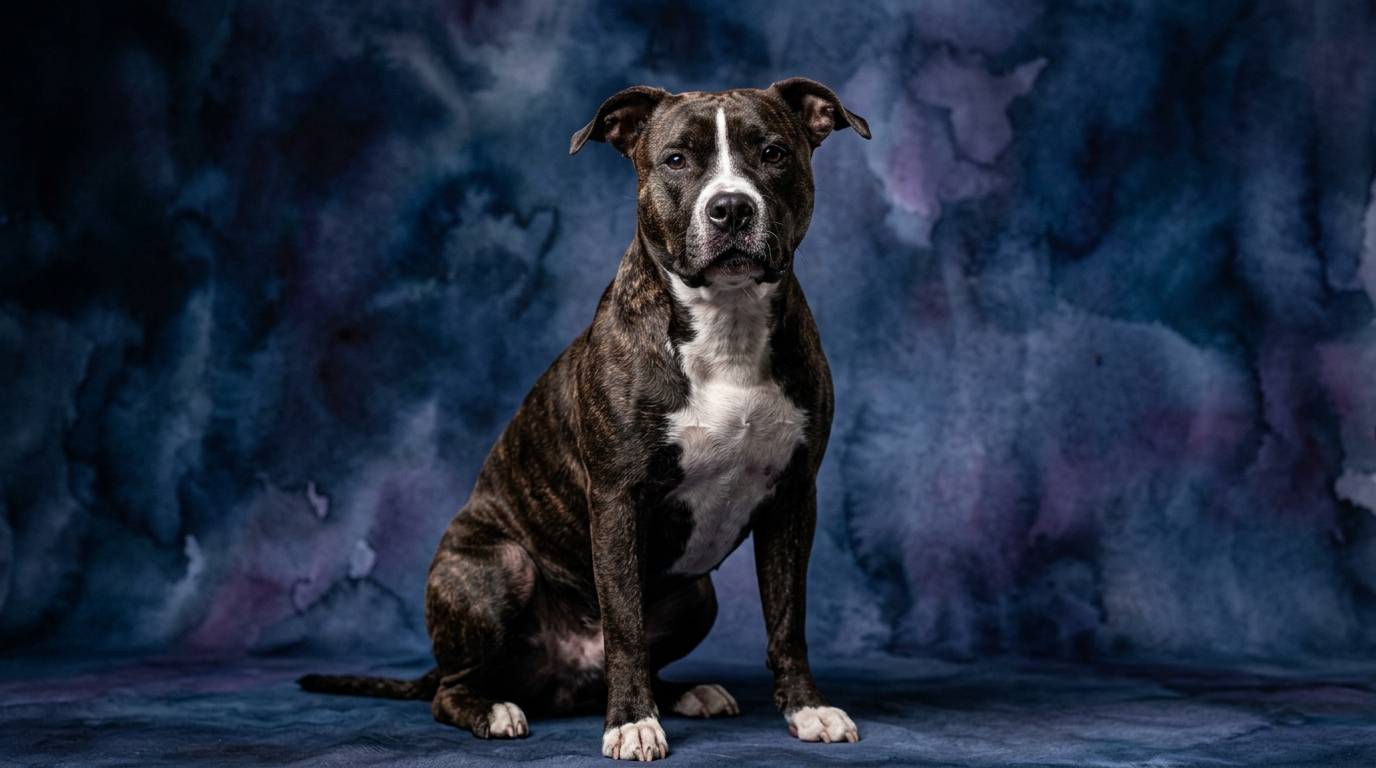
The Cosmic Pet Pet IQ Lab provides a unique lens through which to examine breed-specific cognitive strengths, moving beyond general perceptions to specific metrics. For the American Staffordshire Terrier (AmStaff), a breed with a Coren ranking of #48, their cognitive profile shows a balanced aptitude: Problem Solving 3/5, Training Speed 3/5, Social Intelligence 3/5, Instinctive Drive 3/5, and notably, a Memory of 4/5.
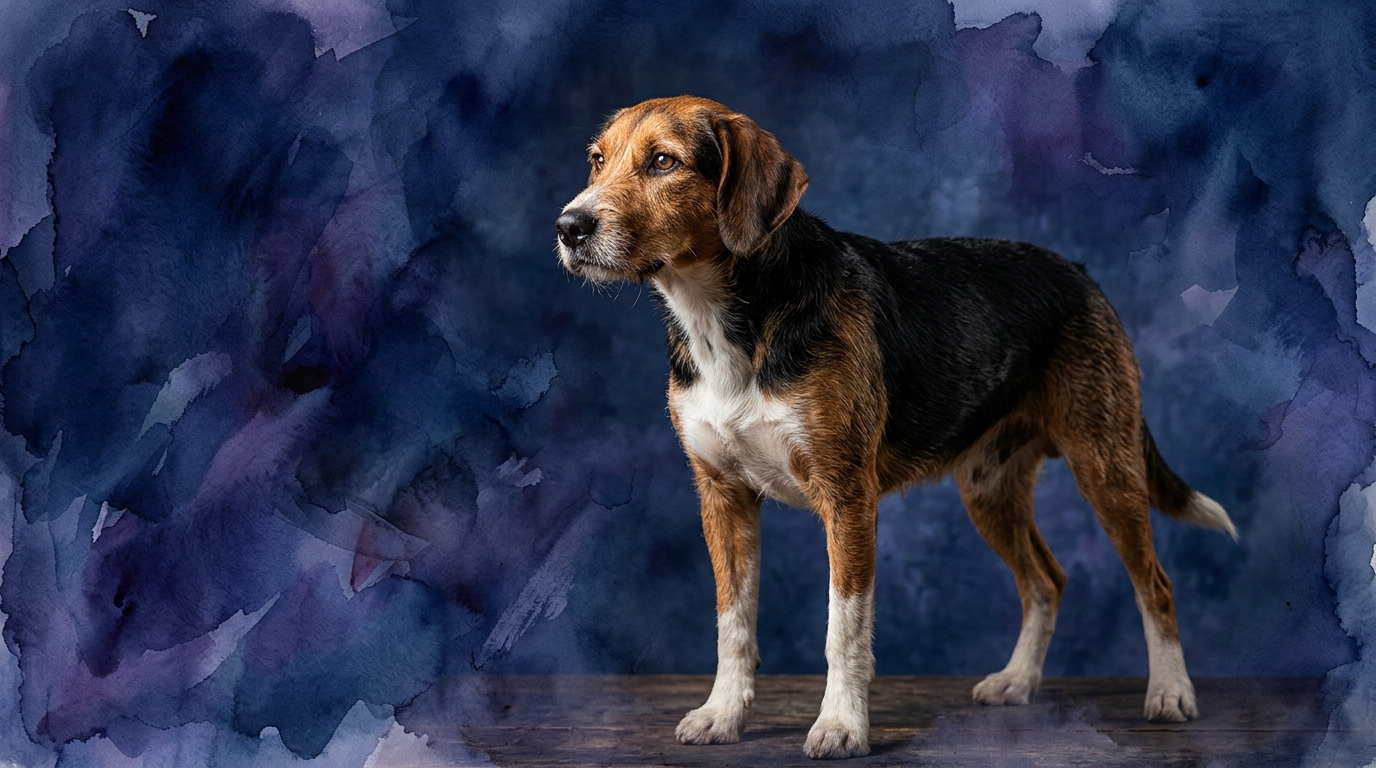
The Harrier, a hound breed not formally ranked by Coren, presents a profile that largely mirrors the AmStaff in general aptitude but with a key distinction in memory. Harriers score Problem Solving 3/5, Training Speed 3/5, Social Intelligence 3/5, Instinctive Drive 3/5, and a Memory of 3/5. These scores indicate that both breeds possess a moderate capacity across most cognitive dimensions, with the AmStaff holding an edge in recollection.
Where the American Staffordshire Terrier Wins Cognitively
The American Staffordshire Terrier's primary cognitive advantage lies in its superior Memory score of 4/5, compared to the Harrier's 3/5. This enhanced capacity for recollection means an AmStaff is more likely to retain learned commands, complex routines, and spatial information over longer periods. Owners might observe an AmStaff remembering intricate sequences of tricks, the location of hidden toys, or consistent adherence to established household rules with greater reliability.
This stronger memory also contributes to more durable learning experiences, both positive and negative. Once an AmStaff associates a specific action with a reward or consequence, that connection tends to solidify more effectively. Their Coren ranking of #48 further suggests an historical adaptability and responsiveness to human direction that complements their memory, making them adept at processing and applying information within structured environments.
Where the Harrier Wins Cognitively
While the Harrier's general cognitive scores are similar to or slightly lower than the AmStaff's, its strength lies in the *nature* of its Instinctive Drive (3/5), which is profoundly specialized for scent work. This isn't just a physical urge; it represents a complex cognitive process of analyzing, tracking, and prioritizing olfactory information over vast distances and varied terrains. The Harrier's problem-solving, when applied to a scent trail, is a masterclass in persistent, independent deduction.
Their cognitive 'win' is in their unparalleled ability to focus intensely on a scent, filtering out distractions and demonstrating incredible stamina in pursuit. This persistence is a cognitive trait, allowing them to methodically work through a trail until a conclusion is reached. While their general memory score is 3/5, their 'olfactory memory' and ability to recall scent profiles can be remarkably sophisticated, a specific cognitive strength honed over generations of selective breeding for hunting.
Training Dynamics: AmStaff vs. Harrier
Both breeds share a Training Speed score of 3/5, suggesting a moderate pace for learning new commands. However, the American Staffordshire Terrier's superior Memory (4/5) significantly influences the *consistency* and *retention* of training. Once an AmStaff grasps a concept, their better recall means they are more likely to perform the desired behavior reliably across different situations and over time. This makes the overall training journey for general obedience potentially smoother and more rewarding, as lessons tend to stick.
The Harrier's training experience, while also benefiting from a 3/5 training speed, is often shaped by its powerful, specialized Instinctive Drive. Their profound focus on scent can make recall challenging in outdoor environments where compelling smells abound, often overriding human commands. Training a Harrier requires immense patience, creativity, and often involves leveraging their natural drive through scent games, rather than solely focusing on traditional obedience. Their independent hound nature means they might require more motivation to engage in tasks that don't align with their inherent impulses.
Matching Breeds to Lifestyles: Active vs. Relaxed Owners
For active owners, both the American Staffordshire Terrier and the Harrier demand significant engagement, but in different ways. The AmStaff thrives with structured physical activity combined with mental challenges. They excel in dog sports like agility, obedience, or flyball, which utilize their problem-solving, memory, and social intelligence. Owners who enjoy teaching new skills and engaging in consistent, varied activities will find an AmStaff a willing and capable partner.
The Harrier, with its deep-seated instinctive drive for endurance and scent work, is ideal for owners who embrace a highly active, outdoor-centric lifestyle. They need extensive daily exercise, often involving long runs, hikes, or secure off-leash exploration where they can follow scents. A truly 'relaxed' owner would likely find themselves overwhelmed by the Harrier's energy and persistent need for sensory engagement, which, if not met, can lead to frustration and undesirable behaviors. Neither breed is well-suited for a sedentary household, but the Harrier's needs are particularly specialized towards sustained physical and olfactory exploration.
The Verdict: When to Choose Each Breed
The Verdict
Choose an American Staffordshire Terrier if you value a companion with strong memory, consistent obedience potential, and enjoy engaging in structured mental challenges and diverse activities.
Opt for a Harrier if you are an active, outdoor-loving individual who appreciates an independent spirit, is passionate about scent work or endurance activities, and is prepared for dedicated, patient training to manage a strong hunting drive.
🧠 Find Your Pet's IQ Score
Our Pet IQ Lab assessment covers 25+ tests across 5 cognitive dimensions — personalized to your breed.
Take the Full IQ Test →Frequently Asked Questions
Is the American Staffordshire Terrier more obedient than the Harrier?
While both have a 3/5 training speed, the AmStaff's superior memory (4/5) often translates to more consistent retention of obedience commands, making them appear more reliably obedient over time. Harriers, with their powerful scent drive, can be more prone to independent decision-making when a compelling scent is present.
How does the Harrier's instinctive drive affect its daily life?
The Harrier's instinctive drive (3/5) is primarily geared towards scent tracking and hunting, meaning they possess a powerful urge to follow their nose. This manifests as a need for extensive exercise and mental stimulation through scent games or secure off-leash exploration, and can make recall challenging in distracting environments.
What kind of mental stimulation benefits each breed most?
American Staffordshire Terriers thrive on structured mental challenges like puzzle toys, advanced obedience training, and dog sports that utilize their problem-solving and memory. Harriers benefit greatly from activities that engage their powerful sense of smell, such as scent work, tracking games, or long explorations in varied outdoor environments.