
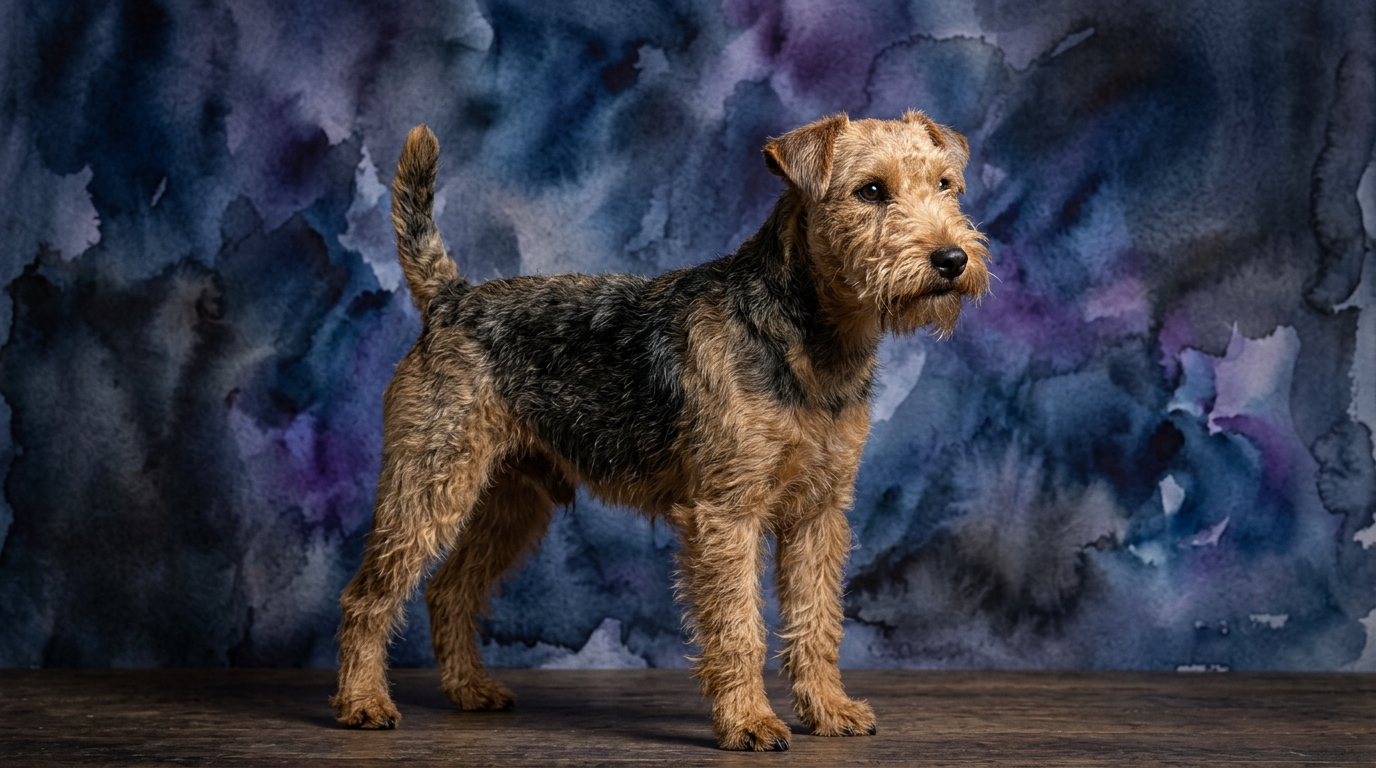
Side-by-Side IQ Profile: AmStaff vs. Lakeland Terrier
Our Cosmic Pet Pet IQ Lab assessment reveals a detailed look into the cognitive strengths of both the American Staffordshire Terrier and the Lakeland Terrier across five key dimensions. While both breeds share a spirited terrier heritage, their intellectual profiles present some interesting points of divergence and similarity.
The American Staffordshire Terrier (AmStaff) holds a Coren rank of #48, indicating a recognized capacity for obedience and working intelligence. Its IQ breakdown includes Problem Solving 3/5, Training Speed 3/5, Social Intelligence 3/5, Instinctive Drive 3/5, and a notable Memory at 4/5.
The Lakeland Terrier, while not Coren-ranked, possesses its own distinct cognitive makeup. Its IQ scores are Problem Solving 3/5, Training Speed 3/5, Social Intelligence 3/5, Instinctive Drive 3/5, and Memory 3/5. This suggests a balanced, practical intelligence, often channeled through their working breed origins.
For Problem Solving, both breeds score 3/5, meaning they can tackle moderately complex tasks like navigating familiar environments or solving basic puzzle toys. An AmStaff might methodically work through a sequence, while a Lakeland often employs a tenacious, trial-and-error approach fueled by curiosity. In terms of Training Speed, both breeds achieve a 3/5, indicating they learn new commands at a moderate pace, typically requiring consistent repetition and engaging motivation to solidify new behaviors.
Social Intelligence for both stands at 3/5; AmStaffs tend to be moderately attuned to human emotions and social cues, often forming strong, affectionate bonds, while Lakelands also demonstrate moderate social acumen, allowing them to interact appropriately within their family circle, though they can be more reserved with strangers. Their Instinctive Drive also aligns at 3/5. For an AmStaff, this drive might manifest as a strong desire for play, tug-of-war, or a protective instinct, often channeled into structured activities. The Lakeland, true to its roots, exhibits a moderate but focused instinctive drive for hunting small prey, translating into a keen interest in scent work, digging, and chasing.
Where the American Staffordshire Terrier Wins Cognitively
The American Staffordshire Terrier holds a distinct cognitive advantage in the realm of memory, scoring a 4 out of 5 compared to the Lakeland Terrier's 3 out of 5. This superior recall means an AmStaff is more likely to retain complex sequences of commands or learned behaviors over time, even with extended breaks in practice. For instance, an AmStaff might easily pick up a multi-step agility course after weeks away from it, demonstrating a robust ability to access and apply previously stored information.
This stronger memory also contributes to their consistency in established household routines and their capacity to build upon prior training without extensive refreshers, making their learning more cumulative and enduring. Owners will often find that once an AmStaff masters a skill, it remains firmly embedded, allowing for a more progressive and less repetitive training journey in the long term.
Where the Lakeland Terrier Wins Cognitively
While the Lakeland Terrier doesn't outscore the AmStaff in any specific cognitive dimension based on our metrics, their unique application of their 3/5 scores in problem-solving and instinctive drive provides a distinct advantage in specific scenarios. Their terrier heritage imbues them with a focused, persistent approach to tasks, particularly those involving scent or prey-drive.
A Lakeland might excel at independently figuring out how to access a hidden toy using their nose and paws, demonstrating a tenacious, practical problem-solving style geared towards tangible results. Their moderate instinctive drive, channeled by centuries of working in the field, means they are often more self-directed in pursuing certain tasks, such as exploring a new scent trail, whereas an AmStaff might look more to their owner for guidance in a similar situation. This self-reliance in instinct-driven tasks can be a significant cognitive 'win' for owners seeking a dog with a strong, independent drive to 'work' in traditional terrier fashion.
Training Ease: AmStaff vs. Lakeland Terrier
Given the identical 3/5 scores in training speed for both breeds, one might expect them to be equally challenging or straightforward to train. However, the American Staffordshire Terrier's superior memory (4/5) provides a subtle but significant edge in the long run. An AmStaff is more likely to retain complex commands and cues with fewer refreshers, meaning that once a behavior is learned, it tends to stick more reliably.
This allows for more advanced training progression over time, as previous lessons are firmly embedded. While both breeds respond well to positive reinforcement, the AmStaff’s moderate social intelligence makes them generally eager to please and attuned to their handler's desires, which can translate into a more cooperative training experience. In contrast, the Lakeland Terrier's equally moderate training speed is often influenced by their independent terrier spirit and strong instinctive drive.
While they are certainly capable of learning, their inherent self-reliance means trainers might need to employ more engaging, varied methods to maintain their focus and prevent boredom, as their drive to pursue scents or dig can sometimes overshadow a desire for obedience in the moment. Therefore, while initial learning might appear similar, the AmStaff's stronger memory and generally cooperative nature often make the overall training journey feel slightly more streamlined and consistent.
Ideal Lifestyles: Active vs. Relaxed Owners
For active owners, both the American Staffordshire Terrier and the Lakeland Terrier present compelling choices, though their ideal activities diverge slightly. The AmStaff, with their moderate instinctive drive and superior memory, thrives in structured activities like obedience, agility, or dog sports where they can apply learned sequences and work closely with their handler. Their moderate social intelligence also means they generally enjoy being a central part of family adventures, whether hiking or playing fetch.
Lakeland Terriers, while equally active, channel their moderate instinctive drive into more traditional terrier pursuits. Active owners who enjoy earthdog trials, scent work, or long, exploratory walks where their dog can indulge in digging and chasing scents will find a Lakeland a keen and tireless companion. Their independent streak means they might be content with more self-directed exploration during outings.
For owners seeking a more relaxed companion, neither breed is a couch potato, but the AmStaff might be a slightly better fit for those who prefer structured downtime. Once adequately exercised, an AmStaff's moderate social intelligence and desire to be near their family often lead to a calm presence indoors. They enjoy quiet companionship and are typically content with a comfortable spot next to their owner.
The Lakeland Terrier, even after physical exertion, often retains a spark of their working terrier energy and curiosity. While they will certainly enjoy relaxing, their moderate instinctive drive means they are always on the alert for something interesting, requiring more mental engagement even during quiet periods. They might be more prone to 'inventing' their own entertainment if not sufficiently stimulated, making them potentially less suited for a truly 'relaxed' home environment without consistent mental engagement.
The Verdict
Choose American Staffordshire Terrier if you prioritize a dog with strong memory retention for consistent training, enjoy structured activities like obedience or agility, and seek a cooperative companion who thrives on being an integral part of family life.
Choose Lakeland Terrier if you are drawn to an independent, tenacious spirit, enjoy engaging in activities that tap into traditional terrier instincts like scent work and digging, and appreciate a dog with a self-reliant approach to exploration.
🧠 Find Your Pet's IQ Score
Our Pet IQ Lab assessment covers 25+ tests across 5 cognitive dimensions — personalized to your breed.
Take the Full IQ Test →Frequently Asked Questions
Is the American Staffordshire Terrier truly smarter than the Lakeland Terrier based on their IQ scores?
The data suggests the American Staffordshire Terrier has a stronger memory (4/5) compared to the Lakeland Terrier (3/5), which is a significant cognitive difference impacting training and recall. While other scores are similar, this memory advantage gives the AmStaff a slight edge in retaining learned information over time.
Do both American Staffordshire Terriers and Lakeland Terriers require similar amounts of exercise?
Yes, both breeds are active and require substantial daily exercise to remain well-adjusted, although the type of activity might differ. AmStaffs often enjoy structured play and training, while Lakelands thrive on exploratory walks and activities that engage their strong prey drive and digging instincts.
How do their instinctive drives manifest differently in a home environment?
Both have a moderate instinctive drive, but an AmStaff's might lean towards tugging or guarding, often channeled through interaction with their owner. A Lakeland's drive is typically more focused on hunting small prey, manifesting as a keen interest in chasing, digging, or intense focus on scents, potentially requiring more management to prevent unwanted behaviors.