Side-by-Side Cognitive Profiles
At The Cosmic Pet Pet IQ Lab, we evaluate canine intelligence across five key dimensions, offering a detailed look at how these breeds approach the world around them.
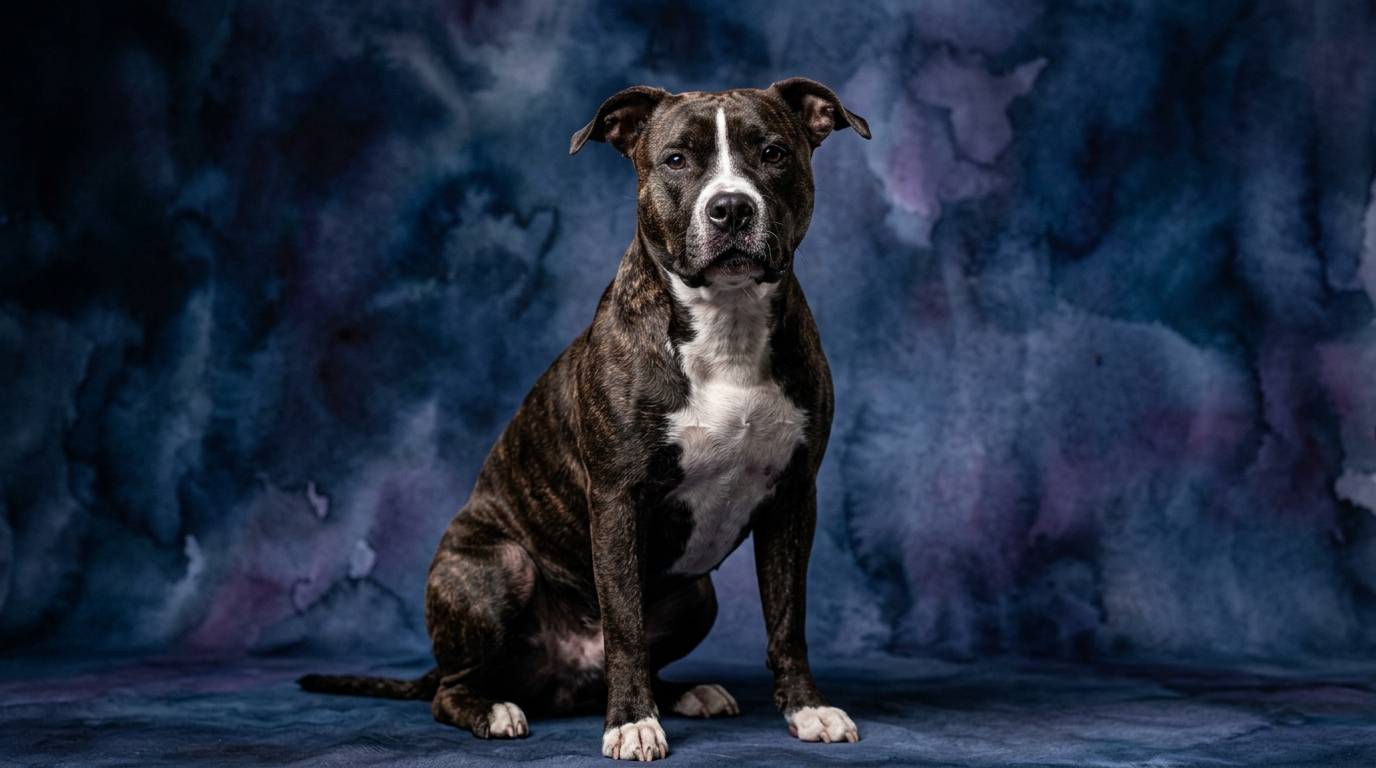
**American Staffordshire Terrier (AmStaff)**: Coren rank #48. Their **Problem Solving (3/5)** abilities manifest as practical adaptability, figuring out how to access desired objects or navigate familiar environments to achieve a goal, often through persistence and observation. **Training Speed (3/5)** indicates they grasp new commands at a moderate pace, thriving on consistent, positive reinforcement and clear expectations. Their **Social Intelligence (3/5)** means they are generally attentive to human emotions and intentions, forming strong bonds with their primary caregivers and integrating well into family dynamics with proper early socialization. **Instinctive Drive (3/5)** leans towards loyalty, protection of their family, and a strong desire for companionship, showing a keen awareness of their surroundings. A notable strength is their **Memory (4/5)**; AmStaffs retain learned behaviors, routines, and past experiences with considerable recall, making consistent training efforts particularly effective in the long term.
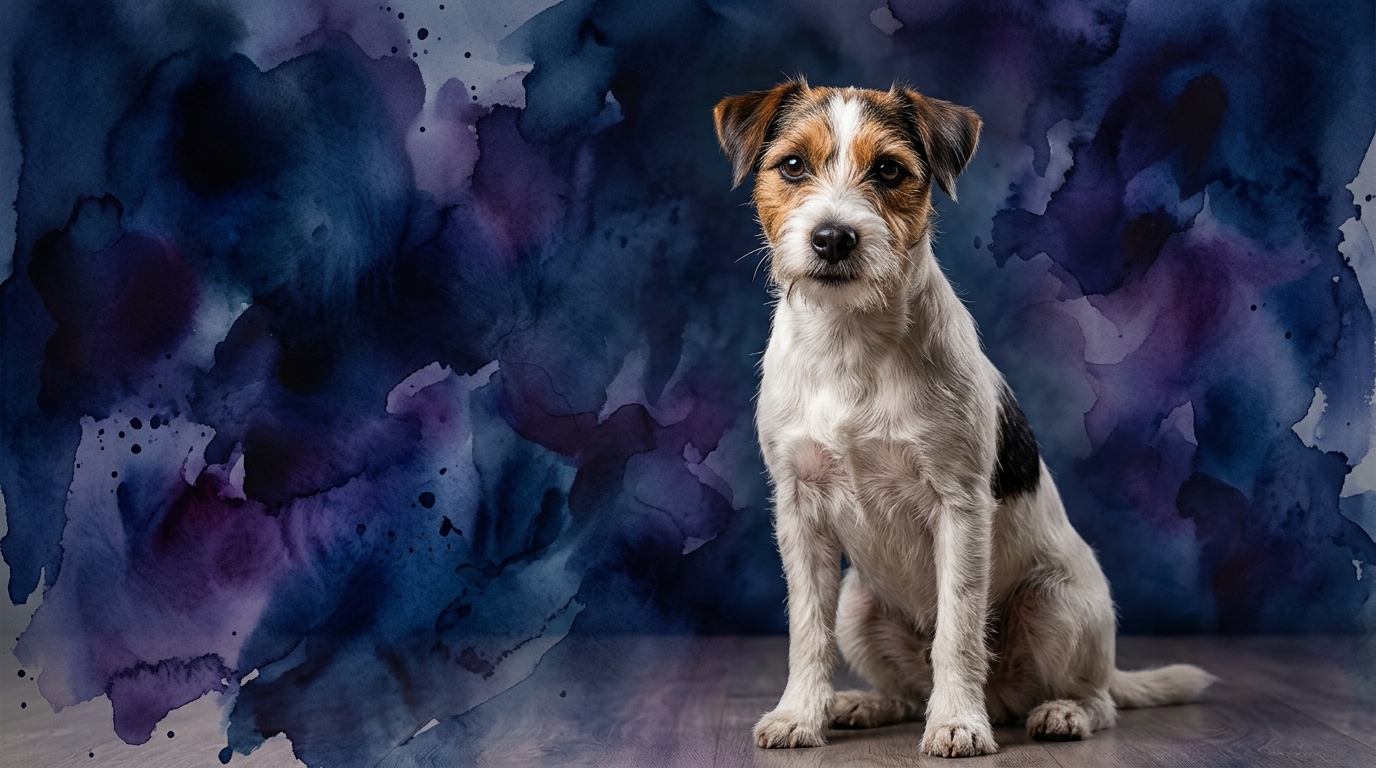
**Parson Russell Terrier (PRT)**: Not Coren-ranked. Their **Problem Solving (3/5)** skills are characterized by independent resourcefulness, particularly in navigating complex physical environments like finding ways through brush or locating hidden scents, often employing clever workarounds rooted in their working heritage. Their **Training Speed (3/5)** suggests they learn new tasks at a moderate rate, but their independent nature sometimes makes them appear less cooperative, requiring engaging, varied methods that appeal to their curiosity. **Social Intelligence (3/5)** involves a sharp awareness of their immediate environment and human activities, making them alert and responsive, though their social interactions can be direct and sometimes intense with other canines or unfamiliar individuals. The **Instinctive Drive (3/5)** of the PRT is profoundly rooted in their hunting origins, manifesting as an intense desire to chase, dig, and explore, a defining characteristic requiring appropriate outlets. Their **Memory (3/5)** allows them to retain functional commands and routines adequately, but their strong independent streak and focus on immediate environmental stimuli might sometimes overshadow the recall of less engaging learned behaviors compared to breeds with higher memory scores.
Where the American Staffordshire Terrier Wins Cognitively
The American Staffordshire Terrier’s standout cognitive attribute lies in its superior memory, rated at 4/5, which provides a distinct advantage over the Parson Russell Terrier’s 3/5 in this dimension. This robust recall means AmStaffs are more likely to retain complex sequences of commands and routines over extended periods, making long-term training efforts highly rewarding. For an AmStaff, once a behavior is learned and reinforced consistently, it tends to stick, contributing to a stable and predictable companion. This strong memory also plays a role in their capacity for nuanced social understanding; they remember past interactions, both positive and negative, which informs their future responses to people and other animals. While both breeds score 3/5 in problem-solving and social intelligence, the AmStaff’s application of these skills often appears more geared towards understanding and interacting with their human family. Their problem-solving might manifest as figuring out how to open a gate to join their people, or understanding subtle human body language to anticipate a walk. This focus on human interaction, supported by their memory, allows for a deep integration into family life, making them adept at anticipating household rhythms and responding to their owner’s moods.
Where the Parson Russell Terrier Wins Cognitively
While the Parson Russell Terrier doesn’t boast a numerically higher score in any single cognitive dimension compared to the American Staffordshire Terrier, its distinct strengths lie in the unique manifestation of its 3/5 ratings, particularly in problem-solving and instinctive drive. The PRT’s problem-solving is characterized by an exceptional degree of independent resourcefulness, a direct legacy of their earthdog origins where they were required to work autonomously in challenging environments. This means they are incredibly adept at finding creative solutions to obstacles, whether it's navigating a complex trail or outsmarting a perceived barrier to exploration. Owners often describe them as clever and tenacious, traits that, while sometimes challenging to manage, are invaluable for specific working tasks or canine sports requiring self-reliance. Similarly, their instinctive drive, also rated 3/5, is a powerful force directed towards scent work, chasing, and digging. For owners who wish to engage in activities like earthdog trials, agility, or extensive hiking, the PRT’s intense, focused drive is a clear advantage. Their social intelligence, while rated 3/5, is keenly attuned to their surroundings, making them highly alert and responsive to changes in their environment, a trait that serves them well as vigilant companions and enthusiastic participants in active pursuits.
Which Is Easier to Train and Why
Determining which breed is 'easier' to train hinges significantly on an owner's approach and understanding of breed-specific motivations. The American Staffordshire Terrier, with its 3/5 training speed and 4/5 memory, generally offers a more consistent training experience. They learn at a moderate pace but crucially, they *retain* that learning exceptionally well. Their desire to please their family, coupled with their strong memory, means that once a command or behavior is understood and practiced, it is likely to become deeply ingrained. This makes them responsive to positive reinforcement and structured routines, allowing for steady progress in obedience and trick training.
In contrast, the Parson Russell Terrier, also with a 3/5 training speed but a 3/5 memory, presents a different set of training considerations. While equally capable of learning, their independent problem-solving and intense instinctive drives often lead to distractions. A PRT might grasp a command quickly but then choose to prioritize an interesting scent or a perceived 'critter' over compliance. Training a PRT requires immense creativity, patience, and a deep understanding of their terrier tenacity; sessions must be engaging, varied, and often incorporate their natural drives. For an owner seeking a dog that will reliably execute complex commands with fewer repetitions over the long haul, the AmStaff’s superior memory can translate to an 'easier' training journey in terms of retention and consistency. For the PRT, 'easier' is perhaps less about the speed of initial learning and more about the ongoing commitment to channel their formidable will and instincts effectively.
Suitability for Active vs. Relaxed Owners
The choice between these two breeds for active versus relaxed owners boils down to differing energy levels and inherent drives. The American Staffordshire Terrier, while robust and energetic, generally suits active owners who can provide consistent daily exercise, such as brisk walks, playtime, or structured training sessions. They require mental stimulation to prevent boredom, but after their physical and mental needs are met, they are typically content to relax alongside their family. Their moderate instinctive drive means they can adapt well to a home environment, enjoying a balance of activity and quiet companionship. They are not suited for entirely sedentary lifestyles, but they don't demand constant, high-octane engagement.
Conversely, the Parson Russell Terrier is undeniably a companion for highly active owners. Their relentless energy and potent instinctive drives mean they require extensive daily physical exertion and mental engagement. Bred for sustained work in the field, a PRT thrives on activities like long runs, challenging hikes, dog sports (agility, flyball), or earthdog trials that allow them to utilize their natural instincts for chasing, digging, and exploring. A 'relaxed' owner, one who prefers minimal direct engagement or short, infrequent walks, would quickly find themselves overwhelmed by a PRT’s unchanneled vigor and ingenuity. They are dogs that thrive when they have a job to do or an adventure to embark on, making them ideal for individuals or families with a genuinely active, outdoor-oriented lifestyle.
The Verdict
Choose the American Staffordshire Terrier if you seek a loyal, robust companion with an excellent memory, capable of deep family bonds and consistent training with a committed owner.
Opt for the Parson Russell Terrier if you are a highly active, experienced owner who thrives on engaging with a tenacious, independent, and tireless companion for adventures and dog sports.
🧠 Find Your Pet's IQ Score
Our Pet IQ Lab assessment covers 25+ tests across 5 cognitive dimensions — personalized to your breed.
Take the Full IQ Test →Frequently Asked Questions
Do AmStaffs and PRTs get along with other pets?
AmStaffs, with proper socialization, can coexist with other pets, though their strong prey drive might require careful management around smaller animals. Parson Russell Terriers possess a very high prey drive and can be intense with other dogs, often requiring significant supervision and early, consistent training for harmonious multi-pet households.
What kind of mental stimulation do these breeds need?
Both breeds benefit from puzzle toys, scent games, and consistent training to keep their minds engaged. AmStaffs appreciate learning new commands and participating in family activities, while PRTs thrive on tasks that mimic their hunting heritage, such as earthdog trials, extensive scent work, or agility courses.
Are there significant health differences impacting their cognitive function?
While both breeds are generally robust, like all dogs, they can face breed-specific health concerns. For cognitive function, ensuring a balanced diet, adequate exercise, and regular veterinary check-ups are paramount for both breeds to support overall brain health throughout their lives.