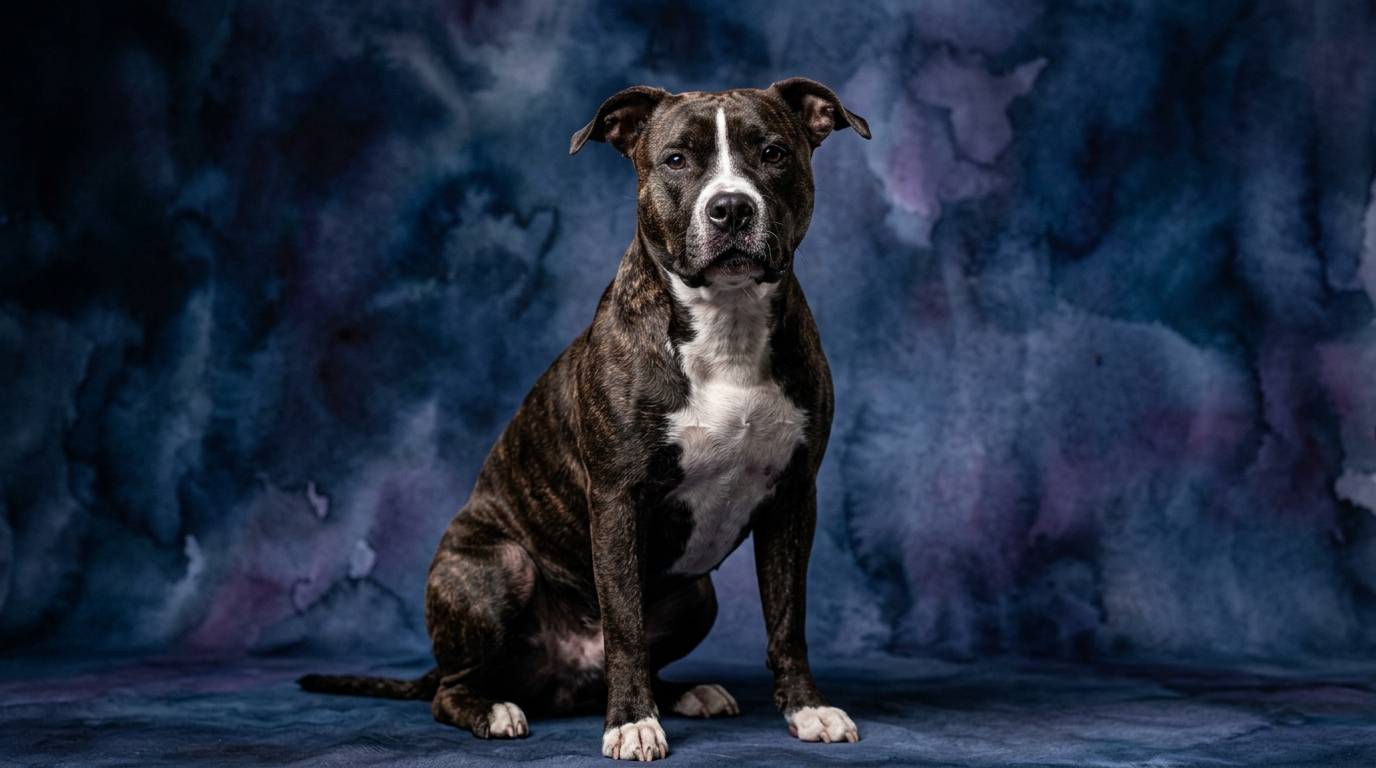
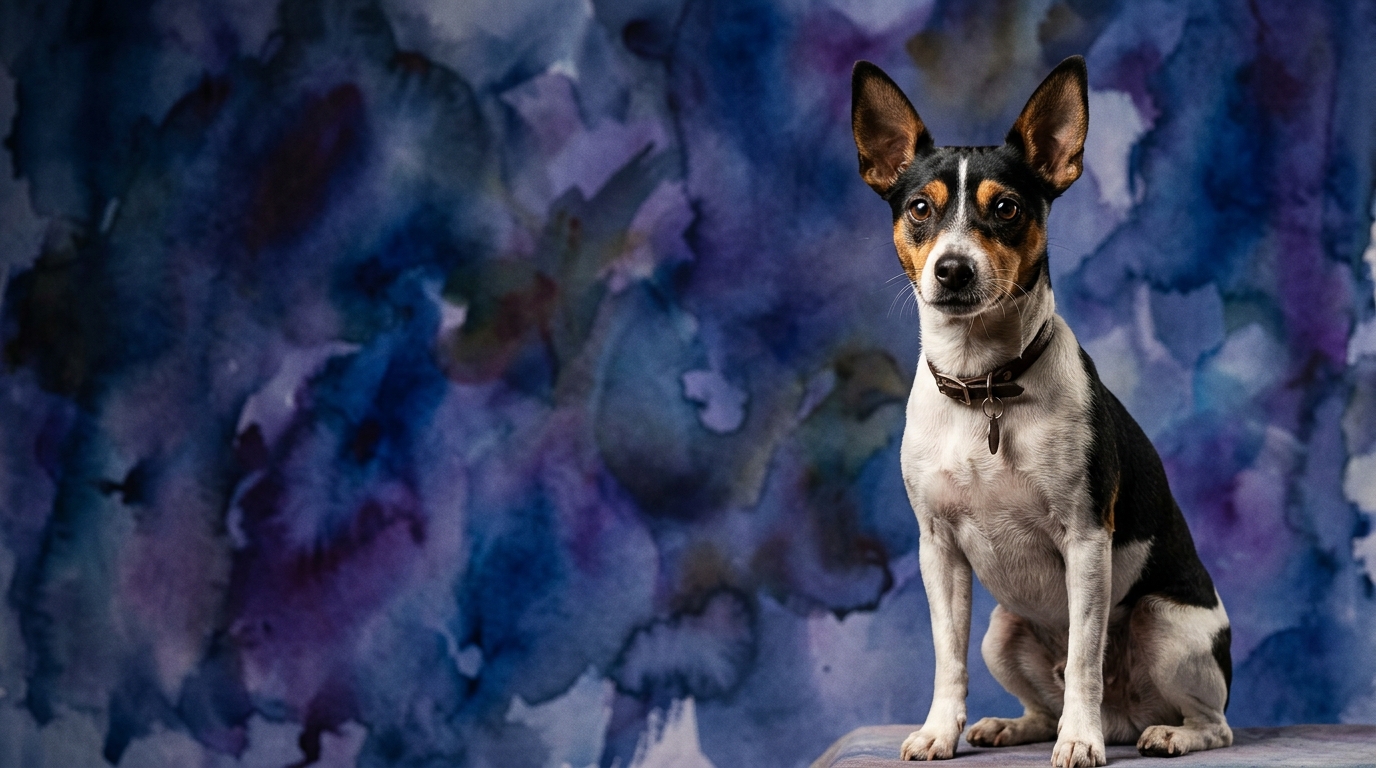
Side-by-Side Pet IQ Profile
The Cosmic Pet Pet IQ Lab categorizes canine intelligence across five key dimensions. For the American Staffordshire Terrier, we observe a Problem Solving score of 3/5; these dogs are capable of figuring out solutions but often lean on persistence and physical effort. Their Training Speed is also 3/5, indicating a moderate pace of learning new commands, thriving with consistent positive reinforcement. Social Intelligence for the AmStaff stands at 3/5, meaning they are generally adept at interpreting human cues and forming strong family bonds. Their Instinctive Drive is 3/5, showing a balanced blend of protective instincts and a desire for companionship, alongside a moderate prey drive. Finally, their Memory is a notable 4/5, allowing them to retain learned behaviors and experiences effectively over long periods, contributing to their Coren ranking of #48 for working and obedience intelligence.
The Rat Terrier, while not Coren-ranked, presents a unique cognitive profile. Their Problem Solving is 3/5, characterized by a practical intelligence, often employing cunning and agility to navigate challenges, particularly when exploring or pursuing. Training Speed is 3/5, suggesting they respond well to engaging training methods, though their independent spirit might require creative motivation. Social Intelligence also scores 3/5, as they adapt well to family life, displaying alertness and understanding household routines. Their Instinctive Drive is 3/5, marked by a strong prey drive for small vermin, coupled with an exploratory and sometimes territorial nature. Their Memory is 3/5, meaning they retain information and routines reasonably well, though they may be more focused on immediate environmental stimuli than complex, long-term recall.
Where the American Staffordshire Terrier Wins Cognitively
The AmStaff demonstrates a clear cognitive advantage in the realm of memory, scoring 4/5 compared to the Rat Terrier's 3/5. This superior recall means an American Staffordshire Terrier is more likely to remember complex training sequences, specific boundaries established months ago, or past interactions with individuals or other animals with greater reliability. For an owner, this translates into a companion who can more consistently execute learned commands, even after a break, and who exhibits more predictable responses based on prior experiences, making them a steady and dependable presence.
Furthermore, the AmStaff's Coren ranking of #48 provides insight into their structured learning capabilities. While not a direct measure of raw intelligence, this ranking reflects a breed's aptitude for formal obedience and their ability to learn and obey commands from known handlers. This suggests a more consistent and predictable response to instruction in controlled training environments, indicating an inherent capacity for processing and responding to human directives in a structured manner that is less common in breeds without such a ranking.
Where the Rat Terrier Wins Cognitively
While both breeds score 3/5 in problem-solving, the Rat Terrier's cognitive strengths lie in a distinct form of practical, agile problem-solving and environmental resourcefulness. Their historical role as vermin hunters cultivated an innate ability to quickly assess and navigate complex physical environments, often finding unconventional routes or solutions to access desired objects or overcome obstacles. An AmStaff might attempt to power through a barrier, whereas a Rat Terrier is more likely to cleverly find a way around, under, or through it, leveraging their smaller size and quick wits to achieve their objective.
This breed also exhibits a pronounced situational adaptability and acute environmental awareness. Their constant observation of surroundings and ability to make rapid, independent decisions based on immediate stimuli contributes to a 'street-smart' cunning. This allows them to adjust swiftly to new situations or challenges, often with less reliance on direct human instruction once a goal, such as exploring a new scent or navigating an unfamiliar space, is identified. Their world is one of constant sensory input and rapid response, making them incredibly perceptive to subtle environmental changes.
Which is Easier to Train and Why
For structured obedience and consistent command execution, the American Staffordshire Terrier often presents as the easier candidate to train. Their superior memory (4/5) means that once a command or behavior is learned, it is retained more reliably over time, reducing the need for constant re-teaching. Their Coren ranking further supports their aptitude for formal training, suggesting they are more inclined to focus on and respond to handler cues in a predictable manner. While they absolutely require patience and positive reinforcement, their desire to please their family and their capacity for remembering complex sequences make them excellent students for advanced obedience, canine sports, or service work where precision and recall are paramount.
The Rat Terrier, while scoring 3/5 in training speed, can be equally trainable but often requires a more creative and engaging approach. Their strong independent streak and inherent instinctive drive (3/5) mean they can find repetitive drills tedious and may be easily distracted by their environment if not properly motivated. Training needs to be fun, varied, and tap into their natural curiosity and drive for exploration or scent work to maintain their engagement. They excel when tasks involve problem-solving or agility, but an owner must understand that their focus might shift quickly, demanding an adaptable and consistent training style that rewards their innate cleverness rather than solely relying on rote memorization.
Which Suits Active Owners vs. Relaxed Owners
Both the American Staffordshire Terrier and the Rat Terrier are breeds that thrive with active owners, but their activity needs manifest differently. An AmStaff benefits significantly from structured, vigorous exercise such as long walks, challenging hikes, or participation in dog sports like weight pull or obedience trials. Their mental stimulation often comes from learning new tasks and engaging in interactive play with their family, after which they are generally content to relax indoors, enjoying quiet time and affection. They thrive when their physical and mental energy is consistently channeled, leading to a balanced and well-adjusted companion who enjoys being an integral part of family activities.
For the Rat Terrier, 'active' often means not just physical exertion but also constant mental engagement and sensory stimulation. Their boundless energy and keen senses make them ideal for activities like agility, earthdog trials, or extensive off-leash exploration in secure environments where they can satisfy their instinct for chasing, digging, and investigating. While they can enjoy downtime, their minds are often in constant motion, observing and reacting to their surroundings. This makes them a better fit for owners who can provide consistent outlets for their investigative spirit and high energy, ensuring they remain stimulated and engaged throughout the day, rather than expecting long periods of placid relaxation.
The Verdict
Choose an American Staffordshire Terrier if you value a companion with superior memory for training, a more consistent response to structured obedience, and a desire for robust, family-inclusive activities, leading to a loyal, steady presence in the home.
Choose a Rat Terrier if you're seeking a quick-witted, agile companion adept at independent problem-solving and environmental navigation, thriving on varied, engaging activities that tap into their keen senses and boundless curiosity.
🧠 Find Your Pet's IQ Score
Our Pet IQ Lab assessment covers 25+ tests across 5 cognitive dimensions — personalized to your breed.
Take the Full IQ Test →Frequently Asked Questions
Do AmStaffs or Rat Terriers make better guard dogs?
While both breeds possess protective instincts, an AmStaff's larger size and formidable presence make them a more natural visual deterrent. Rat Terriers are excellent alert dogs, quick to bark at perceived threats, but their smaller stature means they are less suited for physical guarding.
Are AmStaffs or Rat Terriers better for apartment living?
With sufficient daily exercise and mental stimulation, both breeds can adapt to apartment living. AmStaffs, despite their size, can be content indoors after vigorous activity. Rat Terriers, while smaller, have higher energy demands and need frequent outings to prevent boredom and destructive behaviors and channel their investigative instincts.
How do their instinctive drives manifest differently?
The AmStaff's instinctive drive often manifests as a protective loyalty towards their family and a desire to engage in physical activities like tug or fetch. The Rat Terrier's drive is strongly rooted in hunting and exploration, leading to a keen interest in chasing small animals, digging, and thoroughly investigating new scents and environments.