A Side-by-Side Look at Cognitive Profiles
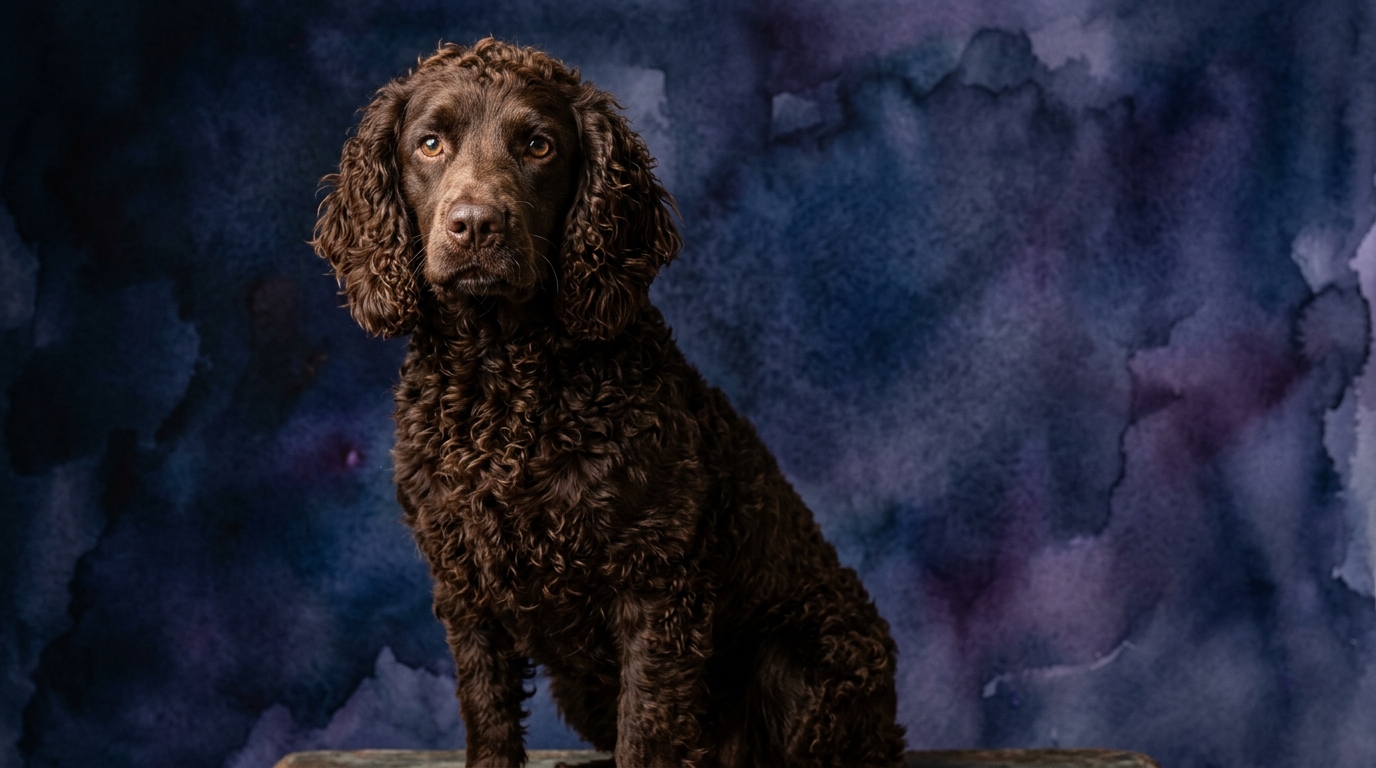
The American Water Spaniel (AWS), ranked #44 by Coren, presents a balanced cognitive profile suited to its heritage as a water-fowling specialist. Its problem-solving ability, rated 3/5, shines in practical, environmental challenges, such as navigating dense cover or retrieving game from intricate waterways. Training speed also sits at 3/5, indicating a moderate pace for command acquisition, where consistency and positive reinforcement yield steady progress. Social intelligence, at 3/5, underscores their capacity for strong bonds with their primary handlers, often displaying a reserved but observant nature with strangers. An instinctive drive of 3/5 highlights their inherent desire for scent work and retrieving, a core aspect of their satisfaction. Notably, their memory is a strong 4/5, allowing them to retain complex hunting patterns, learned routines, and social experiences with remarkable fidelity.
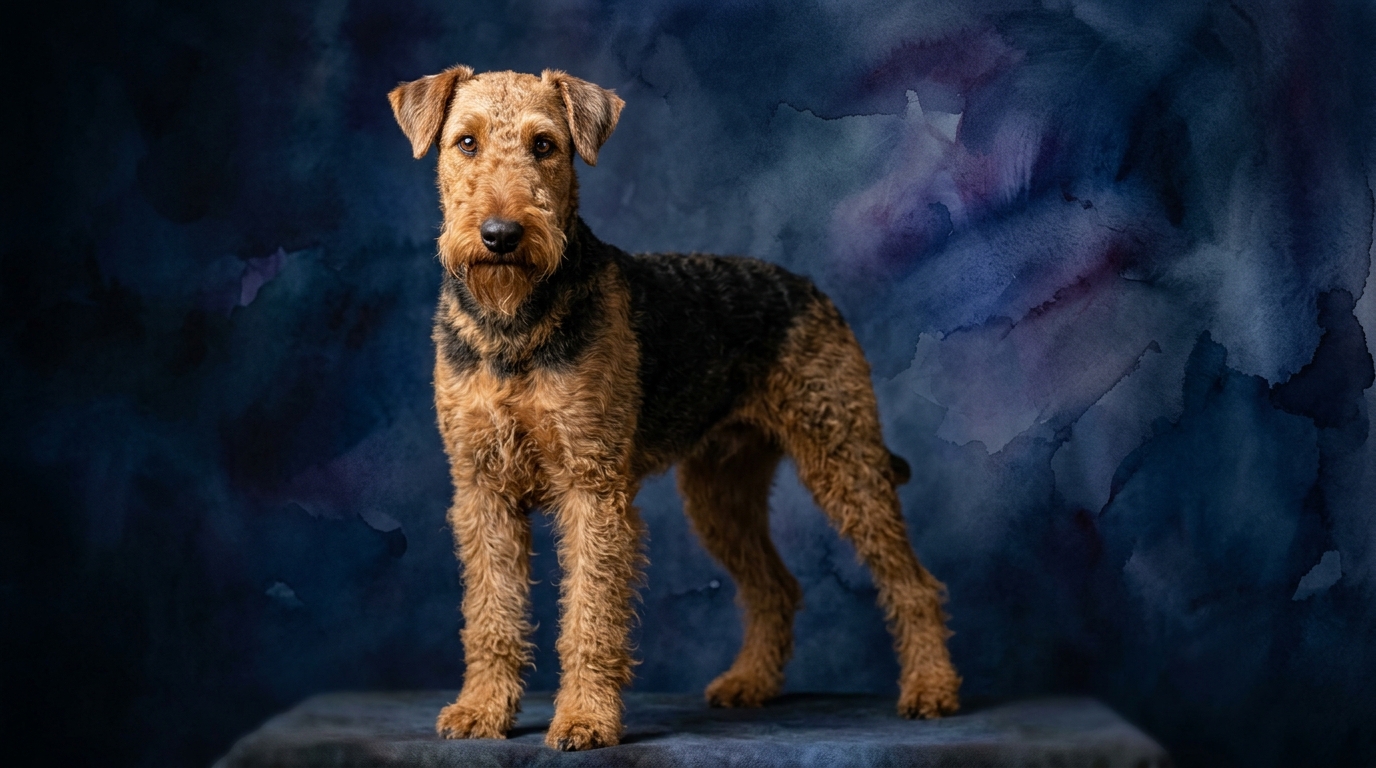
In contrast, the Airedale Terrier, holding a higher Coren rank of #29, exhibits a more assertive cognitive makeup. Their problem-solving prowess is a robust 4/5, indicative of a breed that thinks independently and often devises its own solutions to challenges, whether it's outwitting vermin or figuring out how to open a gate. Training speed also rates 4/5, meaning they grasp new concepts and commands quickly, though their independent streak can sometimes translate into selective compliance rather than a lack of understanding. Social intelligence, at 3/5, reflects their engagement with their family, often displaying a confident and sometimes dominant interaction style with other canines, while remaining perceptive of human cues. Their instinctive drive, 3/5, is channeled into strong prey drive, tracking, and guarding tendencies. Like the AWS, the Airedale also boasts a memory rating of 4/5, showing excellent retention of training, people, and past events, which can be a double-edged sword if negative associations are formed.
Where the American Water Spaniel Excels Cognitively
While the Airedale boasts higher scores in problem-solving and training speed, the American Water Spaniel's cognitive strengths are deeply rooted in its specialized purpose, offering distinct advantages in specific scenarios. Its 3/5 problem-solving, though numerically lower, is acutely honed for environmental navigation and sustained task focus, especially within aquatic and dense vegetative contexts. An AWS will meticulously plan the most efficient route through marshland to retrieve a fallen bird, demonstrating a practical, rather than abstract, form of ingenuity. This isn't about solving complex puzzles in a living room, but about executing a learned protocol flawlessly under varied and challenging field conditions, often requiring sustained physical and mental effort over long periods.
Furthermore, the AWS's combination of 3/5 social intelligence and 4/5 memory fosters a unique cooperative learning style. They are attuned to their handler's subtle cues in the field, remembering intricate hand signals and whistle commands over many seasons. Their bond-driven motivation often translates into a more eager partnership, where the dog actively seeks to understand and comply, rather than independently strategize. This makes them exceptional at repetitive, precise tasks where consistent execution is paramount, such as complex retrieving drills or scent discrimination exercises, where their memory for specific targets and routes is invaluable.
Where the Airedale Terrier Shows Cognitive Superiority
The Airedale Terrier's cognitive profile, with its 4/5 ratings in problem-solving and training speed, clearly indicates a dog wired for independent thought and rapid conceptual acquisition. This breed excels at figuring things out for itself, often demonstrating a "thinking outside the box" approach to obstacles. For instance, an Airedale might not just wait for instruction to retrieve a dropped item but might actively strategize how to reach it if it's out of bounds, utilizing tools or manipulating its environment. This higher problem-solving capacity makes them adept at advanced obedience, agility, and even search and rescue, where quick, unprompted decisions are crucial.
Their accelerated training speed means they pick up new commands and complex sequences with remarkable alacrity. While this can sometimes be paired with a terrier's characteristic independence, the underlying cognitive capacity to grasp intricate concepts quickly is undeniable. This enables an Airedale to progress through training levels at a faster clip, provided the handler can effectively channel their inherent tenacity and strong will. Their robust memory (4/5) further enhances this, allowing them to build upon a vast repertoire of learned behaviors and apply them flexibly across different situations, showcasing a more adaptable and less routine-dependent form of intelligence compared to the AWS.
Training Dynamics: Biddability vs. Independent Learning
The question of which breed is "easier to train" is nuanced, as it depends on an owner's definition of "easy." The Airedale Terrier, with its 4/5 training speed, certainly learns new commands at a faster rate. They are quick studies, capable of understanding complex instructions and sequences after fewer repetitions. However, their 4/5 problem-solving and strong terrier independence mean that while they comprehend quickly, they might not always comply immediately if they perceive a better way or are simply disinclined. This independence can manifest as stubbornness, requiring a handler who is confident, consistent, and creative in motivating them, turning training into a stimulating intellectual challenge rather than rote memorization.
In contrast, the American Water Spaniel, with a 3/5 training speed, may take a few more repetitions to fully grasp a new command. Yet, their 3/5 social intelligence often translates into a more eager-to-please disposition, typical of many Sporting breeds. They thrive on partnership and positive reinforcement, making them generally more biddable and reliable in executing commands once learned. Their slightly lower problem-solving score means they are less likely to "improvise" during training, preferring to follow established patterns. Therefore, while the Airedale might win in initial concept acquisition, the AWS often wins in consistent, willing compliance, making them potentially "easier" for an owner who values a cooperative, predictable training partner over a quick, but sometimes challenging, independent learner.
Matching Cognitive Needs to Lifestyles
Neither the American Water Spaniel nor the Airedale Terrier is suited for a truly "relaxed" owner, as both are working breeds with significant cognitive and physical needs. However, their specific cognitive profiles suggest different types of active engagement. The AWS, with its strong instinctive drive for retrieving and swimming, thrives with owners who can provide consistent outlets for these activities. Long walks through varied terrain, regular swimming sessions, and structured retrieving games that leverage their excellent memory for locations and tasks are ideal. Their balanced social intelligence means they appreciate close family interaction but also benefit from a predictable routine, making them a good fit for active owners who enjoy structured outdoor pursuits and seek a loyal, cooperative companion for these adventures.
The Airedale Terrier, with its higher problem-solving and training speed, demands a more dynamic and intellectually stimulating environment. Owners who enjoy engaging in complex training, agility, scent work, or even earthdog trials will find the Airedale an eager and capable participant. Their independent nature requires mental challenges that prevent boredom, which can otherwise lead to destructive behaviors. They need varied activities that allow them to use their ingenuity, rather than just repetitive physical exercise. Therefore, the Airedale is better suited for highly active owners who thrive on a partnership with a dog that thinks for itself and enjoys pushing cognitive boundaries, offering a constant source of intellectual engagement.
The Verdict
Choose the American Water Spaniel if you value a loyal, cooperative partner for water sports, field work, or a structured family life, where consistent training and bond-based motivation foster dependable performance and a strong emotional connection.
Opt for the Airedale Terrier if you seek a mentally agile companion for advanced training, problem-solving activities, or active outdoor pursuits, and are prepared to channel its independent spirit and quick learning with firm, engaging guidance.
🧠 Find Your Pet's IQ Score
Our Pet IQ Lab assessment covers 25+ tests across 5 cognitive dimensions — personalized to your breed.
Take the Full IQ Test →Frequently Asked Questions
Does Coren rank directly correlate with "smartness"?
Coren's ranking primarily assesses obedience and working intelligence, specifically how quickly a dog learns new commands and complies with them. It doesn't encompass all facets of intelligence, such as problem-solving in novel situations or social cognition, which the Cosmic Pet Pet IQ Lab profiles expand upon.
How does "instinctive drive" impact trainability?
Instinctive drive, rated 3/5 for both, means these breeds possess strong natural behaviors like retrieving or hunting. While these drives can be channeled into training, a powerful instinct might sometimes override learned commands if not properly managed, requiring a handler to integrate these drives into constructive activities.
Can an American Water Spaniel be a good family dog despite its working background?
Absolutely. Their 3/5 social intelligence and 4/5 memory mean they form deep bonds and remember family members well. With sufficient physical and mental stimulation, and early socialization, their cooperative nature makes them devoted and affectionate companions within a family setting, often reserved but gentle.