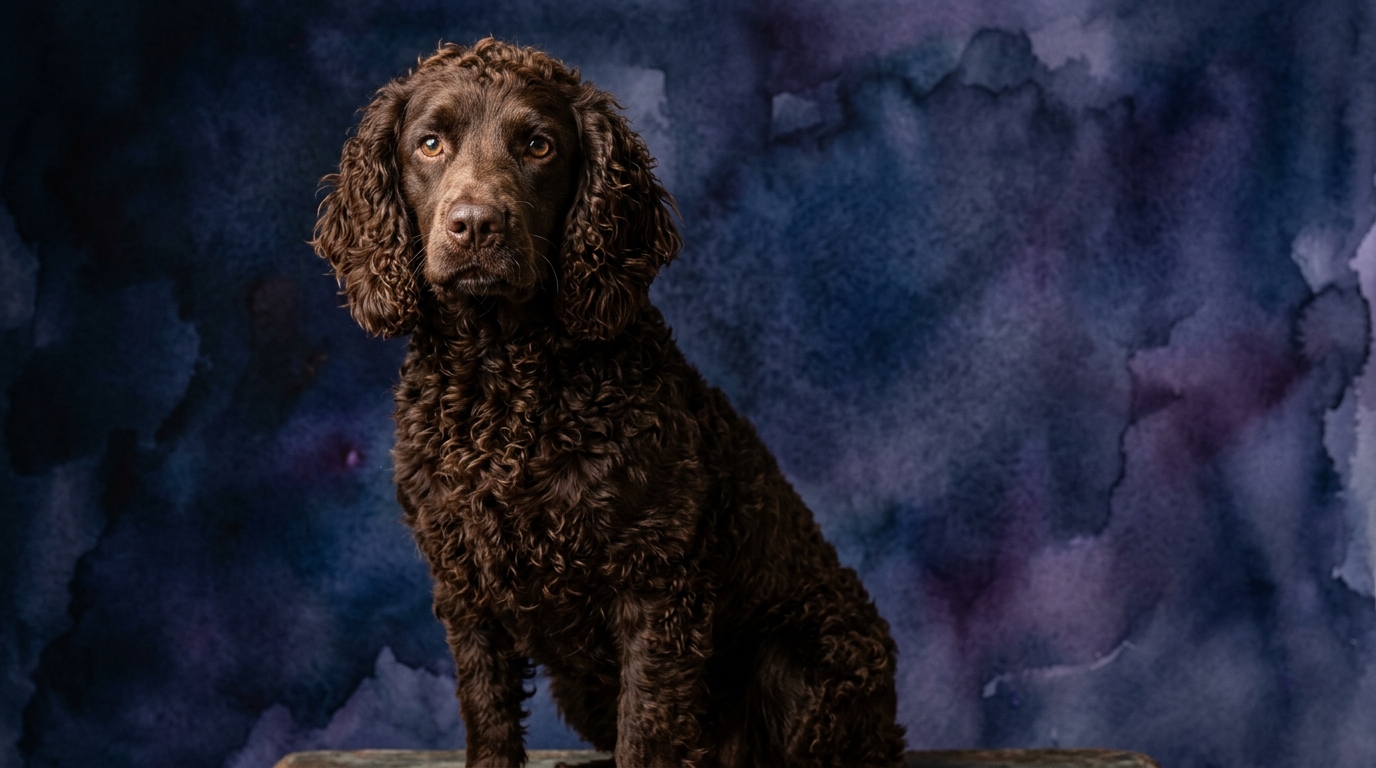
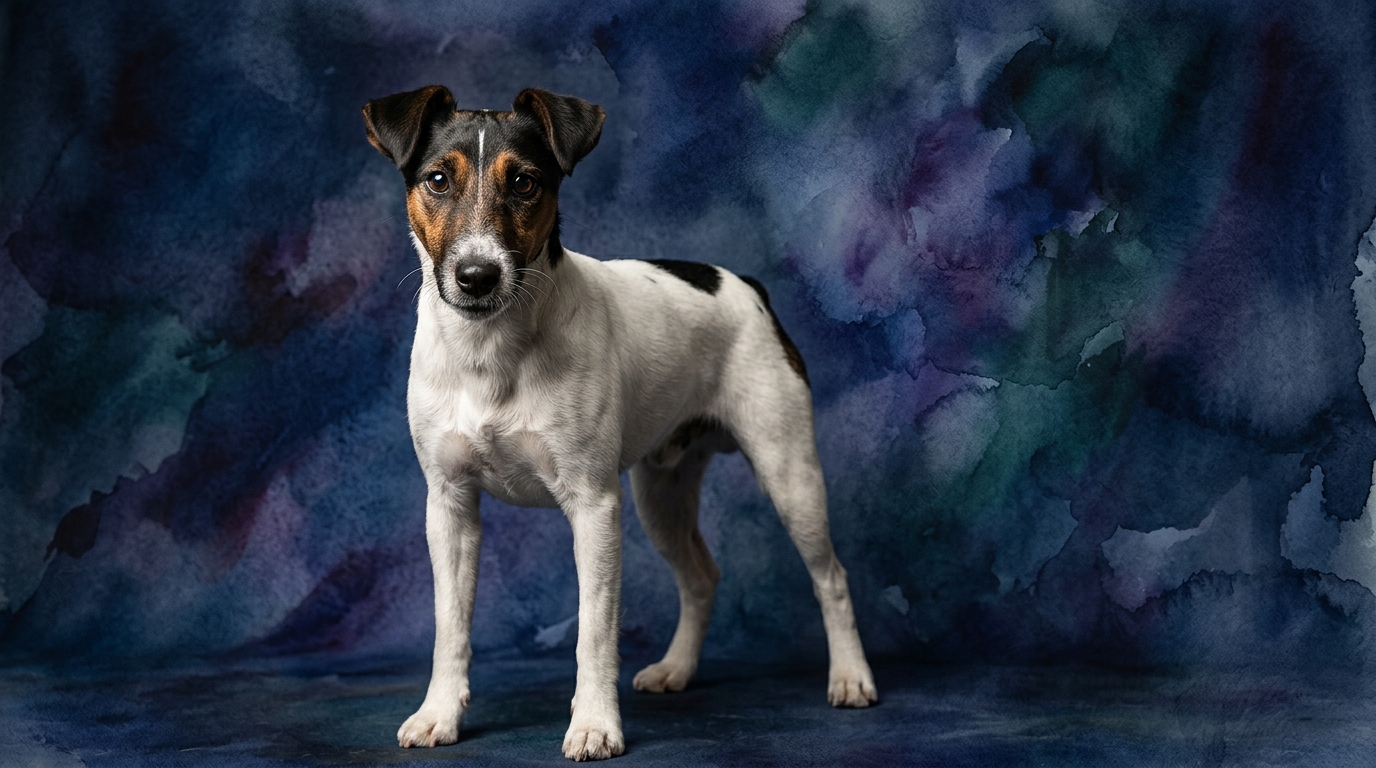
Side-by-Side IQ Profile: American Water Spaniel vs. Smooth Fox Terrier
The Cosmic Pet Pet IQ Lab provides a standardized framework to assess canine cognition across five crucial dimensions, offering a detailed look into each breed's mental makeup. While both breeds often display numerical parity in many areas, understanding the specific manifestations of these scores is key to appreciating their individual brilliance.
The American Water Spaniel, ranked #44 by Coren, exhibits a Problem Solving score of 3/5, indicating a solid capacity for navigating novel challenges, such as figuring out how to retrieve an item from a tricky spot or manipulating puzzle toys. Their Training Speed of 3/5 means they process new commands and routines at a good pace, neither exceptionally quick nor particularly slow, grasping concepts with consistent instruction. Their Social Intelligence, also 3/5, demonstrates a decent understanding of human cues and emotional states, allowing them to form strong bonds and adapt to household dynamics. An Instinctive Drive of 3/5 reflects a moderate but persistent desire for hunting, retrieving, and water work, manifesting as a purposeful pursuit of physical tasks. A standout trait for the AWS is its Memory, scoring 4/5, which signifies an excellent ability to recall learned commands, past experiences, and familiar locations over extended periods, making them capable of retaining complex routines and specific environmental details.
The Smooth Fox Terrier, while not Coren-ranked, presents a cognitive profile with some striking similarities. Its Problem Solving score of 3/5 indicates practical abilities, often employing clever tactics to achieve its goals, whether accessing a forbidden treat or outsmarting a small critter. A Training Speed of 3/5 means the SFT learns at a comparable rate to the AWS, requiring consistent and engaging methods to hold its attention, though its independent streak can sometimes influence perceived compliance. Its Social Intelligence, also 3/5, shows capability in reading human intentions and forming strong family bonds, but its terrier independence often means it prioritizes its own interests alongside human direction. An Instinctive Drive of 3/5 reflects a strong, focused drive for hunting and exploring, typical of its terrier heritage, manifesting as an intense interest in small prey, digging, and patrolling territory with determined focus. Lastly, the SFT’s Memory scores 3/5, indicating a good, reliable recall for commands and routines, retaining what's relevant to its daily activities and desires, though perhaps not with the same depth or detail as the AWS.
Where the American Water Spaniel Wins Cognitively
The American Water Spaniel's primary cognitive advantage lies in its superior Memory score of 4/5, which surpasses the Smooth Fox Terrier's 3/5. This enhanced recall translates into a more robust capacity for remembering intricate sequences of commands, retaining specific instructions over long periods, and recalling detailed information about their environment or past experiences with greater precision. For example, an AWS might more readily remember the exact location of a hidden retrieve from weeks ago or flawlessly execute a multi-step obedience routine after a significant break in training. This exceptional ability to 'bookmark' and retrieve information effectively gives them a distinct edge in situations demanding long-term retention and precise execution based on previous learning, making them particularly adept at advanced obedience or complex field work.
Where the Smooth Fox Terrier Wins Cognitively
While the Smooth Fox Terrier matches the American Water Spaniel in four out of five cognitive dimensions, its unique breed-specific application of these scores, particularly its Instinctive Drive (3/5), can be viewed as a distinct advantage in specific contexts. The Smooth Fox Terrier's drive, while numerically similar to the AWS, is profoundly shaped by centuries of selective breeding for independent vermin control. This translates into an exceptional tenacity and single-minded focus on a task, especially when it involves scent work, chasing, or digging for perceived prey. Their problem-solving (3/5) is often infused with a relentless determination that allows them to overcome obstacles through sheer persistence, even if the initial cognitive approach isn't more complex. This unwavering focus and self-reliance, born from their terrier spirit, means they excel at tasks requiring sustained, independent effort and a refusal to give up, making them incredibly effective in roles demanding sustained vigilance and determination.
Which is Easier to Train and Why
Comparing training ease between these two breeds, both rated 3/5 for Training Speed, reveals interesting nuances rooted in their distinct temperaments and the application of their other cognitive traits. The American Water Spaniel, with its superior Memory (4/5), tends to be slightly more straightforward for owners seeking consistent, complex obedience. Their better recall means they are more likely to remember learned commands and sequences accurately over time, requiring fewer refreshers for established behaviors. Their sporting background also often instills a natural desire to work cooperatively with a handler, making them generally more eager to please and follow direction.
Conversely, the Smooth Fox Terrier, while equally capable of grasping new concepts quickly, often brings a strong independent streak and a formidable instinctive drive to the training arena. This terrier tenacity, while a cognitive asset in some areas, can translate into a challenge for an owner who isn't prepared to make training highly engaging and varied. SFTs might require more creative motivation and patience to ensure compliance, as their problem-solving skills (3/5) are frequently applied to finding ways to do things *their* way, rather than strictly adhering to commands, particularly if a more enticing 'prey' or distraction is present. Consistency, positive reinforcement, and making training feel like a game are paramount for both, but the AWS's memory and cooperative nature often make the learning curve feel smoother for multi-step tasks.
Which Suits Active Owners vs. Relaxed Owners
Both breeds demand active engagement, but the *type* of activity they thrive on differs, making them suitable for distinct styles of active ownership. The American Water Spaniel, a sporting dog, thrives with owners who enjoy structured outdoor activities like retrieving, swimming, hiking, and participating in dog sports such as agility or dock diving. Their 3/5 Instinctive Drive is best satisfied through purposeful work alongside their handler, enjoying the partnership in exploration and physical exertion. An owner who prefers a more relaxed, sedentary lifestyle might find an AWS restless and potentially destructive without a consistent outlet for its energy and desire to work, as their need for mental and physical stimulation is significant.
The Smooth Fox Terrier, on the other hand, while equally energetic, leans towards more independent, investigative activities. Its 3/5 Instinctive Drive is channeled into digging, chasing, and vigilant patrolling, requiring owners who appreciate a dog with a strong prey drive and a need for mental stimulation through 'terrier work,' even if it's just a heavily enriched backyard. A relaxed owner might struggle significantly with an SFT's tendency to create its own entertainment, which could manifest as digging up flowerbeds, excessive barking at perceived intruders, or escape attempts if their innate drive for exploration and pursuit is not adequately managed and channeled. Both need substantial daily exercise and mental challenges; the AWS prefers collaborative work, while the SFT often prefers self-directed, tenacious exploration.
The Verdict
Choosing between the American Water Spaniel and the Smooth Fox Terrier hinges on the specific cognitive partnership an owner seeks. Opt for the American Water Spaniel if you value a companion with excellent memory for complex training and a cooperative spirit for sporting activities, thriving on joint ventures.
Select the Smooth Fox Terrier if you appreciate a tenacious, independent problem-solver with a formidable prey drive, ready for self-directed exploration and a spirited challenge.
🧠 Find Your Pet's IQ Score
Our Pet IQ Lab assessment covers 25+ tests across 5 cognitive dimensions — personalized to your breed.
Take the Full IQ Test →Frequently Asked Questions
Do American Water Spaniels or Smooth Fox Terriers learn tricks faster?
Both breeds are rated 3/5 for Training Speed, indicating they learn at a similar, good pace. However, the American Water Spaniel's superior memory (4/5) might give it a slight edge in retaining a large repertoire of complex tricks over time, potentially requiring fewer refreshers for established behaviors. The Smooth Fox Terrier learns quickly but might require more engaging motivation due to its independent nature.
How do their problem-solving skills differ in real-world situations?
Both score 3/5 in Problem Solving, meaning they are adept at practical solutions. The American Water Spaniel often applies this to tasks like retrieving objects from difficult spots or navigating terrain during hunts, driven by cooperation and a desire to work with its handler. The Smooth Fox Terrier's problem-solving is frequently infused with terrier tenacity, like figuring out how to get to a perceived 'prey' or overcoming physical barriers with persistent, independent effort.
Is one breed more adaptable to different living environments based on their IQ?
Their similar Social Intelligence (3/5) suggests both can adapt well to various home environments, provided their core needs are met. The American Water Spaniel's cooperative nature might make it slightly more pliable in adapting to new routines and people, while the Smooth Fox Terrier's strong instinctive drive requires an environment where its natural terrier behaviors, like digging or chasing, can be managed or channeled appropriately to prevent unwanted behaviors.