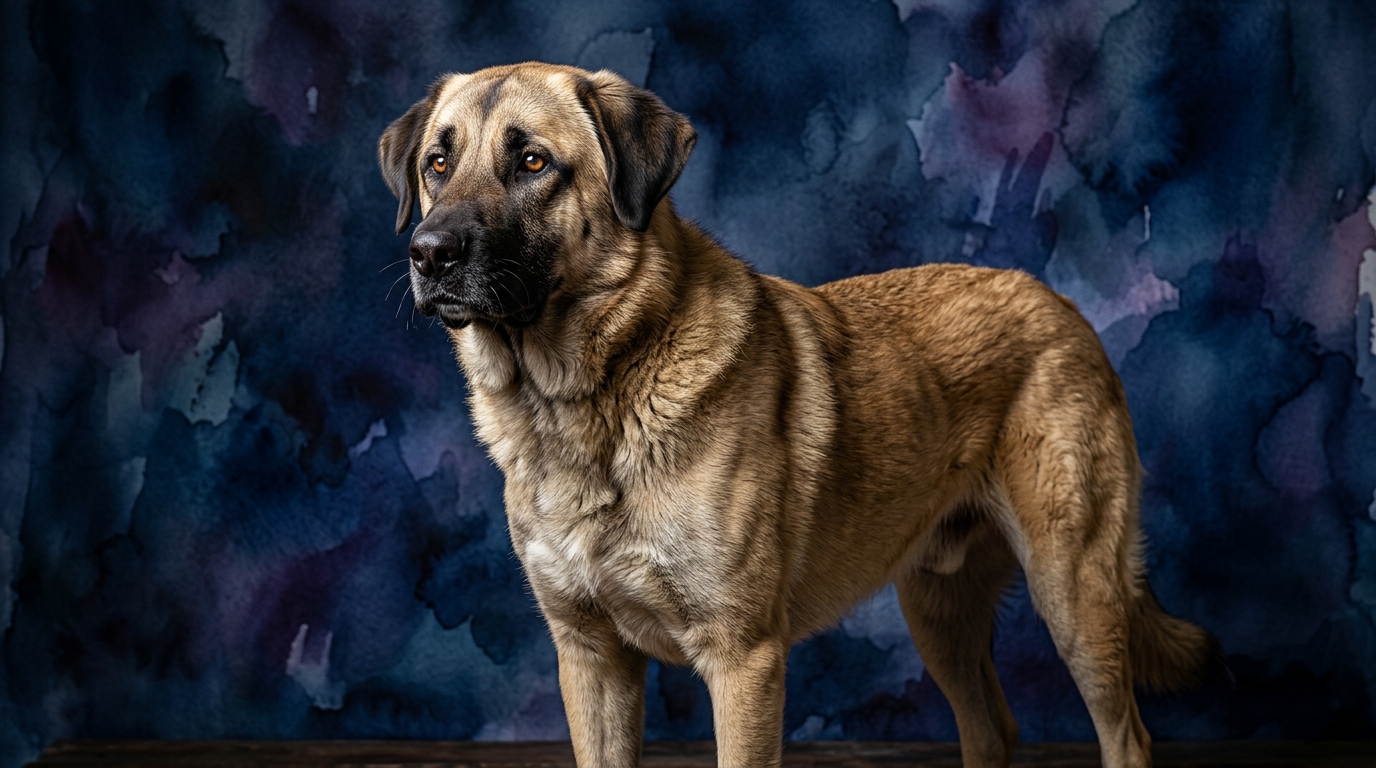
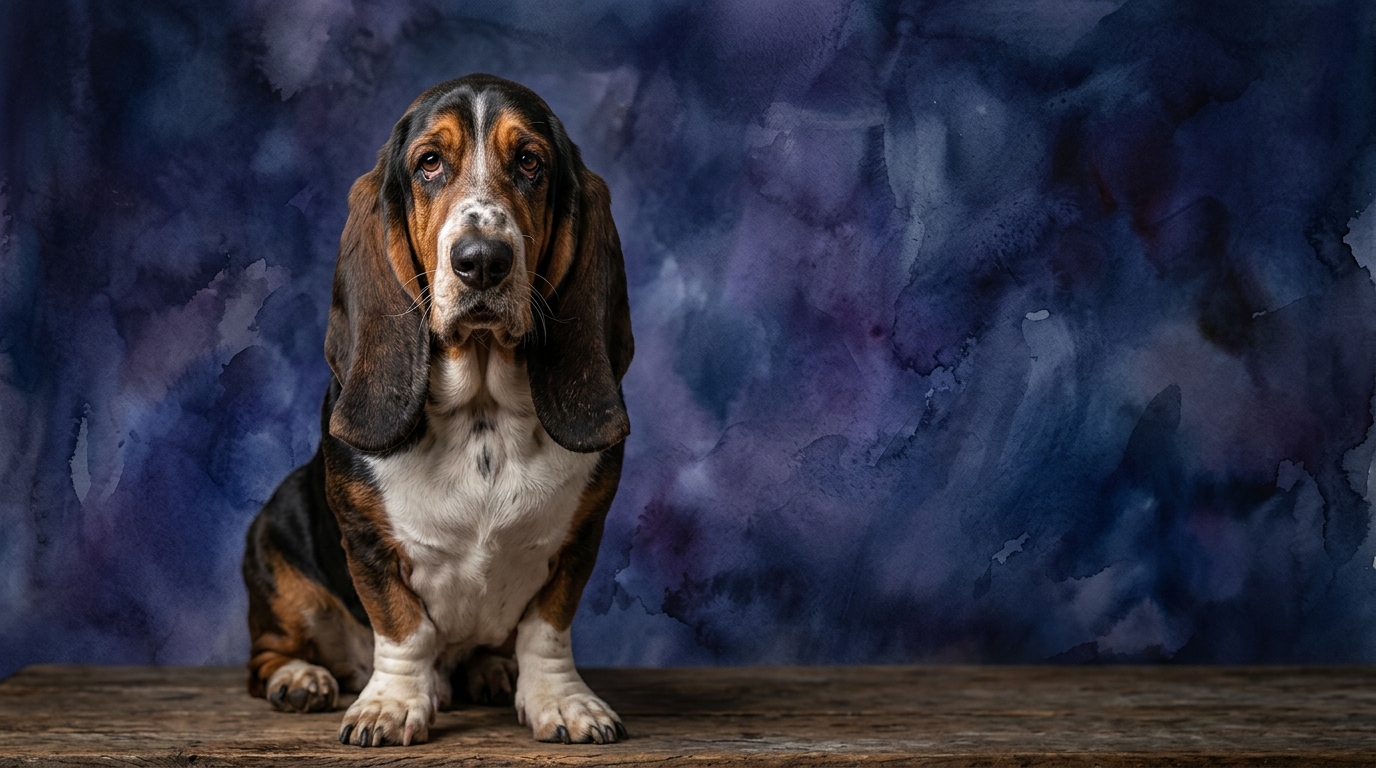
Side-by-Side Cognitive Profile: Anatolian Shepherd Dog vs. Basset Hound
Despite their vastly different appearances and historical roles, the Anatolian Shepherd Dog and the Basset Hound share identical scores across our Cosmic Pet Pet IQ Lab's five cognitive dimensions. These scores, however, manifest in distinctly breed-specific ways, reflecting their unique evolutionary paths and purposes. Understanding these nuances is key to appreciating their individual intellectual strengths.
For the Anatolian Shepherd Dog, a working breed not ranked by Coren, their IQ profile reflects their role as an autonomous guardian. Their Problem Solving (3/5) score highlights their capacity for independent, situational problem-solving crucial to livestock guarding, where they assess threats and strategize responses without direct human command, a practical intelligence focused on real-world security rather than abstract puzzles. Training Speed (3/5) is influenced by their inherent independence; while capable of learning, they require consistent, patient guidance and a clear understanding of the 'why' behind a command, rather than rote memorization or eager compliance. Social Intelligence (3/5) is displayed through deep bonds with their family or flock, discerning friend from foe with keen observation, and reading subtle cues of potential threats, though they can be reserved with strangers. Their Instinctive Drive (3/5) is predominantly a powerful, unwavering protection and guarding instinct, a deep-seated impulse to defend their charges that is a cornerstone of their cognitive makeup. Finally, their Memory (3/5) is robust for patterns, perceived threats, safe territories, and individuals within their protective sphere, retaining crucial information relevant to their guardianship.
The Basset Hound, a hound breed ranked #71 by Coren, also scores a 3/5 across all dimensions, but these scores are colored by their profound olfactory specialization. Their Problem Solving (3/5) acumen shines in navigating complex scent trails, demonstrating an extraordinary ability to follow a specific odor through varied terrains and distractions, a specialized intelligence focused on olfactory puzzles. Training Speed (3/5) is often perceived as deliberate due to their overwhelming focus on scent; while they grasp concepts, their primary drive means competing with an invisible world of odors, requiring highly motivating rewards and immense patience. Social Intelligence (3/5) is exhibited through their generally affable nature, reading human moods with gentle understanding and interacting well with both people and other animals, though they can be stubborn when a compelling scent takes precedence. Their Instinctive Drive (3/5) is overwhelmingly centered on their powerful nose and an unyielding desire to follow a scent trail, a deep-seated hunting impulse that can override other stimuli. Their Memory (3/5) is strong for specific scent patterns, familiar people, established routines, and locations where interesting odors have been previously encountered, allowing them to revisit their olfactory world.
Where the Anatolian Shepherd Dog Excels Cognitively
The Anatolian Shepherd Dog's cognitive strengths distinctly manifest in its capacity for independent, high-stakes decision-making. Unlike many breeds that thrive on direct human instruction, the Anatolian excels at assessing complex, dynamic situations and formulating a response autonomously. For example, when faced with a potential threat to its livestock, an Anatolian will not wait for a command; it will independently evaluate the situation, weigh potential risks, and execute a protective strategy based on its learned experiences and innate guarding instincts. This involves a sophisticated understanding of territorial boundaries, the behavior patterns of both its charges and potential predators, and the appropriate level of intervention required. This form of practical, real-time problem-solving, where the dog acts as a self-sufficient sentinel, represents a pinnacle of their specific cognitive adaptation, allowing them to make nuanced judgments in the absence of human oversight.
Where the Basset Hound Excels Cognitively
Conversely, the Basset Hound's cognitive superiority lies in its unparalleled olfactory processing and sustained focus on a singular sensory input. Their remarkable ability to dissect and follow intricate scent pathways, often filtering out a cacophony of competing odors, is a testament to a highly specialized form of intelligence. A Basset can meticulously trace a cold trail over long distances, through varying environmental conditions, demonstrating an extraordinary capacity for sustained mental effort and memory recall dedicated purely to scent. This isn't just about detecting an odor; it's about interpreting a complex, time-sensitive narrative through scent, remembering specific nuances, and persistently pursuing it despite physical obstacles or distractions. Their ability to remain locked onto a specific olfactory signature, sometimes for hours, showcases a unique cognitive stamina and a problem-solving approach entirely driven by their nose, an intellectual feat in its own right.
Training Challenges: Anatolian Shepherd Dog vs. Basset Hound
When considering ease of training, neither the Anatolian Shepherd Dog nor the Basset Hound fit the mold of a conventionally 'easy' student, albeit for entirely different reasons rooted in their behavioral differences. The Anatolian's training challenge stems from its profound independence and self-reliance. They are not programmed for blind obedience but rather for partnership, often needing to understand the logical purpose behind a command. This demands a trainer establish clear leadership and trust, employing consistent, firm, yet respectful methods, and accepting that rote repetition may not yield immediate results with a dog bred for autonomous decision-making. Their strong protective instincts also require careful socialization and management, as these inherent drives can sometimes override learned behaviors. In contrast, the Basset Hound's training hurdles are primarily a consequence of its overwhelming scent drive. When a Basset's nose is engaged, human commands often fade into irrelevance. Their persistence in following a trail, coupled with a characteristic stubbornness, makes recall a particularly formidable task. Training a Basset requires exceptional patience, an understanding of their primary motivator, and the use of high-value rewards to compete with a captivating scent. While both breeds are capable of learning, the Anatolian demands a trainer who respects their autonomy, and the Basset requires one who can navigate and harness their profound olfactory obsession.
Matching Breeds to Lifestyles: Active vs. Relaxed Owners
Defining 'active' and 'relaxed' ownership reveals distinct preferences for these two breeds. The Anatolian Shepherd Dog is not suited for an 'active' owner seeking a jogging companion, but rather for one providing a highly purposeful and mentally stimulating environment. They thrive with large spaces to patrol, a 'flock' (be it family or livestock) to guard, and an owner understanding their independence and serious, watchful demeanor. They require an owner committed to managing a powerful, territorial dog, providing consistent structure, and engaging their cognitive faculties through meaningful work or responsibility. This is a commitment to a serious working dog. The Basset Hound, while appearing more 'relaxed' indoors, still requires an owner who can accommodate its strong instinctive drives. They need regular, moderate exercise, particularly opportunities for scent work or long, meandering walks where their nose can lead. A truly 'relaxed' owner expecting a purely sedentary dog might find the Basset's persistent tracking, occasional baying, and potential for stubbornness frustrating. They suit an owner who appreciates their unique charm, is patient with their training, and is willing to engage in activities fulfilling their natural hunting instincts, such as scent games or leisurely strolls exploring odors.
The Verdict
Opt for an Anatolian Shepherd Dog if you are an experienced owner with ample property, seeking a deeply loyal, independent guardian capable of autonomous decision-making and committed to a serious working partnership.
Choose a Basset Hound if you appreciate a good-natured, scent-driven companion, are prepared to engage their natural tracking abilities, and possess the patience to navigate their unique training challenges and occasional stubbornness.
🧠 Find Your Pet's IQ Score
Our Pet IQ Lab assessment covers 25+ tests across 5 cognitive dimensions — personalized to your breed.
Take the Full IQ Test →Frequently Asked Questions
Do Anatolian Shepherd Dogs bark a lot?
Anatolian Shepherd Dogs are naturally vigilant and will bark to alert against perceived threats or unusual activity, a core part of their guarding function; their barking is typically purposeful rather than incessant.
Are Basset Hounds good with children?
Basset Hounds are generally known for their gentle and patient temperament, making them typically good companions for children, though supervision is always recommended with any dog and child interaction.
How much exercise does a Basset Hound need?
Basset Hounds require moderate daily exercise, preferably involving opportunities for scent work or leisurely walks where they can explore; while they enjoy lounging, consistent activity helps maintain their physical health and mental well-being.