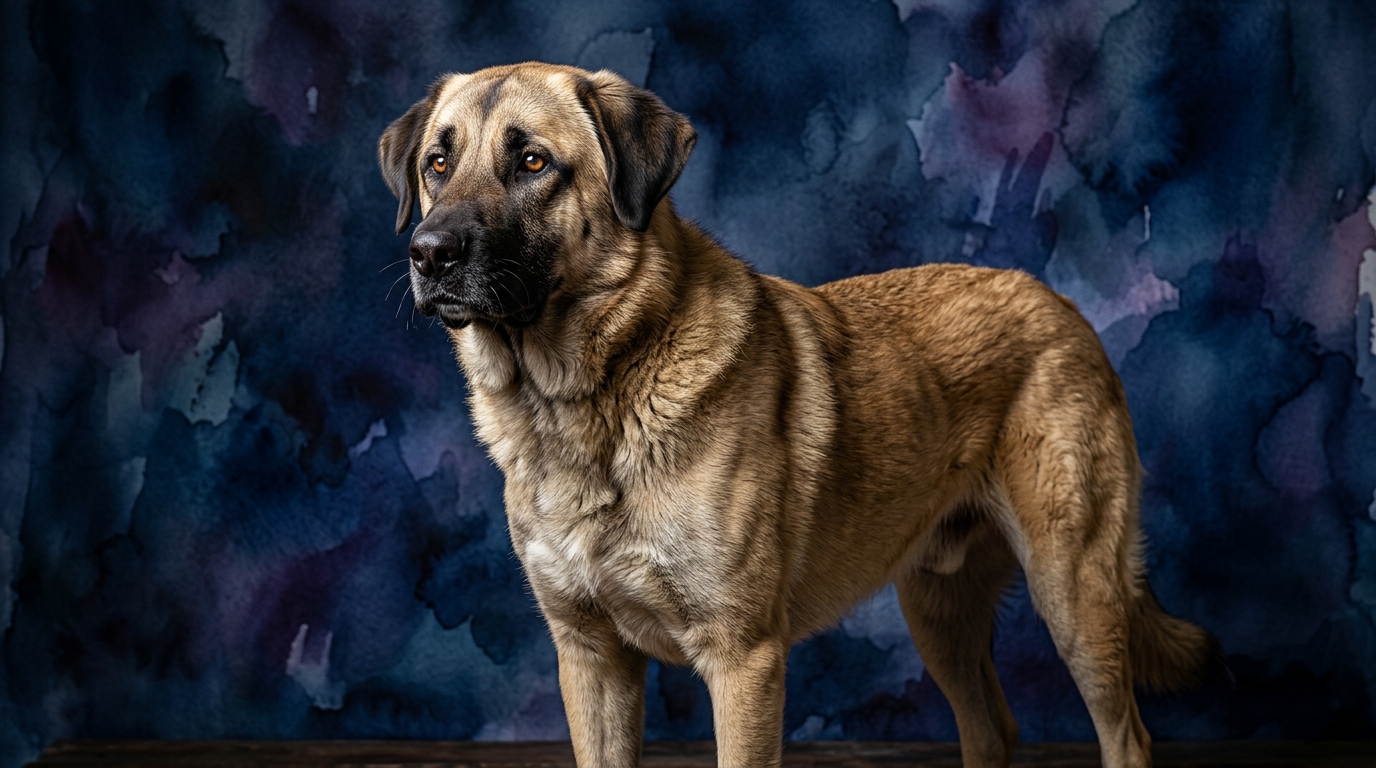
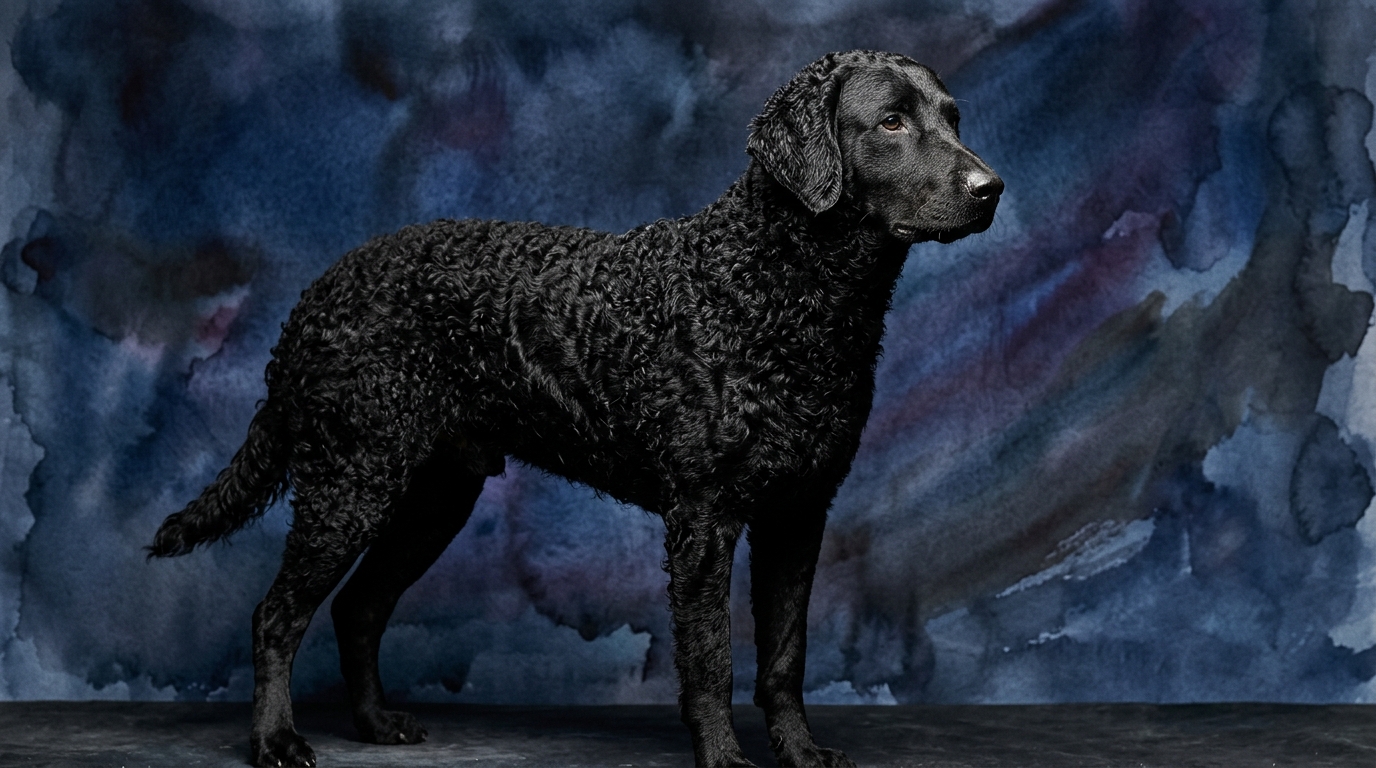
Side-by-Side IQ Profile: Guardian vs. Retriever
The Anatolian Shepherd Dog, a majestic livestock guardian, exhibits a balanced cognitive profile across our five dimensions, scoring 3/5 in Problem Solving, Training Speed, Social Intelligence, Instinctive Drive, and Memory. This consistent mid-range score reflects a canine whose intellect is geared towards independent, self-sufficient work. Their problem-solving often involves assessing environmental threats and strategizing to protect their flock without direct human command, relying on their keen observational skills. Training speed at 3/5 suggests they learn practical tasks effectively but may prioritize their own judgment over rote obedience, a trait crucial for autonomous guardianship. Social intelligence at 3/5 pertains more to understanding the nuances of their flock and potential intruders than intricate human-canine communication. Their instinctive drive at 3/5 is powerfully channeled into protection and territoriality, while a memory score of 3/5 allows them to recall routines, safe boundaries, and perceived threats within their domain.
In contrast, the Curly-Coated Retriever, a sleek sporting dog, shares many scores with the Anatolian Shepherd, registering 3/5 in Problem Solving, Training Speed, Social Intelligence, and Instinctive Drive. However, a standout feature of the Curly-Coated Retriever's cognitive makeup is their superior Memory, scoring 4/5. Their problem-solving at 3/5 is often applied to retrieving challenges, such as navigating obstacles to reach fallen game or figuring out complex scent trails. A training speed of 3/5, combined with their Coren rank of #41, indicates a solid capacity for learning and retaining commands, albeit perhaps not with the lightning speed of top-tier obedience breeds. Their social intelligence at 3/5 is highly attuned to human handlers, fostering the cooperative partnership essential for a retrieving dog. Instinctive drive at 3/5 is focused on prey drive, scent work, and the innate desire to retrieve. The 4/5 memory score is pivotal for this breed, enabling them to recall complex sequences of commands, the precise location of game, and intricate hunting patterns over extended periods.
Where the Anatolian Shepherd Dog Wins Cognitively
The Anatolian Shepherd Dog's cognitive strengths truly shine in scenarios demanding independent judgment and self-reliance, even with a uniform 3/5 across the board. While their problem-solving score is identical to the Curly-Coated Retriever, the *nature* of their problem-solving is distinct. Anatolians excel at autonomously assessing threats and making strategic decisions in the absence of human direction. This involves complex environmental analysis—identifying a coyote at a distance, understanding flock dynamics, or discerning between a harmless stranger and a genuine intruder. Their cognitive prowess lies in their capacity for subtle, long-term vigilance and the ability to act decisively without needing a specific command, a critical trait for a guardian whose primary role is to protect livestock across vast, unsupervised territories. This independent thought process, while sometimes perceived as stubbornness in traditional obedience, is a sophisticated form of intelligence for their intended purpose.
Where the Curly-Coated Retriever Wins Cognitively
The Curly-Coated Retriever's clear cognitive advantage lies in their superior Memory, scoring a robust 4/5 compared to the Anatolian's 3/5. This enhanced memory is a cornerstone of their effectiveness as a sporting dog. It allows them to quickly and accurately recall a vast array of commands, complex retrieving patterns, and the precise locations of multiple fallen birds over varied terrain. This means a Curly-Coated Retriever can learn and retain intricate sequences of hand signals and verbal cues, perform multiple blinds, or remember where several retrieves are located, even after significant time has passed or distractions have occurred. Their strong memory also contributes to their trainability, enabling them to build upon learned behaviors more effectively and maintain a consistent performance in demanding working environments. This cognitive edge makes them highly capable partners in activities requiring sequential learning and precise recall.
Which is Easier to Train and Why
When considering ease of training, the Curly-Coated Retriever generally presents a more straightforward path for the average owner. Their Coren ranking of #41 places them within the category of dogs that understand new commands with 15-25 repetitions and obey the first command 50% of the time or better. This indicates a breed that is typically more eager to please and more attuned to human instruction, a direct result of their historical role as a cooperative hunting partner. Their 4/5 memory score further enhances their trainability, as they retain commands and complex sequences more readily, allowing for faster progression in obedience and task-oriented training. They are bred to work *with* a handler, making them generally more responsive and pliable in structured training sessions.
The Anatolian Shepherd Dog, on the other hand, presents a different training challenge. Unranked by Coren, their 3/5 training speed is coupled with a strong independent streak, a necessity for a guardian breed whose primary job is to make decisions without constant human oversight. This means that while they are capable of learning, they may not always see the immediate value or necessity of a command, especially if it conflicts with their assessment of a situation. Training an Anatolian requires immense patience, consistency, and a deep understanding of their guardian mentality. They respond best to fair, clear, and consistent methods that respect their intelligence and inherent independence, rather than relying solely on rote obedience. Their learning is often more about understanding the 'why' behind a command and integrating it into their protective duties, rather than simply complying to please.
Which Suits Collaborative Owners vs. Independent-Minded Owners
The Curly-Coated Retriever is an excellent match for owners who thrive on collaborative activities and desire an engaged, active partner. Their sporting background means they benefit immensely from regular mental and physical stimulation that involves working alongside their human. Activities like obedience, agility, scent work, and, of course, retrieving, tap into their natural drives and cognitive strengths. Owners who enjoy teaching new skills, participating in dog sports, or simply having a dog that is consistently attentive and responsive to their cues will find the Curly-Coated Retriever to be a fulfilling companion. They flourish in environments where they are given a 'job' to do and are an integral part of family activities.
The Anatolian Shepherd Dog, conversely, is better suited for owners who appreciate and respect a dog's independent thought and purpose-driven existence. These are not dogs that are constantly looking for their owner's next command; rather, they are vigilant observers and protectors. Owners who have significant property to guard, livestock to protect, or who simply admire a dog with a strong sense of self and a calm, watchful demeanor will find the Anatolian Shepherd rewarding. While they require socialization and training, their mental engagement often involves patrolling, assessing, and making their own judgments about their environment. They are not typically suited for owners seeking a high-energy sport dog or one whose primary joy is to perform tricks on command, but rather for those who value a steadfast, self-assured, and protective presence.
The Verdict
Choose the Anatolian Shepherd Dog if you seek an independent, vigilant guardian with a profound sense of purpose, capable of autonomous decision-making in protective roles.
Opt for the Curly-Coated Retriever if you desire a highly trainable, cooperative partner with exceptional memory, eager to engage in collaborative activities and sporting pursuits.
🧠 Find Your Pet's IQ Score
Our Pet IQ Lab assessment covers 25+ tests across 5 cognitive dimensions — personalized to your breed.
Take the Full IQ Test →Frequently Asked Questions
Do Anatolian Shepherds require more training than Curly-Coated Retrievers?
Anatolian Shepherds require a different *type* of training, focusing on consistency and understanding their independent nature, rather than necessarily more repetitions. Curly-Coated Retrievers, with their higher memory and cooperative drive, often respond faster to traditional obedience training methods.
Which breed is better for a first-time dog owner?
The Curly-Coated Retriever, due to its higher trainability and cooperative nature, is generally a more suitable choice for a first-time dog owner willing to commit to consistent training and activity. The Anatolian Shepherd's strong independence and guardian instincts require an experienced owner.
How do their social intelligence scores impact their family life?
Both breeds score 3/5 in social intelligence, but this manifests differently. The Curly-Coated Retriever's social intelligence is geared towards active engagement with its human family, seeking interaction. The Anatolian Shepherd's social intelligence is more about understanding family dynamics within its protective role, often being watchful and calmly present rather than overtly playful or constantly seeking attention.