Side-by-Side IQ Profile
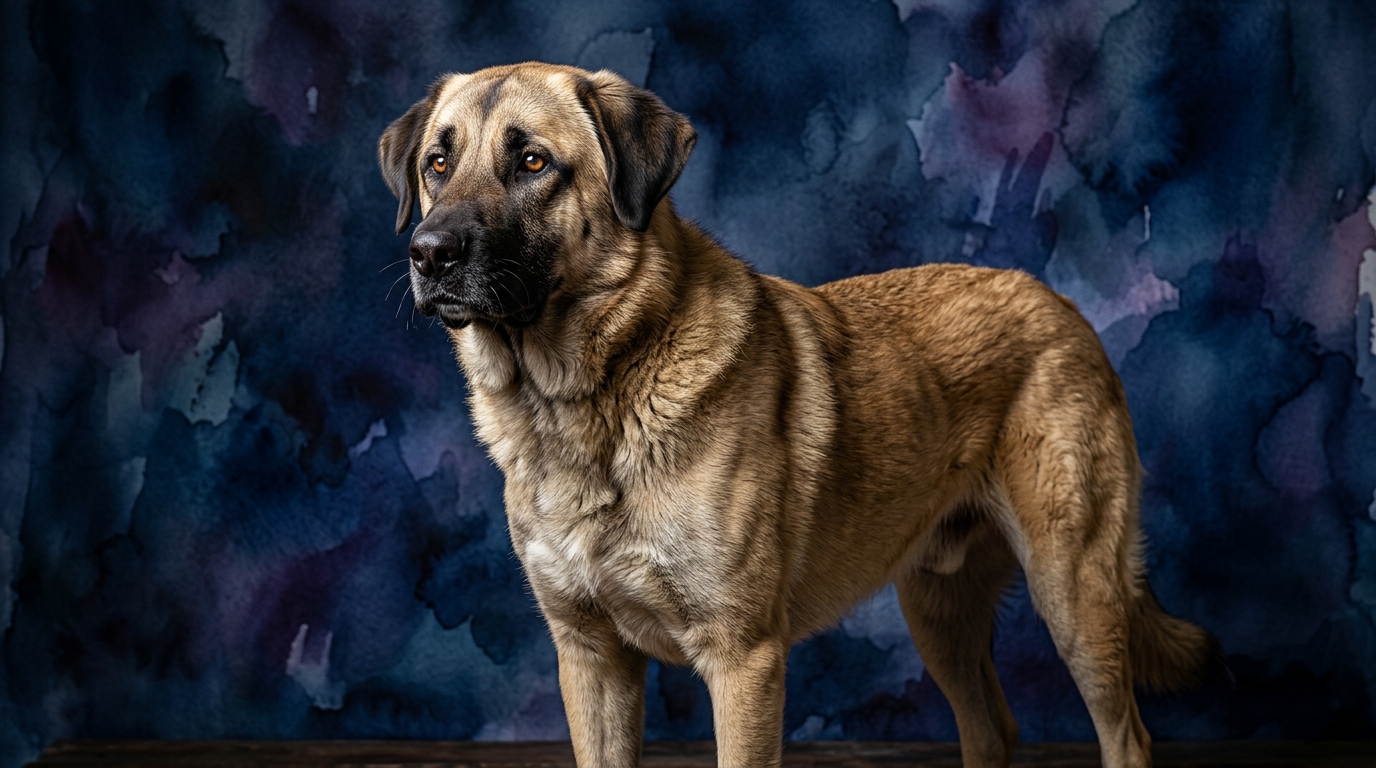
The Anatolian Shepherd Dog, a dog of the working group, possesses a cognitive profile intrinsically linked to its ancient role as a livestock guardian. Its problem-solving ability, rated at 3/5, manifests as independent decision-making in real-time defense scenarios, such as assessing threats to its flock or property without direct human command; this isn't about solving puzzles for entertainment but rather critical, situational analysis for survival. Training speed, also 3/5, reflects a capacity to learn but often through a filter of its primary guarding directive; commands are processed in relation to its perceived duty, requiring patient, consistent instruction that builds a partnership rather than strict obedience. Social intelligence, at 3/5, is characterized by deep bonds with its immediate family or flock, coupled with a discerning and often reserved approach to strangers, reading intentions with a keen observational capacity. Its instinctive drive, a robust 3/5, is overwhelmingly geared towards protection and territorial vigilance, the very essence of its being. Finally, its memory, rated 3/5, allows it to recall threats, safe boundaries, established routines, and the individual members of its charge, retaining both learned behaviors and crucial environmental information.
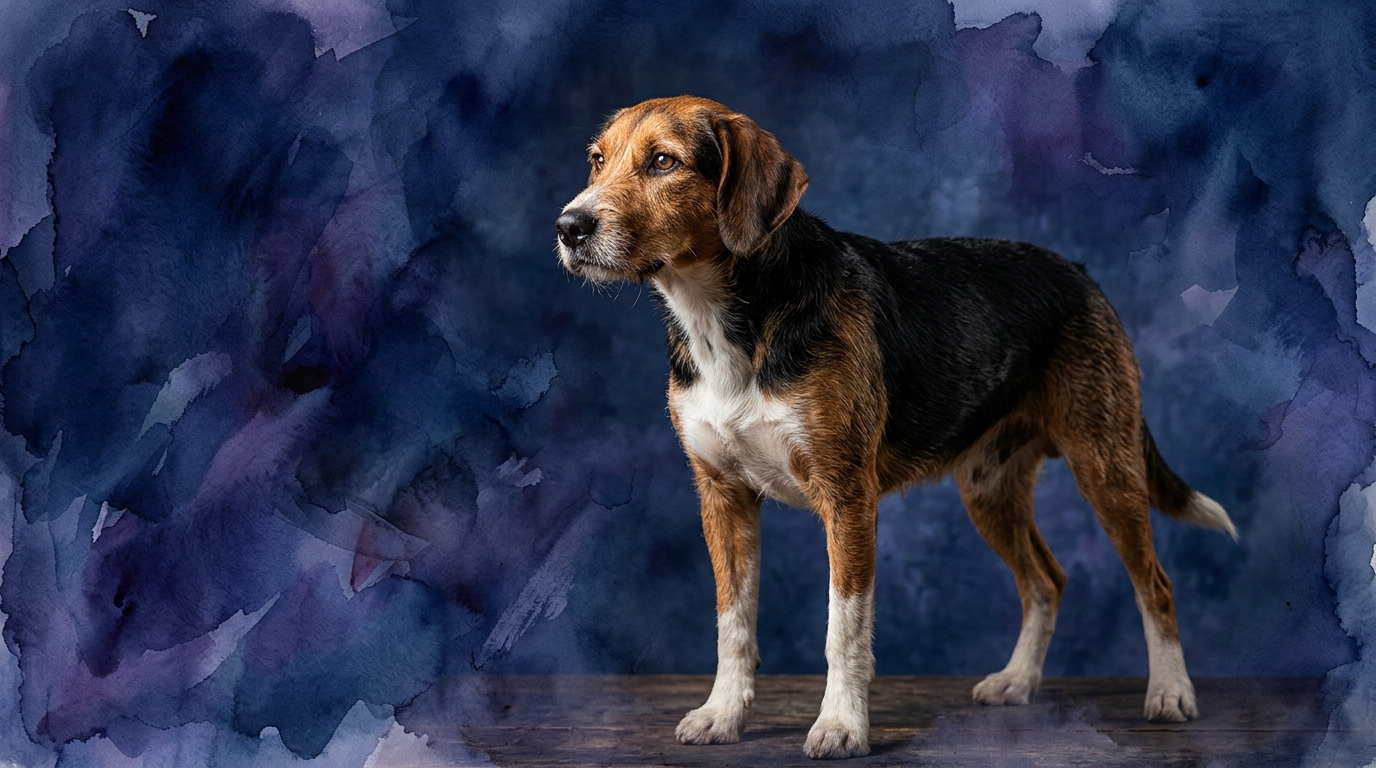
Hailing from the hound group, the Harrier's 3/5 cognitive scores are painted with the brush of a cooperative scent hunter. Its problem-solving (3/5) is primarily olfactory, involving the intricate unraveling of scent trails, navigating complex terrain to locate quarry, and working collaboratively within a pack structure; this intelligence is less about independent decision-making in a solitary defense role and more about persistent, focused sensory pursuit. Training speed, also 3/5, indicates a capability to absorb commands, particularly those relevant to the hunt like recall or staying on a trail, yet its powerful nose can be a significant distraction, demanding engaging, reward-based methods to capture and hold its attention. Social intelligence, at 3/5, shines in its pack dynamics, whether with canine companions or its human family; Harriers excel at reading group cues and are generally gregarious and affectionate within their established social circle. Its instinctive drive, a strong 3/5, is undeniably rooted in the pursuit of scent and the thrill of the chase, propelling its every action. Its memory, also 3/5, is adept at retaining specific scent profiles, mapping successful hunting routes, and remembering the locations of game, alongside conventional learned behaviors.
Where Anatolian Shepherd Dog Wins Cognitively
The Anatolian Shepherd Dog exhibits a distinct cognitive advantage in areas demanding autonomous judgment and protective discernment. Its 3/5 problem-solving ability, while numerically matched by the Harrier, manifests as a sophisticated capacity for independent decision-making in high-stakes situations. Unlike a dog awaiting human instruction, the Anatolian Shepherd Dog is bred to assess threats to its flock or property and respond appropriately without direct command, making split-second choices about intervention or deterrence; this involves a nuanced understanding of its environment, the behaviors of its charges, and potential dangers. Furthermore, its social intelligence, also 3/5, is uniquely honed for identifying and managing perceived threats from strangers, demonstrating a keen ability to differentiate between benign visitors and genuine intruders. This breed's memory (3/5) is particularly strong in retaining detailed spatial maps of its territory and recalling specific individuals or events that presented a risk, allowing it to build a comprehensive mental database for ongoing vigilance. The Anatolian Shepherd Dog's cognitive strengths lie in its self-reliant, practical application of intelligence for protection.
Where Harrier Wins Cognitively
Conversely, the Harrier demonstrates its cognitive strengths in domains centered around sensory processing and cooperative endeavor. Its 3/5 problem-solving capacity shines brightest in its unparalleled ability to interpret and follow intricate scent trails, a complex mental exercise involving discrimination, persistence, and predictive reasoning to locate quarry. This isn't just about sniffing but about constructing a mental map from olfactory data, often over varying terrains and conditions. The Harrier's social intelligence, while also 3/5, is particularly adept at cooperative work within a pack, seamlessly integrating its efforts with other dogs and human handlers during a hunt. This involves reading subtle cues, coordinating movements, and contributing to a shared objective, a distinct form of group-oriented cognition. Its instinctive drive (3/5) propels an unwavering mental focus on the task of the chase, demonstrating remarkable stamina in sustained cognitive effort. The Harrier's memory (3/5) excels at recalling specific scent signatures and successful hunting strategies, building an internal library of olfactory experiences that guide future pursuits. The Harrier's cognitive prowess lies in its specialized sensory intelligence and its capacity for collaborative, persistent problem-solving.
Which is Easier to Train and Why
Determining which breed is 'easier' to train between the Anatolian Shepherd Dog and the Harrier is less about inherent cognitive capacity and more about aligning training methods with their distinct behavioral blueprints. The Anatolian Shepherd Dog, with its 3/5 training speed, responds best to a relationship built on mutual respect and clear, consistent leadership. Its independent nature and strong guarding instincts mean it often evaluates commands against its primary purpose; if a directive conflicts with its perceived duty to protect, it may exhibit what appears to be stubbornness. Training an Anatolian Shepherd Dog requires patience, understanding its motivations, and channeling its protective drive rather than trying to suppress it entirely. Success comes from clear communication and establishing a trusted partnership where the dog understands its role and the owner's expectations within that framework. The Harrier, also with a 3/5 training speed, presents different challenges. Its powerful instinctive drive (3/5) for scent and chase means it can be highly distractible, especially outdoors. Its keen nose often overrides other stimuli, making consistent recall a significant hurdle if not rigorously trained. However, Harriers are generally eager to please and highly motivated by rewards, particularly those tied to their natural drives, like scent games or chasing a lure. Training a Harrier is often about making the desired behavior more rewarding and engaging than the environmental distractions, utilizing positive reinforcement and capitalizing on its social nature and cooperative spirit. Neither breed offers a 'turn-key' training experience; the Anatolian Shepherd requires a nuanced approach to its independence, while the Harrier demands creative methods to manage its intense sensory focus and high energy.
Which Suits Active Owners vs. Relaxed Owners
The suitability of each breed for active versus relaxed owners hinges entirely on the type of activity and engagement desired. For owners seeking a truly relaxed, low-activity companion, neither the Anatolian Shepherd Dog nor the Harrier is an ideal match. The Anatolian Shepherd Dog, though not a high-octane exercise partner in the traditional sense, is far from 'relaxed.' Its 3/5 instinctive drive for guarding means it requires constant mental engagement related to its protective role. Owners must be actively involved in managing its environment, providing a sense of purpose, and ensuring appropriate socialization. This breed needs space to patrol and a consistent routine, demanding an owner who is actively 'on duty' in terms of supervision and guidance. A passive owner will likely find themselves with a dog that takes its protective role too far or becomes anxious without clear leadership. The Harrier, on the other hand, is unequivocally a breed for highly active owners. Its intense 3/5 instinctive drive, coupled with its heritage as a persistent hunter, necessitates extensive physical exercise and robust mental stimulation. This breed thrives on long runs, challenging scent work, and vigorous play. A Harrier that doesn't receive adequate outlets for its energy and intelligence will quickly become bored, potentially leading to destructive behaviors, excessive vocalization, or attempts to create its own 'hunt' within the home. Therefore, while both breeds demand engaged ownership, the Anatolian Shepherd Dog suits owners active in providing purposeful management and protection, while the Harrier is for those who embrace an energetic, outdoor-centric lifestyle.
The Verdict
Choose an Anatolian Shepherd Dog if you are seeking a steadfast, independent guardian for property or livestock, valuing a partner that makes autonomous decisions in its protective role and thrives with an owner who respects its inherent discernment and strong sense of purpose.
Opt for a Harrier if you are an active individual or family capable of providing extensive daily exercise and mental challenges, particularly those that engage its powerful scenting abilities, and you desire a social, cooperative companion for outdoor adventures and structured activities.
🧠 Find Your Pet's IQ Score
Our Pet IQ Lab assessment covers 25+ tests across 5 cognitive dimensions — personalized to your breed.
Take the Full IQ Test →Frequently Asked Questions
Are Anatolian Shepherd Dogs good with children and other pets?
Anatolian Shepherd Dogs can be very devoted to their family, including children and other pets they consider part of their 'flock,' especially if raised with them. However, their strong protective instincts mean they may be wary of unfamiliar children or animals and require careful, ongoing socialization.
Do Harriers tend to be vocal?
Yes, Harriers are hounds and are known for their vocalizations, including baying, barking, and howling. This is particularly true when they are on a scent, excited, bored, or left alone for extended periods, making them potentially unsuitable for quiet living environments.
How much exercise does a Harrier typically need each day?
Harriers require a significant amount of exercise, typically at least 1-2 hours of vigorous activity daily, such as running, hiking, or engaging in scent work. Their high energy and stamina mean short walks are insufficient to meet their needs.