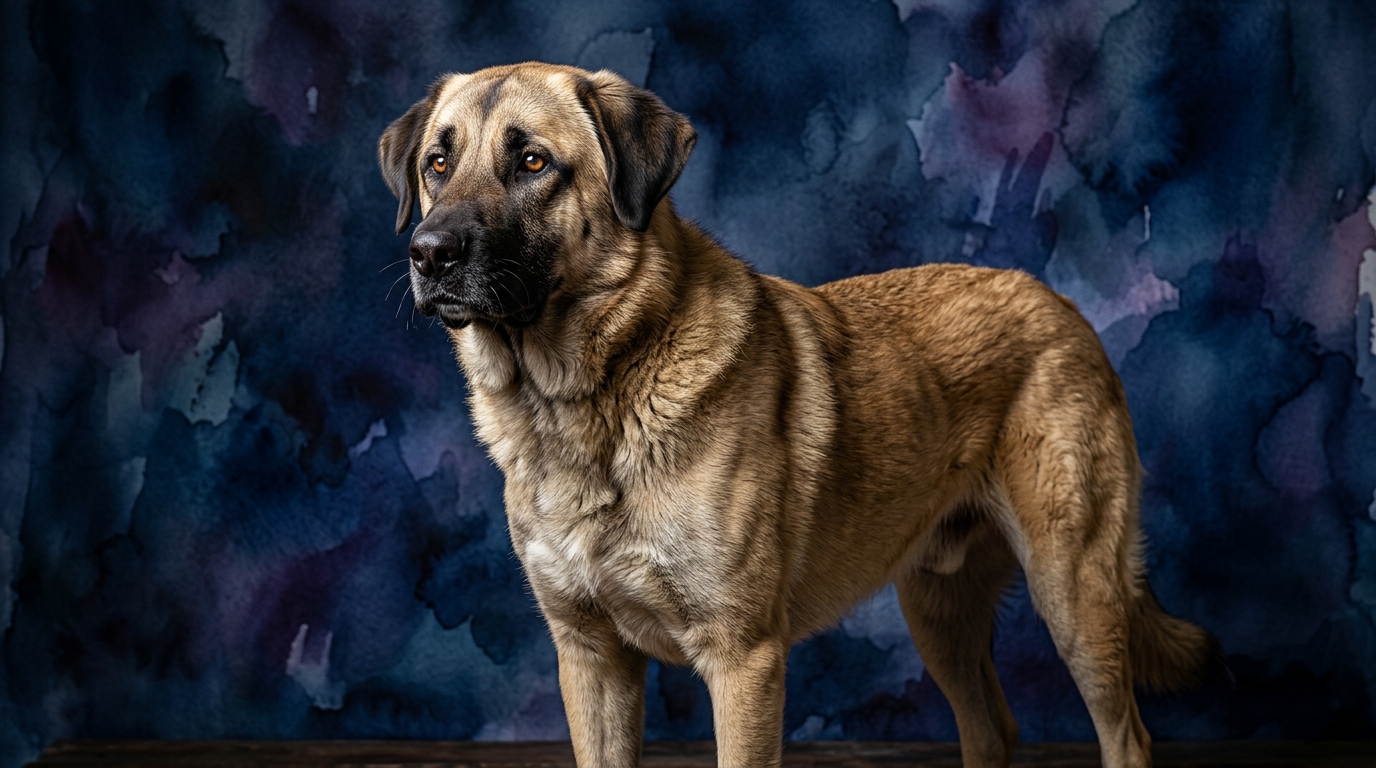

Side-by-Side IQ Profile: Unpacking Identical Scores
At first glance, the Cosmic Pet Pet IQ Lab scores for both the Anatolian Shepherd Dog and the Pointer appear identical across all five dimensions: Problem Solving (3/5), Training Speed (3/5), Social Intelligence (3/5), Instinctive Drive (3/5), and Memory (3/5). However, these scores are a foundation upon which breed-specific traits build, revealing nuanced differences in how their intelligence functions in their respective worlds.
For the Anatolian Shepherd Dog, a working breed with a history of independent livestock guarding, a 3/5 in Problem Solving translates to a thoughtful, often self-reliant approach to challenges. They are adept at assessing situations and making decisions autonomously to protect their charges, often without direct human instruction. Their Training Speed at 3/5 reflects a moderate learning pace, often coupled with a deep-seated independence that can prioritize their perceived duties over rote obedience. Social Intelligence, also 3/5, is primarily geared towards understanding their flock dynamics and discerning threats, often manifesting as a reserved and watchful demeanor towards outsiders. Their Instinctive Drive, a 3/5, is powerfully expressed as protection and territorial guardianship, a steady and unwavering commitment to their role. Finally, a 3/5 in Memory ensures they reliably retain routines, territory layouts, and past encounters relevant to their guarding duties.
The Pointer, a sporting breed renowned for bird hunting, applies its 3/5 Problem Solving skills to practical, task-oriented challenges in the field. This includes navigating complex terrain, strategizing scent tracking, and locating game birds efficiently. Their 3/5 Training Speed indicates they generally learn new commands and tasks at a good pace, especially when aligned with their natural hunting instincts, responding well to positive reinforcement and clear guidance. Social Intelligence at 3/5 for a Pointer is centered on cooperative interaction with their human handler, reading cues and working in tandem towards a shared goal. Their 3/5 Instinctive Drive is an intense and focused impulse to hunt, locate, and 'point' game birds, demonstrating remarkable precision. A 3/5 Memory allows them to recall intricate command sequences, scent patterns, and hunting ground specifics, making them consistent performers.
Where the Anatolian Shepherd Dog Wins Cognitively
While both breeds share a 3/5 in Problem Solving, the Anatolian Shepherd Dog exhibits a distinct cognitive advantage in independent judgment for protection. Their intelligence is geared towards autonomous decision-making in high-stakes guarding scenarios, allowing them to evaluate threats and respond effectively without constant human intervention. This self-reliance in assessing danger and determining appropriate action, honed over centuries of solitary work, represents a unique cognitive strength.
Furthermore, the Anatolian's cognitive framework excels in self-sufficiency within complex, expansive environments. Their inherent ability to patrol, manage, and understand the boundaries of a large territory involves sophisticated spatial memory and a predictive capacity to anticipate potential intrusions. This holistic awareness and proactive management of their environment, performed with minimal human oversight for every patrol or threat assessment, highlights a specialized form of practical intelligence.
Where the Pointer Wins Cognitively
The Pointer's 3/5 Problem Solving score shines brightest in its capacity for collaborative problem-solving with humans. Their cognitive strength lies in their ability to seamlessly interpret subtle handler signals while simultaneously processing complex environmental information like scent and terrain, all to achieve a shared objective. This specialized form of cooperative intelligence, focused on precision and teamwork in the field, is a hallmark of the breed.
Moreover, the Pointer demonstrates a cognitive win in the precision and focused application of its instinctive drive (3/5). While both breeds possess strong instincts, the Pointer's manifests as a highly refined, purpose-driven focus on locating and pointing game. Their mental processes allow for exquisite control over this drive, enabling them to 'lock on' to a scent and maintain a steady point, which demands significant mental discipline and acute environmental awareness.
Which is Easier to Train and Why
Despite both breeds scoring a 3/5 in Training Speed, the Pointer generally proves to be the easier breed to train for conventional obedience and task-oriented work. Their strong desire to cooperate with a handler, coupled with their inherent retrieve and point instincts, makes them highly motivated students when training aligns with these natural drives. Pointers typically exhibit a more handler-focused demeanor and an eagerness to please, readily accepting direction and thriving on positive reinforcement in a structured learning environment.
Conversely, the Anatolian Shepherd Dog can present a greater challenge for novice or casual trainers. Their 3/5 training speed is often tempered by a profound independence and a self-reliant problem-solving style. They are capable of learning, but they often deliberate on commands, weighing them against their own judgment or perceived guarding responsibilities. Training an Anatolian requires immense patience, unwavering consistency, and a deep understanding of their guardian mindset, often necessitating more creative motivation to overcome their inherent skepticism towards commands that may seem arbitrary to their core purpose. They are not resistant to learning, but rather, they question and prioritize based on their ingrained instincts.
Which Suits Active Owners vs. Relaxed Owners
For active owners seeking a dynamic companion, the Pointer is an exceptional match. Their robust physical needs and mental keenness for tasks mean they thrive with consistent, vigorous exercise and engagement. Owners who enjoy activities such as long runs, hiking, field work, or dog sports like agility or scent work will find the Pointer an enthusiastic and capable partner. Their cooperative nature also makes them ideal for owners who want to actively participate in their dog's training and activities, fostering a strong working bond.
Neither of these breeds is truly suited for a sedentary or genuinely 'relaxed' owner who prefers minimal engagement. However, for an owner with a large property or specific needs who appreciates a self-sufficient, watchful presence, the Anatolian Shepherd Dog might be a better fit than the Pointer, despite still requiring significant commitment. Anatolians need ample space, a purposeful role (even if it's just guarding the property), and mental stimulation through observation rather than constant vigorous, human-directed exercise or play. Owners experienced with independent working breeds, who value a dog that operates with a strong sense of purpose and autonomy, will be better equipped for the Anatolian's unique activity profile, which often involves self-directed patrolling and territorial awareness rather than structured games.
The Verdict
Choose an Anatolian Shepherd Dog if you seek a self-reliant guardian, capable of independent decision-making and territorial oversight, and are prepared for a thoughtful, deliberate training approach. They are best suited for experienced owners with ample space, valuing a dog that operates with a strong sense of purpose and autonomy.
Opt for a Pointer if you desire an energetic, cooperative partner for active pursuits and enjoy engaging in focused, task-oriented training. They thrive with owners who provide consistent physical and mental stimulation, appreciating a dog eager to work alongside them.
🧠 Find Your Pet's IQ Score
Our Pet IQ Lab assessment covers 25+ tests across 5 cognitive dimensions — personalized to your breed.
Take the Full IQ Test →Frequently Asked Questions
Are Anatolian Shepherd Dogs difficult to train?
While capable learners (3/5 training speed), Anatolian Shepherd Dogs can present a training challenge due to their independent and self-reliant nature. They are thoughtful and may prioritize their guarding instincts over obedience, requiring consistent, patient, and understanding training methods from an experienced handler.
Do Pointers require a lot of exercise?
Yes, Pointers are an active breed with a strong instinctive drive (3/5) and require substantial daily exercise to remain content and healthy. Their energy levels and desire for mental stimulation are best met with regular vigorous activities like running, hiking, or participation in dog sports.
Can an Anatolian Shepherd Dog live in a suburban home?
An Anatolian Shepherd Dog's strong guarding instincts and need for space make suburban living challenging, though not impossible for the right owner. They thrive in environments where they have a clear 'territory' to oversee and prefer ample outdoor space, making rural or large property settings more suitable for their nature.