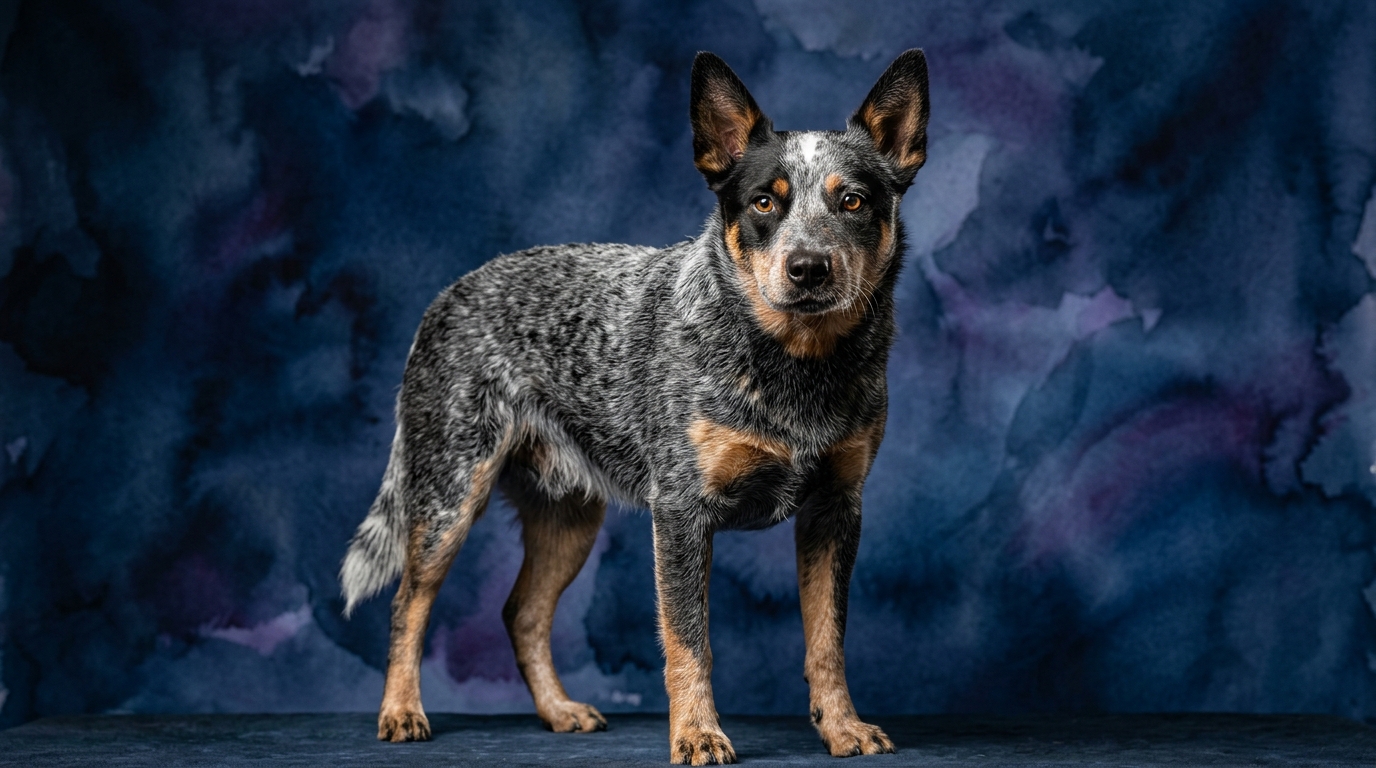
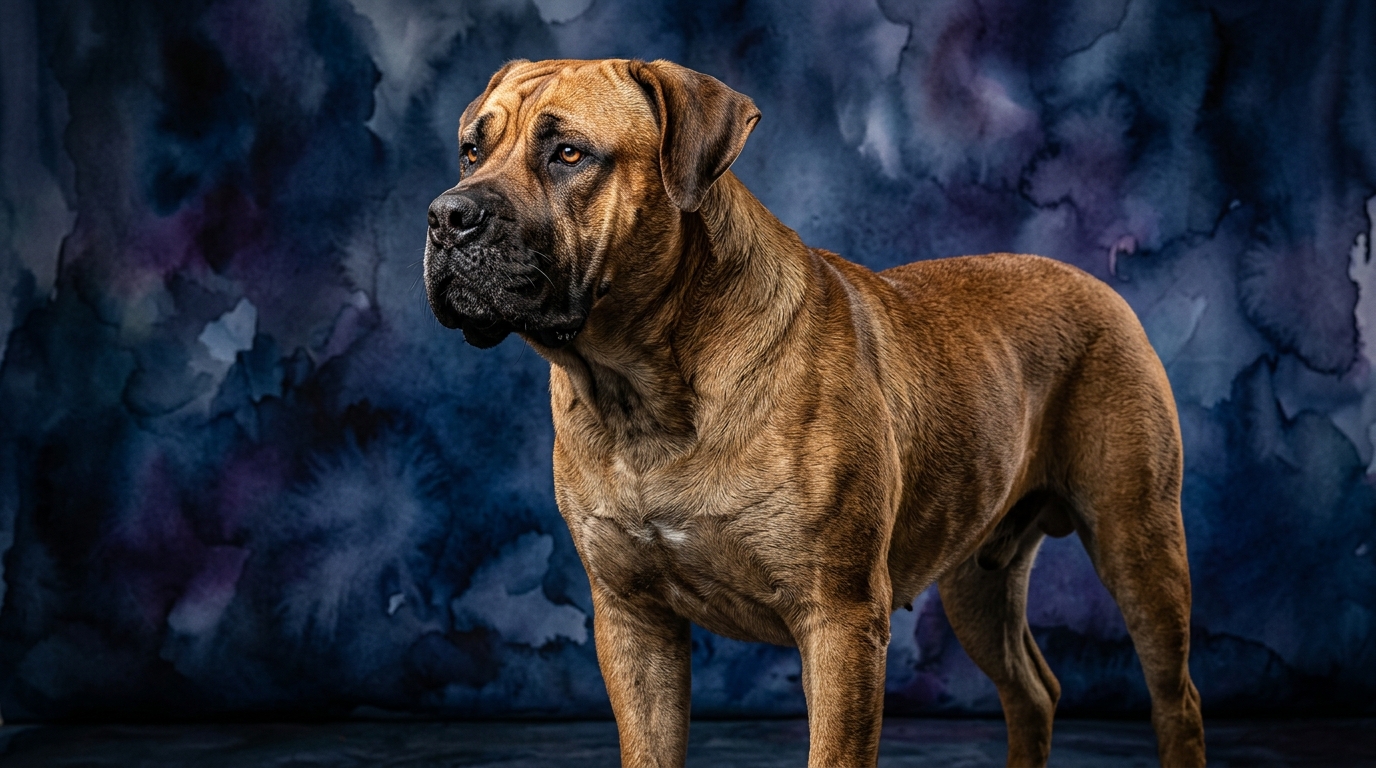
Side-by-Side IQ Profile: Herding Acumen vs. Guardian Steadfastness
The Cosmic Pet Pet IQ Lab's framework offers a detailed look at canine cognitive dimensions, and comparing the Australian Cattle Dog (ACD), a Herding breed, with the Boerboel, a Working breed, highlights their specialized mental architectures. The ACD, ranked #10 by Coren, demonstrates exceptional cognitive agility across several metrics, while the Boerboel, though not Coren-ranked, possesses a different yet effective suite of mental traits suited to its protective duties. Both breeds showcase distinct forms of canine intellect.
For the Australian Cattle Dog, Problem Solving is rated 5/5, indicating an outstanding capacity to independently navigate complex situations and devise solutions, a crucial trait for managing livestock across varied terrains. Their Training Speed also scores a perfect 5/5, reflecting an eagerness to learn and rapid assimilation of new commands and concepts, making them highly responsive partners. Social Intelligence is marked at 3/5, meaning they are capable of reading cues but may not always prioritize social harmony over their task-oriented focus, often displaying a discerning rather than universally friendly demeanor. Instinctive Drive, at 5/5, underscores their powerful innate desire to herd, chase, and control, a core component of their behavioral repertoire. Finally, Memory is an impressive 5/5, allowing them to recall intricate sequences, routes, and learned behaviors with remarkable accuracy, essential for recalling complex herding patterns or training cues.
In contrast, the Boerboel's cognitive profile, while robust, leans towards different strengths. Their Problem Solving is rated 3/5, suggesting they are capable of resolving challenges but might prefer direct guidance or established routines over innovative, independent solutions. Training Speed also sits at 3/5, meaning they learn at a moderate pace, requiring consistent, patient repetition to solidify new behaviors, a characteristic often seen in breeds bred for steadfastness rather than rapid, agile response. Social Intelligence is 3/5, indicating they can interpret social cues but are typically reserved with strangers and highly loyal to their inner circle, evaluating interactions carefully. Instinctive Drive is 3/5, reflecting a strong but controlled protective instinct, geared towards guarding and territorial defense rather than the high-octane pursuit of a herding dog. Their Memory is also 3/5, implying they retain information adequately but may not recall complex sequences with the same precision or speed as an ACD, focusing more on long-term retention of critical safety and family information.
Where the Australian Cattle Dog Excels Cognitively
The Australian Cattle Dog's cognitive strengths are profoundly shaped by its demanding herding heritage, allowing it to shine in areas requiring rapid mental processing and independence. Their 5/5 Problem Solving isn't just about figuring out puzzles; it's about anticipating the unpredictable movements of cattle, making split-second decisions to redirect a stubborn animal, or finding the most efficient path through varied terrain without human direction. This manifests as a strategic mind, capable of assessing dynamic situations and executing complex plans.
The ACD's 5/5 Training Speed is a testament to their exceptional ability to form associations quickly and eagerly engage in learning. They don't just learn commands; they often grasp the underlying intent, allowing for nuanced communication and the rapid acquisition of advanced skills. This quick uptake means they can master a vast repertoire of tasks, from competitive obedience routines to intricate agility courses, often requiring fewer repetitions than many other breeds. Their perfect 5/5 Memory further solidifies this, enabling them to retain vast amounts of information, whether it's the layout of a familiar farm, the specific cues for dozens of tricks, or the faces of regular visitors, making their learning durable and reliable over time.
Where the Boerboel Demonstrates Unique Cognitive Strengths
While the Boerboel's scores might appear lower across the board compared to the ACD, their cognitive profile is perfectly attuned to their role as a steadfast guardian, showcasing strengths in different, equally vital areas. Their 3/5 Instinctive Drive, for instance, reflects a powerful protective impulse that is discerning rather than reactive. This isn't a drive to chase or herd, but a deep-seated commitment to secure their territory and family, requiring a different kind of cognitive processing: one focused on vigilance, assessment of threats, and unwavering resolve.
The Boerboel's 3/5 Social Intelligence, while leading to reserve with strangers, is a strength in its own right for a protection breed; it means they are not easily swayed by unfamiliar individuals and meticulously evaluate new interactions, prioritizing the safety of their unit. Their moderate 3/5 Training Speed, though slower than an ACD's, contributes to a deep, lasting comprehension of commands once learned. This deliberate learning style means that once a Boerboel understands a rule or task, it is typically ingrained with remarkable permanence and reliability, crucial for a dog whose duty often involves critical decision-making under pressure. This steadfastness in learned behaviors, combined with their strong memory for familiar routines and people, translates into a highly dependable and consistent companion and protector.
Training Dynamics: Agility vs. Consistency
When it comes to training, the core distinction between these two breeds lies in their pace of acquisition and the underlying motivations that drive them. The Australian Cattle Dog, with its 5/5 Training Speed, is often described as a sponge, soaking up new information with astonishing rapidity. They thrive on mental challenges and possess an inherent desire to work and please their handlers, making them highly responsive to positive reinforcement and eager to engage in complex training sequences. Their strong Problem Solving and Memory mean they can quickly generalize learned behaviors to new situations and recall them reliably, making them prime candidates for advanced obedience, agility, and other dog sports where precision and speed are paramount.
The Boerboel, with a 3/5 Training Speed, presents a different training experience. They are capable learners, but their process is more measured and requires greater patience and unwavering consistency from their handler. They don't typically pick up new commands on the first few repetitions; instead, they benefit from clear, calm instruction and repeated positive reinforcement over time. Their motivation is often rooted in building a strong bond with their owner and fulfilling their protective role, rather than an intense drive for rapid task completion. Training a Boerboel is less about speed and more about building a solid foundation of trust and respect, ensuring that once a command is learned, it is deeply embedded and reliably executed, particularly in scenarios where their protective instincts might be engaged.
Matching Breeds to Lifestyles: Active Engagement vs. Structured Companionship
The ideal owner for an Australian Cattle Dog is someone who can not only match their physical energy but also meet their profound need for mental engagement. These are not dogs content with a few walks a day; their 5/5 Instinctive Drive and Problem Solving demand an outlet for their strategic minds. Owners who thrive on outdoor adventures, participate in dog sports like agility or herding trials, or are committed to ongoing advanced obedience training will find a highly rewarding partnership with an ACD. They are best suited for active individuals or families who understand the importance of providing both rigorous physical exercise and consistent, challenging mental work to prevent boredom and channeling their innate drives constructively.
Conversely, the Boerboel, while certainly requiring regular exercise to maintain its impressive physique, is more suited to an owner who values structured companionship and a steadfast presence over constant high-octane activity. Their protective nature and moderate energy levels mean they thrive in environments where they have a clear role, often as a guardian of home and family. An ideal owner is one who can provide firm, consistent leadership, patient training, and a secure, well-fenced environment. They are excellent companions for individuals or families seeking a loyal, imposing protector who enjoys focused walks, play sessions, and ample time indoors with their loved ones, rather than endless hours of intense mental puzzles or competitive sports.
The Verdict
Choose an Australian Cattle Dog if you are an active, experienced owner eager for a highly trainable, mentally agile partner for sports, complex tasks, or a working role. Their quick wit and boundless energy demand consistent engagement and a stimulating environment.
Opt for a Boerboel if you seek a loyal, protective companion with a steady temperament, provided you can offer patient, consistent training and a secure environment. Their steadfast nature and discerning social intelligence make them dedicated family guardians.
🧠 Find Your Pet's IQ Score
Our Pet IQ Lab assessment covers 25+ tests across 5 cognitive dimensions — personalized to your breed.
Take the Full IQ Test →Frequently Asked Questions
Do Australian Cattle Dogs bark a lot?
Australian Cattle Dogs can be vocal, especially if their strong instinctive drives are not adequately met with mental and physical stimulation. They may bark to herd, alert, or express frustration when bored, so consistent training and enrichment are crucial to manage their vocal tendencies effectively.
Are Boerboels good with children?
Boerboels can be excellent family dogs and are often very tolerant and protective of children within their immediate family, especially when raised with them. However, their size and protective instincts necessitate careful supervision, early socialization, and consistent training to ensure safe interactions with all children.
How much exercise do these breeds need daily?
Australian Cattle Dogs require a minimum of 1-2 hours of vigorous exercise daily, often needing more, combined with significant mental stimulation like puzzle toys or training sessions. Boerboels need at least 45 minutes to an hour of moderate exercise daily, such as brisk walks or playtime, along with mental enrichment to keep them balanced.