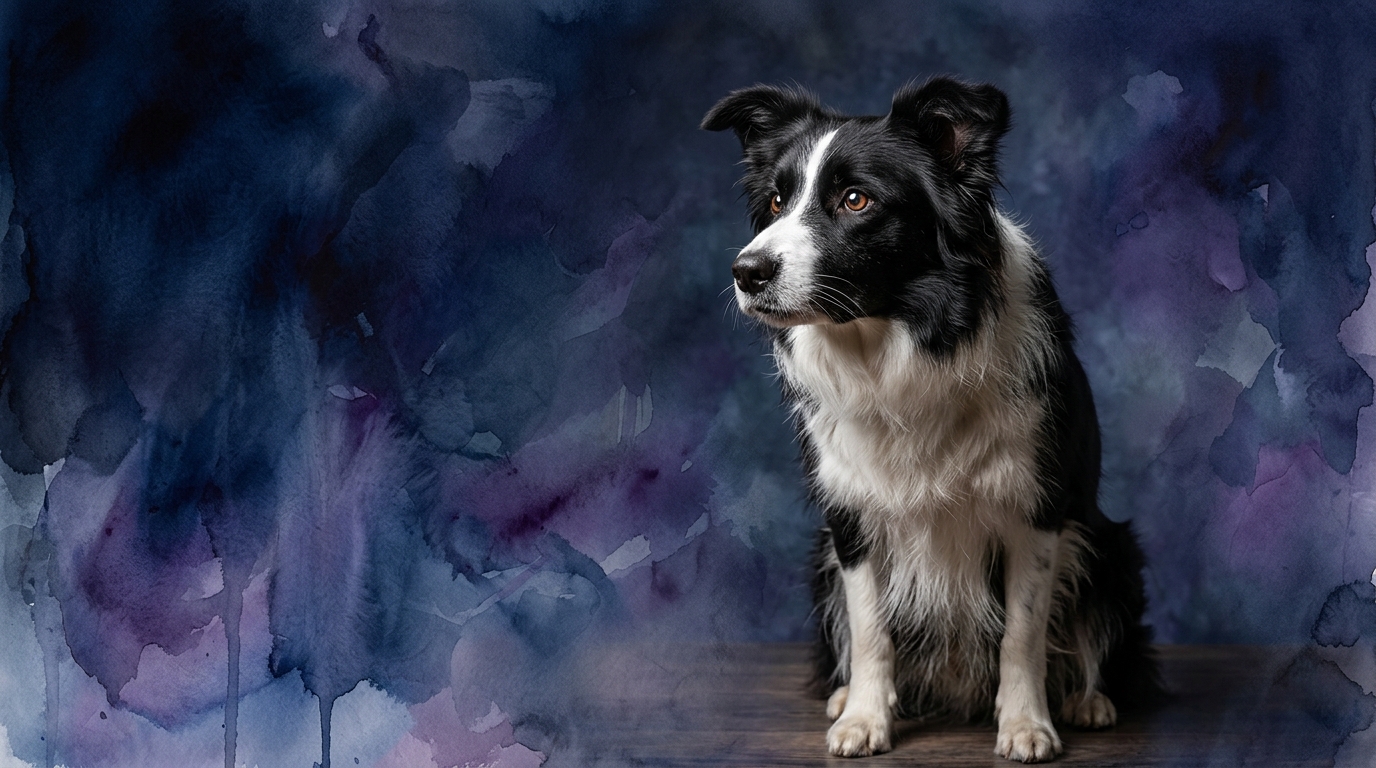
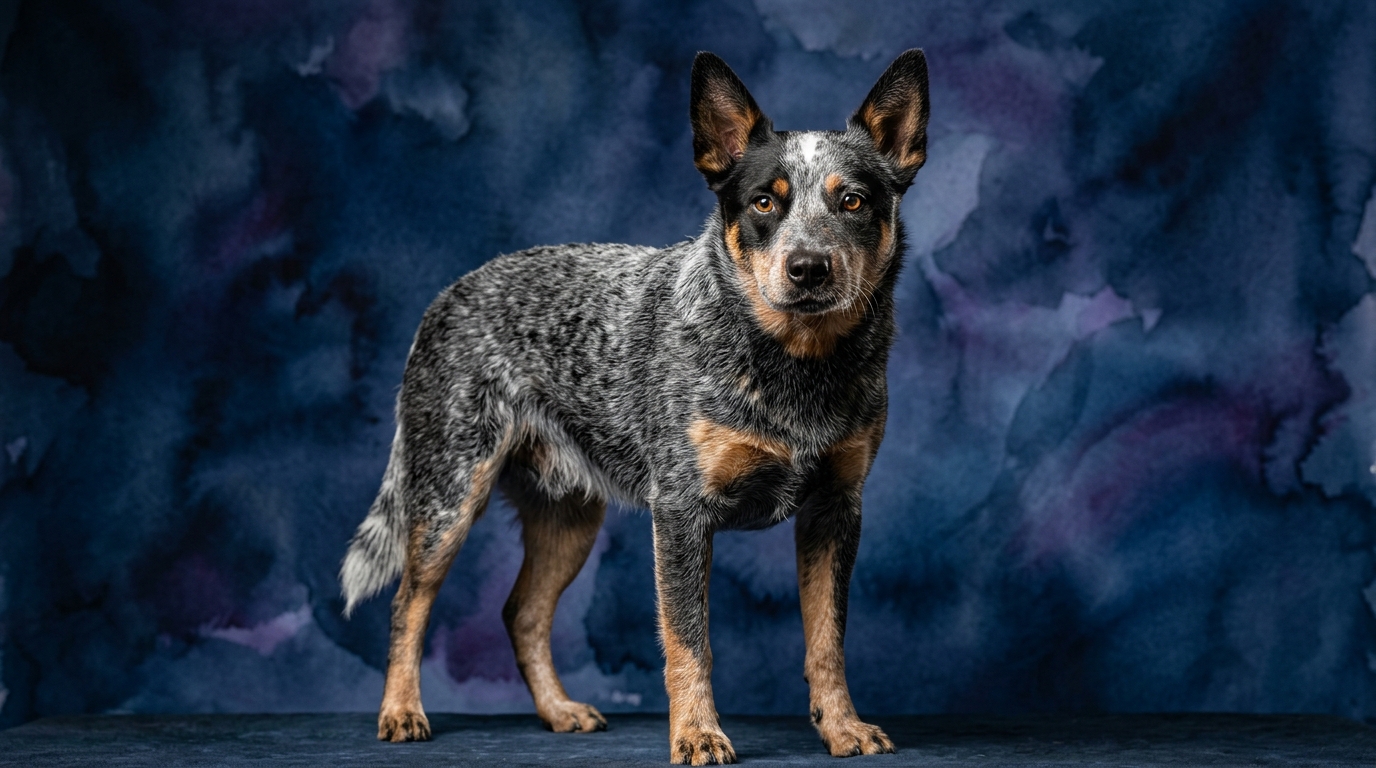
Side-by-Side IQ Profile: Border Collie vs. Australian Cattle Dog
The Cosmic Pet Pet IQ Lab employs a five-dimensional framework to assess canine cognition, providing a nuanced understanding beyond simple rankings. While both the Border Collie (Coren rank #1) and the Australian Cattle Dog (Coren rank #10) demonstrate exceptional mental faculties, their profiles reveal distinct strengths.
For the **Border Collie**: Problem Solving is rated 5/5, indicating an exceptional capacity to analyze complex situations and devise novel solutions, often predicting outcomes several steps ahead. Training Speed is 5/5, demonstrating unparalleled quickness in learning new commands and routines, frequently grasping concepts in minimal repetitions. Social Intelligence stands at 4/5, exhibiting strong understanding of human cues and intentions, though their focus can sometimes be more task-oriented than purely relational. Instinctive Drive is 5/5, fueled by an intense, finely-tuned herding instinct, manifesting as a profound desire to control movement and maintain order. Memory is 5/5, retaining a vast repertoire of commands, experiences, and spatial information with remarkable long-term recall.
The **Australian Cattle Dog** presents a slightly different cognitive architecture. Problem Solving is also 5/5, displaying an equally robust ability to tackle complex challenges, often employing strategic thinking and persistence to achieve goals. Training Speed is 5/5, acquiring new skills with striking rapidity, showing a keen aptitude for understanding and executing instructions efficiently. Social Intelligence is 3/5, tending to be more reserved and selective in their social interactions, forming deep bonds with their chosen few but often exhibiting wariness towards strangers. Instinctive Drive is 5/5, possessing a powerful, innate drive to herd, specifically adapted for larger, stubborn livestock, often involving nipping at heels. Memory is 5/5, exhibiting excellent retention of learned behaviors, boundaries, and past experiences, contributing to their consistency.
Where the Border Collie Wins Cognitively
The Border Collie's cognitive edge primarily shines in its social intelligence and overall adaptability to human-centric learning environments. While both breeds excel at understanding tasks, the Border Collie (Social Intelligence 4/5) often demonstrates a more nuanced interpretation of human emotional states and subtle non-verbal cues than the Australian Cattle Dog (Social Intelligence 3/5). This heightened social awareness contributes to their Coren rank #1 placement, indicating a superior capacity for understanding and responding to human communication in a broader context.
Their problem-solving, while equally rated at 5/5, often manifests with a more eager, collaborative approach in partnership with their handler, driven by a deep desire to please and perform. This collaborative spirit, rooted in their social perception, allows them to anticipate human intentions with remarkable precision, making them exceptionally responsive partners in complex tasks like competitive obedience or intricate sheepdog trials. They often appear to "think with" their handler more readily, processing instructions and adapting strategies in real-time based on subtle feedback.
Where the Australian Cattle Dog Wins Cognitively
The Australian Cattle Dog's distinct cognitive strength lies in its resolute independence and strategic problem-solving tailored for challenging, often uncooperative, scenarios. While both breeds achieve a 5/5 in problem-solving, the ACD's approach is often characterized by a greater self-reliance and tenacity. Their instinctive drive (5/5) is uniquely suited for larger, more stubborn livestock, requiring a robust mental fortitude to persist through resistance.
This manifests cognitively as a deep-seated ability to strategize independently, often without constant human direction, when faced with a difficult task. They excel at thinking through obstacles, devising solutions that might involve circling wide, using pressure, or even a strategic nip, all to achieve their objective. Their lower social intelligence rating (3/5) paradoxically supports this, as it allows them to maintain focus on the task at hand with less distraction from external social cues, enabling them to operate effectively in environments where human interaction might be minimal or less critical for task completion. This breed's cognitive architecture is optimized for sustained, independent effort against formidable challenges, making them masters of their domain when the going gets tough.
Which is Easier to Train, and Why?
When considering ease of training, the Border Collie generally presents a more straightforward experience for the average owner. Both breeds share an exceptional Training Speed of 5/5, meaning they grasp commands with remarkable rapidity. However, the Border Collie's higher Social Intelligence (4/5) translates into a profound eagerness to engage with their handler and a strong desire to cooperate. They are often inherently motivated by praise and the opportunity to work alongside their human partner. Their instinctive drive, while powerful, is often expressed through focused, collaborative herding patterns that are highly amenable to structured training. They thrive on clear communication and consistent feedback, readily adjusting their behavior to meet expectations.
The Australian Cattle Dog, despite its identical 5/5 Training Speed, requires a different training approach due to its lower Social Intelligence (3/5) and fiercely independent nature. While they learn quickly, their motivation often stems more from the intrinsic satisfaction of completing a task or the immediate reward, rather than a deep-seated desire to please. Their instinctive drive (5/5), specifically honed for tough, unyielding livestock, can manifest as stubbornness or a tendency to "herd" family members or other pets if not properly channeled. Training an ACD demands consistency, firm boundaries, and an understanding that they will often question directives or attempt to find their own solutions. They respond best to handlers who can earn their respect through clear, fair leadership, rather than relying solely on their innate cooperativeness. Their independence means they might learn a command quickly but then decide whether or not to execute it based on their own assessment of the situation, requiring a more nuanced and patient approach to build reliable obedience.
Which Suits Active Owners vs. Relaxed Owners?
Neither the Border Collie nor the Australian Cattle Dog is suitable for a truly "relaxed" owner in the traditional sense; both demand significant physical and mental engagement. However, their specific needs diverge, making them ideal for different types of active owners.
The Border Collie excels with owners who are committed to structured activities and collaborative work. Their immense instinctive drive (5/5) and high energy levels require outlets such as agility, flyball, competitive obedience, or, ideally, actual herding work. They thrive on learning complex sequences and executing precise tasks in partnership with their human. An owner who enjoys teaching new tricks, participating in dog sports, or engaging in long, varied walks with mental challenges embedded will find a perfect match. Their need for constant mental stimulation means that a lack of engagement can lead to boredom-driven behaviors like excessive barking or destructive chewing. They are best suited for owners who view their dog as a working partner, eager to participate in daily cognitive and physical challenges.
The Australian Cattle Dog, while equally energetic (Instinctive Drive 5/5), often prefers a more rugged, independent style of activity. They thrive with owners who enjoy outdoor adventures like hiking, trail running, or even working on a farm. Their problem-solving (5/5) and tenacity make them excellent companions for exploring, where they can navigate challenging terrains and make their own choices within safe boundaries. While they can participate in dog sports, their motivation might be less about pleasing and more about the challenge itself. Owners who appreciate a dog with a strong will and a natural aptitude for navigating the world independently will find the ACD rewarding. They need space to roam and explore, and their lower social intelligence means they might not always be seeking constant direct interaction during activities, but rather appreciating the shared experience alongside their human. A relaxed owner will quickly find themselves overwhelmed by either breed's profound need for purposeful engagement.
The Verdict
Choose the Border Collie if you seek an intensely cooperative, highly trainable partner for complex dog sports, intricate obedience, or dedicated herding work, valuing their eager collaboration and responsiveness.
Opt for the Australian Cattle Dog if you desire a resilient, independent, and tenacious companion for rugged outdoor adventures, demanding tasks, or farm work, appreciating their self-reliance and strategic problem-solving.
🧠 Find Your Pet's IQ Score
Our Pet IQ Lab assessment covers 25+ tests across 5 cognitive dimensions — personalized to your breed.
Take the Full IQ Test →Frequently Asked Questions
Do Border Collies or Australian Cattle Dogs bark more?
Both breeds can be vocal, but often for different reasons. Border Collies may bark excessively when bored or under-stimulated, using it as a demand for interaction or a release of pent-up energy. Australian Cattle Dogs tend to bark more as an alert or territorial warning, reflecting their watchful and protective nature.
Are Border Collies or Australian Cattle Dogs better with children?
Border Collies, with their higher social intelligence, can be good with respectful children, often forming strong bonds if properly socialized and supervised. Australian Cattle Dogs tend to be more reserved and their herding instincts, which include nipping at heels, can be problematic with very young or boisterous children without careful training and management.
Which breed requires more grooming, Border Collie or Australian Cattle Dog?
Australian Cattle Dogs generally require less intensive grooming due to their short, dense double coat, needing regular brushing a few times a week. Border Collies, especially the long-haired variety, require more frequent and thorough grooming to prevent matting and manage shedding.