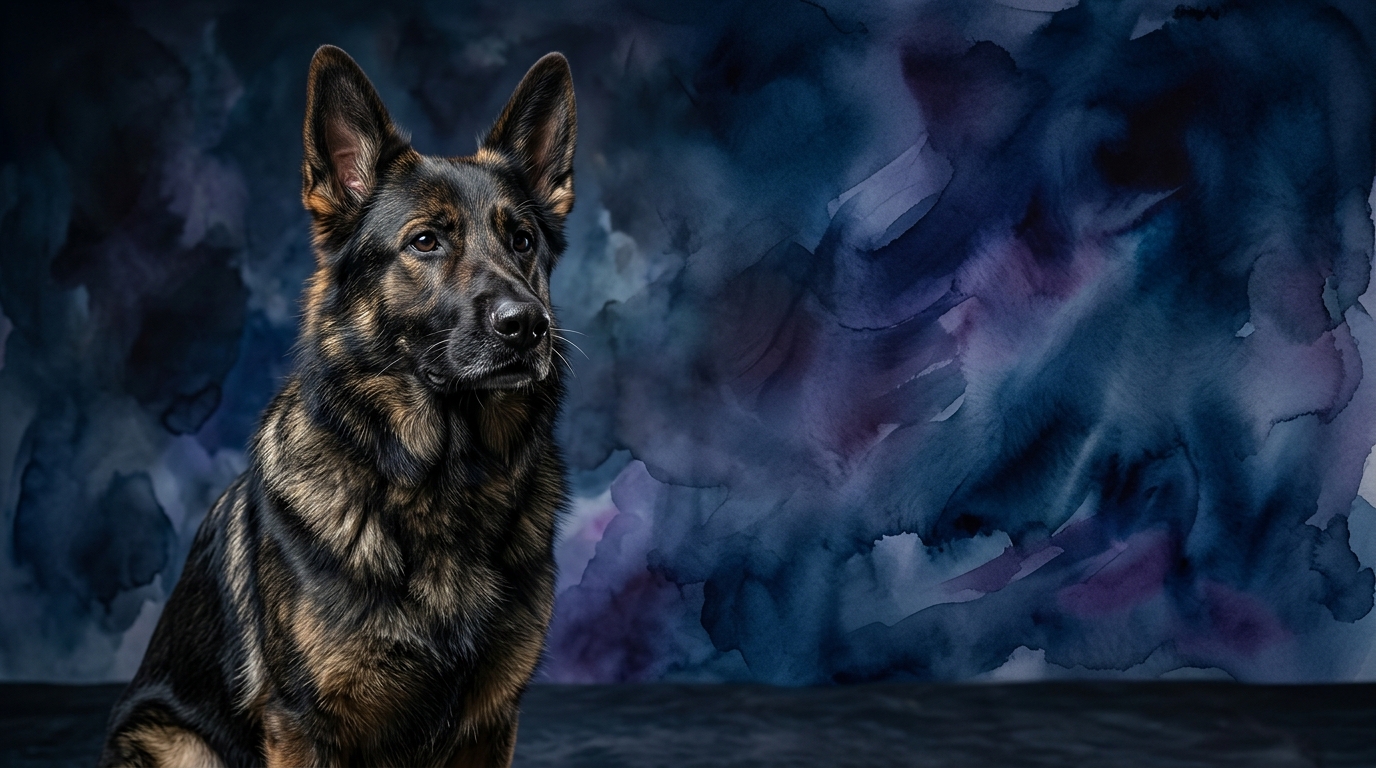
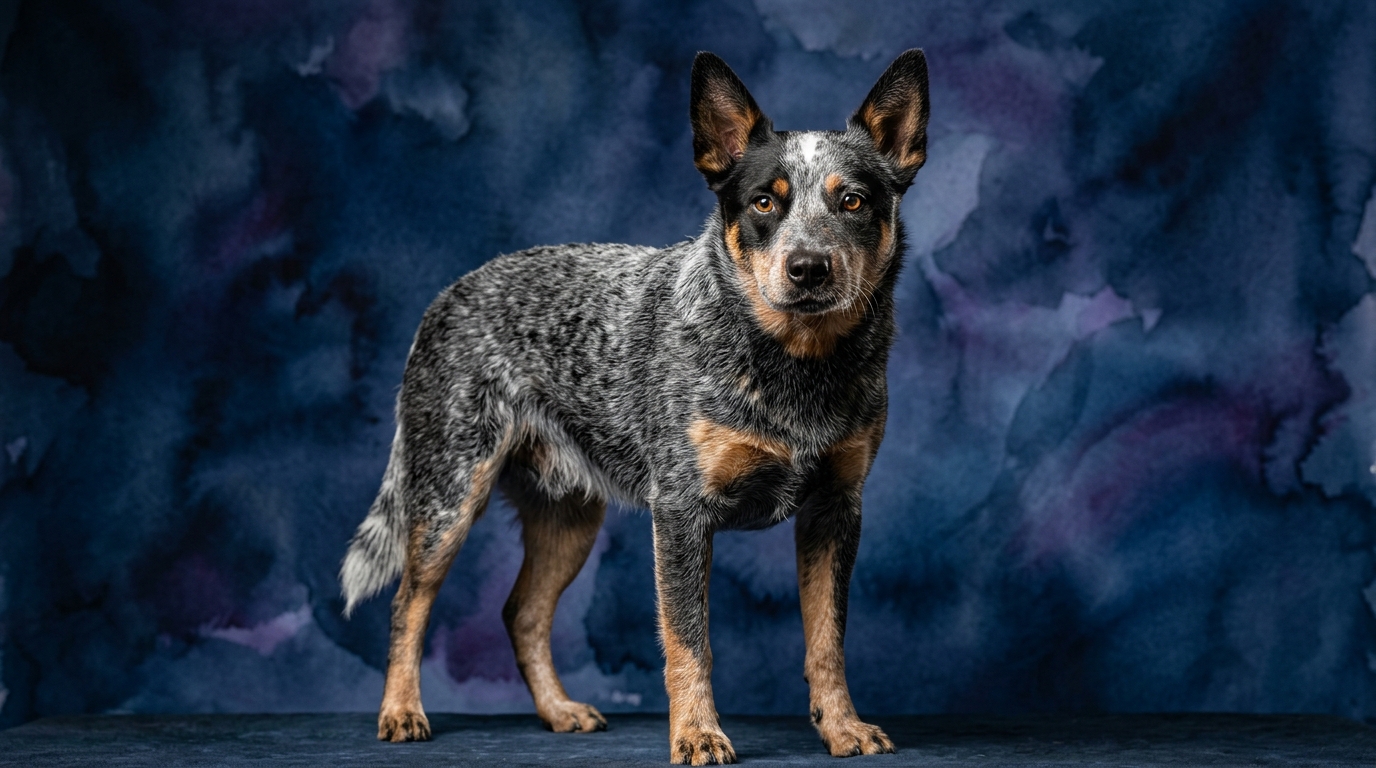
Side-by-Side IQ Profile: German Shepherd vs. Australian Cattle Dog
The Cosmic Pet Pet IQ Lab provides a unique lens through which to examine breed-specific cognitive strengths across five key dimensions. For the German Shepherd, ranked #3 by Coren, all metrics register a perfect 5/5: Problem Solving, Training Speed, Social Intelligence, Instinctive Drive, and Memory. This indicates a breed with comprehensive cognitive prowess, excelling across the board in learning, adaptability, and interaction.
In contrast, the Australian Cattle Dog, Coren ranked #10, presents a slightly different, though equally impressive, profile. This breed scores a 5/5 in Problem Solving, Training Speed, Instinctive Drive, and Memory, mirroring the German Shepherd in these crucial areas. However, its Social Intelligence rating stands at 3/5, marking the primary distinction in their cognitive make-up.
A 5/5 in Problem Solving for both breeds signifies an exceptional capacity to independently assess novel situations and devise solutions, whether it's navigating complex obstacles or understanding intricate tasks. Their shared 5/5 in Training Speed highlights an innate ability to grasp new commands and concepts with remarkable swiftness, indicating a strong aptitude for learning.
Both breeds also boast a 5/5 in Instinctive Drive, underscoring their powerful herding impulses, energy levels, and inherent motivation to work. This drive fuels their engagement and provides a strong foundation for task-oriented learning. Furthermore, a perfect 5/5 in Memory for both points to their excellent retention of learned behaviors, routines, and past experiences, making them consistent performers once a skill is acquired.
The divergent Social Intelligence scores are where the most significant practical differences emerge. A 5/5 for the German Shepherd indicates a profound understanding of human social cues, intentions, and emotional states, fostering deep cooperative bonds. The Australian Cattle Dog's 3/5, while not low, suggests a more independent, perhaps even reserved, approach to social interaction, valuing self-reliance over constant human direction, which impacts their collaborative dynamics.
Where the German Shepherd Wins Cognitively
The German Shepherd's cognitive edge primarily shines through its superior Social Intelligence, rated at 5/5. This isn't merely about being friendly; it reflects a sophisticated capacity to interpret and respond to human communication, intentions, and social structures. This advanced social cognition allows German Shepherds to integrate seamlessly into complex human environments, understanding subtle cues and anticipating desires with remarkable accuracy. They are often described as being "in tune" with their owners, a direct result of this heightened social awareness.
This strong social intelligence translates into a greater predisposition for collaborative work. A German Shepherd doesn't just learn a command; it learns to learn *with* its human partner. This makes them exceptional candidates for roles requiring intricate teamwork, such as service work, police K9 units, or competitive obedience, where a nuanced understanding of their handler's directives is paramount. Their ability to form deep, cooperative partnerships is a hallmark of their cognitive profile, making them highly adaptable to varied human-centric tasks.
Furthermore, the German Shepherd's consistent 5/5 across all IQ dimensions, including Training Speed and Problem Solving, is amplified by their social acumen. They apply their problem-solving skills not just to physical tasks but also to social puzzles, navigating group dynamics or understanding complex household rules with greater ease. This holistic cognitive excellence, anchored by their social intelligence, gives them an advantage in roles demanding both independent thought and unwavering cooperative spirit.
Where the Australian Cattle Dog Wins Cognitively
The Australian Cattle Dog's cognitive strengths, while equally robust in many areas, manifest differently, particularly in their independent problem-solving and self-reliance. With a 5/5 in Problem Solving, they are adept at figuring things out on their own, often preferring to analyze and act without constant human instruction. This makes them exceptional at tasks requiring initiative and autonomous decision-making in dynamic environments, a trait honed by their history of managing livestock over vast distances with minimal human intervention.
Their 3/5 Social Intelligence, rather than being a deficit, can be seen as a strength in contexts demanding self-sufficiency. This breed isn't as driven by human approval or direction as the German Shepherd; instead, they are motivated by the task itself and their innate drive (also 5/5). This independence means they can work effectively when separated from their handler, making decisions based on their own assessment of the situation, which is invaluable in specific working scenarios like solo herding or perimeter checks.
The Australian Cattle Dog's cognitive profile emphasizes resilience and adaptability in challenging, unpredictable situations. Their powerful Instinctive Drive (5/5), combined with their problem-solving ability, allows them to persist through difficulties, finding innovative ways to achieve their goals. They are less prone to waiting for guidance and more inclined to forge their own path, a cognitive trait that makes them superb at tasks requiring independent thought and robust self-direction in demanding environments.
Which is Easier to Train and Why
When evaluating ease of training, the German Shepherd generally presents a more straightforward experience for the average owner, largely due to its 5/5 Social Intelligence. This higher social acumen means they are inherently more inclined to seek human interaction and approval, making them highly responsive to praise and correction. Their strong desire to cooperate and understand human intent translates into quicker comprehension of commands and a greater willingness to perform consistently. They are often described as "eager to please," a behavioral manifestation of their cognitive drive for social engagement.
The Australian Cattle Dog, despite also having a 5/5 Training Speed, can be perceived as more challenging to train due to its 3/5 Social Intelligence and pronounced independence. While they grasp concepts quickly, their motivation is often more internal or task-oriented rather than people-oriented. They might learn a command swiftly but choose when and how to execute it based on their own assessment of the situation, sometimes appearing stubborn or willful. Their herding instinct, also 5/5, can sometimes override human commands, especially if a perceived "job" presents itself.
Training an Australian Cattle Dog often requires a more nuanced approach, focusing on clear, consistent communication and demonstrating the practical value of a command from the dog's perspective. Owners need to understand that this breed's independence isn't a lack of intelligence but a different cognitive orientation. The German Shepherd's default setting is cooperation; the Australian Cattle Dog's is competence, which they may prefer to demonstrate on their own terms. Therefore, while both learn quickly, the German Shepherd's social nature makes its training speed more readily accessible and consistent in an obedience context.
Which Suits Active Owners vs. Relaxed Owners
Both the German Shepherd and the Australian Cattle Dog require active owners, but the *type* of activity and engagement differs. Neither breed is suitable for truly relaxed or sedentary owners, as their 5/5 Instinctive Drive in both cases demands significant physical and mental stimulation to prevent boredom and destructive behaviors. Their working dog heritage means they thrive on having a purpose and ample opportunities to expend energy.
The German Shepherd, with its 5/5 Social Intelligence and drive for cooperation, suits active owners who enjoy structured activities that involve strong partnership. These could include advanced obedience, agility, protection sports, search and rescue, or long, interactive hikes. They excel when their physical and mental exercises are intertwined with human companionship and direction. An owner who enjoys teaching complex tasks and engaging in shared experiences will find the German Shepherd a willing and enthusiastic partner.
The Australian Cattle Dog, while equally active, suits owners who appreciate and can channel their independent, problem-solving nature. They thrive on activities that allow them to think for themselves, such as herding, flyball, disc dog, or challenging puzzle toys. Their exercise needs are intense, often involving high-energy bursts and endurance, but they might be content with a more self-directed play session rather than constant human interaction. Owners who enjoy rugged outdoor adventures where the dog can explore and make independent decisions, or those involved in dog sports that leverage their agility and drive, will find an Australian Cattle Dog a perfect fit. They require an owner who understands their need for purpose and can provide consistent, engaging outlets for their robust physical and mental energy.
The Verdict: When to Choose Each
The Verdict
Choose a German Shepherd if you seek a highly cooperative, socially attuned partner for structured activities, protection, or service roles, valuing a deep, collaborative bond.
Opt for an Australian Cattle Dog if you appreciate independent problem-olving, robust self-reliance, and thrive on channeling intense, task-oriented drive into demanding physical and mental challenges.
🧠 Find Your Pet's IQ Score
Our Pet IQ Lab assessment covers 25+ tests across 5 cognitive dimensions — personalized to your breed.
Take the Full IQ Test →Frequently Asked Questions
Do German Shepherds and Australian Cattle Dogs have similar energy levels?
Yes, both breeds exhibit a 5/5 Instinctive Drive, indicating very high energy levels and a strong need for physical and mental engagement. They are both working breeds requiring significant exercise and purposeful activity to thrive.
Is an Australian Cattle Dog harder to train than a German Shepherd?
While both breeds learn quickly (5/5 Training Speed), the Australian Cattle Dog's lower Social Intelligence (3/5) means they can be more independent and less consistently eager to please. This can make them perceived as more challenging in traditional obedience contexts compared to the highly cooperative German Shepherd.
Which breed is better for a family with children?
The German Shepherd's 5/5 Social Intelligence often makes them more adaptable and understanding of family dynamics, often forming strong bonds with children when properly socialized. Australian Cattle Dogs, due to their independent nature and strong herding instincts, may require more careful management and supervision around children, especially younger ones, to ensure appropriate interactions.