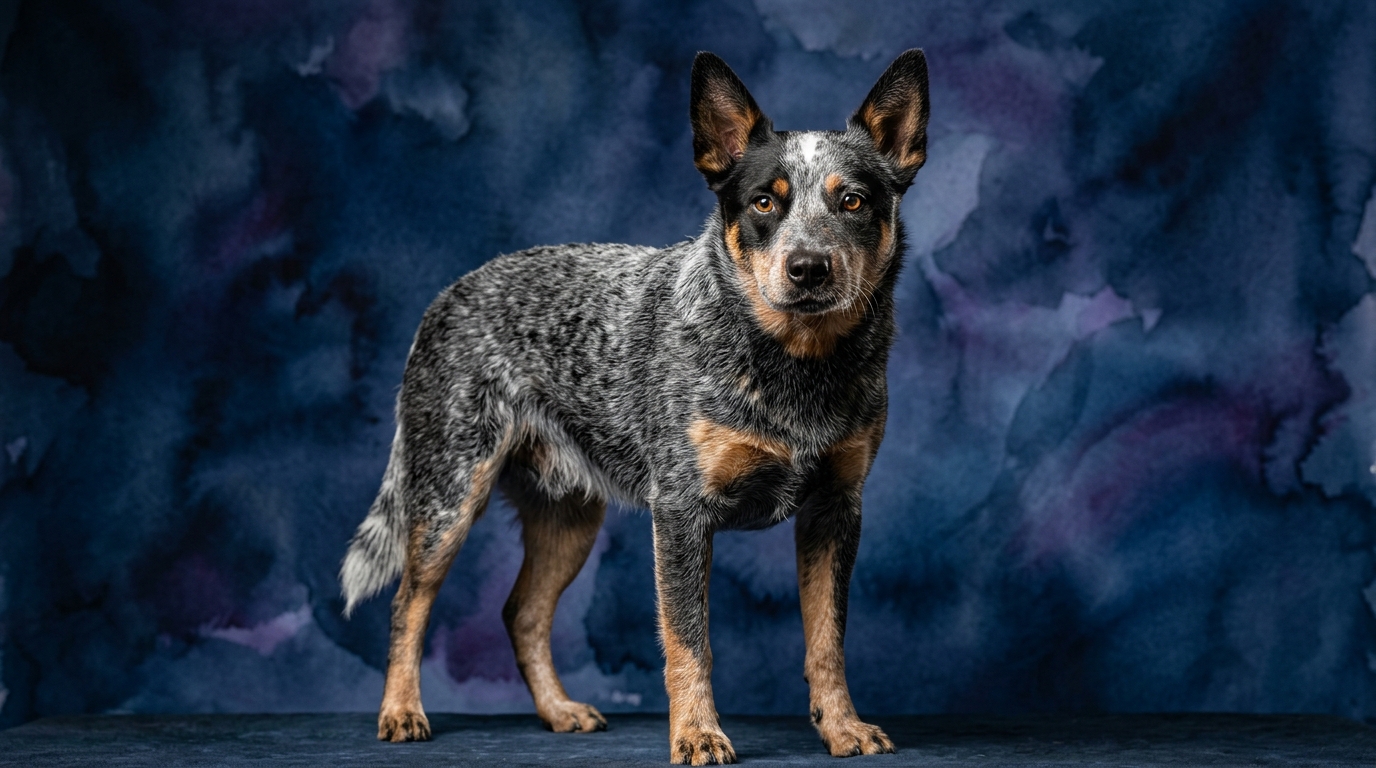
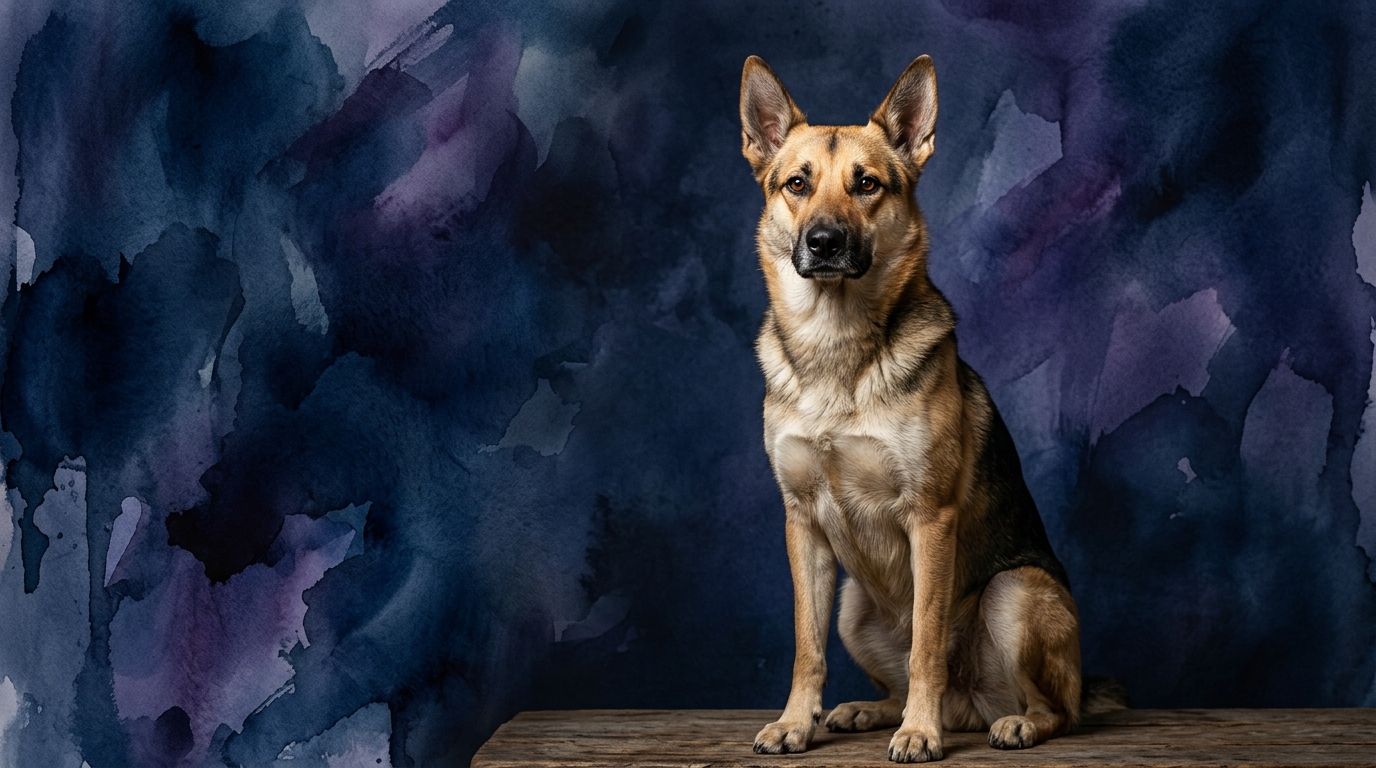
Side-by-side IQ profile
The Cosmic Pet Pet IQ Lab delves into the operational cognition of two distinct herding breeds: the Australian Cattle Dog and the Canaan Dog. While both possess ancestral roots in livestock management, their cognitive profiles, as reflected in their Coren ranks and specific IQ dimensions, paint pictures of divergent mental architectures. The Australian Cattle Dog, a breed developed for robust cattle work, stands at a notable Coren rank of #10, indicating a profound capacity for understanding and executing commands. In contrast, the Canaan Dog, a more ancient and primitive breed with a history as a pariah dog and general-purpose farm helper, occupies Coren rank #43, suggesting a different, more independent approach to cognition and learning.
For the Australian Cattle Dog, their problem-solving ability scores a perfect 5/5, reflecting their need to independently assess and react to the unpredictable challenges of moving stubborn livestock across vast terrains. This breed also achieves a 5/5 in training speed, indicating a remarkable aptitude for quickly grasping and retaining new commands and complex sequences. Their social intelligence is rated at 3/5, suggesting they form strong bonds but might be less universally gregarious or handler-dependent in their decision-making than some other breeds. An intense instinctive drive of 5/5 underscores their relentless work ethic, while a memory score of 5/5 ensures they retain vast amounts of information, from learned tasks to environmental cues.
The Canaan Dog presents a different cognitive landscape. Their problem-solving ability registers at 3/5, demonstrating competence but a potentially slower or more independent approach to novel challenges compared to the ACD. Training speed also rates 3/5, indicating that while trainable, they typically require more repetition and patience to solidify new behaviors. Like the ACD, their social intelligence is 3/5, pointing to a capacity for bonding but often with a reserved demeanor, especially towards strangers. Their instinctive drive is 3/5, present but perhaps less overtly focused on handler-directed tasks, leaning more towards self-preservation and independent vigilance. Finally, their memory stands at a solid 4/5, suggesting a good capacity for recall, particularly of important environmental details and established routines, even if initial learning takes more effort.
Where Australian Cattle Dog wins cognitively
The Australian Cattle Dog's cognitive profile reveals several areas where their mental architecture provides distinct advantages. Their perfect 5/5 in problem-solving ability is not merely about completing tasks, but about strategizing in dynamic, often chaotic environments. This manifests in their capacity to anticipate the movements of livestock, identify escape routes, and adjust their herding pressure in real-time, often without explicit direction. They excel at figuring out how to overcome physical obstacles to reach a goal, whether it's opening a gate or retrieving a dropped item from an inaccessible spot.
Furthermore, their 5/5 training speed signifies an exceptional capacity for rapid learning. An ACD can often grasp a new command or a complex sequence of actions in just a few repetitions, making them highly efficient students in disciplines like competitive obedience, agility, or advanced trick training. This quick cognitive uptake allows them to build a vast repertoire of skills efficiently. Coupled with their 5/5 memory, they not only learn fast but retain that knowledge for extended periods, applying it consistently across varying contexts. This cognitive strength means once a behavior is established, it is deeply ingrained, making them reliable partners in intricate tasks.
Finally, the ACD's 5/5 instinctive drive is a profound cognitive asset that fuels their work ethic. This isn't just about physical energy; it's a mental drive to engage with tasks, to be purposeful, and to channel their energy into productive outcomes. This intense internal motivation means they are often self-starters, eager to work and requiring less external prompting once a task's objective is understood. This combination of swift learning, deep retention, and an innate drive to perform makes the Australian Cattle Dog a formidable cognitive force in tasks requiring precision, quick adaptation, and sustained effort.
Where Canaan Dog wins cognitively
While the Australian Cattle Dog excels in handler-directed tasks and rapid learning, the Canaan Dog's cognitive strengths lie in a different domain, rooted in their ancient lineage as a free-ranging pariah dog. Their cognitive wins are subtle, reflecting an intelligence geared towards survival and independent judgment rather than biddable teamwork. A notable strength is their 4/5 memory, which, while not a perfect score, is a significant asset that enables them to recall environmental details, safe routes, and potential threats with remarkable accuracy. This memory serves their survival instincts well, allowing them to navigate complex territories and remember past interactions, both positive and negative, shaping their cautious approach to novelty.
The Canaan Dog's problem-solving score of 3/5, combined with their 3/5 instinctive drive, translates into a cognitive approach that values self-reliance. Instead of seeking handler input for every challenge, they are often observed assessing situations independently, making decisions based on their own evaluation of safety and efficacy. This can manifest as a subtle, discerning intelligence in navigating unfamiliar environments or discerning genuine threats from perceived ones. Their independence, often mistaken for stubbornness, is a cognitive advantage in scenarios where a dog needs to act autonomously, relying on its own judgment to protect its territory or family without constant human oversight.
Their social intelligence, rated 3/5, also presents a unique strength. While they might not be overtly demonstrative or universally friendly, this score reflects an acute ability to read social cues and intentions, albeit with a reserved disposition. This allows them to effectively guard their family and property, discerning friend from foe with a keen, watchful eye. Their cognitive "win" here is in their capacity for independent discernment and self-preservation, making them highly effective watchdogs who prioritize the safety of their immediate circle based on their own assessment, rather than relying solely on human direction.
Which is easier to train and why
When evaluating trainability, the Australian Cattle Dog clearly presents a more straightforward path for most owners. Their exceptional 5/5 training speed means they form associations between commands and actions with remarkable quickness. This breed thrives on structure and purpose, eagerly absorbing new lessons. For example, an ACD can often learn a multi-step retrieve or a complex agility sequence in a fraction of the time it would take many other breeds, needing only a few repetitions to solidify the behavior. Their 5/5 memory ensures that once learned, these behaviors are retained, making consistent performance reliable. This rapid cognitive processing and retention are hallmarks of a breed designed for intense, cooperative work with a handler.
In contrast, the Canaan Dog, with a training speed of 3/5 and problem-solving at 3/5, requires a significantly different approach and greater patience. While they are certainly trainable and capable of learning, they are not as quick to pick up new commands and may require many more repetitions and consistent reinforcement over a longer period. Their independent nature, stemming from their history, means they might question the utility of a command or prefer to act on their own initiative rather than blindly follow instructions. For instance, while an ACD might instantly respond to a recall command, a Canaan Dog might pause, assess the situation, and decide if coming back aligns with its current perceived interests.
Real behavioral differences highlight this disparity. An ACD often displays intense focus on their handler, eager for the next instruction and intrinsically motivated by the "job." This biddable nature makes them highly receptive to positive reinforcement and structured training environments. The Canaan Dog, conversely, might appear more aloof or easily distracted by environmental stimuli, as their instincts are geared towards surveying their surroundings. Training a Canaan Dog demands creativity, consistent motivation, and a deep understanding of their primitive drives, rather than relying on their innate eagerness to please, which is less pronounced than in the ACD.
Which suits active owners vs relaxed owners
The choice between an Australian Cattle Dog and a Canaan Dog hinges significantly on an owner's lifestyle and their capacity for engagement. The Australian Cattle Dog, with its 5/5 problem-solving, 5/5 instinctive drive, and high training speed, is unequivocally suited for highly active and engaged owners. These dogs require constant mental stimulation and physical exertion to thrive. An owner who enjoys competitive dog sports like agility, flyball, or herding trials, or who can provide daily, structured activities involving complex tasks and problem-solving, will find an ACD a fulfilling partner. Without sufficient outlets for their profound cognitive abilities and strong work ethic, ACDs can quickly become bored, leading to destructive behaviors, excessive barking, or neurotic tendencies. They are not content with mere backyard access; they need a "job" and a purpose.
The Canaan Dog, while also an active breed, suits a different type of owner. Their 3/5 instinctive drive and problem-solving, coupled with their independent nature, mean they still require regular exercise and mental engagement, but perhaps not the same intensity of structured, handler-focused work as an ACD. They thrive with owners who appreciate their self-reliant character and can provide opportunities for exploration, scent work, and patrolling a secure yard. While they enjoy walks and hikes, they might not be as enthusiastic about repetitive drills or highly competitive sports. A Canaan Dog can be content with a routine that includes regular physical activity and opportunities for independent thought, rather than constant direction.
Therefore, relaxed owners, in the sense of those seeking a low-maintenance companion content with minimal interaction beyond basic care, would find neither breed suitable. Both dogs demand commitment. However, an owner who enjoys outdoor activities and appreciates a dog that retains a degree of independence, and is willing to invest patience in training, might find the Canaan Dog a rewarding companion. Owners seeking a dog for intense, cooperative work, who can dedicate significant time to advanced training and high-energy sports, will find the Australian Cattle Dog a perfect match for their active lifestyle.
The Verdict
Choose the Australian Cattle Dog if you are an active, experienced owner seeking a highly biddable, task-oriented companion for demanding dog sports, competitive obedience, or complex working roles.
Opt for the Canaan Dog if you appreciate an independent, watchful, and self-reliant dog, are prepared for patient, consistent training, and can provide a secure environment where their primitive instincts for guarding and patrolling are satisfied.
🧠 Find Your Pet's IQ Score
Our Pet IQ Lab assessment covers 25+ tests across 5 cognitive dimensions — personalized to your breed.
Take the Full IQ Test →Frequently Asked Questions
Are Australian Cattle Dogs good family pets?
Yes, with proper socialization from a young age and consistent mental and physical exercise, they can be fiercely loyal family members. However, their strong herding instincts may lead them to nip at heels, especially with children, requiring vigilant training and supervision.
What is the biggest challenge with Canaan Dog ownership?
Their inherent independence and strong territorial instincts mean they can be reserved or wary of strangers and may not respond to commands with the same eagerness as more biddable breeds. This necessitates patient, consistent, and positive reinforcement training, alongside early and ongoing socialization.
How do the herding styles of these two breeds differ?
Australian Cattle Dogs typically employ a forceful, driving style, using their bodies, eyes, and sometimes nipping to move livestock efficiently. Canaan Dogs, while possessing general herding and guarding instincts as versatile farm dogs, are less specialized and might use their presence to gather or protect rather than applying a specific, intense driving technique.