Side-by-Side IQ Profile: Herder vs. Guardian Minds
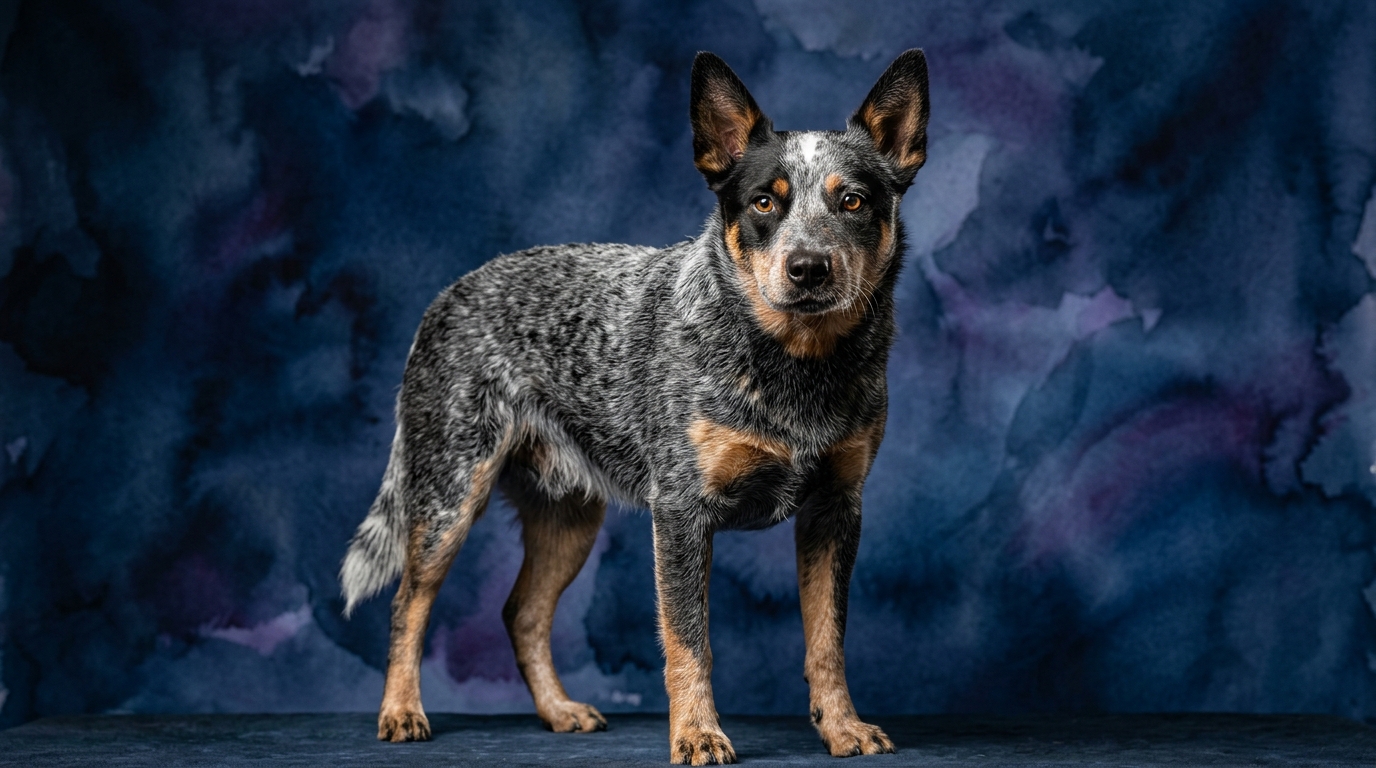
The Australian Cattle Dog (ACD), a member of the Herding group and ranked #10 in Coren's intelligence scale, presents a cognitive profile optimized for dynamic, independent work. Their Problem Solving is rated a top-tier 5/5, indicating an exceptional capacity to navigate complex situations and find solutions. Training Speed also scores 5/5, demonstrating a rapid ability to acquire and retain new commands. Their Instinctive Drive is a powerful 5/5, fueling their innate desire to work and engage. Memory is similarly impressive at 5/5, allowing them to recall intricate sequences and past experiences. Social Intelligence, however, stands at 3/5, suggesting a more task-oriented focus or a reserved nature compared to breeds that prioritize constant social interaction.
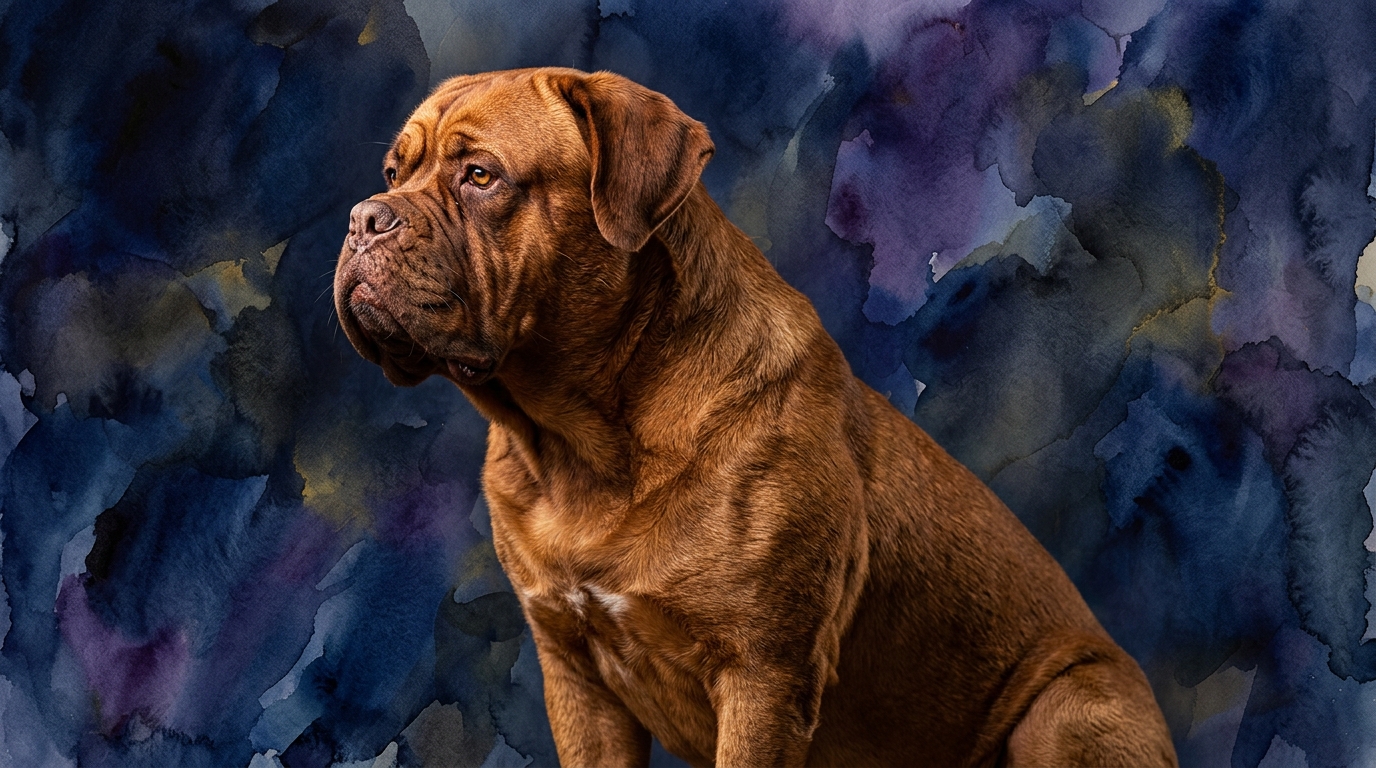
In contrast, the Dogue de Bordeaux, a robust member of the Working group, exhibits a more balanced and steadfast cognitive blueprint, with consistent ratings of 3/5 across all five dimensions. Their Problem Solving at 3/5 indicates a capable but perhaps more deliberate approach to challenges. Training Speed at 3/5 means they are trainable, but may require more repetition and patience to master new skills. A 3/5 in Social Intelligence suggests they are discerning and loyal to their inner circle, without the immediate, effusive friendliness seen in some breeds. Instinctive Drive at 3/5 implies a sufficient motivation for their protective and companion roles, without the ceaseless need for intense mental and physical exertion. Finally, Memory at 3/5 ensures they retain crucial information about their environment, family, and routines, contributing to their reliable presence.
Where the Australian Cattle Dog Wins Cognitively
The Australian Cattle Dog's cognitive strengths are undeniably rooted in their heritage as independent livestock managers. Their 5/5 Problem Solving ability means they are not merely followers of commands but active thinkers capable of assessing situations and devising strategies. For instance, an ACD might instinctively know how to cut off a straying sheep or find a novel way to retrieve a dropped toy from an inaccessible spot, showcasing a deep understanding of cause and effect and spatial reasoning. This mental agility makes them adept at complex tasks and dog sports where quick, on-the-fly decisions are paramount.
The ACD's 5/5 Training Speed and 5/5 Memory work in concert, allowing them to absorb and recall a vast lexicon of commands and behaviors with remarkable efficiency. They learn intricate obedience routines, multi-step agility courses, or complex herding patterns rapidly, often anticipating the next instruction. This cognitive fluency means they thrive on continuous learning and are often bored if not challenged, constantly seeking new mental puzzles. Their intense 5/5 Instinctive Drive fuels this cognitive engine, providing an intrinsic motivation to engage, work, and apply their mental faculties to purposeful activities, whether it's managing a flock or mastering a new trick.
Where the Dogue de Bordeaux Wins Cognitively
While the Dogue de Bordeaux's cognitive profile features consistent 3/5 ratings, these scores translate into a distinctive set of strengths that are highly valuable for their role as a guardian and companion. Their 3/5 Problem Solving, though not as rapid as the ACD's, suggests a deliberate and thoughtful approach. They may take more time to process information, but their solutions are often solid and well-considered, reflecting a calm steadiness rather than impulsive action. This manifests as a dog that is less prone to overreacting or panicking in unfamiliar situations, preferring to observe and assess.
The Dogue de Bordeaux's 3/5 Social Intelligence can be interpreted as a discerning nature. They aren't indiscriminately friendly; rather, they form deep bonds with their family and are typically reserved with strangers, a valuable trait for a protective breed. This measured social engagement means they are not constantly seeking external validation but are content within their established social structure. Their 3/5 Instinctive Drive, while not as intense as a herder's, is perfectly suited for a dog whose primary 'work' involves being a watchful, stable presence. This prevents them from becoming restless or destructive due to under-stimulation in a typical home environment, provided their basic needs are met. Their 3/5 Memory is sufficient for remembering their family, routines, and basic commands, contributing to their reliable and predictable demeanor.
Which Is Easier to Train and Why
When considering ease of training, the Australian Cattle Dog holds a distinct advantage, primarily due to their 5/5 Training Speed and 5/5 Problem Solving. They grasp new concepts with astonishing rapidity, often requiring fewer repetitions than many other breeds. Their inherent eagerness to work and high instinctive drive mean they are often self-motivated and attentive during training sessions. However, this cognitive intensity comes with a caveat: their intelligence demands constant direction. An ACD left without adequate mental and physical stimulation will apply their problem-solving skills to undesirable activities, such as outsmarting fences or inventing their own 'herding' games with family members or household items. Training an ACD is less about teaching them 'how' to learn and more about channeling their prodigious mental capacity effectively.
The Dogue de Bordeaux, with a 3/5 Training Speed, requires a more patient and consistent approach. While capable of learning, they are not as quick to pick up new commands and may need more repetitions to solidify behaviors. Their training benefits immensely from positive reinforcement, short sessions, and clear, calm communication. Their moderate instinctive drive (3/5) means they are less likely to create their own 'jobs' if under-stimulated compared to an ACD, but they can also be less intrinsically motivated to train for the sake of working. Owners need to find what truly motivates a Dogue de Bordeaux, often through food rewards or affectionate praise, and maintain a consistent routine to build strong habits. While not as 'quick' to train, a Dogue de Bordeaux can achieve a high level of obedience with dedicated effort, resulting in a reliably calm and well-mannered companion.
Which Suits Active Owners vs. Relaxed Owners
The Australian Cattle Dog is unequivocally suited for active owners who relish a dynamic, engaged lifestyle. Their 5/5 Instinctive Drive and high cognitive scores across the board demand substantial mental and physical outlets. These are dogs that thrive when given a job, whether it's competitive dog sports like agility, flyball, or obedience, or even complex puzzle toys and extensive outdoor adventures. Owners who appreciate a canine partner capable of independent thought and rapid learning will find the ACD profoundly rewarding. They are not content to be couch potatoes; their intelligence needs to be challenged daily, making them ideal for individuals or families committed to an active, stimulating routine.
Conversely, the Dogue de Bordeaux is a better fit for owners who prefer a more relaxed pace of life, yet still value a devoted and protective presence. Their moderate 3/5 instinctive drive means they require regular, but not necessarily intense, exercise. Leisurely walks, supervised yard time, and predictable routines are usually sufficient to keep them content. While they benefit from mental engagement, it doesn't need to be the constant, high-octane stimulation an ACD demands. Owners who appreciate a calm, steadfast companion that is discerning in its social interactions and provides a watchful presence will find the Dogue de Bordeaux a wonderful match. They are well-suited for a home environment where a powerful, yet serene, canine presence is desired.
The Verdict
Choose the Australian Cattle Dog if you're an active owner seeking a highly trainable, problem-solving partner for sports, work, or continuous mental challenges.
Opt for the Dogue de Bordeaux if you desire a calm, devoted, and protective companion, willing to invest patience in training, and appreciating a steadfast presence over constant high-energy engagement.
🧠 Find Your Pet's IQ Score
Our Pet IQ Lab assessment covers 25+ tests across 5 cognitive dimensions — personalized to your breed.
Take the Full IQ Test →Frequently Asked Questions
Does a Dogue de Bordeaux's 3/5 Problem Solving mean it cannot learn complex tasks?
Not at all. A 3/5 in Problem Solving indicates a capable mind, but one that may approach challenges more deliberately. They can certainly learn complex tasks, but might require more structured guidance and repetition than a breed with a 5/5 rating, rather than figuring things out independently at speed.
How does the Australian Cattle Dog's 3/5 Social Intelligence manifest in daily life?
An ACD's 3/5 Social Intelligence often means they are more focused on their primary handler and tasks, rather than seeking widespread social interaction. They can be reserved or aloof with strangers and may require careful socialization to ensure they are polite, rather than overly guarded or reactive, in new social settings.
Is the Dogue de Bordeaux's 3/5 Instinctive Drive a disadvantage for training?
The 3/5 Instinctive Drive is not a disadvantage, but rather an indicator that their motivation for 'work' is different from a herding dog. It means they likely won't possess the same tireless enthusiasm for constant activity, but they are still driven by loyalty and protection. Training will be effective with consistent motivation, often through positive reinforcement and bond-building, rather than relying solely on an innate 'work ethic'.